

 Preview
 Send
Send Share
Share
 Details

 Download
 Similars
 X-Ray
X-Ray Diaporama
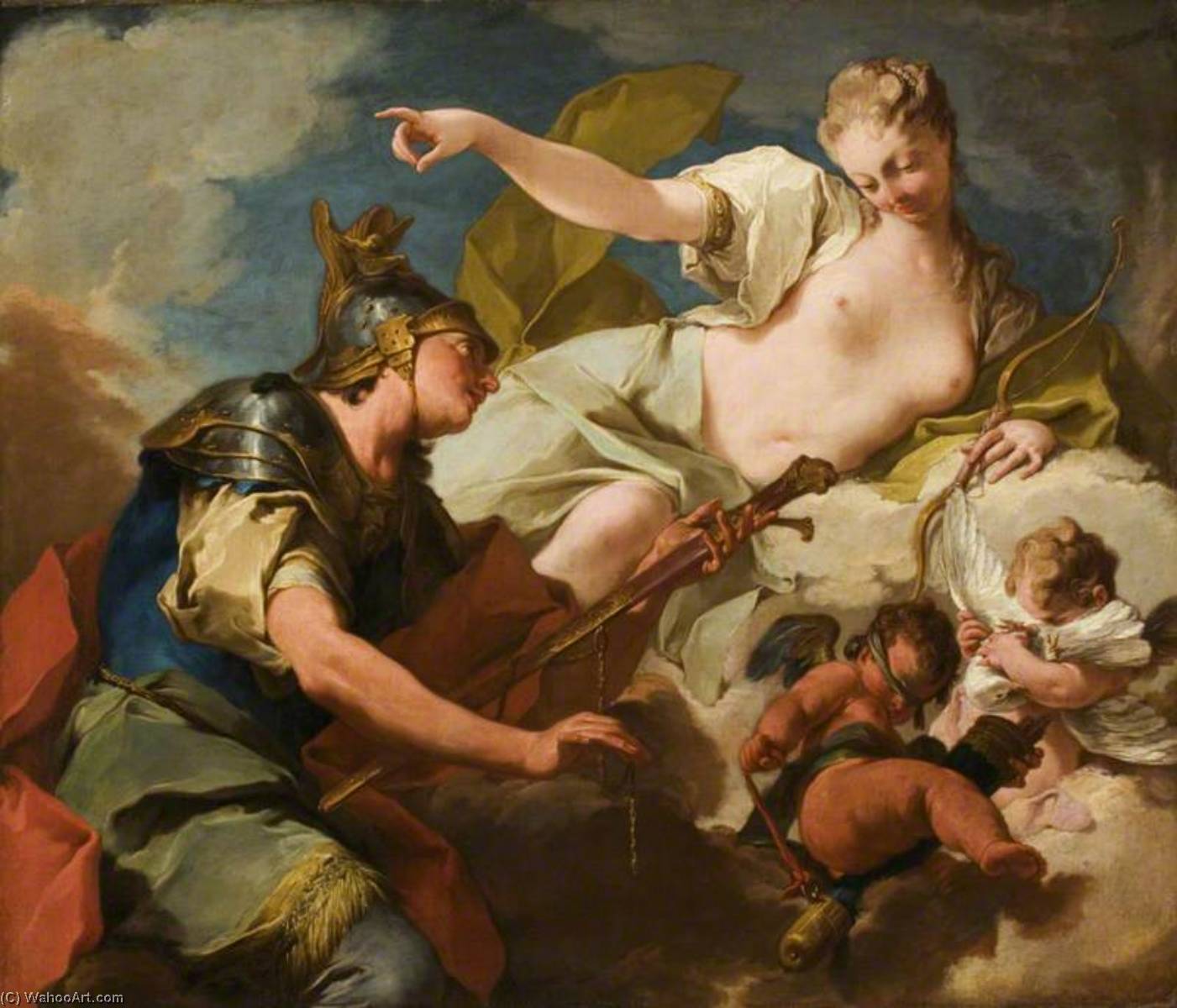
Venus Giving Armour to Aeneas
 Oil On Canvas
- WallArt
- Baroque
 1720
1720- Early Modern
 137.0 x 155.0 cm
 Reading Museum
 Read More
Purchase a high-resolution, enhanced digital image, far superior to the online preview.
Each file is meticulously prepared by our in-house specialists using advanced tools and expert manual retouching. We ensure every image has exceptional clarity, precise color accuracy, and fine detail.
The final file is delivered via email within 72 hours, optimized for immediate use in professional, editorial, and print environments. This is the same quality trusted by top-tier design studios, publishers, and galleries.
Digital Image
Download a high-resolution file for personal display, printing, and creative projects. ( Buy Print Buy Hand Made Painting)
Included in Every Digital Image Order
Expert Digital Delivery, Guaranteed
When you choose ArtsDot.com, you're not just getting an image - you're receiving a professionally enhanced digital artwork, crafted with precision and backed by a satisfaction guarantee. Here's everything that comes with your order, automatically:

Fast Email Delivery
Your high-resolution digital image file will be emailed to you within 72 hours of ordering - ready for immediate use.

AI-Enhanced Digital File
Your artwork is professionally optimized using advanced AI tools and manual editing, ensuring maximum detail, clarity, and color accuracy.

Free Lifetime Re-Delivery
Accidentally deleted or lost your file? No worries - we'll resend it to you anytime, free of charge.

No Import Fees - Ever
Enjoy your artwork instantly with zero customs, duties, or delivery fees - digital downloads are always tax-free.

Color Accuracy Guarantee
We ensure your digital image reflects the original colors as closely as possible using professional tools and color management.

60-Day Satisfaction Guarantee
If you're not satisfied with your digital image, we'll revise it or refund 100% within 60 days - no questions asked.

100% Money-Back Guarantee
Not satisfied? Get a full refund within 60 days of receiving your digital file - no questions asked.

Bulk Order Discounts
Buy 3 images, save 10% - Buy 5, save 15% - Buy 10+, save 20%. Great for creative projects, galleries, and agencies.
A Divine Encounter in Venetian Baroque
In the luminous realm of Giovanni Battista Pittoni, the boundaries between the mortal and the divine dissolve into a shimmering spectacle of light and grace. His masterpiece, Venus Giving Armour to Aeneas, serves as a breathtaking window into the heart of Venetian Baroque artistry. The scene captures a pivotal moment of mythological destiny: the goddess Venus, embodying both maternal tenderness and divine foresight, prepares her son Aeneas for the arduous journey that will eventually lead to the founding of Rome. This is not merely a depiction of a historical myth, but a choreographed dance of celestial intervention, where every gesture carries the weight of fate.
The composition is a masterclass in movement and theatricality. As Venus presents the instruments of war, the canvas breathes with an ethereal energy. The presence of three angels—positioned strategically across the left, center, and right—imbues the scene with a sense of profound spiritual protection. These celestial beings act as silent witnesses to the unfolding drama, their forms blending seamlessly into the radiant atmosphere created by Pittoni’s brush. The inclusion of swords, bows, and shields does more than suggest impending conflict; these objects serve as anchors of tension within an otherwise fluid and graceful arrangement, reminding the viewer of the heavy burden Aeneas must carry.
The Radiance of Venetian Technique
To behold this work is to experience the unique luminosity that defined the Venetian school during the eighteenth century. Pittoni, a visionary of his era, utilized a palette that avoids the heavy shadows of the previous century in favor of a bright, light-hearted brilliance. The technique is characterized by a "shimmering" quality, where light seems to dance across the surfaces of silk, metal, and skin. This luminosity creates a convincing effect of daylight, making the mythological figures feel present and tangible, as if they were caught in a fleeting moment of afternoon sun.
For the discerning collector or interior designer, this painting offers an unparalleled opportunity to introduce a sense of classical grandeur and sophisticated elegance into a space. The interplay of textures—the cold gleam of the armor against the soft, divine glow of the goddess—provides a rich visual depth that commands attention. Whether placed in a formal gallery setting or as a focal point in a luxurious contemporary living room, the artwork brings with it an air of historical prestige and an enduring sense of wonder.
Symbolism and Emotional Resonance
Beyond its technical brilliance, Venus Giving Armour to Aeneas resonates on a deeply emotional level. It explores the universal themes of preparation, sacrifice, and the guidance of providence. The armor is not merely protection; it is a symbol of the transition from innocence to duty. As Aeneas receives these gifts, there is an underlying poignancy in the realization that his journey will be marked by struggle and loss. Pittoni captures this duality perfectly—the sweetness of the maternal bond contrasted with the sharp edges of the weaponry.
This painting is more than a historical artifact; it is an evocative piece of storytelling that invites viewers to contemplate their own destinies. The balance of wit, elegance, and divine drama makes it a timeless addition to any collection. For those seeking to decorate with pieces that inspire conversation and evoke the splendor of the Italian Baroque, this reproduction stands as a testament to the enduring power of mythological art to stir the human soul.
Related Artworks





Artist Biography
The Venetian Master of Light and Drama
In the vibrant, water-bound splendor of eighteenth-century Venice, few artists captured the theatrical essence of the late Baroque and Rococo periods as fluently as Giovanni Battista Pittoni. Born on June 6, 1687, Pittoni emerged from a city that was itself a stage for grand spectacle, bringing to his canvas a sense of movement and luminosity that would define an era. While his early life was rooted in the traditions of his native Venice, his artistic soul was shaped by a profound connection to the masters who preceded him. Trained under the guidance of his uncle, Francesco Pittoni, he inherited a foundational understanding of the Venetian school, yet he possessed a unique vision that allowed him to transcend mere imitation.
The development of Pittoni’s style was an exquisite evolution of light and emotion. He drew deep inspiration from the dramatic chiaroscuro of Caravaggio and the textured depth of Rembrandt, yet he filtered these heavy influences through a distinctly Venetian lens. As his career progressed, his work began to reflect the lighter, more airy sensibilities of the Rococo, characterized by a shimmering palette and an elegant, almost weightless grace. His brushwork became increasingly fluid, capable of conveying both the divine majesty of a religious apparition and the delicate intimacy of a mythological encounter. This ability to navigate between the profound and the playful made him a central figure in the transition from the heavy drama of the Baroque to the refined elegance of the Rococo.
A Legacy of Theatricality and Grace
Pittoni’s oeuvre is a breathtaking collection of religious and mythological narratives, each designed to captivate the viewer through dynamic composition and expressive figures. His paintings often feel like frozen moments from a grand opera, where every gesture is imbued with meaning and every shadow tells a story. Whether depicting the serene sanctity of The Nativity or the heroic tension in Venus Giving Armour to Aeneas, his work possesses an unmistakable theatricality. He had a remarkable talent for utilizing light not merely as a tool for visibility, but as a spiritual protagonist, bathing his subjects in an ethereal glow that suggests the presence of the divine.
Beyond the confines of individual canvases, Pittoni’s influence extended to the very architecture of Venetian prestige. His mastery of large-scale composition earned him prestigious commissions for the ceilings and walls of grand palaces and churches across Italy. His work in the Palazzo Labia and various Milanese residences showcased his ability to transform structural spaces into immersive mythological worlds. This period of prolific creation solidified his reputation as a leading painter of his generation, capable of decorating the most significant civic and religious institutions with unparalleled sophistication.
Institutional Impact and Historical Significance
The historical importance of Giovanni Battista Pittoni extends far beyond the aesthetic beauty of his paintings; he was a cornerstone of the Venetian artistic community. His commitment to the formalization of art education led him to become one of the founding members of the Academy of Fine Arts, Venice. His leadership within this institution—eventually serving as its second president following the legendary Tiepolo—demonstrates the immense respect he commanded among his peers and the lasting impact he had on the training of future generations of Italian artists.
Though he was known to receive significant commissions from abroad, particularly from Germany, Pittoni remained deeply tied to the Venetian landscape. He was a painter who found greatness within the borders of his home, enriching the local culture with a style that was both internationally relevant and intimately Venetian. Today, his works serve as vital windows into the 18th century, embodying the transition of European art from the intense emotionality of the Baroque to the luminous, decorative splendor of the Rococo. His legacy lives on in the museums of the world, where his canvases continue to enchant viewers with their timeless elegance and dramatic brilliance.

Giovanni Battista Pittoni
2007 - 1770 , Italy
Quick Facts
- Artistic Movement Or Style: Baroque & Rococo
- Artists Or Movements Influenced By This Artist: ['Rococo']
- Artists Who Influenced This Artist:
- Peter Paul Rubens
- Gian Lorenzo Bernini
- Date Of Birth: Venice, Italy (2007)
- Date Of Death: 1770
- Full Name: Giovanni Battista Pittoni
- Nationality: Italian
- Notable Artworks:
- The Rest on the Flight into Egypt
- Hagar in the Desert
- Place Of Birth: Venice

