

 Preview
 Send
Send Share
Share
 Details

 Download
 Similars
 X-Ray
X-Ray Diaporama
 Stats
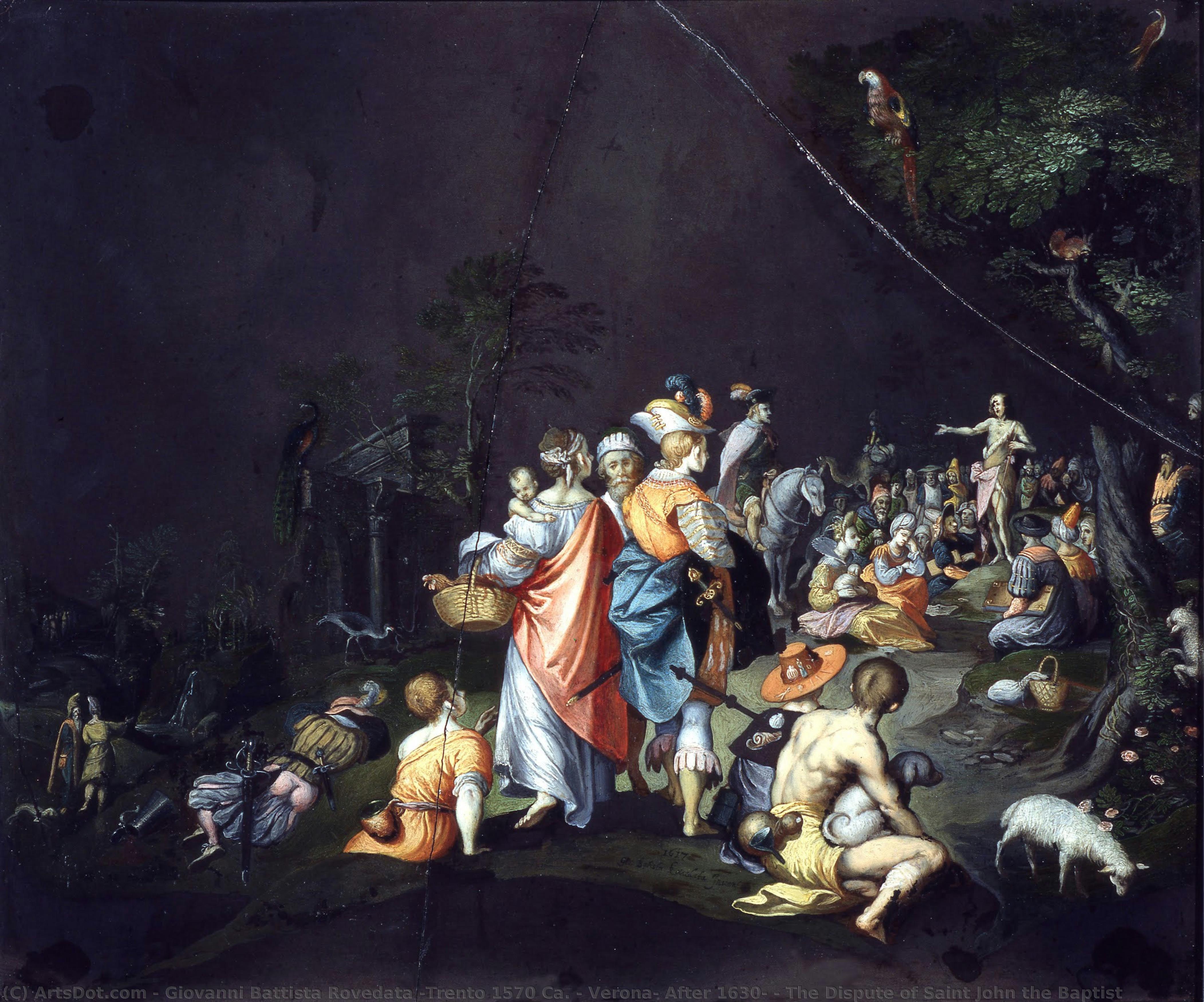
StatsThe Dispute of Saint John the Baptist


 Read More
Purchase a high-resolution, enhanced digital image, far superior to the online preview.
Each file is meticulously prepared by our in-house specialists using advanced tools and expert manual retouching. We ensure every image has exceptional clarity, precise color accuracy, and fine detail.
The final file is delivered via email within 72 hours, optimized for immediate use in professional, editorial, and print environments. This is the same quality trusted by top-tier design studios, publishers, and galleries.
Digital Image
Download a high-resolution file for personal display, printing, and creative projects. ( Switch to Print Buy Hand Made Painting)
Included in Every Digital Image Order
Expert Digital Delivery, Guaranteed
When you choose ArtsDot.com, you're not just getting an image - you're receiving a professionally enhanced digital artwork, crafted with precision and backed by a satisfaction guarantee. Here's everything that comes with your order, automatically:

Fast Email Delivery
Your high-resolution digital image file will be emailed to you within 72 hours of ordering - ready for immediate use.

AI-Enhanced Digital File
Your artwork is professionally optimized using advanced AI tools and manual editing, ensuring maximum detail, clarity, and color accuracy.

Free Lifetime Re-Delivery
Accidentally deleted or lost your file? No worries - we'll resend it to you anytime, free of charge.

No Import Fees - Ever
Enjoy your artwork instantly with zero customs, duties, or delivery fees - digital downloads are always tax-free.

Color Accuracy Guarantee
We ensure your digital image reflects the original colors as closely as possible using professional tools and color management.

100-Day Satisfaction Guarantee
If you're not satisfied with your digital image, we'll revise it or refund 100% within 100 days - no questions asked.

100% Money-Back Guarantee
Not satisfied? Get a full refund within 100 days of receiving your digital file - no questions asked.

Bulk Order Discounts
Buy 3 images, save 10% - Buy 5, save 15% - Buy 10+, save 20%. Great for creative projects, galleries, and agencies.
Related Artworks






Artist Biography
Hieronymus Cock: The Master of the Print Revolution
The name Hieronymus Cock might not be instantly familiar to many art enthusiasts, yet his contribution to the history of art is profoundly significant – he was, in essence, the architect of the modern printmaking industry. Born in Antwerp around 1518 and tragically dying in 1570, Cock’s life coincided with a pivotal moment in artistic development: the burgeoning rise of print media and its transformation from a craft primarily undertaken by individual artists into a sophisticated commercial enterprise. He wasn't merely a painter; he was a visionary publisher, a shrewd businessman, and an innovative artist who fundamentally reshaped how images were disseminated and experienced.
Cock’s early life was steeped in artistic tradition. He belonged to a family deeply involved in the visual arts – his father, Jan Wellens de Cock, and brother, Matthys Cock, were both accomplished painters and draftsmen. He formally entered the Guild of Saint Luke in Antwerp in 1545, establishing himself as a professional artist. However, it was his foray into printmaking that truly cemented his legacy. Initially, he produced etchings in the style of his brother, demonstrating a nascent talent for capturing detail and atmosphere. These early works, characterized by a somewhat fantastical quality, foreshadowed the distinctive aesthetic he would later develop.
The Founding of ‘In de Vier Winden’
Around 1548, Cock, along with his wife Volcxken Diericx, established “*Aux quatre vents*,” or “House of the Four Winds” – a name that reflected their ambition to distribute prints across Europe. This wasn't simply a printing workshop; it was a fully integrated publishing house, meticulously managing every stage of production, from initial design and engraving to distribution and sales. The company’s success stemmed from Cock’s strategic partnerships with some of the most prominent artists of the era – Frans Floris, Pieter Bruegel the Elder, Lambert Lombard, Maarten van Heemskerck, and crucially, Hieronymus Bosch. These artists provided the designs, which were then meticulously etched by skilled engravers like Johannes Wierix and Philip Galle. Cock’s genius lay in his ability to assemble a collaborative network, effectively creating an industry rather than just producing individual artworks.
The sheer volume of prints produced by “*In de Vier Winden*” is staggering – over 1,100 works circulated between 1548 and Cock’s death. This unprecedented output was made possible through a division of labor: artists focused on design, engravers on execution, and Cock himself oversaw the entire operation, managing finances, marketing, and distribution. His innovative approach to printmaking—moving beyond single-artist production—was revolutionary.
A Painter’s Legacy
While often celebrated as a publisher, Cock was also a talented artist in his own right. His late series of twelve landscape etchings (circa 1558) offer a fascinating glimpse into his artistic development. These works, imbued with a dreamlike quality reminiscent of Hieronymus Bosch’s fantastical imagery, demonstrate a shift towards a more personal and expressive style. They stand as a testament to his versatility and his ability to seamlessly blend the roles of artist and publisher.
Cock's influence extended beyond simply increasing print production; he also played a crucial role in shaping the aesthetic of early prints. His collaborations with artists like Bosch, known for their dramatic compositions and symbolic imagery, profoundly impacted the visual language of printmaking. The combination of artistic talent and business acumen made Hieronymus Cock one of the most important figures in the history of art, transforming the way images were created, distributed, and consumed.
Historical Context: 1570 and Beyond
Cock’s career unfolded during a period of immense upheaval in Europe. The late 16th century was marked by religious conflict, political instability, and the rise of new artistic styles. The Protestant Reformation challenged traditional artistic conventions, while the Renaissance continued to exert its influence, fostering innovation and experimentation. Within this dynamic environment, Cock’s publishing house thrived, supplying prints that were widely circulated throughout Europe – a remarkable feat considering the limitations of transportation and communication at the time.
His work reflects the broader trends of the era, incorporating elements of both Renaissance humanism and emerging Mannerist styles. The year 1570 itself was a pivotal one in art history, witnessing significant developments across Europe – from Titian’s dramatic landscapes to El Greco's burgeoning career in Italy. Cock’s story is inextricably linked to this period of artistic transformation, solidifying his place as a key player in the evolution of printmaking and its impact on the wider world.
Quick Facts
- Artistic Movement Or Style: Renaissance, Printmaking
- Artists Or Movements Influenced By This Artist:
- El Greco
- Old Master Prints
- Artists Who Influenced This Artist:
- Matthys Cock
- Hans Vredeman de Vries
- Date Of Birth: 1518
- Date Of Death: October 1570
- Full Name: Hieronymus Cock
- Nationality: Flemish
- Notable Artworks:
- The Burial of Christ
- Landscape etchings
- Place Of Birth: Antwerp, Belgium