 Preview
 Send
Send Share
Share
 Details

 Download
 Similars
 X-Ray
X-Ray Diaporama
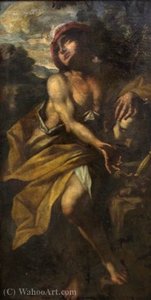
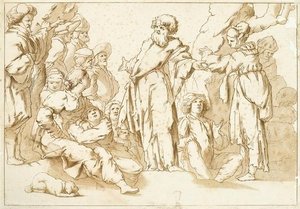
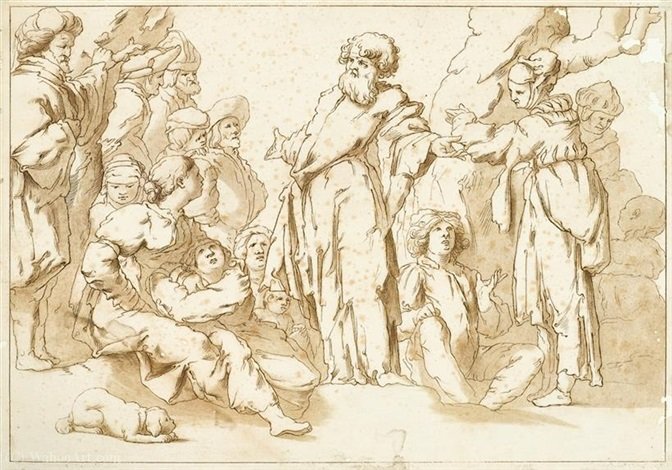
St. John preaching in the wilderness
 Read More
Hand Made Oil Reproduction
Hand-painted oil on canvas in your size and frame, made to order by our artists. ( Buy Print Buy Image)




































Pick from our preset sizes that match the artwork's original proportions.

You may enter your own dimensions to fit a specific frame or space. If your selected size does not match the original image's proportions, we will either crop the artwork or extend the painting with additional hand-painted elements. A digital mockup will be sent for your approval before production begins.
Please note that the on-screen preview does not reflect the actual cropping or extension. Only the mockup will accurately show the final composition.
While custom sizes are available, we recommend selecting a dimension from the predefined list to preserve the original proportions.
After order, ArtsDot.com team will email client for instructions and provide a mockup preview
Worldwide Delivery () in 3/4 weeks instead of standard 5 weeks. (17 August). No compromise on quality.

Free Worldwide Express Shipping

High-Quality Linen Canvas

Full Shipping Insurance

Customs Tax Refund Guarantee

True Color Matching Guarantee

60-Day Return Policy (Defects Only)

100% Money-Back Guarantee

Bulk Discount Offer
 Glass option is only available in size under 110 CM

St. John preaching in the wilderness
Reproduction Medium
Reproduction Size
-


Total Price
$ 263
Related Artworks

Artist Biography
A Life Immersed in Light and Shadow: Giovanni Battista Spinelli
Giovanni Battista Spinelli, born around 1597 in Chieti, Italy, emerged during the vibrant yet tumultuous era of the Baroque period. His story is one woven with threads of aristocratic upbringing, artistic apprenticeship, a profound engagement with Neapolitan masters, and an intriguing, almost alchemical turn later in life. Unlike artists propelled by necessity, Spinelli’s early exposure to art was likely fostered by his family's wealth; his father, Sante, a grain merchant originally from Bergamo, provided a comfortable foundation that allowed for the pursuit of artistic training. Early lessons with Domenico Carpinoni in the 1620s laid the groundwork for a career that would see him become a significant figure within the Abruzzo region and beyond. His sister’s marriage to Baron Ludovico de Pizzis further connected him to the local nobility, influencing his patronage and subject matter.From Abruzzo Churches to Neapolitan Studios
Spinelli initially established himself painting religious scenes throughout Abruzzo. A notable early work, the “Coronation of Mary” at the Chiesa della Santissima Trinità around 1630, demonstrates a developing talent for composition and narrative. However, it was his relocation to Naples in the 1630s that truly catalyzed his artistic evolution. There, he entered the orbit of two pivotal figures: Massimo Stanzione and Battistello Caracciolo. The influence of Caracciolo proved particularly profound; Spinelli became one of his last students, absorbing not only technical skills but also a distinctive compositional style characterized by dramatic tenebrism – the stark contrast between light and dark that defines much Baroque art. This technique wasn’t merely aesthetic; it was employed to heighten emotional intensity and draw viewers into the sacred narratives he depicted. Beyond painting, Spinelli cultivated a passion for prints from Northern Europe, collecting works by masters like Lucas van Leyden, Hendrik Goltzius, and Jacob Matham. These engravings subtly infused his work with a refined attention to detail and an appreciation for complex iconography.The Art of Character: Portraits and Religious Themes
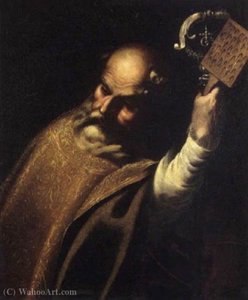
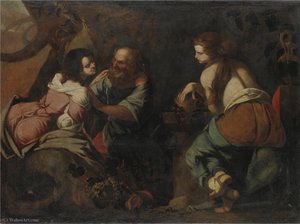
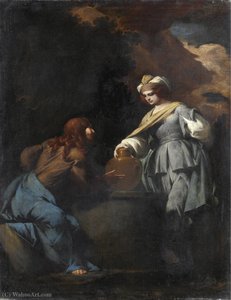
Spinelli’s oeuvre is marked by a compelling focus on the human figure, whether in religious contexts or portraits. His paintings are not simply representations; they are studies in character, imbued with psychological depth and physical realism. He possessed an exceptional ability to convey age, wisdom, and emotion through subtle nuances of expression and gesture. This talent was particularly evident in his portraits, which often transcended mere likenesses to become insightful explorations of the sitter’s inner life. His religious scenes, while adhering to traditional iconography, were infused with a dramatic intensity that set them apart. The “San Biagio,” for example, showcases this mastery of chiaroscuro and the aged wisdom of its subject. Works like "Cristina La Samaritana" demonstrate his ability to capture connection and detail in portraiture. While commissions dictated much of his output, Spinelli consistently brought a unique artistic sensibility to each project.A Legacy Reconsidered
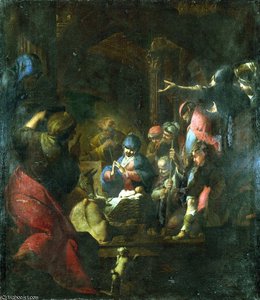
For many years, Spinelli’s work remained somewhat overshadowed by the more celebrated Neapolitan artists of his time. However, recent scholarship, notably spearheaded by Roberto Longhi, has led to a significant reassessment of his legacy. Longhi and others have praised Spinelli's ability to portray the physical and psychological characteristics of his figures with remarkable sensitivity. While dating his canvases can be challenging due to their bespoke nature – tailored to individual client specifications – it is clear that he was a highly sought-after artist during his lifetime. His works are now found in prestigious collections, including the Uffizi Gallery and the National Gallery in London ("Adoration of the Shepherds"), testament to his enduring artistic merit.The Enigma of Alchemy
The final chapter of Spinelli’s life is shrouded in mystery. According to Bernardo De Dominici's “Vite dei Pittori, Scultori, ed Architetti Napolitani,” he abandoned painting around 1647 to dedicate himself to the pursuit of alchemy, ultimately dying while conducting an experiment at approximately fifty years old. While this account has long been accepted, more recent research suggests a possible extension of his life until at least 1658. Regardless of the precise date of his death, the story adds a layer of intrigue to Spinelli’s biography – a suggestion that even amidst artistic success, he harbored a deeper fascination with the transformative power of nature and the secrets it held. His legacy remains as a Baroque master who skillfully blended dramatic light, psychological insight, and technical prowess, leaving behind a body of work that continues to captivate and inspire.
giovanni battista spinelli
1613 - 1658 , Italy
Quick Facts
- Artistic Movement Or Style: Baroque
- Artists Or Movements Influenced By This Artist: ['Renaissance Art']
- Artists Who Influenced This Artist:
- Salviati
- Del Conte
- Ligorio
- Date Of Birth: 1613
- Full Name: Giovanni Battista Spinelli
- Nationality: Italian
- Notable Artworks:
- San Biagio
- Cristina La Samaritana
- Place Of Birth: Italy