 Preview
 Send
Send Share
Share
 Details

 Download
 Similars
 X-Ray
X-Ray Diaporama
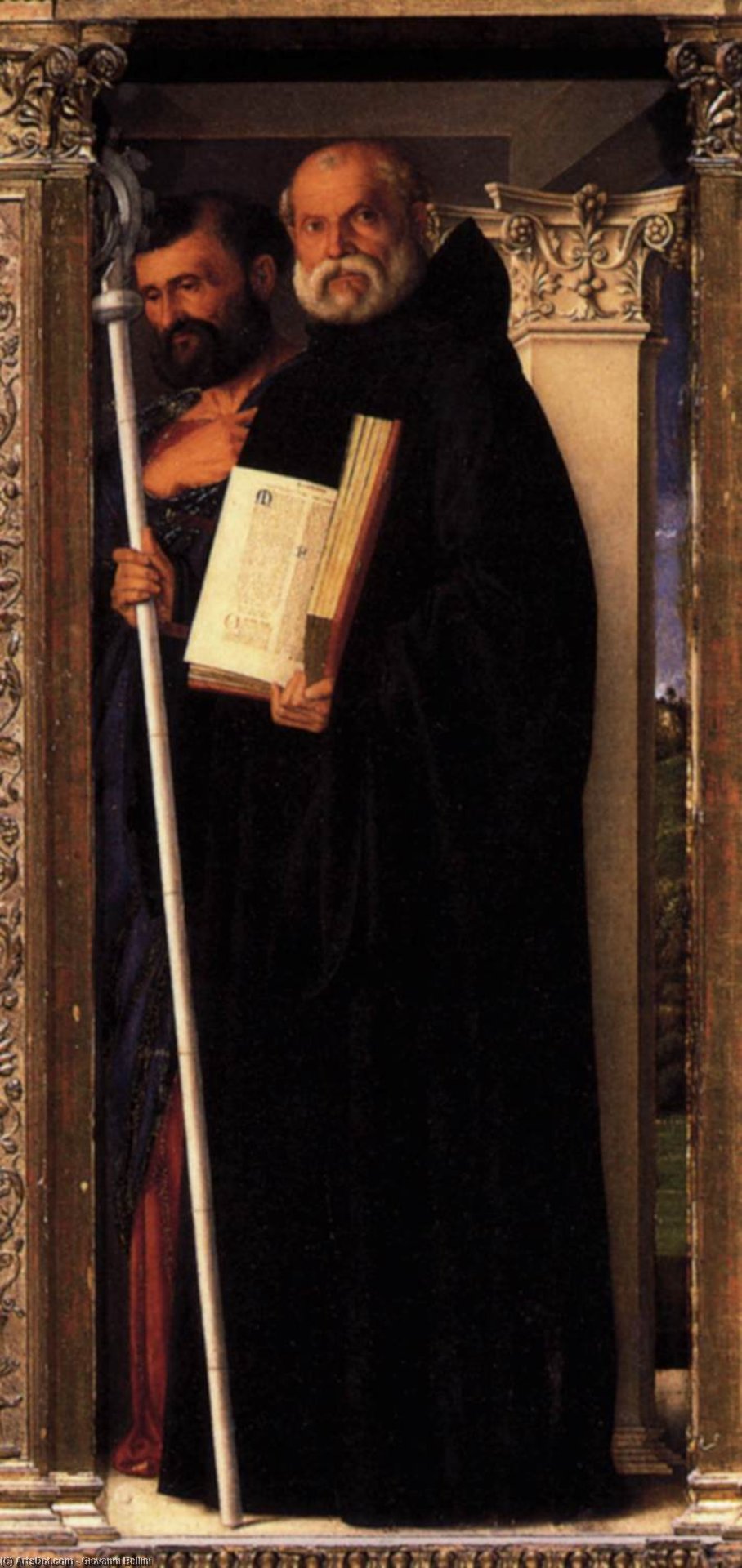
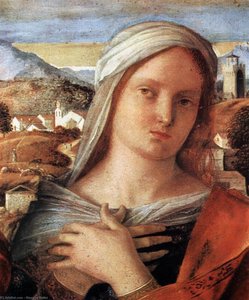
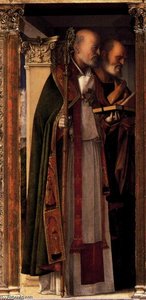
Frari Triptych (detail) (17)
 Oil On Canvas
- WallArt
- Early Renaissance
 1488
1488 115.0 x 46.0 cm
 Santa Maria Gloriosa dei Frari
 Read More
Hand Made Oil Reproduction
Hand-painted oil on canvas in your size and frame, made to order by our artists. ( Buy Print Buy Image)




P118B $10

P118H $10

P118W $10

P438Z $10

P508JH $12

P508YH $12

P805H $10

P805Z $10

P919BZ $10

P919G $10

P919XJ $10

P959ZH $10

P968JZ $12

W106C $8

W218G $10

W218JH $8

W218Y $10

W307PJ $10

W316G $10

W316PJ $8

W316Y $10

W398PJ $8

W4111J $10

W500HY $15

W500JH $15

W692G $12

W849H $8

W940BG $15

W953PJ $8




Pick from our preset sizes that match the artwork's original proportions.

You may enter your own dimensions to fit a specific frame or space. If your selected size does not match the original image's proportions, we will either crop the artwork or extend the painting with additional hand-painted elements. A digital mockup will be sent for your approval before production begins.
Please note that the on-screen preview does not reflect the actual cropping or extension. Only the mockup will accurately show the final composition.
While custom sizes are available, we recommend selecting a dimension from the predefined list to preserve the original proportions.
After order, ArtsDot.com team will email client for instructions and provide a mockup preview
Worldwide Delivery () in 3/4 weeks instead of standard 5 weeks. (17 August). No compromise on quality.

Free Worldwide Express Shipping

High-Quality Linen Canvas

Full Shipping Insurance

Customs Tax Refund Guarantee

True Color Matching Guarantee

60-Day Return Policy (Defects Only)

100% Money-Back Guarantee

Bulk Discount Offer
 Glass option is only available in size under 110 CM

Frari Triptych (detail) (17)
Reproduction Medium
Reproduction Size
-


Total Price
$ 263
Artwork Description
Giovanni Bellini’s Frari Triptych: A Symphony of Light and Emotion
Giovanni Bellini's Frari Triptych stands as a cornerstone of Venetian Renaissance art, embodying the artistic spirit of its time—a harmonious blend of Byzantine tradition and humanist innovation. Completed in 1488, this monumental altarpiece commissioned by Franceschina Tron for Santa Maria Gloriosa dei Frari isn’t merely a depiction of biblical figures; it's an immersive experience designed to evoke contemplation and reverence.
Composition and Technique: Mastering Illusionism
Bellini’s genius lies in his masterful manipulation of perspective and color. Unlike earlier Venetian painters who relied on flattened surfaces, Bellini achieved remarkable depth through the use of *trompe-l'œil*, creating an illusionary apse behind the Virgin Mary that seamlessly merges with the painted architecture. This technique—borrowed from Andrea Mantegna—was revolutionary for its time and demonstrates Bellini’s profound understanding of optical principles.
- Oil on Panel: The medium itself contributes to the painting's luminous quality, allowing for subtle gradations of color and capturing the ethereal glow characteristic of Venetian Renaissance art.
- Detailed Modeling: Bellini’s meticulous attention to detail—evident in the drapery folds and facial expressions—reveals a sculptural approach to painting that elevates it beyond mere representation.
Symbolism and Narrative Depth
The triptych's narrative unfolds with deliberate precision, depicting the Virgin Mary enthroned alongside Saint Nicholas of Bari and Saint Peter on one side, and Saint Mark and Saint Benedict on the other. Each figure is imbued with symbolic significance—Mary represents purity and compassion, while St. Nicholas embodies generosity and protection. The saints serve as intermediaries between God and humanity, reinforcing the spiritual message of the artwork.
The inscription “IANUA CERTA POLI DUC MENTEM DIRIGE VITAM” (“Certain gate of heaven, guide my mind, direct my life”) underscores the contemplative purpose of the piece—a testament to Bellini’s belief in art's ability to inspire moral reflection.Historical Context and Legacy
Created during a period of fervent religious fervor and artistic experimentation, the Frari Triptych reflects the broader cultural landscape of Venice. It exemplifies the Venetian Renaissance’s fascination with classical ideals while simultaneously retaining elements of Byzantine iconography—a stylistic dialogue that distinguishes it from its contemporaries. Bellini's influence extended far beyond his immediate circle, shaping the artistic sensibilities of subsequent generations and cementing his place as one of Italy’s greatest painters.
- Influence on Titian & Mantegna: Bellini served as a mentor to Titian and Andrea Mantegna, whose styles bear unmistakable traces of his innovative techniques.
- Enduring Appeal: The Frari Triptych continues to captivate viewers today with its breathtaking beauty and profound spiritual depth—a timeless masterpiece that embodies the essence of Venetian Renaissance art.
Related Artworks


Artist Biography
A Venetian Master: The Life and Legacy of Giovanni Bellini
Giovanni Bellini, a name synonymous with the blossoming Renaissance in Venice, stands as a pivotal figure bridging the gap between the traditions of Byzantine art and the innovative spirit that would define the 16th century. Born around 1430 – though some sources suggest 1433 – into a family deeply entrenched in the artistic world, Bellini’s journey was one of continuous evolution, marked by a profound sensitivity to color, light, and the burgeoning humanism of his era. The precise nature of his familial relationships has been debated; for years Jacopo Bellini was considered his father, but modern scholarship increasingly points towards Jacopo being Giovanni's elder half-brother, with Gentile Bellini as his nephew rather than sibling. Regardless of these intricacies, young Giovanni grew up immersed in a workshop brimming with creativity and technical expertise, absorbing the foundations of painting from an early age. His initial training likely involved the traditional tempera techniques favored at the time, but it was his innate talent for observation and emotional expression that would set him apart.Early Influences and Artistic Development
The artistic landscape of 15th-century Venice was a unique blend of influences. The city’s position as a major trading hub exposed its artists to diverse styles and ideas, while the Byzantine heritage continued to exert a strong pull. Bellini's early works reflect this duality. Initially, his style bore the mark of his father and brother, Gentile, with compositions often characterized by meticulous detail and a somewhat restrained emotional palette. However, even in these early pieces, hints of his future brilliance began to emerge – a delicate handling of light, a growing interest in naturalistic settings, and an ability to imbue religious figures with a palpable sense of human pathos. The influence of Andrea Mantegna, his brother-in-law, is also readily apparent during this period, particularly in the clarity of line and sculptural forms. Bellini’s early commissions often involved collaborative projects, such as his contributions to the Scuola di San Marco alongside Gentile and other prominent Venetian artists. These large-scale works provided invaluable experience and allowed him to hone his skills while working alongside some of the most talented painters of the day.Revolutionizing Venetian Painting: Color, Light, and Oil
Bellini’s true revolution lay in his embrace of oil paint. While not the inventor of the technique, he was among the first Venetian artists to fully exploit its potential. Unlike tempera, which dried quickly and demanded a precise, linear approach, oil paint allowed for greater blending, richer colors, and subtle gradations of tone. This newfound freedom enabled Bellini to create paintings with an unprecedented depth and luminosity. His use of color became increasingly sophisticated, moving away from the bright, often harsh hues of earlier Venetian painting towards a more nuanced and harmonious palette. He masterfully captured the effects of light and atmosphere, imbuing his landscapes with a sense of serenity and realism that was groundbreaking for its time. This mastery of oil paint not only transformed his own work but also laid the foundation for the distinctive style that would come to define the Venetian school – a style celebrated for its sensuousness, coloristic richness, and atmospheric perspective. His paintings began to radiate an inner glow, reflecting a spiritual depth that resonated with viewers.Mature Works and Lasting Influence
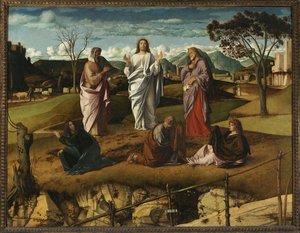
As Bellini matured, his artistic vision continued to evolve. His altarpieces, such as those created for the churches of San Zaccaria and Santa Corona, demonstrate his ability to create complex compositions filled with symbolic meaning and emotional resonance. The *Transfiguration*, now housed in the Capodimonte Museum in Naples, exemplifies his mature style – a serene spirit combined with ripened artistic powers. He also served as conservator of the paintings in Doge’s Palace, further solidifying his reputation as Venice's leading artist. His influence extended far beyond his own lifetime. He became a mentor to a generation of younger painters, including Giorgione and Titian, who would carry on his legacy and push the boundaries of Venetian art even further. These pupils absorbed Bellini’s techniques and aesthetic principles, adapting them to their own individual styles and contributing to the golden age of Venetian painting. Bellini's impact can be seen in the works of countless artists who followed, solidifying his place as a true master of the Renaissance. He died in Venice in 1516, leaving behind a body of work that continues to inspire awe and admiration centuries later.A Legacy Enduring Through Time
Giovanni Bellini’s significance extends beyond his technical innovations and artistic achievements. He captured the spirit of a changing world – a world grappling with new ideas about humanity, spirituality, and the relationship between art and nature. His paintings are not merely representations of religious scenes; they are profound meditations on faith, beauty, and the human condition. His ability to imbue his figures with dignity and grace, combined with his masterful use of color and light, created a visual language that resonated deeply with his contemporaries and continues to captivate audiences today. Bellini’s legacy is not simply one of artistic brilliance; it is a testament to the power of art to transcend time and connect us to the enduring values of human experience. From the serene beauty of his Madonnas to the dramatic intensity of his religious scenes, Bellini's work remains a cornerstone of Western art history.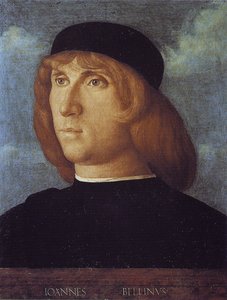
Giovanni Bellini
1433 - 1516 , Italy
Quick Facts
- Artistic Movement Or Style: Renaissance, Venetian School
- Artists Or Movements Influenced By This Artist:
- Giorgione
- Titian
- Venetian painting school
- Artists Who Influenced This Artist:
- Jacopo Bellini
- Gentile Bellini
- Andrea Mantegna
- Date Of Birth: c. 1433
- Date Of Death: 1516
- Full Name: Giovanni Bellini
- Nationality: Italian
- Notable Artworks:
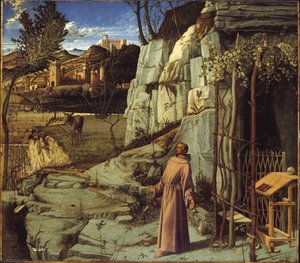
- St. Jerome in the Desert
- The Transfiguration
- Coronation of the Virgin
- Place Of Birth: Venice, Italy
Related Articles

Jacopo Tintoretto's Masterpieces: 25 Paintings That Define Venetian Drama | ArtsDot
Explore 25 breathtaking masterpieces by Jacopo Tintoretto, the Venetian master of drama and light. Discover the stories behind iconic Renaissance paintings & find museum-quality art reproductions to elevate your home decor on ArtsDot.com.
Giorgione: Enigma and Innovation in Early Venetian Renaissance Painting
Explore the enigmatic world of Giorgione, a pivotal figure in the Venetian Renaissance. Discover his innovative techniques, iconic paintings like 'The Tempest', and lasting influence on art history. Learn more at ArtsDot.
The Golden Light of Innovation: Exploring the Venetian Renaissance Art Movement (1430–1580)
Explore the Golden Age of Venetian art (1430–1580). Discover Giorgione, Titian & Tintoretto's techniques, the 'colorito' revolution, and lasting influence. Expert insights for collectors & enthusiasts.
Titian: Innovation, Technique & the Venetian Renaissance Portrait Tradition
Explore the revolutionary techniques & enduring legacy of Titian, the master of Venetian Renaissance portraiture. Discover insights for collectors & appreciate his impact on art history.
Vittore Carpaccio: Venetian Renaissance Narrative & the Poetics of Detail
Explore the captivating world of Vittore Carpaccio, a master storyteller of the Venetian Renaissance. Discover his intricate details, narrative cycles like 'The Legend of St. Ursula,' and unique artistic style.