Artist Biography
The Enduring Legacy of Giovanni da Nola: Sculptor of a Renaissance Naples
Giovanni da Nola, also known as Giovanni Merliano, stands as a pivotal figure in the transition from the High Renaissance to the burgeoning Mannerist style within the artistic landscape of Southern Italy. Born in Nola, near Naples – though precise dates remain elusive – his career flourished throughout the 16th century, leaving an indelible mark on the city he called home and beyond. While biographical details are often fragmented, pieced together from contemporary accounts and surviving works, it’s clear that Da Nola wasn't merely a sculptor; he was a craftsman of civic identity, shaping the very image of Naples during a period of significant political and cultural change. His influence extended through a notable workshop, nurturing a generation of sculptors who carried forward his distinctive aesthetic.
From Classical Roots to Neapolitan Expression
Da Nola’s artistic journey began steeped in the traditions of classical sculpture. He demonstrably absorbed the lessons of antiquity, evident in the anatomical precision and balanced forms that characterize his early works. However, he wasn't a slavish imitator. Instead, he synthesized these influences with a distinctly Neapolitan sensibility – a robust realism tempered by an emerging theatricality. This unique blend is particularly apparent in his monumental work on the Porta Capuana, commissioned by Pedro de Toledo, the Viceroy of Naples, beginning around 1537. The gate isn’t simply an architectural element; it's a dynamic narrative carved in stone, depicting scenes from the life of Emperor Charles V and celebrating his victories. The figures are powerfully rendered, conveying both strength and a sense of dramatic movement – a departure from the more static compositions favored by earlier Renaissance sculptors. This project cemented Da Nola’s reputation as Naples' premier sculptor and established a style that would define much of the city’s public art for decades to come.
A Workshop of Innovation: Disciples and Style
The success of the Porta Capuana led to a prolific period of commissions, necessitating the establishment of a thriving workshop. Da Nola was not only an accomplished artist but also a skilled teacher, attracting numerous pupils who absorbed his techniques and disseminated his style throughout the region. Among his most notable students were Nicola of Naples, Ferdinando Manlio, and Cola dell'Amatrice. These artists, while exhibiting individual variations, consistently employed Da Nola’s emphasis on expressive realism, dynamic composition, and detailed ornamentation. His workshop became a hub for the production of funerary monuments, altarpieces, and decorative sculpture, contributing significantly to the artistic richness of Neapolitan churches and palaces. The influence of his atelier is so pervasive that attributing specific works solely to Da Nola himself can be challenging; however, the consistent stylistic hallmarks – the powerful musculature, the emotive faces, and the intricate detailing – serve as a clear indication of his overarching aesthetic vision.
Major Achievements and Enduring Monuments
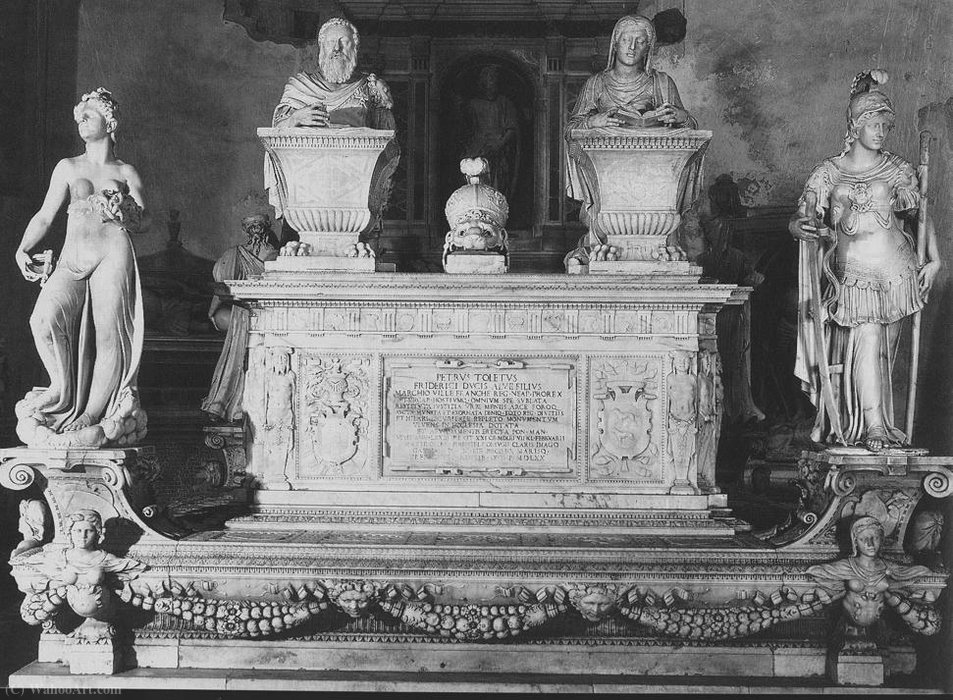
Beyond the Porta Capuana, Da Nola’s oeuvre encompasses a diverse range of sculptural projects. He created numerous funerary monuments for prominent Neapolitan families, showcasing his ability to capture both the dignity and individuality of the deceased. His altarpieces, often featuring complex compositions and dramatic lighting effects, adorned several churches throughout Naples and its surrounding areas. He also undertook commissions for private patrons, producing decorative sculpture and portrait busts that reveal a keen understanding of human psychology. While many of his works remain in situ, integrated into the fabric of Neapolitan architecture, others are preserved in museums and collections, offering glimpses into the breadth and depth of his artistic talent. The Cappella Sansevero, though significantly altered over time, also bears traces of Da Nola’s early involvement, demonstrating his versatility and willingness to collaborate on ambitious architectural projects.
Historical Significance: Bridging Eras in Neapolitan Art
Giovanni da Nola occupies a unique position in the history of Italian art. He effectively bridged the gap between the High Renaissance ideals of harmony and balance and the more expressive, dynamic forms of Mannerism. His work reflects a growing interest in emotional intensity and theatricality – characteristics that would come to define much of Baroque sculpture. More importantly, he played a crucial role in establishing a distinctly Neapolitan artistic identity, one rooted in classical traditions but infused with local sensibilities and a vibrant sense of realism. He wasn’t simply importing styles from Rome or Florence; he was creating something new, something uniquely suited to the cultural context of Southern Italy. Even today, his sculptures continue to captivate viewers with their power, drama, and enduring beauty, serving as a testament to the lasting legacy of this remarkable Renaissance artist.


 Preview
 Send
Send Share
Share
 Details

 Download
 Similars
 X-Ray
X-Ray Diaporama
 Read More
 Buy Print