 Preview
 Send
Send Share
Share
 Details

 Download
 Similars
 X-Ray
X-Ray Diaporama
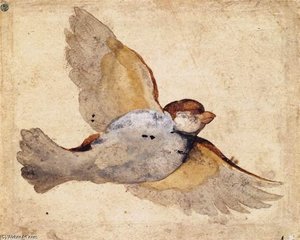
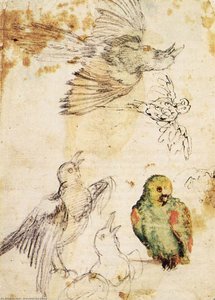
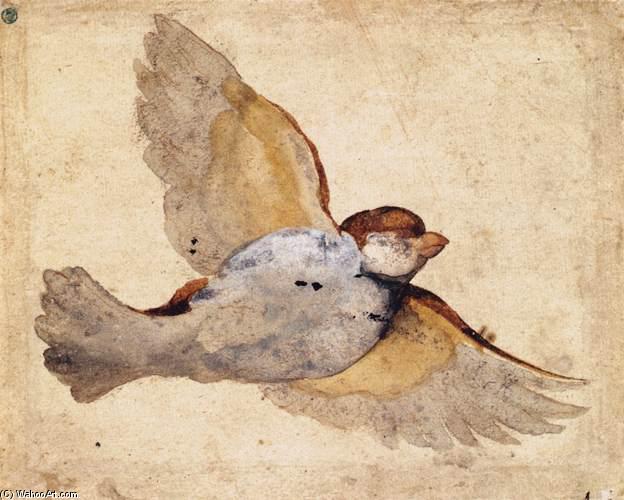
Study of a Flying Sparrow
 Acrylic On Canvas
- WallArt
- Renaissance Italian Painting
 1515
1515 138.0 x 168.0 cm
 Nationalmuseum
 Read More
Hand Made Oil Reproduction
Hand-painted oil on canvas in your size and frame, made to order by our artists. ( Buy Print Buy Image)




P118B $10

P118H $10

P118W $10

P438Z $10

P508JH $12

P508YH $12

P805H $10

P805Z $10

P919BZ $10

P919G $10

P919XJ $10

P959ZH $10

P968JZ $12

W106C $8

W218G $10

W218JH $8

W218Y $10

W307PJ $10

W316G $10

W316PJ $8

W316Y $10

W398PJ $8

W4111J $10

W500HY $15

W500JH $15

W692G $12

W849H $8

W940BG $15

W953PJ $8




Pick from our preset sizes that match the artwork's original proportions.

You may enter your own dimensions to fit a specific frame or space. If your selected size does not match the original image's proportions, we will either crop the artwork or extend the painting with additional hand-painted elements. A digital mockup will be sent for your approval before production begins.
Please note that the on-screen preview does not reflect the actual cropping or extension. Only the mockup will accurately show the final composition.
While custom sizes are available, we recommend selecting a dimension from the predefined list to preserve the original proportions.
After order, ArtsDot.com team will email client for instructions and provide a mockup preview
Worldwide Delivery () in 3/4 weeks instead of standard 5 weeks. (17 August). No compromise on quality.

Free Worldwide Express Shipping

High-Quality Linen Canvas

Full Shipping Insurance

Customs Tax Refund Guarantee

True Color Matching Guarantee

60-Day Return Policy (Defects Only)

100% Money-Back Guarantee

Bulk Discount Offer
 Glass option is only available in size under 110 CM

Study of a Flying Sparrow
Reproduction Medium
Reproduction Size
-


Total Price
$ 263
Artwork Description
A Study in Flight: Giovanni da Udine’s Delicate Observation
Giovanni Martini da Udine, born around 1475 in Udine, Italy, stands as a beacon of Renaissance artistic innovation—a painter whose meticulous attention to detail and profound understanding of the natural world cemented his place among the foremost masters of his era. Unlike many artists preoccupied with grand narratives or monumental sculptures, Da Udine’s focus resided in capturing fleeting moments of beauty, particularly within the realm of ornithology. This “Study of a Flying Sparrow,” executed circa 1515, exemplifies his distinctive style and offers a glimpse into the artistic sensibilities prevalent during Padua’s flourishing Renaissance.- Subject Matter: The artwork depicts a sparrow in mid-flight, rendered with remarkable precision. Its wings are outstretched, conveying an impression of effortless grace and dynamism—a testament to Da Udine's keen observation skills.
- Style & Technique: Employing red chalk and gouache on paper, Da Udine achieved a subtle tonal range that captures the texture of feathers and the movement of air. The delicate layering of gouache lends depth and luminosity to the composition, creating an ethereal quality characteristic of Venetian painting.
- Historical Context: Padua during the Renaissance was a hub for humanist scholarship and artistic experimentation. Da Udine’s work reflects this intellectual climate, aligning with the broader trend toward scientific inquiry and idealized depictions of nature—a departure from medieval conventions.
- Symbolism: The sparrow's posture embodies a spirit of liberation and perseverance, mirroring the humanist ideals championed during the Renaissance. Its presence underscores Da Udine’s commitment to portraying nature with uncompromising realism.
- Emotional Impact: Viewing this study evokes a sense of tranquility and contemplation—a reminder of the beauty inherent in the natural world. The artist's masterful technique elevates the sparrow from a simple subject matter into an emblem of grace and dignity.
Related Artworks

Artist Biography
Michelangelo Buonarroti: A Titan of the Renaissance
Michelangelo di Lodovico Buonarroti Simoni, born in Caprese in 1475 and dying in Rome in 1564, stands as arguably the most influential artist of the High Renaissance—a figure whose work continues to resonate with awe and admiration centuries later. More than simply a sculptor, painter, architect, or poet, Michelangelo embodied the very essence of the Renaissance ideal: the “uomo universale,” a polymath capable of mastering diverse disciplines. His career spanned over seven decades, marked by an unparalleled drive for perfection and a profound understanding of human anatomy, emotion, and the classical world—influences that shaped not only his individual masterpieces but also the course of Western art itself.
Michelangelo’s early life in Florence instilled within him a deep appreciation for both artistic skill and humanist ideals. His father, Lodovico Buonarroti, a member of the Florentine gentry, initially hoped his son would pursue a career in law or administration. However, Michelangelo's innate talent for art quickly became apparent, leading to an apprenticeship with Domenico Ghirlandaio, a prominent painter in Florence. This early training provided him with foundational skills but it was his time under the patronage of Lorenzo de’ Medici that truly ignited his artistic potential. Lorenzo recognized and nurtured Michelangelo’s extraordinary abilities, providing him with access to a vast collection of classical sculptures—a pivotal moment that would profoundly shape his artistic vision.
Sculpting Divinity: Early Masterpieces
Michelangelo's early career was defined by a remarkable burst of productivity. His first major commission, the *Pietà* (1498-9), carved from a single block of marble in St Peter’s Basilica, immediately established him as a sculptor of exceptional skill and emotional depth. The sculpture depicts Mary cradling the body of Christ—a scene rendered with breathtaking realism and profound sorrow. Notably, Michelangelo deliberately avoided depicting any signs of suffering on Christ's body, opting instead for an expression of serene acceptance, a departure from conventional depictions of death in Northern European art.
Just two years later, he completed the *David* (1501-4), a colossal marble statue that became a symbol of Florentine civic pride and republican ideals. The statue’s anatomical accuracy, dynamic pose, and intense gaze captivated viewers and cemented Michelangelo's reputation as a master sculptor. The *David*, originally intended for placement above the Florence Cathedral, was ultimately placed outside the Palazzo Vecchio, representing the city’s commitment to freedom and justice. It is important to note that this wasn’t simply a representation of David before his battle with Goliath; it embodied the spirit of Florence itself – courageous, determined, and ready to defend its liberty.
The Sistine Chapel: A Ceiling of Revelation
In 1508, Pope Julius II summoned Michelangelo back to Rome, initiating one of the most ambitious artistic projects in history—the decoration of the ceiling of the Sistine Chapel. Despite his initial reluctance to undertake such a monumental task, Michelangelo accepted and spent four years meticulously painting over 300 figures on the chapel’s vault. The frescoes depict scenes from Genesis, including *The Creation of Adam*, arguably the most iconic image in Western art—a moment of divine inspiration captured with unparalleled dynamism and emotional intensity.
Michelangelo's approach to fresco painting was revolutionary. He worked directly on wet plaster, employing a technique that demanded incredible speed and precision. The scale of the project, combined with his demanding artistic standards, pushed him to the limits of his physical and mental endurance. The *Last Judgment*, painted on the altar wall in 1536-9, further demonstrated Michelangelo’s mastery—a dramatic depiction of Christ's return and the final judgment of humanity, characterized by powerful figures and a turbulent emotional landscape.
Architecture and Legacy
While primarily known for his sculpture and painting, Michelangelo was also a significant architect. He designed several important buildings in Rome, including the Laurentian Library (1520-34) and the redesign of St Peter’s Basilica, though he never completed the project himself. His architectural designs were characterized by their innovative use of space, complex geometry, and dramatic ornamentation—reflecting his artistic sensibilities and pushing the boundaries of Renaissance architecture.
Michelangelo's influence on Western art is immeasurable. His anatomical studies revolutionized the depiction of the human form, while his dynamic compositions and expressive gestures set a new standard for painting and sculpture. His work continues to inspire artists today, and his masterpieces—the *David*, the *Pietà*, the Sistine Chapel frescoes—remain among the most treasured treasures of the world’s art museums. Beyond his technical brilliance, Michelangelo's legacy lies in his unwavering pursuit of perfection, his profound understanding of human emotion, and his ability to capture the divine within the mortal realm.
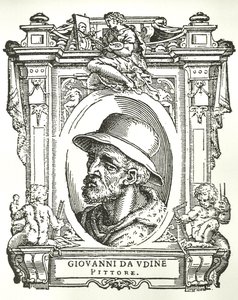
giovanni da udine
1475 - 1535 , Italy
Quick Facts
- Artistic Movement Or Style: High Renaissance, Mannerism
- Artists Or Movements Influenced By This Artist:
- Renaissance art
- Mannerism
- Artists Who Influenced This Artist:
- Classical antiquity
- Leonardo da Vinci
- Date Of Birth: March 6, 1475
- Date Of Death: February 18, 1564
- Full Name: Michelangelo di Lodovico Buonarroti Simoni
- Nationality: Italian
- Notable Artworks:
- Pietà
- David
- Sistine Chapel ceiling
- The Last Judgment
- Place Of Birth: Caprese, Italy
Related Articles

Leonardo da Vinci's Masterpieces: Explore 25 Iconic Artworks for Your Home | ArtsDot
Journey through Leonardo da Vinci's genius with our curated selection of 25 iconic artworks. Explore the stories behind Mona Lisa, The Last Supper & more Renaissance masterpieces. Find museum-quality art reproductions for your home at ArtsDot.com.

Leonardo da Vinci: A Renaissance Master’s Synthesis of Art, Science & Human Observation – Reinterpreted for the Collector
Explore Leonardo da Vinci’s timeless masterpieces with ArtsDot. Discover insights into his art, science, and legacy – trusted expertise for discerning collectors seeking authentic reproductions & investment opportunities.
Giovanni Giacometti: Sculpting Existentialism – A Study of Form, Space, and the Human Condition
Explore the profound artistic journey of Giovanni Giacometti, father to Alberto. Discover his unique transition from Surrealism to Existentialist sculpture and painting – a compelling study for elite collectors and art enthusiasts.
Feathered Visions: A Historical & Artistic Exploration of Birds in Painting
Explore the rich history of birds in painting! Discover symbolism, artistic movements & master artists like Audubon. High-quality reproductions available at ArtsDot.
Renaissance Humanism's Greatest Art: 10 Masterpieces for Your Home
Explore 10 Renaissance Humanism masterpieces by Leonardo da Vinci, Michelangelo & Raphael. Discover the stories behind these iconic paintings & sculptures and bring timeless art into your home with museum-quality reproductions from ArtsDot.com. Explore the full collection online!