

 Preview
 Send
Send Share
Share
 Details

 Download
 Similars
 X-Ray
X-Ray Diaporama
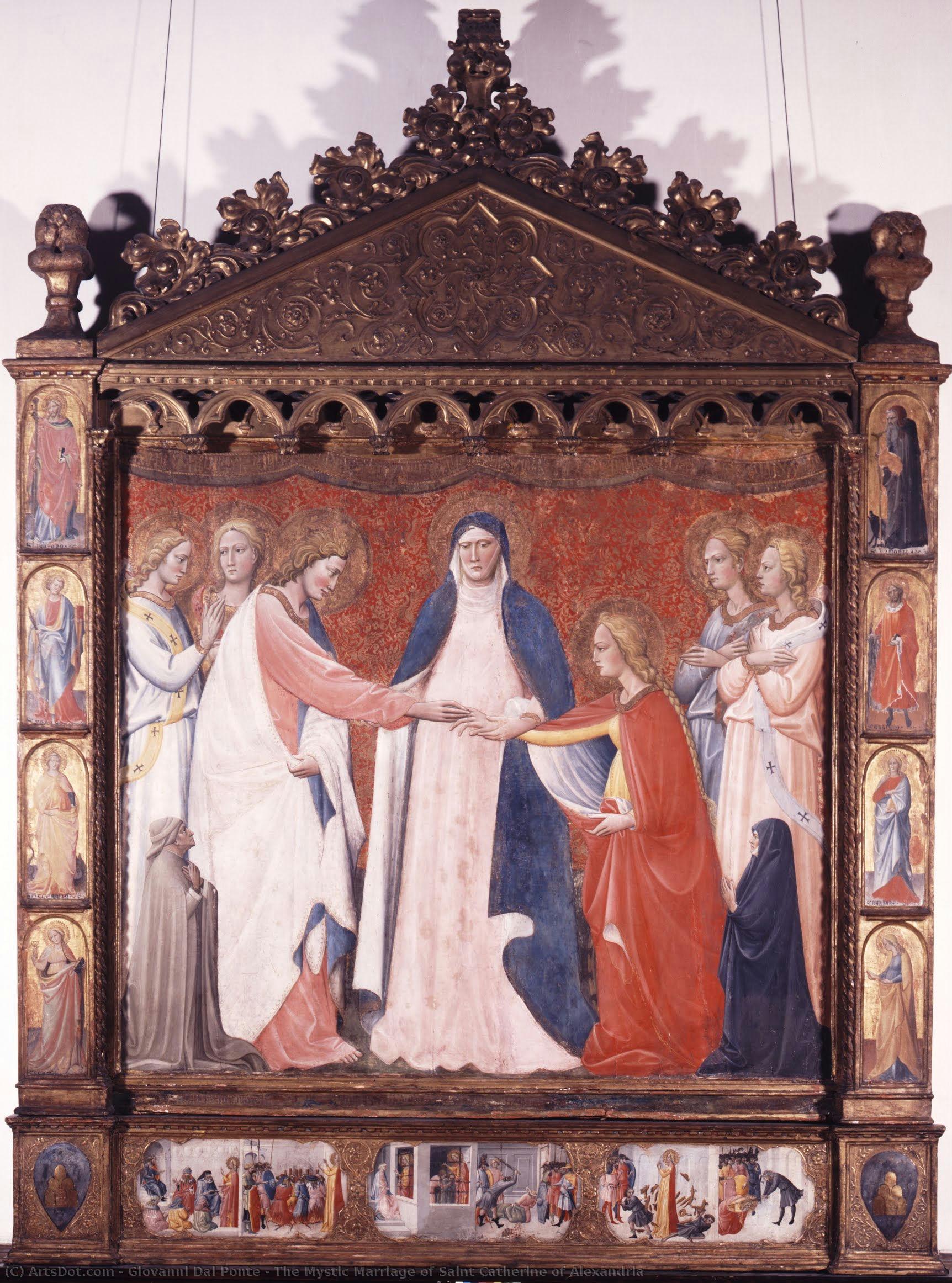
The Mystic Marriage of Saint Catherine of Alexandria
 Acrylic On Canvas
- WallArt
- Late Gothic/Renaissance
 1421
1421 147.0 x 168.0 cm
 Museum of Fine Arts
 Read More
Purchase a high-resolution, enhanced digital image, far superior to the online preview.
Each file is meticulously prepared by our in-house specialists using advanced tools and expert manual retouching. We ensure every image has exceptional clarity, precise color accuracy, and fine detail.
The final file is delivered via email within 72 hours, optimized for immediate use in professional, editorial, and print environments. This is the same quality trusted by top-tier design studios, publishers, and galleries.
Digital Image
Download a high-resolution file for personal display, printing, and creative projects. ( Buy Print Buy Hand Made Painting)
Included in Every Digital Image Order
Expert Digital Delivery, Guaranteed
When you choose ArtsDot.com, you're not just getting an image - you're receiving a professionally enhanced digital artwork, crafted with precision and backed by a satisfaction guarantee. Here's everything that comes with your order, automatically:

Fast Email Delivery
Your high-resolution digital image file will be emailed to you within 72 hours of ordering - ready for immediate use.

AI-Enhanced Digital File
Your artwork is professionally optimized using advanced AI tools and manual editing, ensuring maximum detail, clarity, and color accuracy.

Free Lifetime Re-Delivery
Accidentally deleted or lost your file? No worries - we'll resend it to you anytime, free of charge.

No Import Fees - Ever
Enjoy your artwork instantly with zero customs, duties, or delivery fees - digital downloads are always tax-free.

Color Accuracy Guarantee
We ensure your digital image reflects the original colors as closely as possible using professional tools and color management.

60-Day Satisfaction Guarantee
If you're not satisfied with your digital image, we'll revise it or refund 100% within 60 days - no questions asked.

100% Money-Back Guarantee
Not satisfied? Get a full refund within 60 days of receiving your digital file - no questions asked.

Bulk Order Discounts
Buy 3 images, save 10% - Buy 5, save 15% - Buy 10+, save 20%. Great for creative projects, galleries, and agencies.
Giovanni dal Ponte: Bridging Gothic Legacy and Renaissance Dawn
Giovanni dal Ponte (1385 – c. 1438 in Florence) stands as a pivotal figure in the transition from Late Gothic to Early Renaissance art, embodying the spirit of innovation while retaining echoes of tradition. Born amidst the grandeur of Florentine civic life, he emerged during a period where artistic sensibilities were shifting dramatically—the austere formality of medieval iconography was gradually yielding to the humanist ideals and naturalistic observation championed by masters like Masaccio. Though often overshadowed by his more celebrated contemporaries, dal Ponte’s contribution to Florentine art history is undeniable, securing him a place among the “minor maestri” – artists who skillfully blended stylistic influences and elevated artistic craftsmanship. His workshop, nestled near Piazza Santo Stefano a Ponte, served as a crucible for artistic experimentation, fostering a dialogue between established conventions and emerging trends.- Style & Technique: Dal Ponte’s oeuvre exemplifies the Late Gothic style, characterized by rich ornamentation, stylized figures, and meticulous attention to detail. However, he deftly incorporated elements of Renaissance naturalism—particularly evident in his drapery folds and anatomical accuracy—demonstrating an awareness of the burgeoning artistic revolution unfolding across Europe. His preferred medium was tempera on wood panel, a technique favored for its luminosity and durability, allowing him to achieve impressive textural effects.
- The Mystic Marriage of Saint Catherine: The centerpiece of dal Ponte’s oeuvre is undoubtedly “The Mystic Marriage of Saint Catherine of Alexandria,” completed around 1421. This monumental altarpiece—measuring 147 x 168 cm—depicts the saint receiving divine grace as she is married to Jesus Christ, a narrative rooted in Christian theology and illuminated by vibrant colors achieved through painstaking layering of glaze.
- Historical Context: Dal Ponte’s artistic activity coincided with Florence's ascent as a cultural powerhouse during the Quattrocento. The city was experiencing a surge of intellectual curiosity fueled by rediscovered classical texts and humanist scholarship, profoundly impacting artistic practice. Artists like Masaccio were pioneering new approaches to perspective and realism, challenging medieval conventions and redefining the visual language of art.
- Symbolism & Narrative Depth: Beyond its formal beauty, “The Mystic Marriage” is laden with symbolic significance. The radiant light emanating from Christ symbolizes divine grace and illuminates Catherine’s face, conveying her spiritual purity and receptiveness to God's love. The surrounding saints—including St. Jerome and St. Augustine—represent the Church’s wisdom and piety, reinforcing the theological message of the scene.
- Legacy & Influence: Giovanni dal Ponte’s work served as an inspiration for subsequent artists, particularly those exploring the intersection between Gothic and Renaissance aesthetics. His meticulous craftsmanship and masterful use of color established him as a cornerstone of Florentine artistic tradition—a testament to the enduring power of blending stylistic influences and conveying profound spiritual truths through visual art.
Further Exploration: Rediscovering Giovanni dal Ponte’s Artistic World
To delve deeper into Giovanni dal Ponte's artistic legacy, consider visiting Museo delle Arti Decorative e degli Usi Pratici di Palazzo Pitti in Florence (https://www.museopiccioni.it/en/), where you can admire reproductions of his celebrated cassoni—elaborate wooden chests adorned with intricate inlaid designs and gilded ornamentation—offering a glimpse into the opulent tastes of Florentine aristocratic families during the Renaissance. Also, explore scholarly publications detailing his workshop practices and artistic collaborations, furthering our understanding of the broader context within which he produced his masterpieces.Resources for Art Lovers
For more information on Giovanni dal Ponte and “The Mystic Marriage of Saint Catherine,” consult: * Wikipedia: https://en.wikipedia.org/wiki/Giovanni_dal_Ponte * Museum of Fine Arts Budapest Catalog: https://www.mfab.hu/artworks/8676/Discover More About Saint Catherine
Explore the captivating story of Saint Catherine of Alexandria, a figure revered for her wisdom and piety—a narrative that inspired artists like Giovanni dal Ponte to depict divine grace and spiritual purity through masterful visual representation.Related Artworks
Artist Biography
A Florentine Bridging Worlds: The Life and Art of Giovanni dal Ponte
Giovanni dal Ponte, a name resonating softly within the annals of early Renaissance Florence, represents a fascinating transition in artistic style. Born around 1385 in the heart of Tuscany, his life unfolded during a period where the graceful lines of the Gothic tradition were beginning to yield to the burgeoning naturalism championed by artists like Masaccio. Though not as widely celebrated as some of his contemporaries, dal Ponte occupied a crucial position, skillfully synthesizing these evolving aesthetics and leaving behind a body of work that offers invaluable insight into 15th-century Florentine society and artistic practice. His very moniker, “dal Ponte” – meaning "from the bridge" – speaks to his roots; it derived from the location of his workshop near the Piazza di Santo Stefano a Ponte, a bustling hub in the city’s vibrant commercial and artistic landscape. He formally entered the Florentine art world by joining the Arte dei Medici e degli Speziali in 1410 and later the Compagnia di S Luca in 1413, demonstrating an early commitment to his craft and integration within the established guild system.From Cassoni to Frescoes: A Diverse Artistic Output
Dal Ponte’s artistic reputation was initially forged through the creation of exquisitely decorated marriage chests – *cassoni* or *forzieri* – objects central to Florentine wedding rituals and indicative of a family's wealth and status. His work for Illarione dei Bardi in 1422 brought him early recognition, leading to further prestigious commissions from families like the Biliotti and Bardo di Francesco de’ Bardi. These chests weren’t merely storage containers; they were canvases showcasing intricate narratives and symbolic imagery, reflecting the hopes and aspirations of the newly betrothed. Beyond these celebrated *cassoni*, dal Ponte's talents extended to a diverse range of projects. He undertook significant fresco cycles, notably at Santa Trinita, where he depicted scenes from the life of Saint Paul alongside the martyrdoms of Saints Bartholomew and Peter. These frescoes, though fragmented today, reveal his growing mastery of spatial composition and narrative clarity. He also designed numerous triptychs, perhaps most famously his two versions of *The Annunciation* – one completed in 1430 for Santa Maria in Rosano, the other in 1435 now residing in the Pinacoteca Vaticana. These devotional works demonstrate a delicate balance between Gothic elegance and emerging Renaissance realism. Smaller altarpieces, such as the one created for the Oratorio di S. Eugenio a Pugliano, further showcase his versatility and skill in rendering religious subjects with grace and piety.Navigating Influence: A Synthesis of Styles
Giovanni dal Ponte’s artistic style is characterized by its unique blend of late Gothic sensibilities and nascent Renaissance innovations. His foundations lay firmly within the decorative traditions of the International Gothic style, evident in his use of rich colors, elaborate ornamentation, and elongated figures. However, he was not immune to the revolutionary changes sweeping through Florentine art during his lifetime. The influence of artists like Lorenzo Monaco is palpable in his refined draftsmanship and elegant compositions. More significantly, the groundbreaking work of Masaccio – with its emphasis on naturalism, perspective, and anatomical accuracy – left an indelible mark on dal Ponte’s artistic development. He skillfully absorbed these new techniques, integrating them into his existing style to create a distinctive aesthetic that was both traditional and forward-looking. The influence of Lorenzo Ghiberti, particularly in the use of gilded surfaces and refined detail, is also apparent in many of his works. Dal Ponte wasn't simply imitating; he was *synthesizing*, forging a personal artistic language that reflected the complex cultural currents of his time.A Pragmatic Partnership: Collaboration with Smeraldo di Giovanni
Dal Ponte’s life wasn’t without its challenges. Financial difficulties led to imprisonment in 1424, a common plight for artists operating within the patronage system. Upon his release, he entered into a pragmatic partnership with Smeraldo di Giovanni in 1427 – an arrangement that proved mutually beneficial. Smeraldo, an experienced painter who had previously collaborated with Ambrogio di Baldese, brought logistical expertise and access to commissions, while dal Ponte contributed the majority of the artistic skill, receiving sixty-five percent of the profits. This collaboration wasn’t a simple master-apprentice relationship; it was a formalized business arrangement where responsibilities were clearly delineated. Dal Ponte covered rent payments, while Smeraldo managed the workshop's practical operations. The partnership allowed their studio to flourish, producing not only *cassoni* but also banners and other decorative items. Importantly, each artist maintained control over the execution of individual works, demonstrating a division of labor that was becoming increasingly common in Florentine workshops during this period. This arrangement foreshadowed similar partnerships between artists like Bicci di Lorenzo and Stefano d’Antonio, suggesting dal Ponte and Smeraldo were pioneers in establishing formalized workshop collaborations.A Lasting Legacy: Bridging the Gap to the Renaissance
Giovanni dal Ponte may not occupy a central position within the canonical narrative of Renaissance art, but his contribution is nonetheless significant. He stands as a crucial “minor master,” bridging the gap between the late Gothic period and the full flowering of the Renaissance. His skillful craftsmanship, combined with his ability to synthesize diverse artistic influences, contributed significantly to the rich tapestry of Florentine art in the early 15th century. His *cassoni*, in particular, offer valuable insights into the material culture and social customs of the time. They are not merely beautiful objects; they are historical documents reflecting the values and aspirations of a burgeoning merchant class. Dal Ponte’s legacy extends beyond his individual works to encompass his role as a facilitator of artistic innovation and collaboration. His partnership with Smeraldo di Giovanni represents an early example of formalized workshop organization, influencing subsequent practices within the Florentine art world. Today, his paintings are held in major museums worldwide, ensuring that his artistry continues to be appreciated by scholars and enthusiasts alike – a testament to the enduring power of a painter who skillfully navigated the shifting currents of his time.
Giovanni dal Ponte
1385 - 1438 , Italy
Quick Facts
- Artistic Movement Or Style: Late Gothic/Renaissance
- Artists Or Movements Influenced By This Artist: ['Bicci di Lorenzo']
- Artists Who Influenced This Artist:
- Lorenzo Monaco
- Masaccio
- Ghiberti
- Date Of Birth: 1385
- Date Of Death: 1438
- Full Name: Giovanni dal Ponte
- Nationality: Italian
- Notable Artworks:
- The Annunciation (1430)
- The Annunciation (1435)
- Marriage Chests (Cassoni)
- Place Of Birth: Florence, Italy

