

 Send
Send Share
Share
 Details

 Download
 Similars
 Diaporama
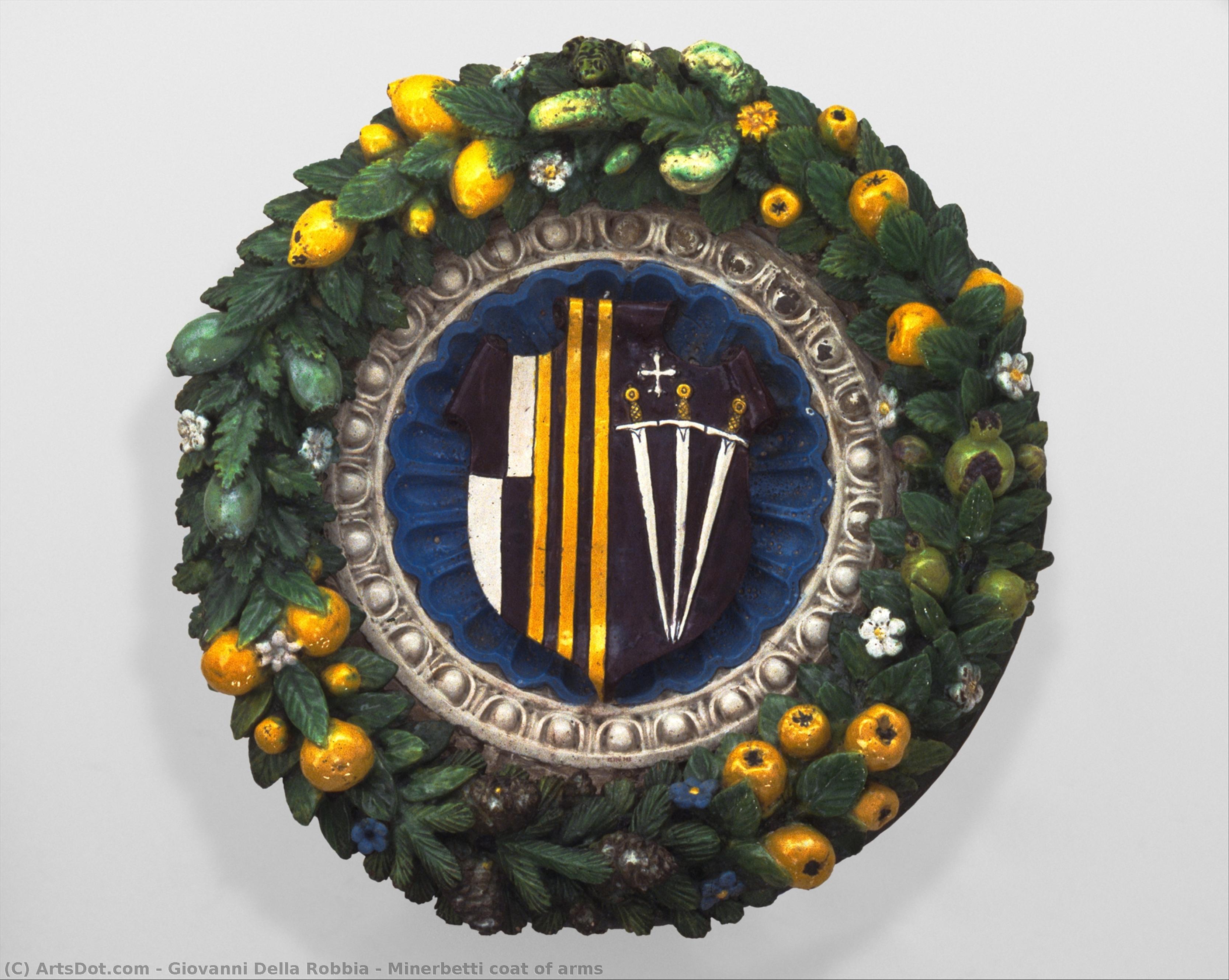
Minerbetti coat of arms
 Ceramics
- Sculpture
- Renaissance Sculpture
 1510
1510- Renaissance
 57.0 x 57.0 cm
 Metropolitan Museum of Art
 Read More
Purchase a high-resolution, enhanced digital image, far superior to the online preview.
Each file is meticulously prepared by our in-house specialists using advanced tools and expert manual retouching. We ensure every image has exceptional clarity, precise color accuracy, and fine detail.
The final file is delivered via email within 72 hours, optimized for immediate use in professional, editorial, and print environments. This is the same quality trusted by top-tier design studios, publishers, and galleries.
Digital Image
Download a high-resolution file for personal display, printing, and creative projects. ( Buy Print Buy Hand Made Painting)
Included in Every Digital Image Order
Expert Digital Delivery, Guaranteed
When you choose ArtsDot.com, you're not just getting an image - you're receiving a professionally enhanced digital artwork, crafted with precision and backed by a satisfaction guarantee. Here's everything that comes with your order, automatically:

Fast Email Delivery
Your high-resolution digital image file will be emailed to you within 72 hours of ordering - ready for immediate use.

AI-Enhanced Digital File
Your artwork is professionally optimized using advanced AI tools and manual editing, ensuring maximum detail, clarity, and color accuracy.

Free Lifetime Re-Delivery
Accidentally deleted or lost your file? No worries - we'll resend it to you anytime, free of charge.

No Import Fees - Ever
Enjoy your artwork instantly with zero customs, duties, or delivery fees - digital downloads are always tax-free.

Color Accuracy Guarantee
We ensure your digital image reflects the original colors as closely as possible using professional tools and color management.

60-Day Satisfaction Guarantee
If you're not satisfied with your digital image, we'll revise it or refund 100% within 60 days - no questions asked.

100% Money-Back Guarantee
Not satisfied? Get a full refund within 60 days of receiving your digital file - no questions asked.

Bulk Order Discounts
Buy 3 images, save 10% - Buy 5, save 15% - Buy 10+, save 20%. Great for creative projects, galleries, and agencies.
Collectible Description
The Luminous Echoes of Florentine Craftsmanship
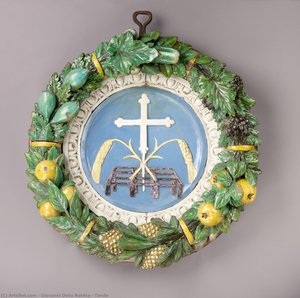
To gaze upon Giovanni della Robbia's "Minerbetti coat of arms" is to step directly into the radiant heart of the Italian Renaissance. This exquisite piece, dating back to 1510, transcends mere decorative art; it is a tangible testament to devotion, lineage, and unparalleled artistic mastery. The work immediately captivates with its delicate yet commanding presence, rendered in the warm, earthy tones characteristic of terracotta. It speaks softly of Florentine workshops, where artistry was often intertwined with deep personal or familial significance.
A Study in Symbolic Elegance
At the very core of the composition lies the Minerbetti coat of arms, a heraldic emblem framed by an opulent wreath. This naturalistic border, meticulously crafted from representations of yellow flowers and verdant green leaves, speaks to themes of enduring life and honor. The central focus, however, is the pair of crossed swords. In art history, crossed swords are potent symbols, often signifying military valor, defense of ideals, or a noble commitment to justice. Surrounded by the gentle embrace of the floral wreath, these martial symbols achieve a remarkable balance—a perfect marriage between earthly duty and natural beauty.
The Alchemical Touch of Terracotta
What elevates this piece beyond simple sculpture is the breathtaking technique employed by Giovanni della Robbia himself. He was not merely a craftsman; he was an alchemist who coaxed divine luminosity from humble terracotta clay. The signature polychrome glaze, which gives the work its characteristic enamel-like sheen, allows light to interact with the surface in a way that seems almost magical. This material choice grounds the piece in history while simultaneously giving it an ethereal glow, making it ideal for adding depth and storied elegance to any interior space.
Historical Resonance and Enduring Appeal
Created during the height of Renaissance cultural flourishing, this artwork connects us directly to a period of profound artistic rebirth. Displayed originally at the Metropolitan Museum of Art, its provenance speaks volumes about its importance in art history. For the modern collector or designer, acquiring a reproduction of this piece is not just decorating; it is curating a piece of enduring narrative. It brings with it the weight of Florentine tradition and the quiet dignity of noble heritage, offering an immediate focal point that whispers tales of 16th-century grandeur.
Related Artworks
Artist Biography
The Luminous Legacy of Giovanni della Robbia
To stand before the works of Giovanni della Robbia is to encounter a breathtaking confluence of artistry and devotion. He was more than just a ceramicist; he was a master alchemist who transformed humble terracotta into objects imbued with divine light. Born in Florence in 1469, Giovanni emerged from a lineage steeped in artistic tradition, the son of Andrea della Robbia, whose own genius had already set the standard for Florentine decorative arts. Growing up within this vibrant crucible of creativity, he absorbed the techniques and the spirit of his forebears, particularly his uncle, Luca della Robbia.
His early career was one of apprenticeship, a gradual immersion into the demanding craft of the workshop. It was here that Giovanni honed his unparalleled skill in developing the polychrome glaze—a signature characteristic that would define his contribution to Renaissance art. This technique allowed him to achieve vibrant, almost enamel-like colors on durable terracotta, giving his religious narratives an unprecedented luminosity.
Mastery of Material and Form
Giovanni’s genius lay not just in the pigments he applied, but in how he commanded the very material itself. The combination of glazed earthenware and sculpted form allowed him to create pieces that were both structurally monumental and delicately lifelike. While his father and uncle established the foundation, Giovanni elevated the polychrome character of the glaze works to new heights. Indeed, so many exquisite pieces bearing the Robbia name today are in fact testaments to his own hand, a testament perhaps to his sheer technical brilliance.
His dedication was such that he often signed his work, adding a date—a subtle but significant act of authorship, possibly spurred by the growing imitation of the celebrated Robbia style. This signature marks him as an artist keenly aware of his own place in history, even amidst the echoes of masters before him.
Iconography and Grand Statements
The subject matter that preoccupied Giovanni was overwhelmingly sacred. His works served to illuminate Christian narratives for the faithful, transforming architectural spaces into visual sermons. Among his most breathtaking achievements is the large retable at the church of San Girolamo in Volterra, dated 1501. This depiction of the Last Judgment remains a profound study in human drama and divine power. One cannot help but be captivated by the fine modeling of the figures, particularly the dynamic portrayal of the Archangel Michael or the serene, nude youth rising from his tomb.
Equally remarkable is the washing fountain commissioned for the sacristy of Santa Maria Novella in Florence (1497). This piece transcends mere utility; it is a vision. The back wall, painted on maiolica tiles to resemble a view of the seashore, transports the viewer beyond the church walls. It is an illusionistic masterpiece, complemented by panels depicting fruit trees and crowned with a white relief of the Madonna flanked by adoring angels.
Historical Significance in Renaissance Art
Giovanni della Robbia’s contribution cannot be overstated when considering the trajectory of Italian decorative arts. He bridged the gap between monumental sculpture and portable, richly colored decoration. His ability to make religious narratives feel immediate, vibrant, and accessible through glazed terracotta made his work profoundly influential. He provided a visual language for piety that was both sophisticated in its technique and deeply emotional in its appeal.
His legacy endures not only in the surviving masterpieces housed in Florentine basilicas but also in the very understanding of how ceramic art could achieve the grandeur previously reserved for marble or fresco. He remains a luminous figure, forever linking the earthy beauty of fired clay with the transcendent glow of divine inspiration.

giovanni della robbia
1469 - 1529 , Italy
Quick Facts
- Artistic Movement Or Style: Renaissance ceramics
- Artists Who Influenced This Artist: ['Andrea della Robbia']
- Date Of Birth: 1469
- Date Of Death: 1529
- Full Name: Giovanni della Robbia
- Nationality: Italian
- Notable Artworks:
- Last Judgment retable
- Washings fountain
- Place Of Birth: Florence, Italy

