 Preview
 Send
Send Share
Share
 Details

 Download
 Similars
 X-Ray
X-Ray Diaporama
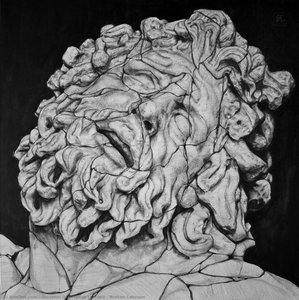
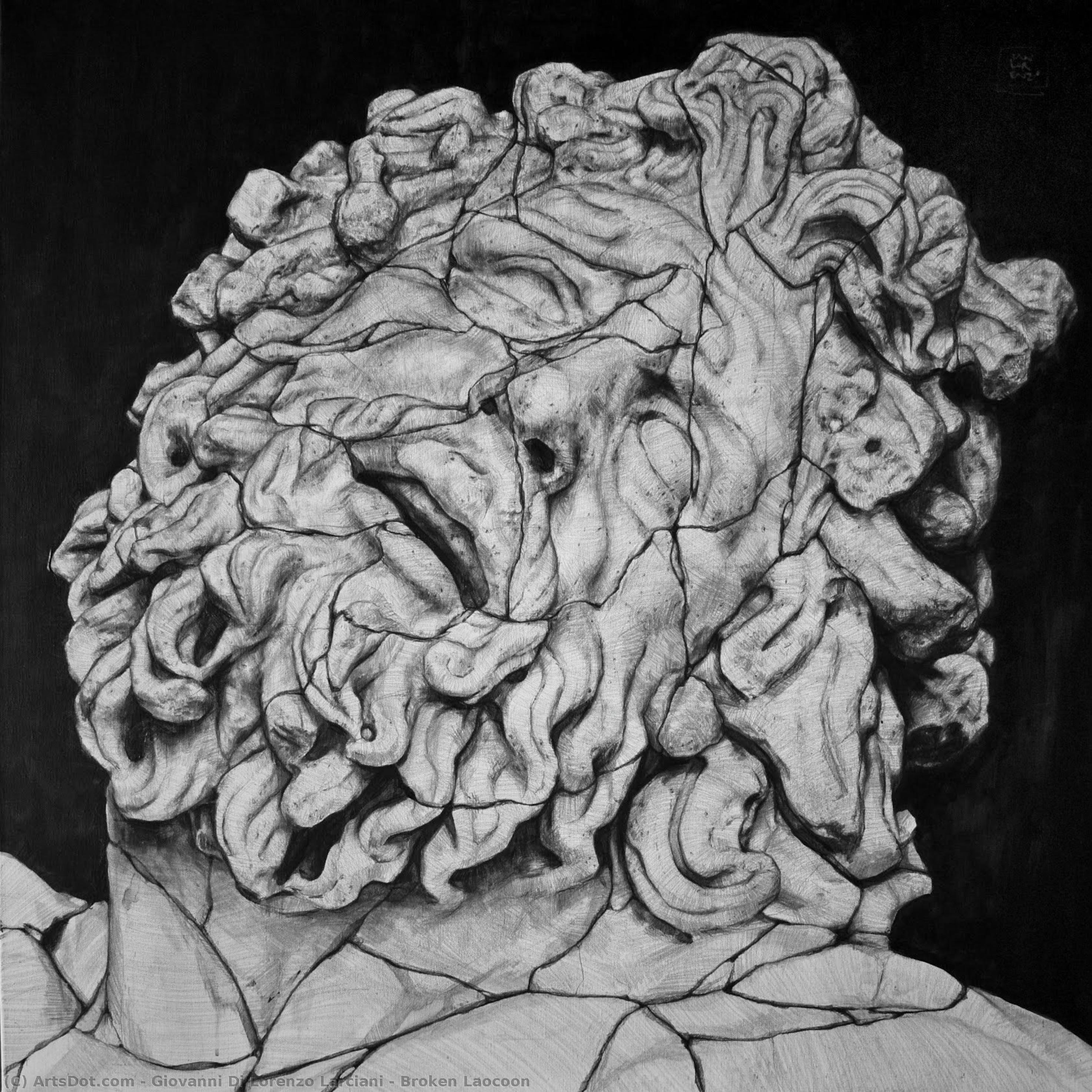
Broken Laocoon


 Read More
Hand Made Oil Reproduction
Hand-painted oil on canvas in your size and frame, made to order by our artists. ( Buy Print Buy Image)




































Pick from our preset sizes that match the artwork's original proportions.

You may enter your own dimensions to fit a specific frame or space. If your selected size does not match the original image's proportions, we will either crop the artwork or extend the painting with additional hand-painted elements. A digital mockup will be sent for your approval before production begins.
Please note that the on-screen preview does not reflect the actual cropping or extension. Only the mockup will accurately show the final composition.
While custom sizes are available, we recommend selecting a dimension from the predefined list to preserve the original proportions.
After order, ArtsDot.com team will email client for instructions and provide a mockup preview
Worldwide Delivery () in 3/4 weeks instead of standard 5 weeks. (4 September). No compromise on quality.

Free Worldwide Express Shipping

High-Quality Linen Canvas

Full Shipping Insurance

Customs Tax Refund Guarantee

True Color Matching Guarantee

60-Day Return Policy (Defects Only)

100% Money-Back Guarantee

Bulk Discount Offer
 Glass option is only available in size under 110 CM

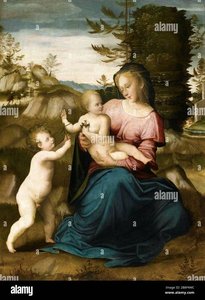
Broken Laocoon
Reproduction Medium
Reproduction Size
-


Total Price
$ 263
Related Artworks







Artist Biography
The Enigmatic Visionary of the Florentine Shadows
Giovanni di Lorenzo Larciani, a name whispered through the corridors of art history with both reverence and mystery, remains one of the most captivating enigmas of the Italian Renaissance. Born in Florence around 1484, Larciani emerged during a period of unparalleled creative explosion, yet his work possesses a singular, haunting quality that distinguishes him from the more celebrated luminaries of his era. Often referred to by scholars as il Maestro dei paesaggi kress, he carved out a niche that transcended the mere depiction of scenery, instead utilizing the landscape as a vessel for profound psychological exploration and existential reflection. His life, which came to a tragic end in 1527, was marked by an artistic pursuit of the ephemeral, capturing the delicate boundary between the tangible world and the realm of dreams.
The formative years of Larciani are shrouded in the characteristic obscurity of the late Quattrocento, yet his stylistic DNA reveals a deep connection to the masters of his time. It is widely believed by historians that he refined his technique under the guidance of Maestro Francesco Mazzola, a painter celebrated for his mastery of tonalism and atmospheric depth. From this lineage, Larciani inherited an extraordinary ability to manipulate light and shadow, moving beyond simple realism to achieve a sense of sfumato that felt almost supernatural. His early development was characterized by an obsession with the textures of the natural world—the way light clings to moss, the heavy weight of a darkening sky, and the unsettling stillness of a forest at dusk.
A Mastery of Texture and Melancholy
Larciani’s oeuvre is defined by a unique tension between meticulous detail and dreamlike abstraction. His approach to painting was never merely about the observation of nature, but rather an attempt to capture the anima—the soul—of the landscape. This is most strikingly evident in his celebrated series of works that explore the interplay of darkness and tactile surfaces. In masterpieces such as Velvet nº 5, currently preserved in the Museo Civico Palazzo Buonarroti, the artist demonstrates a breathtaking command over texture. The way he renders deep, light-absorbing blacks creates a sense of infinite space, inviting the viewer to lose themselves in a velvet void that feels both luxurious and claustrophobic.
His technical repertoire allowed him to explore themes of fragility and decay with unparalleled sensitivity. In works like Brittle, Larciani employs a Renaissance-style precision to depict the slow erosion of beauty, using subtle gradations of color to evoke a sense of memento mori. This preoccupation with mortality and the fleeting nature of existence lends his landscapes an unsettling psychological depth, prefiguring the emotional intensity found in much later movements such as Surrealism. To gaze upon a Larciani landscape is to encounter a world that is simultaneously familiar and alien, where every shadow holds a secret and every horizon suggests a departure from reality.
Legacy and Historical Resonance
Though his career was cut short by the turbulent events of 1527, the impact of Giovanni di Lorenzo Larciani continues to resonate within the study of Renaissance art. He stands as a pivotal figure who bridged the gap between the structured naturalism of the early Renaissance and a more subjective, emotive form of expression. His ability to infuse the landscape with human emotion—transforming a simple vista into a complex narrative of solitude and introspection—marks him as a pioneer of the psychological landscape.
The enduring fascination with his work lies in its refusal to be easily categorized. He remains an artist of the threshold, existing between light and dark, reality and illusion. His contributions to the Florentine tradition are not found in grand, sweeping historical narratives, but in the quiet, profound moments captured on canvas:
- The mastery of atmospheric perspective, which allowed him to create depth through tonal subtlety rather than mere line.
- The innovation of texture, particularly his use of deep pigments to simulate the tactile sensation of velvet and stone.
- The introduction of psychological symbolism into landscape painting, using the natural world to mirror the complexities of the human psyche.
giovanni di lorenzo larciani
1484 - 1527 , Italy
Quick Facts
- Artistic Movement Or Style: Kress Landscapes
- Date Of Birth: Florence, Italy (1484)
- Date Of Death: 1527
- Full Name: Giovanni di Lorenzo Larciani
- Nationality: Italian
- Notable Artworks:
- Velvet nº 5
- Broken Laocoon
- Place Of Birth: Florence