

 Preview
 Send
Send Share
Share
 Details

 Download
 Similars
 X-Ray
X-Ray Diaporama
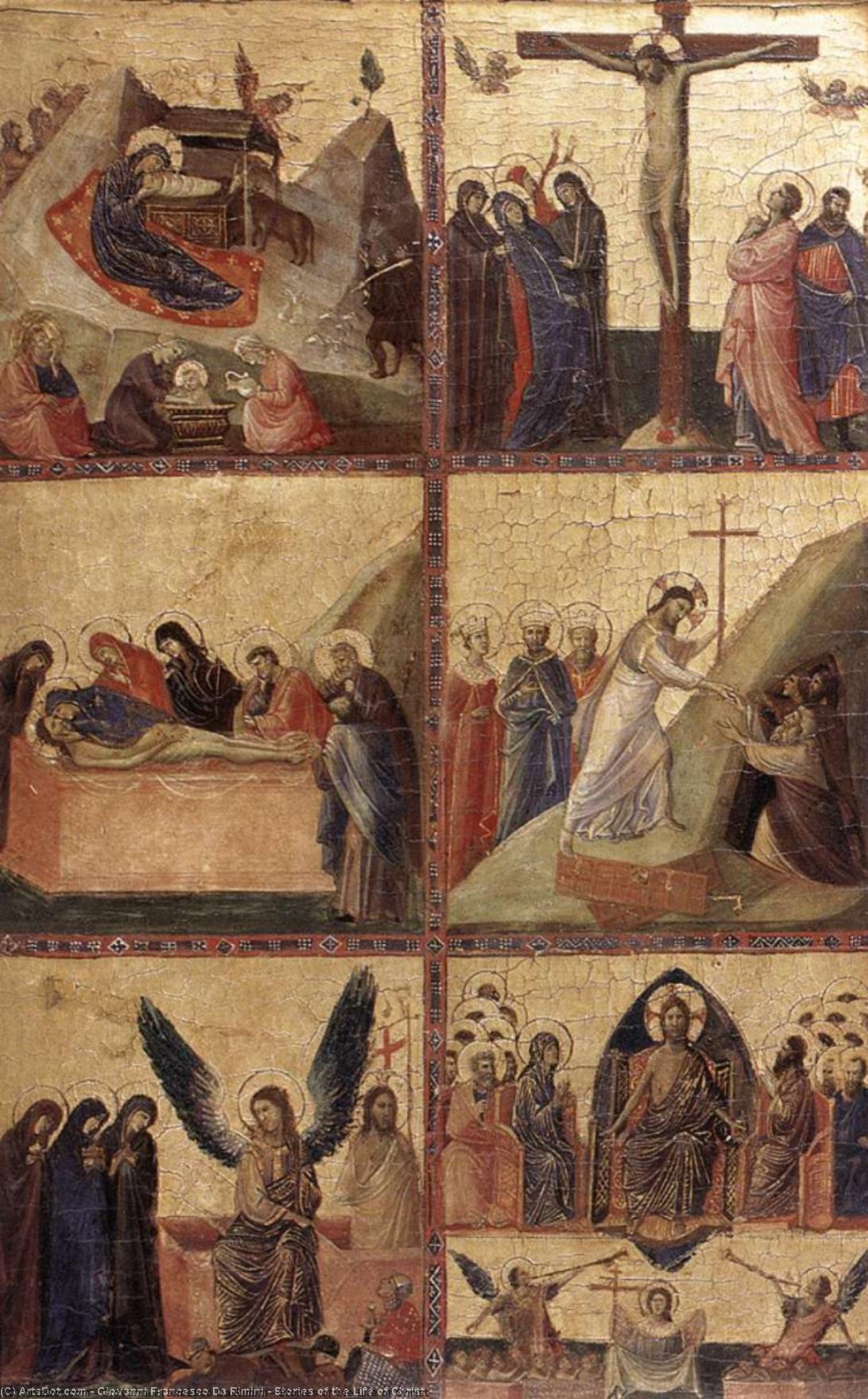
Stories of the Life of Christ


 Read More
Purchase a high-resolution, enhanced digital image, far superior to the online preview.
Each file is meticulously prepared by our in-house specialists using advanced tools and expert manual retouching. We ensure every image has exceptional clarity, precise color accuracy, and fine detail.
The final file is delivered via email within 72 hours, optimized for immediate use in professional, editorial, and print environments. This is the same quality trusted by top-tier design studios, publishers, and galleries.
Digital Image
Download a high-resolution file for personal display, printing, and creative projects. ( Buy Print Buy Hand Made Painting)
Included in Every Digital Image Order
Expert Digital Delivery, Guaranteed
When you choose ArtsDot.com, you're not just getting an image - you're receiving a professionally enhanced digital artwork, crafted with precision and backed by a satisfaction guarantee. Here's everything that comes with your order, automatically:

Fast Email Delivery
Your high-resolution digital image file will be emailed to you within 72 hours of ordering - ready for immediate use.

AI-Enhanced Digital File
Your artwork is professionally optimized using advanced AI tools and manual editing, ensuring maximum detail, clarity, and color accuracy.

Free Lifetime Re-Delivery
Accidentally deleted or lost your file? No worries - we'll resend it to you anytime, free of charge.

No Import Fees - Ever
Enjoy your artwork instantly with zero customs, duties, or delivery fees - digital downloads are always tax-free.

Color Accuracy Guarantee
We ensure your digital image reflects the original colors as closely as possible using professional tools and color management.

60-Day Satisfaction Guarantee
If you're not satisfied with your digital image, we'll revise it or refund 100% within 60 days - no questions asked.

100% Money-Back Guarantee
Not satisfied? Get a full refund within 60 days of receiving your digital file - no questions asked.

Bulk Order Discounts
Buy 3 images, save 10% - Buy 5, save 15% - Buy 10+, save 20%. Great for creative projects, galleries, and agencies.
A Divine Tapestry of Faith: The Life of Christ
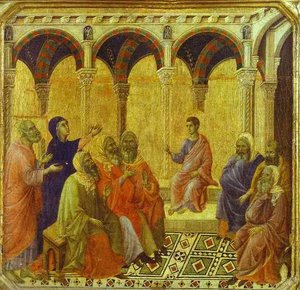
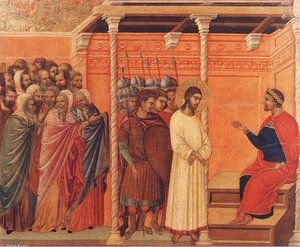
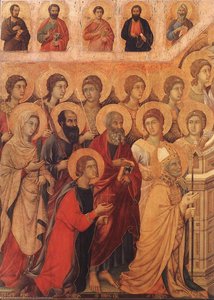
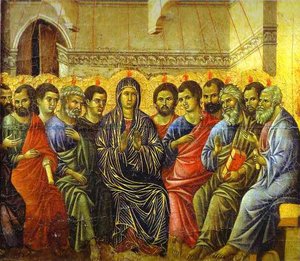
In the quiet, hallowed halls of the Galleria Nazionale d'Arte Antica in Rome, there exists a window into a bygone era of devotion, a masterpiece that breathes life into the sacred chronicles of the New Testament. "Stories of the Life of Christ", painted by the skilled hand of Giovanni Francesco da Rimini around 1305, is not merely a painting but a visual pilgrimage. This exquisite tempera on wood panel serves as a narrative mosaic, weaving together the most profound moments of the Christian journey—from the tender intimacy of Christ’s infancy to the solemn gravity of his ultimate sacrifice. Each scene is meticulously composed, inviting the viewer to move through time and emotion, witnessing the growth of a Savior through a series of interconnected vignettes that pulse with spiritual vitality.
The artistry of Giovanni Francesco da Rimini shines through in the delicate execution of the tempera technique. The artist utilizes the medium's characteristic precision to render fine details that captivate the eye: the soft, maternal warmth in the scene where Mary cradles her newborn; the innocent curiosity of the young Christ; and the profound, heavy stillness of his adult years. Through subtle gradations of color and light, the artist breathes movement into the figures, creating a sense of presence that transcends the flat surface of the wood panel. The inclusion of celestial angels, humble onlookers, and even the quiet presence of animals adds a layer of earthly realism to the divine drama, grounding the miraculous in a world that feels both ancient and intimately familiar.
For the discerning collector or the interior designer seeking to infuse a space with historical depth and contemplative grace, this work offers an unparalleled emotional resonance. The painting functions as a meditation on the cycle of life, resilience, and eternal hope. Its small, intimate scale—measuring 53 x 35 cm—makes it an ideal centerpiece for a private study, a library, or a curated gallery wall where light can play across its storied surfaces. Owning a high-quality reproduction of such a piece is more than an aesthetic choice; it is an invitation to surround oneself with the enduring beauty of the Italian Renaissance and the timeless power of sacred storytelling.
Beyond its technical mastery, the symbolic language embedded within these scenes speaks to the universal human experience. The transition from the vulnerability of childhood to the strength of adulthood mirrors our own journeys of growth and discovery. To display this artwork is to celebrate the intersection of history, art, and spirit, providing a focal point that inspires awe and invites quiet reflection in any sophisticated setting.
Related Artworks
Artist Biography
A Life Emerging from the Shadows: Giovanni Francesco da Rimini
Giovanni Francesco da Rimini, a name that resonates softly within the annals of Renaissance painting, represents a fascinating case study in artistic attribution and rediscovery. Born around 1420 in the vibrant city of Rimini, nestled along the Adriatic coast of Italy, he initially existed as little more than a stylistic label – “The Master of the Scenes from the Life of the Virgin” – until diligent scholarship began to piece together his biography through fragmented archival records and compelling artistic evidence. His story is not one of meteoric rise or groundbreaking innovation, but rather a testament to consistent skill, devout artistry, and a subtle yet significant contribution to the religious painting of his time.Early Training and Artistic Wanderings
The details of Giovanni Francesco’s early training remain elusive, shrouded in the typical obscurity that often surrounds artists predating widespread biographical documentation. It is believed he began his artistic journey within the local workshops of Rimini, absorbing the prevailing northern Italian traditions characterized by a blend of lingering Gothic sensibilities and the nascent stirrings of Renaissance naturalism. By 1441, documents place him in Padua, a crucial center for artistic exchange under the influence of Francesco Squarcione, whose workshop fostered a revivalist interest in classical antiquity. This period likely exposed Giovanni Francesco to a broader range of influences, shaping his developing style and technical approach. His movements continued, with repeated appearances in Bologna between 1459 and 1469, where he undertook numerous commissions for church altarpieces and devotional panels. These travels weren’t merely geographical shifts; they were immersions into diverse artistic climates, each leaving an imprint on his evolving oeuvre.A Style of Quiet Devotion
Giovanni Francesco da Rimini's paintings are immediately recognizable by their distinctive character – a quiet devotion that permeates every brushstroke. He primarily worked in egg tempera on wood panels, favoring intimate compositions centered around the Virgin and Child. His figures possess a gentle grace, with fair complexions, large expressive eyes, and an overall sense of serene piety. While contemporaries were experimenting with dramatic perspective and anatomical precision, Giovanni Francesco remained largely faithful to established conventions. This isn’t to suggest a lack of skill; rather, his mastery lay in refining existing traditions, imbuing them with a delicate emotionality and meticulous attention to detail. His use of gold leaf adds a luminous quality to his works, enhancing the spiritual atmosphere and emphasizing the sacred nature of his subjects. The architectural settings within his paintings – often featuring classical arches and columns – provide a dignified backdrop for these tender scenes, evoking a sense of timeless reverence.Influences and Artistic Connections
Pinpointing specific influences on Giovanni Francesco’s work is a complex undertaking. While the impact of Squarcione's workshop in Padua is evident, particularly in his early works, he also demonstrates an awareness of other regional styles. Some scholars have noted connections to Bonfigli, whose influence can be seen in certain aspects of his composition and color palette. More intriguingly, the sculptures of Agostino di Duccio appear to have informed his depictions of depth and form, suggesting a broader engagement with contemporary sculptural practices. However, Giovanni Francesco never fully embraced the radical innovations of artists like Mantegna or Piero della Francesca. His style occupies a unique position – a bridge between the Gothic past and the burgeoning Renaissance, characterized by a conservative approach that prioritized religious piety over groundbreaking naturalism.Legacy and Historical Significance
Giovanni Francesco da Rimini died in Bologna around 1469, leaving behind a relatively small but remarkably consistent body of work. For centuries, his paintings were attributed to various anonymous masters, their authorship lost to the passage of time. It wasn’t until the early 20th century that Corrado Ricci began to systematically identify and attribute works to “Hovanes Franciscus da Rimino,” initiating a process of rediscovery that continues today. While he may not be a household name like Leonardo or Michelangelo, Giovanni Francesco's contribution to Renaissance art is significant. He represents the often-overlooked artists who sustained regional traditions, catering to the devotional needs of private patrons and contributing to the rich tapestry of Italian painting beyond the major artistic centers of Florence and Venice. His works offer a poignant glimpse into the spiritual life of the 15th century, reminding us that beauty and devotion can flourish even in the shadows of more celebrated masters. His paintings are not about revolution; they are about reverence.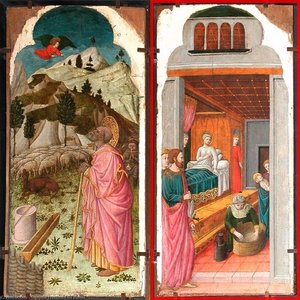
giovanni francesco da rimini
1425 - 1470 , Italy
Quick Facts
- Artistic Movement Or Style: Renaissance painting
- Artists Who Influenced This Artist:
- Agostino di Duccio
- Bonfigli
- Date Of Birth: 1425
- Date Of Death: 1470
- Full Name: Giovanni Francesco da Rimini
- Nationality: Italian
- Notable Artworks:
- Stories of the Life of Christ
- St Philip; St Paul
- Virgin and Child
- Place Of Birth: Rimini, Italy

