

 Preview
 Send
Send Share
Share
 Details

 Download
 Similars
 X-Ray
X-Ray Diaporama
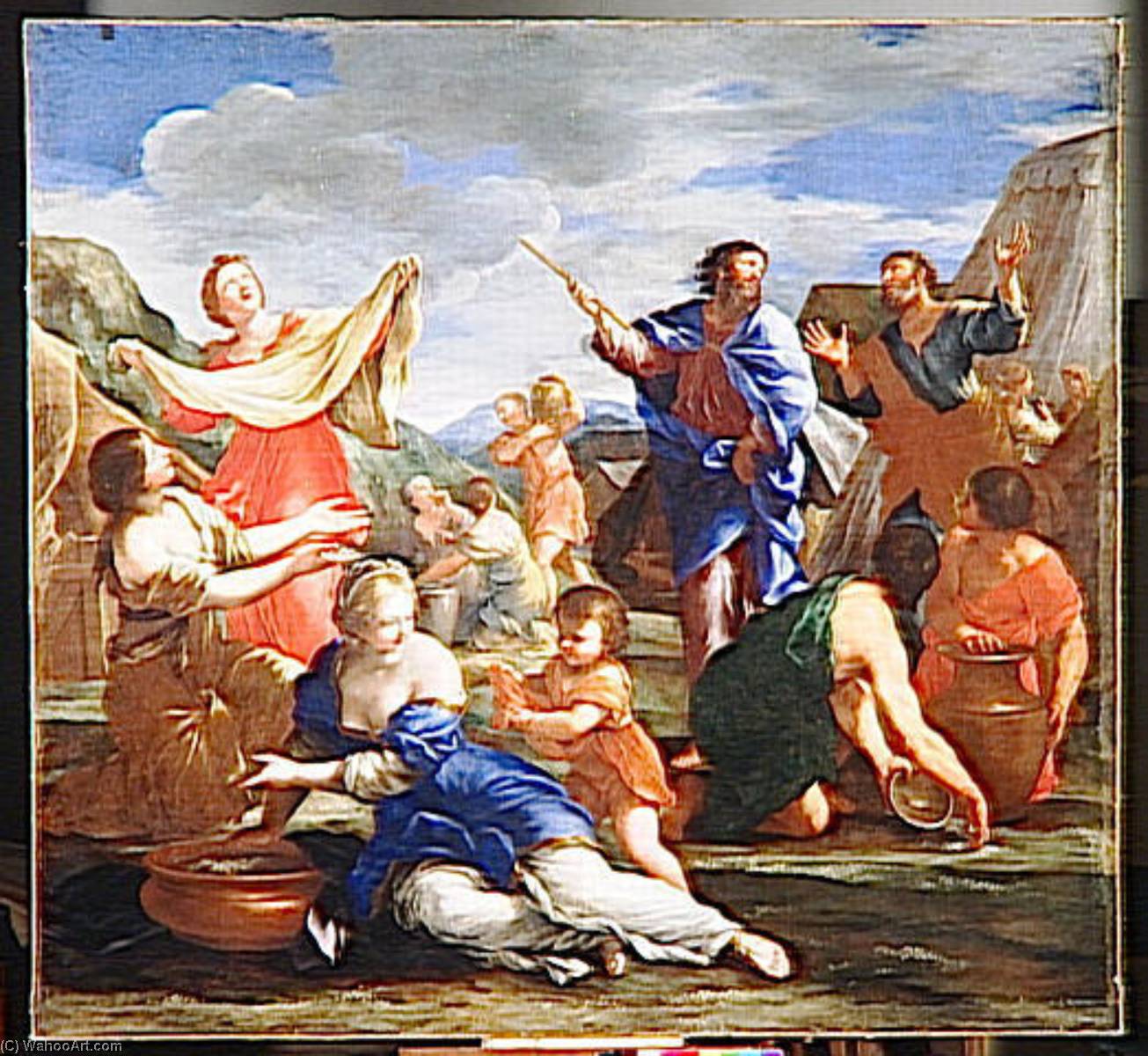
LES ISRAELITES RECUEILLANT LA MANNE


 Read More
Purchase a high-resolution, enhanced digital image, far superior to the online preview.
Each file is meticulously prepared by our in-house specialists using advanced tools and expert manual retouching. We ensure every image has exceptional clarity, precise color accuracy, and fine detail.
The final file is delivered via email within 72 hours, optimized for immediate use in professional, editorial, and print environments. This is the same quality trusted by top-tier design studios, publishers, and galleries.
Digital Image
Download a high-resolution file for personal display, printing, and creative projects. ( Buy Print Buy Hand Made Painting)
Included in Every Digital Image Order
Expert Digital Delivery, Guaranteed
When you choose ArtsDot.com, you're not just getting an image - you're receiving a professionally enhanced digital artwork, crafted with precision and backed by a satisfaction guarantee. Here's everything that comes with your order, automatically:

Fast Email Delivery
Your high-resolution digital image file will be emailed to you within 72 hours of ordering - ready for immediate use.

AI-Enhanced Digital File
Your artwork is professionally optimized using advanced AI tools and manual editing, ensuring maximum detail, clarity, and color accuracy.

Free Lifetime Re-Delivery
Accidentally deleted or lost your file? No worries - we'll resend it to you anytime, free of charge.

No Import Fees - Ever
Enjoy your artwork instantly with zero customs, duties, or delivery fees - digital downloads are always tax-free.

Color Accuracy Guarantee
We ensure your digital image reflects the original colors as closely as possible using professional tools and color management.

60-Day Satisfaction Guarantee
If you're not satisfied with your digital image, we'll revise it or refund 100% within 60 days - no questions asked.

100% Money-Back Guarantee
Not satisfied? Get a full refund within 60 days of receiving your digital file - no questions asked.

Bulk Order Discounts
Buy 3 images, save 10% - Buy 5, save 15% - Buy 10+, save 20%. Great for creative projects, galleries, and agencies.
A Divine Harvest: The Gathering of Manna
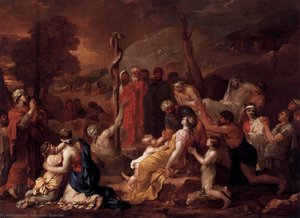
To stand before this depiction of "Les Israélites Recueillant la Manne" is to be transported across the vast, arid expanse of the Sinai wilderness. Giovanni Francesco Romanelli masterfully captures not merely a biblical event, but a moment suspended between divine miracle and human awe. The composition pulses with narrative energy; one can almost smell the dry earth mingling with the sweet scent of miraculous sustenance. Here, the grand sweep of Exodus comes alive through countless figures engaged in the humble yet profound act of gathering manna—the very bread provided by heaven. Romanelli’s handling of this crowded scene is breathtaking, guiding the viewer's eye from the central, authoritative figure gesturing towards the sky, down to the baskets overflowing with pale, ethereal flakes.
Baroque Drama and Luminous Technique
The stylistic hallmarks of the Baroque period shine through every brushstroke. Romanelli employs a dramatic dynamism that refuses stillness. The interplay between light and shadow is not just decorative; it is narrative. A divine luminescence seems to pour down from an unseen source, illuminating the central action while allowing deep, rich shadows to anchor the figures against the rocky cliffs. Observe the color palette: the warm ochres and earthy browns of the landscape provide a grounding contrast to the cooler blues and reds adorning the drapery of the Israelites. This careful juxtaposition, achieved through expert layering and glazing typical of oil painting on canvas, gives the entire scene an astonishing depth and palpable volume.
Symbolism Woven into the Desert Air
Beyond its immediate visual splendor, this artwork is rich with profound symbolism. The manna itself serves as a potent symbol of divine providence—a tangible reminder that sustenance, in times of greatest need, can arrive unexpectedly from grace. The staff held aloft by the leader speaks to authority and guidance, while the collective expressions on the faces of the multitude range from deep reverence to quiet wonder. It is a meditation on faith itself: the human capacity to look up, to acknowledge a power greater than oneself, and to receive what is necessary for survival.
Bringing Sacred Narrative Home
For the collector or designer seeking an object imbued with historical weight and emotional resonance, this reproduction offers more than mere decoration. It invites contemplation. The energy of Romanelli’s composition—the movement, the light, the sheer scale of human endeavor meeting divine gift—can transform any space. Imagine this scene anchoring a grand hall or lending spiritual depth to a private study. Owning a piece echoing this masterful blend of narrative intensity and technical brilliance allows one to connect with centuries of artistic devotion, bringing the drama of sacred history into the modern domestic sphere.
Related Artworks

Artist Biography
Michelangelo Merisi da Caravaggio: A Revolutionary of Light and Shadow
Michelangelo Merisi, more famously known as Caravaggio, remains one of the most intensely debated and profoundly influential figures in art history. Born in Milan in 1571, his life was a whirlwind of dramatic events – marked by both extraordinary artistic talent and a volatile temperament that ultimately led to exile and premature death in 1610. His brief but explosive career irrevocably altered the course of painting, establishing a new visual language characterized by intense realism, dramatic lighting, and an unprecedented engagement with contemporary life. Caravaggio’s legacy continues to resonate today, inspiring artists and captivating audiences alike.Early Years and Artistic Training
Caravaggio's early life remains somewhat shrouded in mystery. He was born into a family of modest means in Milan, the son of Rosso Merisi, a court painter for Vincenzo I Gonzaga, Duke of Marsica. This provided him with an initial introduction to the world of art, though he received no formal training. He spent his youth in various Italian cities – Cremona, Bologna, and Venice – honing his skills as a draughtsman and preparing himself for a career in painting. It was in 1592 that he moved to Rome, the vibrant heart of the artistic world, seeking opportunities and hoping to establish himself. Initially struggling to find commissions, he began by specializing in still lifes—scenes of fruits and flowers – a common practice at the time, selling his works on the streets to make ends meet. This early work, though modest, demonstrated an innate ability to capture the textures and colors of natural objects with remarkable accuracy.The Breakthrough: Dramatic Realism and Theatrical Lighting
Caravaggio’s breakthrough came in 1596 with a commission from Cardinal Francesco Maria del Monte, a prominent patron known for his discerning eye and support of emerging artists. Through the cardinal's connections, Caravaggio secured his first major public commissions – the *Calling of Saint Matthew* and *The Martyrdom of Saint Matthew*, paintings that would cement his reputation almost overnight. These works were revolutionary in their approach to religious painting. Rather than depicting saints as idealized figures removed from earthly concerns, Caravaggio presented them as ordinary people caught in dramatic moments. He employed a technique known as “tenebrism,” characterized by stark contrasts between light and shadow – plunging figures into darkness while highlighting key elements with intense illumination. This created a powerful sense of immediacy and drama, drawing the viewer directly into the scene. As Keith Christiansen notes in *Caravaggio (Michelangelo Merisi) (1571–1610) and His Followers*, Caravaggio “pushed the figures up against the picture plane and used light to enhance the dramatic impact and give the figures a quality of immediacy.”Controversy, Violence, and Exile
Caravaggio’s innovative style was not without its detractors. His depictions of ordinary people, often with unflattering features and dressed in contemporary clothing, challenged traditional artistic conventions. He was also known for his volatile temper and a penchant for brawling – incidents that included slashing the cloak of an adversary, throwing a plate of artichokes at a waiter, and engaging in violent altercations with police officers. In 1606, his life took a tragic turn when he became embroiled in a dispute with a young man, resulting in a fatal stabbing. Rather than face justice, Caravaggio fled Rome, seeking refuge in Naples, Malta, and Sicily. His travels were punctuated by further incidents of violence and legal troubles, culminating in his expulsion from Malta after another brawl.Later Years and Legacy
Despite his turbulent life, Caravaggio continued to paint throughout his exile, producing a series of works that demonstrate the evolution of his style. In Naples, he experimented with color and composition, while in Sicily, he focused on dramatic scenes of martyrdom and sacrifice. His final years were marked by a severe disfigurement resulting from a bar fight – an injury that ultimately contributed to his declining health. Caravaggio died in Porto Ercole, Italy, in 1610 at the age of 39. Despite his short life, Caravaggio’s impact on art was immense. His innovations in lighting, composition, and subject matter profoundly influenced generations of painters who followed, including Rembrandt, Velázquez, and Gentileschi. His use of tenebrism continues to be studied and emulated today, and his paintings remain among the most celebrated and emotionally resonant works in Western art history. As The National Gallery notes, “Caravaggio’s paintings were controversial, popular, and hugely influential on succeeding generations of painters all over Europe.” His legacy endures as a testament to the power of artistic vision and the enduring fascination with the dramatic interplay between light and shadow.
giovanni francesco romanelli
1610 - 1662 , Italy
Quick Facts
- Artistic Movement Or Style: Caravaggism
- Artists Or Movements Influenced By This Artist: ['Baroque']
- Artists Who Influenced This Artist:
- Leonardo da Vinci
- Michelangelo
- Date Of Birth: 1571
- Date Of Death: 1610
- Full Name: Michelangelo Merisi da Caravaggio
- Nationality: Italian
- Notable Artworks:
- The Calling of Saint Matthew
- Supper at Emmaus
- David and Goliath
- Death of the Virgin
- Place Of Birth: Milan, Lombardy

