 Preview
 Send
Send Share
Share
 Details

 Download
 Similars
 X-Ray
X-Ray Diaporama
Preaching of St John the Baptist


 Read More
Hand Made Oil Reproduction
Hand-painted oil on canvas in your size and frame, made to order by our artists. ( Buy Print Buy Image)




P118B $10

P118H $10

P118W $10

P438Z $10

P508JH $12

P508YH $12

P805H $10

P805Z $10

P919BZ $10

P919G $10

P919XJ $10

P959ZH $10

P968JZ $12

W106C $8

W218G $10

W218JH $8

W218Y $10

W307PJ $10

W316G $10

W316PJ $8

W316Y $10

W398PJ $8

W4111J $10

W500HY $15

W500JH $15

W692G $12

W849H $8

W940BG $15

W953PJ $8




Pick from our preset sizes that match the artwork's original proportions.

You may enter your own dimensions to fit a specific frame or space. If your selected size does not match the original image's proportions, we will either crop the artwork or extend the painting with additional hand-painted elements. A digital mockup will be sent for your approval before production begins.
Please note that the on-screen preview does not reflect the actual cropping or extension. Only the mockup will accurately show the final composition.
While custom sizes are available, we recommend selecting a dimension from the predefined list to preserve the original proportions.
After order, ArtsDot.com team will email client for instructions and provide a mockup preview
Worldwide Delivery () in 3/4 weeks instead of standard 5 weeks. (22 August). No compromise on quality.

Free Worldwide Express Shipping

High-Quality Linen Canvas

Full Shipping Insurance

Customs Tax Refund Guarantee

True Color Matching Guarantee

60-Day Return Policy (Defects Only)

100% Money-Back Guarantee

Bulk Discount Offer
 Glass option is only available in size under 110 CM

Preaching of St John the Baptist
Reproduction Medium
Reproduction Size
-


Total Price
$ 263
Artwork Description
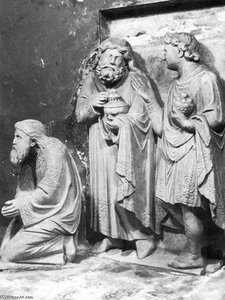
A Silent Witness to Faith: Giovanni Francesco Rustici’s Preaching of St John the Baptist
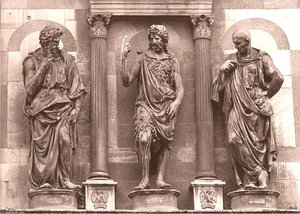
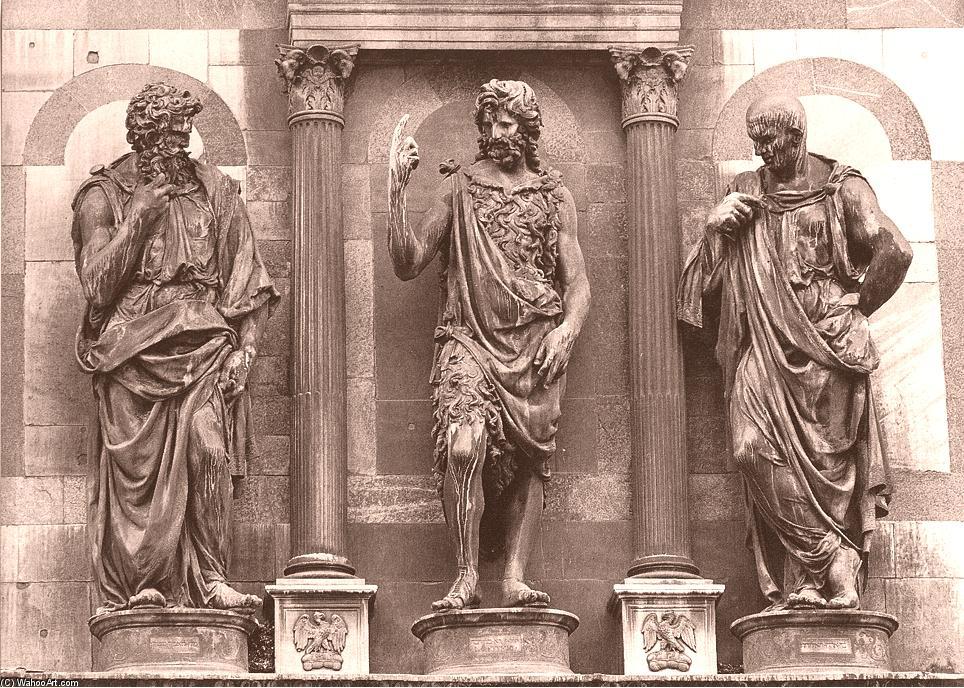
Giovanni Francesco Rustici's “Preaching of St John the Baptist,” executed in 1506, stands as a testament to the burgeoning humanist spirit and artistic fervor that characterized Renaissance Florence. Commissioned for the Baptistery façade – a monumental undertaking aimed at revitalizing civic pride – this sculpture represents more than just biblical narrative; it embodies the profound contemplation of faith and virtue central to the era’s intellectual landscape.
- Subject Matter: The artwork depicts three figures engaged in a dramatic tableau centered around St John the Baptist, commemorating his proclamation of repentance and baptism. This scene draws heavily from Gospel accounts detailing John's ministry prior to Jesus’s crucifixion, emphasizing themes of moral exhortation and spiritual preparation.
- Style & Technique: Rustici adheres to the classical tradition championed by Michelangelo Buonarroti – a stylistic lineage that prioritizes anatomical accuracy, idealized proportions, and serene composure. The sculpture utilizes marble as its medium, allowing for exceptional detail and textural richness. Rustici’s masterful carving demonstrates an understanding of contrapposto—a pose where the torso tilts slightly away from the spine—creating dynamic balance and conveying subtle movement despite the static form.
- Historical Context: Florence in 1506 was experiencing a period of unprecedented artistic innovation, fueled by papal patronage and driven by a renewed interest in Greco-Roman ideals. Rustici’s work reflects this cultural climate, aligning with the broader Renaissance preoccupation with human dignity and moral responsibility. The Baptistery itself served as a focal point for civic identity and religious devotion during the Reformation.
Symbolism: Beyond its narrative depiction of John the Baptist’s ministry, the sculpture carries symbolic weight. The central figure's outstretched hand signifies proclamation and divine authority—a gesture intended to inspire listeners with a call to repentance. The seated figures flanking him represent contemplation and humility, mirroring the virtues deemed essential for spiritual enlightenment. The architectural backdrop reinforces the sculpture’s solemn purpose, elevating it beyond mere representation into an emblem of faith and piety.
Emotional Impact: Rustici's “Preaching of St John the Baptist” transcends its formal elements to evoke a palpable sense of serenity and moral seriousness. The sculptor skillfully captures the contemplative gaze of each figure, inviting viewers to engage in introspection and consider the profound implications of spiritual conviction. Its enduring beauty lies not only in its technical prowess but also in its ability to communicate timeless themes of faith, repentance, and virtue—qualities that continue to resonate with audiences today.
Related Artworks
Artist Biography
Michelangelo Buonarroti: A Titan of the Renaissance
Michelangelo, born Michelangelo di Lodovico Buonarroti Simoni on March 6, 1475, in Caprese, Italy, remains one of the most iconic and profoundly influential figures in Western art history. His life spanned nearly nine decades, a period marked by unparalleled artistic achievement across sculpture, painting, architecture, and poetry. While often associated primarily with his monumental works for the Papal States, Michelangelo’s journey was shaped by a complex interplay of ambition, patronage, personal struggles, and an unwavering dedication to mastering the human form – a pursuit that defined his entire career. His legacy continues to inspire awe and debate centuries after his death on February 18, 1564, in Rome.Early Life and Training
The details of Michelangelo’s early life are surprisingly sparse, shrouded in the mists of historical record. Born into a family of Florentine bankers, he was not initially destined for a career in art. His father, Lodovico Buonarroti Simoni, hoped he would follow in his footsteps and become an accountant. However, at the age of 13, Michelangelo entered the workshop of Domenico Ghirlandaio, a prominent Florentine painter, where he began his apprenticeship. This experience provided him with foundational skills in fresco painting and drawing, but it was his innate talent and relentless drive that truly set him apart. Crucially, he also studied sculpture under Bertoldo di Giovanni, a sculptor working for the Medici court, exposing him to classical ideals and techniques. It’s believed he spent time in Rome as well, absorbing the influence of ancient Roman art and architecture – a formative period that would profoundly shape his artistic vision.Sculptural Masterpieces: Embodiment of Human Potential
Michelangelo's genius truly blossomed through sculpture. His early works, such as *Battle of the Centaurs* (1492-93), demonstrated a raw power and dynamism that hinted at his future greatness. However, it was *David* (1501-04) – commissioned for Florence Cathedral – that cemented his reputation as a sculptor of unparalleled skill. This colossal marble statue, depicting the biblical hero David before his battle with Goliath, is a testament to Michelangelo’s mastery of anatomy, proportion, and psychological intensity. The figure's muscularity, youthful energy, and contemplative gaze captured the essence of human potential and courage. Following the tumultuous events of the Florentine Republic, he was commissioned by Pope Julius II to create the *Pieta* (1498-99), a deeply moving marble sculpture depicting Mary cradling the body of Christ. The Pieta’s exquisite detail and emotional resonance are considered among the greatest achievements in Western art. Later, under the patronage of Pope Leo X, he undertook the monumental task of creating the *Statue of Moses* for St. Peter's Basilica, further showcasing his ability to convey profound emotion and spiritual depth through stone.Painting: Frescoes and Panels
While primarily celebrated as a sculptor, Michelangelo was also a gifted painter. His most significant painting commissions came from the Popes, beginning with the *Sistine Chapel Ceiling* (1508-1512). This vast fresco cycle, commissioned by Pope Julius II, is arguably his greatest artistic achievement. The ceiling depicts scenes from Genesis, including the Creation of Adam – an image instantly recognizable and endlessly reproduced – as well as episodes from the Flood and the Deluge. The sheer scale and complexity of the project, combined with Michelangelo’s innovative use of color and dynamic composition, were revolutionary for the time. He also painted *The Last Judgment* (1536-1541) on the altar wall of the Sistine Chapel, a dramatic and emotionally charged depiction of Christ's return. Beyond the Sistine Chapel, he created several panel paintings, including *Doni Tondo* (1504), which showcases his mastery of composition and color.Architectural Contributions and Legacy
Michelangelo’s influence extended beyond sculpture and painting into the realm of architecture. He served as architect for St. Peter's Basilica in Rome, contributing significantly to its design and overseeing many of its construction projects. His designs included the iconic dome, a marvel of engineering and artistic vision. He also designed the Laurentian Library in Florence, a complex and innovative structure that reflects his sculptural sensibilities. Michelangelo’s legacy is immense and multifaceted. He profoundly influenced generations of artists with his emphasis on anatomical accuracy, dramatic composition, and emotional intensity. His works continue to be studied and admired for their technical brilliance, expressive power, and enduring beauty. He remains a symbol of the Renaissance ideal – a man of boundless talent, unwavering ambition, and profound artistic vision.
giovanni francesco rustici
1474 - 1554 , Italy
Quick Facts
- Artistic Movement Or Style: High Renaissance
- Artists Or Movements Influenced By This Artist:
- Raphael
- Caravaggio
- Artists Who Influenced This Artist:
- Donatello
- Leonardo da Vinci
- Date Of Birth: March 6, 1475
- Date Of Death: February 18, 1564
- Full Name: Michelangelo di Lodovico Buonarroti Simoni
- Nationality: Italian
- Notable Artworks:
- Pietà
- David
- Giotto's Tomb
- Place Of Birth: Florence, Italy
Related Articles

Michelangelo's Masterpieces: Explore 25 Iconic Artworks for Your Home | ArtsDot
Journey through Michelangelo's 25 greatest artworks – from David’s strength to the Sistine Chapel’s beauty. Explore Renaissance masterpieces, art history & find museum-quality reproductions for your home at ArtsDot.com.

Bronze Sculptures That Defined Art History | ArtsDot
Journey through art history with our Top 10 bronze sculptures! Explore masterpieces by Rodin, Michelangelo & more. Discover stories behind iconic statues and find museum-quality reproductions for your home decor at ArtsDot.com.

Bronze Age to Modern Masters: 10 Sculptures That Redefined Art | ArtsDot
Journey through art history with 10 legendary bronze sculptures – from Michelangelo's David to Rodin’s Thinker. Explore the stories, techniques & timeless beauty of these masterpieces. Find museum-quality reproductions & elevate your home decor on ArtsDot.com.

The Enduring Form: Exploring Themes & Techniques in Sculpture Across Historical Periods
Explore the rich history of sculpture from ancient masterpieces to contemporary innovations. Discover key techniques, influential artists & investment potential for discerning art collectors.
The Enduring Form: Sculpture Across History, Technique & Emotional Resonance
Explore the rich history of sculpture with ArtsDot. Discover key techniques, influential artists & investment potential for discerning collectors. Expert insights into valuing and collecting timeless masterpieces.