 Preview
 Send
Send Share
Share
 Details

 Download
 Similars
 X-Ray
X-Ray Diaporama
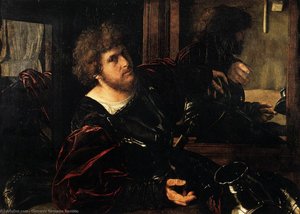
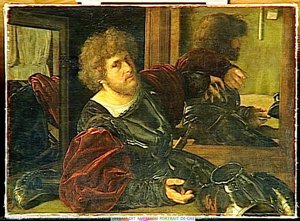
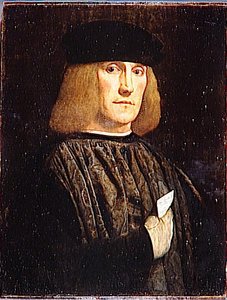
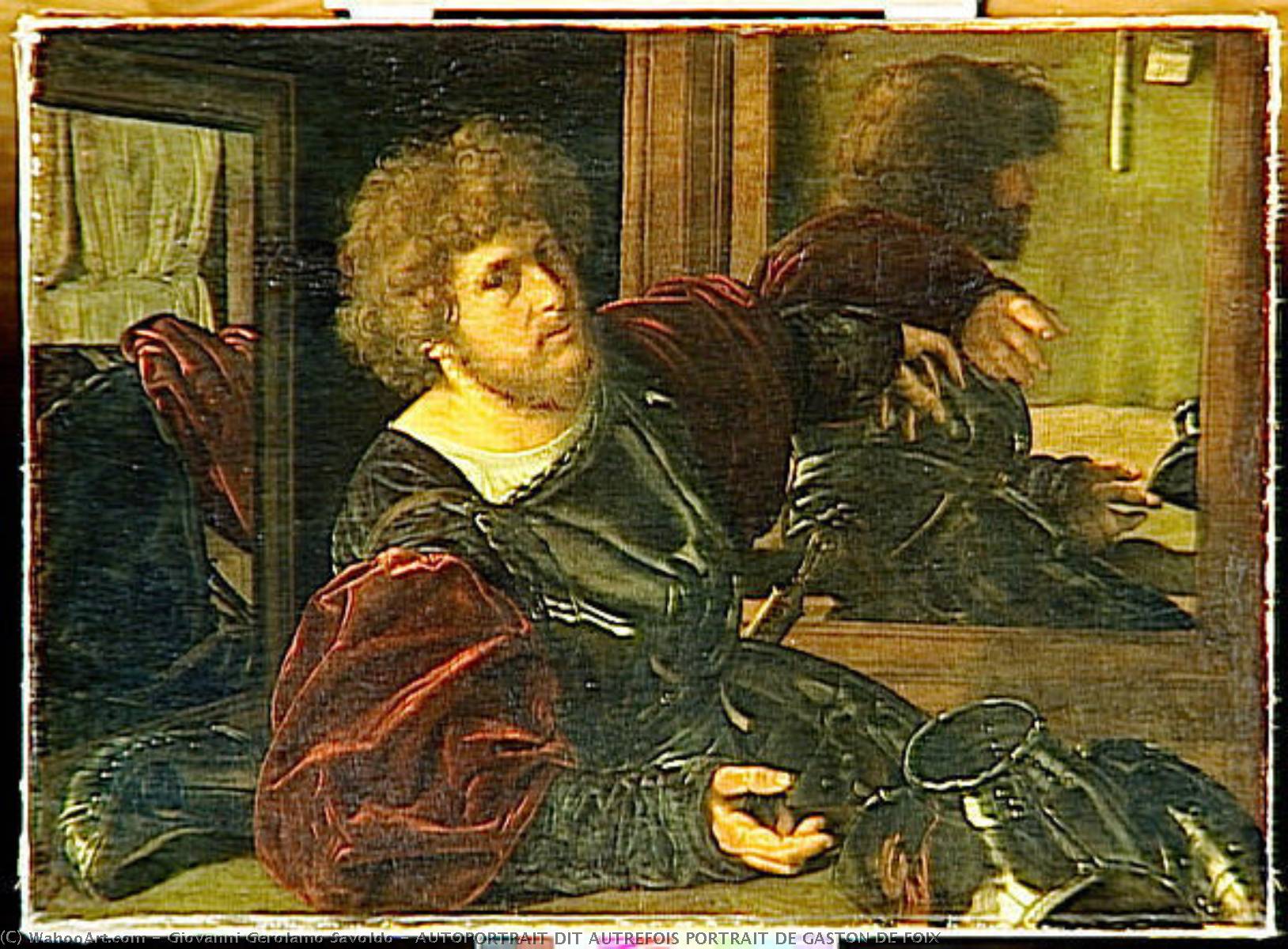
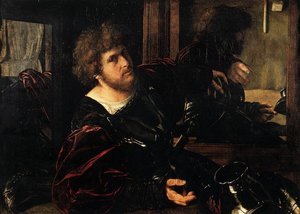
AUTOPORTRAIT DIT AUTREFOIS PORTRAIT DE GASTON DE FOIX


 Read More
Hand Made Oil Reproduction
Hand-painted oil on canvas in your size and frame, made to order by our artists. ( Buy Print Buy Image)




P118B $10

P118H $10

P118W $10

P438Z $10

P508JH $12

P508YH $12

P805H $10

P805Z $10

P919BZ $10

P919G $10

P919XJ $10

P959ZH $10

P968JZ $12

W106C $8

W218G $10

W218JH $8

W218Y $10

W307PJ $10

W316G $10

W316PJ $8

W316Y $10

W398PJ $8

W4111J $10

W500HY $15

W500JH $15

W692G $12

W849H $8

W940BG $15

W953PJ $8




Pick from our preset sizes that match the artwork's original proportions.

You may enter your own dimensions to fit a specific frame or space. If your selected size does not match the original image's proportions, we will either crop the artwork or extend the painting with additional hand-painted elements. A digital mockup will be sent for your approval before production begins.
Please note that the on-screen preview does not reflect the actual cropping or extension. Only the mockup will accurately show the final composition.
While custom sizes are available, we recommend selecting a dimension from the predefined list to preserve the original proportions.
After order, ArtsDot.com team will email client for instructions and provide a mockup preview
Worldwide Delivery () in 3/4 weeks instead of standard 5 weeks. (3 September). No compromise on quality.

Free Worldwide Express Shipping

High-Quality Linen Canvas

Full Shipping Insurance

Customs Tax Refund Guarantee

True Color Matching Guarantee

60-Day Return Policy (Defects Only)

100% Money-Back Guarantee

Bulk Discount Offer
 Glass option is only available in size under 110 CM

AUTOPORTRAIT DIT AUTREFOIS PORTRAIT DE GASTON DE FOIX
Reproduction Medium
Reproduction Size
-


Total Price
$ 288
Giovanni Girolamo Savoldo: A Master of Subtle Light and Lombard Modeling
Giovanni Girolamo Savoldo (c. 1480 – after 1548) stands as a pivotal figure in the Venetian Renaissance, recognized for his distinctive artistic style that blended Northern European influences with the expressive traditions of Lombard painting. Despite the scarcity of biographical details—scholars debate his precise birthplace and early training—Savoldo’s output constitutes approximately forty paintings, predominantly religious subjects imbued with remarkable realism and psychological depth. His legacy rests on a handful of drawings and continues to fascinate art historians who grapple with questions surrounding the dating of many works and the attribution of certain commissions. Early Life & Training: Savoldo’s origins remain shrouded in mystery, though he is generally believed to have been born in Brescia, Italy. Records indicate that he was known as Girolamo Bresciano, suggesting a familial connection to th ## The Artwork: Autoportrait, dit autrefois Portrait de Gaston de Foix The *Portrait of a Clad Warrior*, also known as *, is an oil on canvas painting by the Italian* Giovanni Girolamo Savoldo, dating to c. 1529 and housed in the Louvre Museum,* Paris. It’s a masterful example of Venetian Renaissance portraiture, characterized by its meticulous attention to detail and subtle manipulation of light—a technique that distinguishes Savoldo from many of his contemporaries. The painting depicts a man wearing military armor in a small room with two mirrors. In a narrow space, the figure leans against a shelf, while he also leans forward towards the viewer, settling along a deep diagonal, which ends with his outstretched left arm, indicating the reflected image. The presence of the triple image (front, back and side) certainly refers to a lost painting by Giorgione,* who had been created to demonstrate the superiority of painting in the lively debate on the “comparison of the arts”. Savoldo, like Giorgione, wanted to demonstrate that painting was also capable of representing multiple views of the same subject, in the same way as sculpture, and without having to go around it. The theme of light and reflections is also magnified by the metallic luster of the armor and the red velvet sleeves, which create those chromatic flashes between dense and dark shadow fields, typical of Savoldo’s production. The artist skillfully employs chiaroscuro—the dramatic contrast between light and shade—to sculpt the figure's form and convey a profound sense of introspection. This technique wasn’t merely decorative; it served to heighten emotional impact and imbue the portrait with psychological complexity. ## Composition & Technique: Lombard Modeling Meets Venetian Color Palette Savoldo’s compositional choices are equally noteworthy. The central placement of the man’s face—both in reality and within the mirror—immediately draws the viewer's eye, establishing a dialogue between self-representation and external perception. Framing the figure with the mirror adds depth to the scene and reinforces the idea of contemplation. Furthermore, Savoldo’s meticulous rendering of textures—the folds of clothing, the roughness of hair, and the smoothness of skin—demonstrates his mastery of Lombard modeling, a style that prioritizes realistic representation through careful layering of pigments to achieve tonal variations and subtle surface irregularities. This contrasts sharply with the brighter, more vibrant color palette favored by Venetian painters like Titian, creating a harmonious blend of artistic traditions. ## Historical Context & Symbolism: Echoes of Giorgione’s Lost Masterpiece The *Portrait of a Clad Warrior* emerged during a period of intense artistic rivalry—the “Paragone”—between Venetian and Florentine artists. Savoldo deliberately invoked the influence of Giorgione,* whose enigmatic masterpiece, *The Tempest*, had similarly explored the complexities of perception and representation. By adopting a similar compositional strategy and employing comparable techniques, Savoldo asserted painting’s ability to capture multiple viewpoints—a bold statement against sculpture's perceived limitations. The inclusion of the mirror serves as a potent symbol—representing self-reflection and perhaps the artist’s awareness of his own image and identity—further enriching the artwork’s narrative significance. ## Emotional Impact & Legacy: A Portrait That Speaks Volumes Ultimately, Savoldo’s *Portrait of a Clad Warrior* transcends mere visual representation; it communicates an enduring sense of solemn contemplation and psychological nuance. The subdued lighting and muted color palette contribute to an atmosphere of quiet dignity, inviting viewers to engage in a profound meditation on the human condition. Savoldo's work continues to inspire artists and collectors alike—a testament to his unparalleled skill and artistic vision—solidifying his place as one of the most influential figures of the Venetian Renaissance.Related Artworks


Artist Biography
The Luminous Legacy of Giovanni Girolamo Savoldo
In the golden age of the Italian Renaissance, few painters possessed the ability to capture the ephemeral dance of light as masterfully as Giovanni Girolamo Savoldo. A figure of profound technical skill and quiet emotional depth, Savoldo emerged from the Lombard traditions to become a vital voice within the Venetian school. While much of his early life remains shrouded in the mists of history, his artistic presence is undeniably felt through a body of work that breathes with a unique, atmospheric vitality. Born in Brescia around 1480, he carried with him the meticulous modeling and restrained palettes characteristic of his Lombard roots, yet his spirit was irrevocably transformed by the vibrant, coloristic innovations of Venice.
The evolution of Savoldo’s style is a journey through the shifting landscapes of 16th-century Italy. His early training, likely influenced by the monumental precision of Andrea Mantegna and the grace of Francesco Mazzola, provided him with a foundation of structural integrity. As he moved through Parma and eventually settled in Venice around 1515, his work began to exhibit a breathtaking synthesis of styles. He possessed a rare talent for blending the Northern European preoccupation with realistic detail and texture with the sweeping, lyrical light of the Venetian masters. This fusion allowed him to create scenes that were not merely depictions of religious or secular subjects, but immersive environments where shadow and illumination tell a story of their own.
Mastery of Light and Lombard Modeling
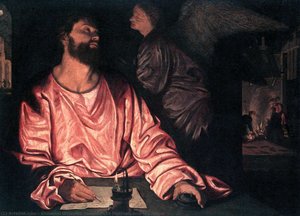
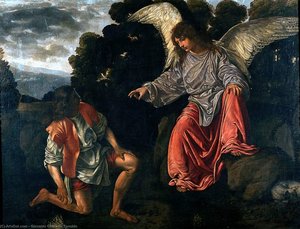
To gaze upon a Savoldo masterpiece is to witness the profound use of chiaroscuro. He did not merely use light to illuminate his subjects; he used it to sculpt them. His technique, often referred to as Lombard modeling, allowed him to imbue figures with a tangible, three-dimensional presence through subtle gradations of tone. In works such as "St Matthew and the Angel", one can sense the spiritual weight of the moment, conveyed through a luminous glow that seems to emanate from within the divine revelation itself. This ability to manipulate light created a sense of quiet lyricism, a hallmark of his mature period.
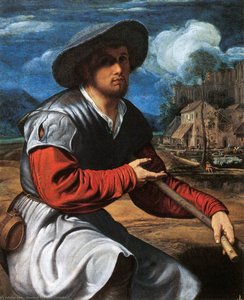
His versatility extended far beyond the sacred realm, reaching into the intimate world of portraiture and the pastoral charm of genre scenes. His portraits, such as the "Portrait of Bernardo di Salla" or the enigmatic "Portrait of a Man in Armour (known as Gaston de Foix)," demonstrate an uncanny ability to capture the psychological essence and dignity of his sitters. In these works, the play of light on metal, fabric, and skin showcases his technical virtuosity, while the soft, atmospheric backgrounds invite the viewer into a contemplative space. Even in more rustic subjects like "Shepherd with a Flute," Savoldo infuses the scene with a serene realism that elevates the humble subject to a level of poetic beauty.
Historical Significance and Artistic Enduring Spirit
Though his known output is relatively small—comprising approximately forty paintings—the impact of Giovanni Girolamo Savoldo on the trajectory of Renaissance art is significant. He acted as a bridge between the rigorous, sculptural traditions of the Lombardy region and the emotive, color-driven brilliance of Venice. His work serves as a testament to the era's capacity for profound innovation through the blending of diverse regional influences.
The rediscovery of his genius in the 19th century brought a renewed appreciation for his unique contribution to the High Renaissance. Today, art historians and enthusiasts alike continue to find solace and wonder in his ability to capture the fleeting moments of human experience. His legacy remains etched in the soft shadows and radiant highlights of his canvases, reminding us that true mastery lies in the ability to make the intangible—light, spirit, and emotion—visible to the eye.
giovanni gerolamo savoldo
1480 - 1548 , Italy
Quick Facts
- Artistic Movement Or Style: High Renaissance
- Artists Or Movements Influenced By This Artist: ['Hieronymus Bosch']
- Artists Who Influenced This Artist: ['Giorgione']
- Date Of Birth: c. 1480
- Date Of Death: after 1548
- Full Name: Giovanni Girolamo Savoldo
- Nationality: Italian
- Notable Artworks:
- Saint Matthew and the Angel
- The Madonna and Saints
- Mary Magdalene
- Place Of Birth: Brescia, Italy
Related Articles

The Enduring Legacy of Oil on Canvas: Technique, History & Aesthetic Impact
Explore the rich history & techniques of oil painting – from Renaissance masters to Impressionism. Discover pigments, layering methods, and why this timeless medium endures. Expert insights for artists & art enthusiasts.
Oil on Canvas Masters: 10 Paintings That Redefined Art History |
Journey through art history with our guide to 10 legendary oil on canvas masterpieces! Explore iconic works by Van Gogh, Monet & Rembrandt. Find museum-quality reproductions and elevate your home decor at . Discover all masterpieces online.

Oil on Canvas: A Historical & Technical Exploration of a Timeless Artistic Medium
Explore the rich history & enduring techniques of oil painting on canvas. Discover the science behind its longevity, conservation practices, and contemporary relevance. Expert insights for art enthusiasts.

The Enduring Legacy of Oil on Canvas: Technique, History & Contemporary Practice
Explore the rich history & enduring techniques of oil painting on canvas. Discover the science behind its longevity, conservation practices, and contemporary relevance. Expert insights for art enthusiasts.

Jacopo Tintoretto's Masterpieces: 25 Paintings That Define Venetian Drama | ArtsDot
Explore 25 breathtaking masterpieces by Jacopo Tintoretto, the Venetian master of drama and light. Discover the stories behind iconic Renaissance paintings & find museum-quality art reproductions to elevate your home decor on ArtsDot.com.