 Preview
 Send
Send Share
Share
 Details

 Download
 Similars
 X-Ray
X-Ray Diaporama
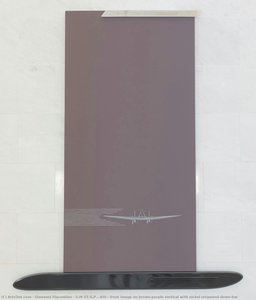
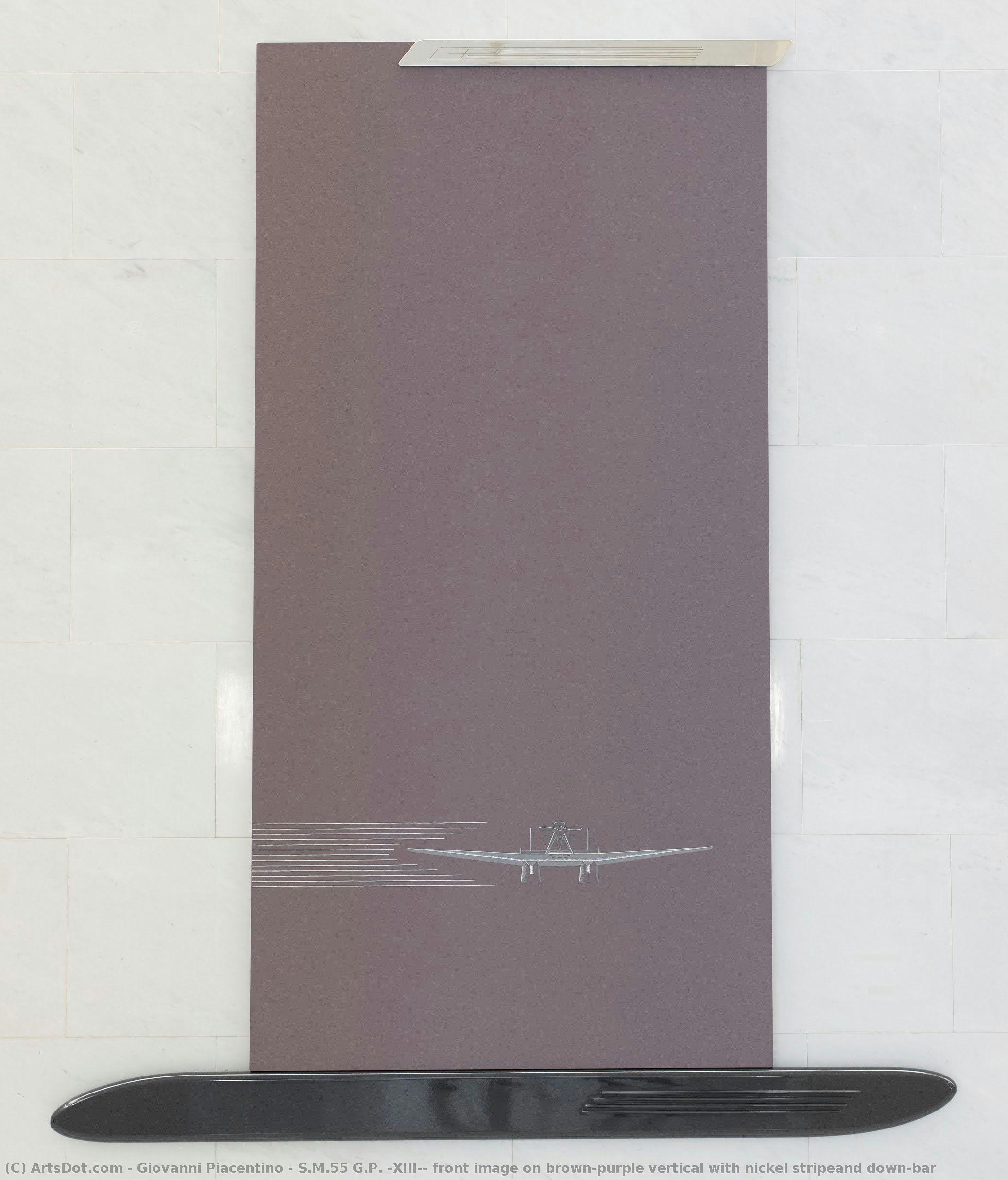
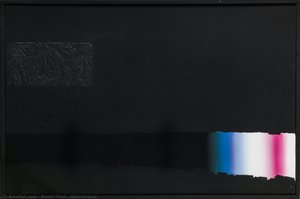
S.M.55 G.P. (XIII): front image on brown-purple vertical with nickel stripeand down-bar
 260.0 x 320.0 cm
 Ministero degli Affari Esteri e della Cooperazione Internazionale. Collezione Farnesina
 Read More
Giclée / Art Print
Museum-quality giclée or canvas print with fast production and flexible finish options. ( Buy Hand Made Painting Buy Image)




































Pick from our preset sizes that match the artwork's original proportions.

You may enter your own dimensions to fit a specific frame or space. If your selected size does not match the original image's proportions, we will either crop the artwork or extend the image with a mirrored or solid-fill edge. A digital mockup will be sent for your approval before production begins.
Please note that the on-screen preview does not reflect the actual cropping or extension. Only the mockup will accurately show the final composition.
While custom sizes are available, we recommend selecting a dimension from the predefined list to preserve the original proportions.
Worldwide Delivery () in 2 weeks instead of standard 4/5 weeks. (1 September)

Free Worldwide Express Shipping

High-Quality Linen Canvas

Full Shipping Insurance

Customs Tax Refund Guarantee

True Color Matching Guarantee

60-Day Return Policy (Defects Only)

100% Money-Back Guarantee

Bulk Discount Offer
 Glass option is only available in size under 110 CM

S.M.55 G.P. (XIII): front image on brown-purple vertical with nickel stripeand down-bar
Giclée / Art Print
Reproduction Size
-


Total Price
$ 63
Related Artworks







Artist Biography
Early Life and Arte Povera Beginnings
Born in Coazze, a small town nestled in the province of Turin, Italy, in 1945, Gianni Piacentino emerged as a significant voice within the radical art landscape of the mid-20th century. His early artistic explorations were deeply intertwined with the rise of Arte Povera, a movement that challenged conventional notions of art by embracing humble materials and rejecting the polished aesthetics of mainstream production. Piacentino wasn’t merely a participant; he was among its founding members, initially contributing to the group's ethos of using everyday objects—wood, metal, found items—to create works that were deliberately anti-bourgeois and conceptually driven.
However, Piacentino’s time within Arte Povera proved relatively brief. While he engaged with its core principles during the late 1960s, creating minimal sculptures from simple forms, he soon charted his own independent course. This wasn't a rejection of the movement’s ideals but rather a desire to pursue a more personal and idiosyncratic vision—one that would become increasingly defined by an obsession with speed, mechanics, and the allure of industrial design.
The Fascination with Machines: Motorcycles, Automobiles, and Planes
A pivotal moment in Piacentino’s artistic development came with the purchase of a 1930s Indian motorcycle. This wasn't simply an acquisition; it was the beginning of a lifelong passion that would permeate his entire oeuvre. The machine became more than just a vehicle—it represented dynamism, precision engineering, and a potent symbol of freedom and rebellion. He immersed himself in the world of motorcycles, not as a passive observer but as an active participant, racing both as a driver and sidecar passenger between 1971 and 1977.
This direct engagement with mechanics profoundly influenced his artistic process. Piacentino began to translate the forms and aesthetics of motorcycles, automobiles, and planes into sculpture and painting. His works aren’t representations *of* these machines but rather distillations of their essence—celebrating their streamlined shapes, polished surfaces, and inherent energy. He worked as a consultant for a varnish factory, further deepening his understanding of industrial materials and techniques.
Minimalism and the Pursuit of Perfection
Throughout his career, Piacentino has maintained an unwavering commitment to minimalism. His sculptures are characterized by their clean lines, precise execution, and meticulous attention to detail. He favors polyester-coated wood, transforming it into forms that appear both solid and ethereal. The surfaces are often flawlessly finished, resembling the gleaming exteriors of automobiles or the aerodynamic curves of aircraft.
This pursuit of perfection isn’t merely aesthetic; it's a deliberate attempt to elevate manual skill and craftsmanship. Piacentino approaches his work with the same level of care and precision as the industry puts into manufacturing machines, blurring the boundaries between art and design. His objects often incorporate logos bearing his initials or words related to flight and racing—subtle yet powerful statements about identity and obsession.
Legacy and Historical Significance
Gianni Piacentino’s work stands as a testament to the power of individual vision and unwavering artistic commitment. He resisted easy categorization, forging a unique path that blended elements of Arte Povera, Minimalism, and industrial design. His sculptures and paintings challenge viewers to reconsider their perceptions of art, craftsmanship, and the relationship between humans and machines.
His influence can be seen in contemporary artists who explore themes of technology, speed, and materiality. Major exhibitions have solidified his reputation as a significant figure in post-war Italian art, including a large-scale survey at Centre d’Art Contemporain in Geneva and a retrospective organized by the Fondazione Prada in Milan in 2015. Piacentino continues to live and work in Turin, Italy, creating works that are both visually stunning and intellectually stimulating—a lasting legacy of an artist who dared to defy convention and pursue his own singular vision.
- Key Influences: Arte Povera movement, industrial design, mechanics, racing culture
- Notable Achievements: Founding member of Arte Povera, retrospective exhibition at Fondazione Prada (2015), participation in Documenta 6 (1977)
- Recurring Themes: Speed, dynamism, precision engineering, the relationship between art and design
giovanni piacentino
1945 - , Italy
Quick Facts
- Artistic Movement Or Style:
- Arte Povera
- Minimalism
- Date Of Birth: 1945
- Full Name: Giovanni Piacentino
- Nationality: Italian
- Place Of Birth: Coazze, Italy