 Preview
 Send
Send Share
Share
 Details

 Download
 Similars
 X-Ray
X-Ray Diaporama
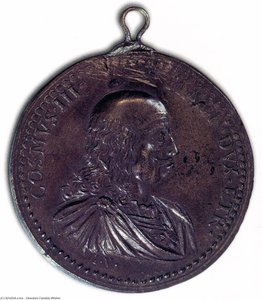
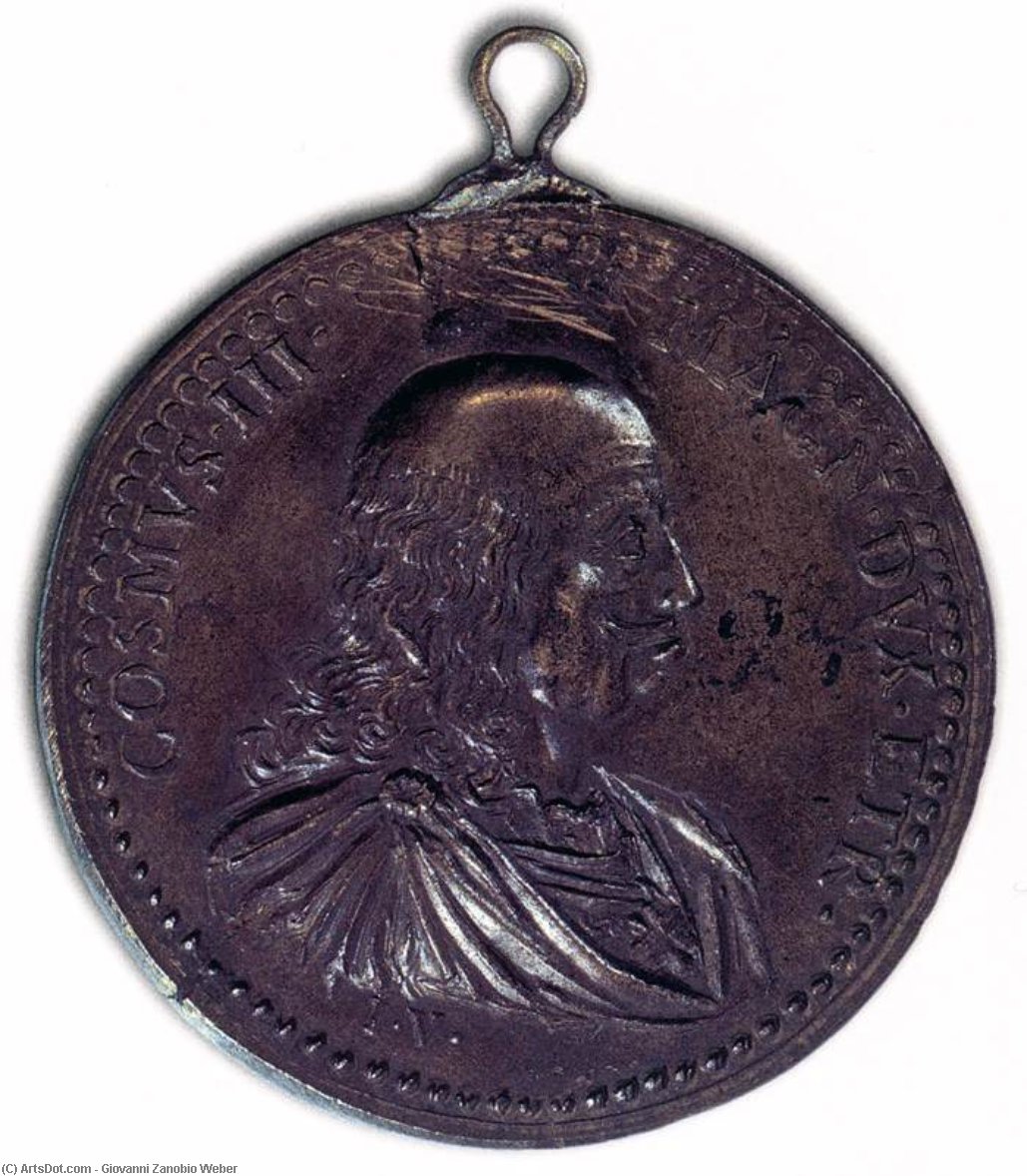
Medal of Grand Duke Cosimo III
 5.0 x 5.0 cm
 Museo di Palazzo Martelli
 Read More
Hand Made Oil Reproduction
Hand-painted oil on canvas in your size and frame, made to order by our artists. ( Buy Print Buy Image)




































Pick from our preset sizes that match the artwork's original proportions.

You may enter your own dimensions to fit a specific frame or space. If your selected size does not match the original image's proportions, we will either crop the artwork or extend the painting with additional hand-painted elements. A digital mockup will be sent for your approval before production begins.
Please note that the on-screen preview does not reflect the actual cropping or extension. Only the mockup will accurately show the final composition.
While custom sizes are available, we recommend selecting a dimension from the predefined list to preserve the original proportions.
After order, ArtsDot.com team will email client for instructions and provide a mockup preview
Worldwide Delivery () in 3/4 weeks instead of standard 5 weeks. (31 August). No compromise on quality.

Free Worldwide Express Shipping

High-Quality Linen Canvas

Full Shipping Insurance

Customs Tax Refund Guarantee

True Color Matching Guarantee

60-Day Return Policy (Defects Only)

100% Money-Back Guarantee

Bulk Discount Offer
 Glass option is only available in size under 110 CM

Medal of Grand Duke Cosimo III
Reproduction Medium
Reproduction Size
-


Total Price
$ 263
Description and Historical Significance
The Medal of Grand Duke Cosimo III features a portrait of Cosimo III on the obverse side, while the reverse side depicts a winged figure holding a torch and a wreath. This medal is not only a beautiful work of art but also holds significant historical value, as it provides insight into the reign of Cosimo III and the cultural heritage of Tuscany. The medal was created after 1785, during the reign of Grand Duke Cosimo III, and reflects his commitment to promoting the arts and sciences in Tuscany.Artistic Style and Technique
Weber's use of bronze as the medium for this medal demonstrates his mastery of the material. The level of detail and precision achieved in the medal is a testament to Weber's exceptional skill as a medallist. The Medal of Grand Duke Cosimo III is an excellent example of Renaissance art, with its use of classical motifs and attention to detail.Relevance to Art Lovers and Collectors
For art lovers and collectors, the Medal of Grand Duke Cosimo III is a must-see. The medal's historical significance, combined with its beauty and craftsmanship, make it a truly unique piece. Those interested in learning more about this artwork or purchasing a hand-made oil painting reproduction can visit https://ArtsDot.com. The website offers a wide range of artworks, including paintings by famous artists such as Silvia Rubinson and Jasper Francis Cropsey.- View the Medal of Grand Duke Cosimo III at /art/list/?Filter=8Y2VTY-Giovanni-Zanobio-Weber-Medal-of-Grand-Duke-Cosimo-III
- Learn more about Giovanni Zanobio Weber and his artworks at /art/list/?Filter=giovanni+zanobio+weber,giovanni,zanobio,weber&
- Discover the Museo di Palazzo Martelli and its collection at /art/list/?Filter=A@D3ASVK-Discover-the-Hidden-Gems-of-Museo-di-Palazzo-Martelli-in-Florence-Italy
The Medal of Grand Duke Cosimo III is a remarkable example of Renaissance art and a testament to the skill of Giovanni Zanobio Weber. Its historical significance and beauty make it a must-see for art lovers and collectors alike.
Related Artworks



Artist Biography
The Florentine Legacy of Giovanni Zanobio Weber
Born in the vibrant cradle of Florence around 1737, Giovanni Zanobio Weber emerged as a master of form and fine detail, bridging the gap between the dramatic intensity of the High Baroque and the refined elegance of Neoclassicism. While his biographical journey remains partially shrouded in the mists of the eighteenth century, his lineage suggests a connection to the cosmopolitan atmosphere of the era; he was known to be the son of a German or Austrian officer serving in the prestigious bodyguard of the Grand Duke of Tuscany. This heritage likely provided him with a unique perspective, blending the disciplined precision of Northern European traditions with the lush, emotive aesthetic of the Italian masters.
Weber’s artistic evolution was deeply rooted in the classical training he received in his native Florence. Under the guidance of Alessandro Falconetti, a sculptor celebrated for his monumental contributions to Saint Peter’s Basilica, Weber developed an acute sensitivity to volume and composition. This early immersion in the sculptural arts instilled in him a profound respect for the tactile nature of his medium, a quality that would later define his work as a medallist. The influence of Falconetti’s grand, architectural approach allowed Weber to understand how small-scale objects could carry the weight and dignity of much larger monuments.
A Master of Metal and Vision
As his career progressed, Weber moved toward the artistic heart of the Serenissima Republic, establishing himself within the illustrious Venetian milieu. It was here that his talent for capturing historical and religious narratives through miniature forms truly flourished. His work as an Italian medallist allowed him to explore the intersection of portraiture and symbolism, creating pieces that served both as commemorative treasures and political statements. One of his most enduring achievements is the Medal of Grand Duke Cosimo III, a bronze masterpiece created after 1785. In this work, Weber demonstrates an extraordinary ability to render the likeness of the Grand Duke on the obverse, while utilizing the reverse to depict a winged figure holding a torch and a wreath—a sophisticated use of classical motifs that speaks to the Enlightenment ideals of his time.
Beyond the delicate precision of his medals, Weber’s reputation extended to the grander scale of religious art. He was recognized for his ability to compose monumental church paintings that breathed life into sacred spaces. His style was characterized by a unique duality: the ability to evoke deep religious fervor through sweeping, dramatic compositions while maintaining a clarity and meticulousness that reflected the burgeoning Neoclassical movement. This balance made his work particularly resonant in an era where the intellectual rigor of the Enlightenment began to meet the enduring spiritual traditions of Italy.
Artistic Influence and Historical Resonance
The breadth of Weber's influence is further evidenced by the prestigious circles in which he moved. His mastery of detail and classical grace suggests a deep connection to the workshop of Antonio Canova, the titan of Neoclassical sculpture. By refining his skills within such an environment, Weber was able to embrace the ideals of purity and harmony championed by artists like Francesco Bartolomeo Rastrelli. This synthesis of styles—the dramatic Florentine Baroque and the poised Venetian Neoclassicism—allowed him to create works that were both emotionally stirring and intellectually sophisticated.
Though he passed away in 1806, leaving behind a legacy that spans both the intimate scale of bronze medals and the expansive scale of ecclesiastical frescoes, Giovanni Zanobio Weber remains a vital figure for understanding the transition of Italian art at the turn of the nineteenth century. His ability to translate the grandeur of history into the palm of a hand ensures that his artistry continues to captivate collectors and historians alike, serving as a testament to a life dedicated to the pursuit of beauty, faith, and form.
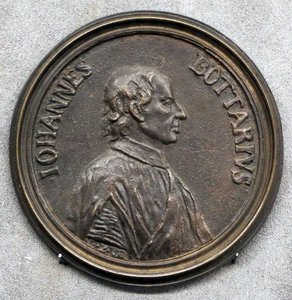
giovanni zanobio weber
1737 - 1806 , Italy
Quick Facts
- Artistic Movement Or Style: Neoclassicism
- Artists Or Movements Influenced By This Artist: ['Classical Sculpture']
- Artists Who Influenced This Artist:
- Titian
- Pordenone
- Date Of Birth: Florence, Italy (1737)
- Date Of Death: 1806
- Full Name: Giovanni Zanobio Weber
- Nationality: Italian
- Notable Artworks:
- Medal of Grand Duke Cosimo III
- San Giovanni Fuorcivitas
- Campo di Santi Giovanni e Paolo
- Place Of Birth: Florence