 Preview
 Send
Send Share
Share
 Details

 Download
 Similars
 X-Ray
X-Ray Diaporama
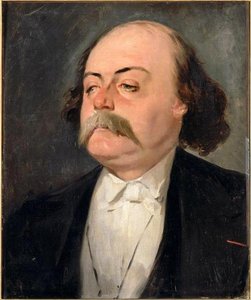
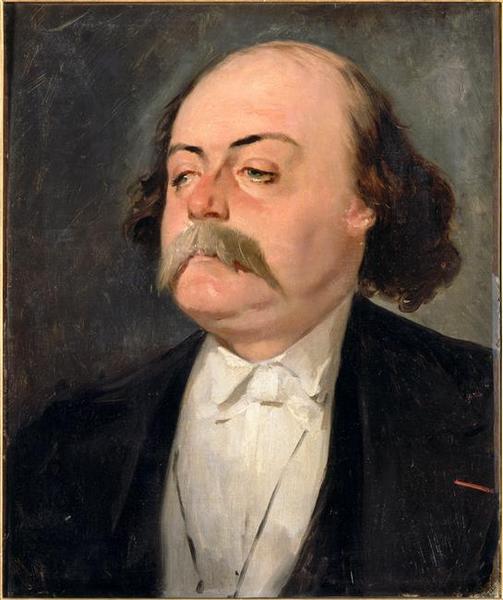
Gustave Flaubert (1821 1880)
 Read More
Hand Made Oil Reproduction
Hand-painted oil on canvas in your size and frame, made to order by our artists. ( Buy Print Buy Image)




































Pick from our preset sizes that match the artwork's original proportions.

You may enter your own dimensions to fit a specific frame or space. If your selected size does not match the original image's proportions, we will either crop the artwork or extend the painting with additional hand-painted elements. A digital mockup will be sent for your approval before production begins.
Please note that the on-screen preview does not reflect the actual cropping or extension. Only the mockup will accurately show the final composition.
While custom sizes are available, we recommend selecting a dimension from the predefined list to preserve the original proportions.
After order, ArtsDot.com team will email client for instructions and provide a mockup preview
Worldwide Delivery () in 3/4 weeks instead of standard 5 weeks. (26 August). No compromise on quality.

Free Worldwide Express Shipping

High-Quality Linen Canvas

Full Shipping Insurance

Customs Tax Refund Guarantee

True Color Matching Guarantee

60-Day Return Policy (Defects Only)

100% Money-Back Guarantee

Bulk Discount Offer
 Glass option is only available in size under 110 CM

Gustave Flaubert (1821 1880)
Reproduction Medium
Reproduction Size
-


Total Price
$ 263
Related Artworks









Artist Biography
A Life Etched in Light: The World of Pierre-François Eugène Giraud
Pierre-François Eugène Giraud, born in 1806 and passing in 1881, was a quietly significant figure within the vibrant tapestry of 19th-century French art. While perhaps not a household name today, his legacy resides in the meticulous detail of his engravings and the compelling intimacy of his portraits – most notably, his iconic depiction of Gustave Flaubert. Giraud’s career unfolded during a period of immense artistic change, bridging the Neoclassical formality of David with the burgeoning Realism that would come to define much of the latter half of the century. He wasn't merely a recorder of faces and scenes; he was an interpreter, capturing not just likeness but also a sense of character and atmosphere. His journey reflects the broader shifts in artistic patronage and subject matter occurring across France during his lifetime.From Engraving to Portraiture: A Developing Style
Giraud initially established himself as a skilled engraver, a profession highly valued for its ability to disseminate images widely before the advent of photography. This early training instilled in him an exceptional eye for precision and line – qualities that would become hallmarks of his later paintings. However, he soon gravitated towards portraiture, recognizing it as a medium allowing for greater artistic expression. His portraits weren’t grand statements of power or wealth, but rather intimate studies of individuals, often members of the literary and artistic circles of Paris. He possessed an ability to convey psychological depth through subtle nuances in facial expression and posture. This talent quickly garnered him recognition within Parisian society. While he continued to produce engravings throughout his career, painting became his primary focus, allowing him to explore color and texture with increasing confidence.The Portrait of Flaubert: An Enduring Legacy
Undoubtedly, Giraud’s most celebrated work is his portrait of Gustave Flaubert, painted in 1866. This image transcends the typical conventions of portraiture; it's not simply a representation of the author’s physical appearance but a profound psychological study. The painting depicts Flaubert seated at his desk, seemingly lost in thought, surrounded by books and papers – symbols of his intellectual life. The intensity of his gaze, coupled with the somber palette and carefully rendered details of his workspace, conveys a sense of both creative energy and profound isolation. It’s a portrait that speaks volumes about the burdens and joys of artistic creation. The work is considered one of the most insightful depictions of Flaubert, offering a glimpse into the mind of one of France's greatest novelists. It remains an invaluable resource for scholars and admirers of Flaubert alike.Orientalist Influences and Broader Themes
Beyond portraiture, Giraud also explored Orientalist themes, a popular genre in 19th-century France fueled by colonial expansion and romantic fascination with the “exotic” East. His paintings of oriental subjects, such as ‘Les Chercheurs de Simples’ (The Herb Gatherers), demonstrate his skill in depicting complex scenes filled with vibrant color and intricate detail. These works reflect a broader trend within French art towards exploring non-Western cultures, though it's important to note that these depictions were often filtered through a European lens. He also created historical paintings, showcasing his versatility and ability to adapt his style to different subject matters.- His Orientalist works reveal an interest in light and shadow.
- He was awarded honors for his contributions to both portraiture and history painting.
- Giraud’s historical scenes often focused on moments of quiet contemplation or dramatic tension.
Historical Significance and Lasting Impact
Pierre-François Eugène Giraud occupies a unique position in the annals of French art. He wasn't a revolutionary innovator, but rather a highly skilled craftsman who excelled at capturing the essence of his subjects. His work provides valuable insight into the social and intellectual life of 19th-century France, particularly within Parisian literary circles. His portraits offer intimate glimpses into the lives of prominent figures, while his Orientalist paintings reflect the broader cultural currents of his time. Though often overshadowed by more celebrated contemporaries, Giraud’s meticulous technique, psychological depth, and enduring portrait of Gustave Flaubert ensure his place as a significant – and increasingly appreciated – artist of the 19th century. His dedication to capturing both physical likeness and inner character continues to resonate with viewers today, making him a compelling figure for those interested in the intersection of art, history, and psychology.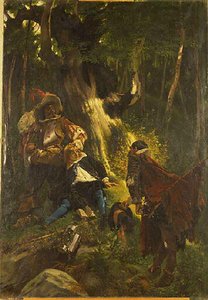
giraud pierre françois eugène
1806 - 1881
Quick Facts
- Artistic Movement Or Style: Orientalist Painting
- Artists Or Movements Influenced By This Artist: ['None known']
- Artists Who Influenced This Artist:
- Louis Hersent
- Joseph Richomme
- Date Of Birth: August 8, 1806
- Date Of Death: December 28, 1881
- Full Name: Pierre François Eugène Giraud
- Nationality: French
- Notable Artworks:
- Gustave Flaubert Portrait
- Les Chercheurs de Simples
- Place Of Birth: Paris, France