 Preview
 Send
Send Share
Share
 Details

 Download
 Similars
 X-Ray
X-Ray Diaporama
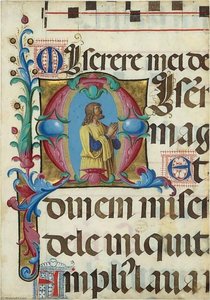
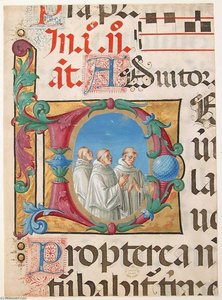
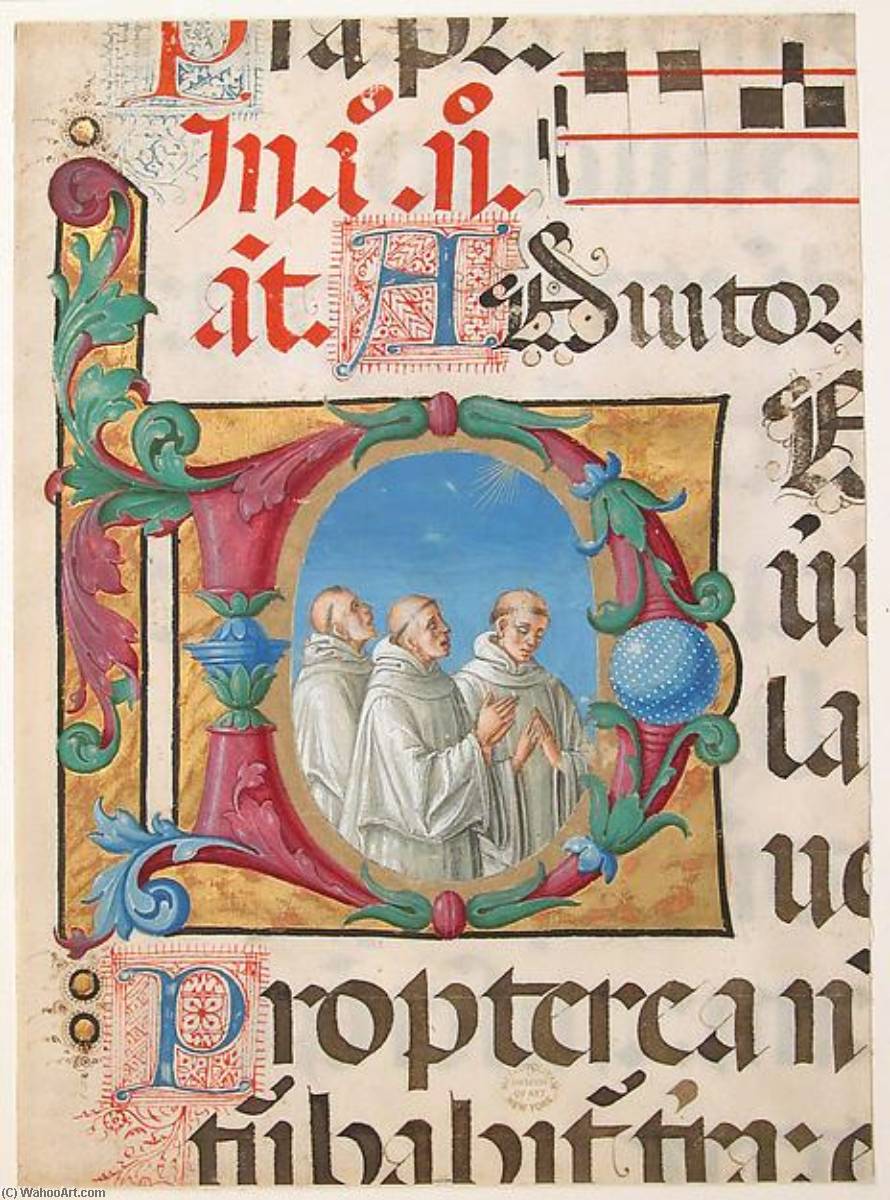
Manuscript Illumination with Singing Monks in an Initial D, from a Psalter
 1501
1501 49.0 x 36.0 cm
 Read More
Hand Made Oil Reproduction
Hand-painted oil on canvas in your size and frame, made to order by our artists. ( Buy Print Buy Image)




































Pick from our preset sizes that match the artwork's original proportions.

You may enter your own dimensions to fit a specific frame or space. If your selected size does not match the original image's proportions, we will either crop the artwork or extend the painting with additional hand-painted elements. A digital mockup will be sent for your approval before production begins.
Please note that the on-screen preview does not reflect the actual cropping or extension. Only the mockup will accurately show the final composition.
While custom sizes are available, we recommend selecting a dimension from the predefined list to preserve the original proportions.
After order, ArtsDot.com team will email client for instructions and provide a mockup preview
Worldwide Delivery () in 3/4 weeks instead of standard 5 weeks. (24 August). No compromise on quality.

Free Worldwide Express Shipping

High-Quality Linen Canvas

Full Shipping Insurance

Customs Tax Refund Guarantee

True Color Matching Guarantee

60-Day Return Policy (Defects Only)

100% Money-Back Guarantee

Bulk Discount Offer
 Glass option is only available in size under 110 CM

Manuscript Illumination with Singing Monks in an Initial D, from a Psalter
Reproduction Medium
Reproduction Size
-


Total Price
$ 263
Related Artworks









Artist Biography
Girolamo dai Libri: Verona’s Master of Light and Shadow
Girolamo dai Libri, a name synonymous with the early Renaissance in Verona, was more than just an illuminator; he was a painter, a craftsman, and a storyteller who breathed life into the pages of illuminated manuscripts. Born around 1474 and passing away in 1555, his career spanned nearly eight decades, during which he left behind a legacy of exquisite detail, profound symbolism, and a uniquely evocative style that continues to captivate art historians today. His story is inextricably linked to the vibrant artistic landscape of Verona, a city that served as both his birthplace and primary creative home.
Girolamo’s lineage was steeped in artistry. He hailed from a family of illuminators – his grandfather, Stefano dai Libri, and father, Francesco dai Libri – had established themselves as skilled practitioners of the craft, working primarily for the churches and religious institutions of Verona. This familial tradition provided Girolamo with an invaluable foundation, immersing him in the techniques and aesthetics of manuscript decoration from a young age. However, unlike his predecessors who largely focused on intricate borders and decorative elements, Girolamo quickly distinguished himself through his remarkable ability to integrate narrative scenes into the illuminated pages, elevating the art form to new heights.
The Early Years: Apprenticeship and Artistic Development
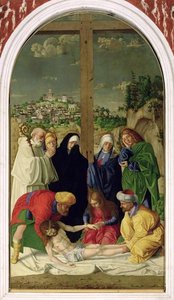
Girolamo’s artistic journey began under the tutelage of his father, Francesco, but it was likely that he also benefited from the influence of Domenico Morone, a prominent Veronese painter known for his dynamic compositions and dramatic use of light. Vasari, in his *Lives of the Artists*, noted Girolamo's astonishing debut at the young age of sixteen, when he completed the *Deposition from the Cross* for the church of Santa Maria in Organo – a work that immediately established him as a prodigious talent. This early masterpiece showcased not only his technical skill but also an understanding of perspective and anatomical accuracy that was remarkably advanced for the time.
The 1510s marked a pivotal period in Girolamo’s artistic development. The plague that ravaged Verona during this decade profoundly impacted his work, leading to a shift in style characterized by a softer, more refined approach. Influenced by Giovanni Bellini, Cima da Conegliano, and Antonello da Messina – artists whose works were gaining popularity in the region – Girolamo embraced a greater emphasis on atmospheric perspective and delicate modeling of forms. This period also witnessed his growing fascination with Lombard and Roman artistic traditions, brought to Verona through the presence of Giovan Francesco Caroto, who had traveled extensively throughout Italy.
A Master of Landscape and Symbolism
Girolamo’s most distinctive characteristic was undoubtedly his masterful depiction of landscape. Unlike many of his contemporaries who treated landscapes as mere backgrounds, Girolamo imbued them with a remarkable sense of depth, atmosphere, and detail. He meticulously rendered distant hills, forests, and bodies of water, creating immersive scenes that enhanced the narrative power of his compositions. This skill stemmed from his background as an illuminator, where he was accustomed to working on small scales and demanding precision in every brushstroke.
Beyond landscape, Girolamo’s work is rich in symbolism. His paintings are replete with religious iconography, allegorical figures, and carefully chosen details that convey profound spiritual meanings. The *Nativity with Rabbits*, for example, features a dead tree alongside a flourishing laurel – a potent symbol of death and resurrection. Similarly, the *Christ and the Samaritan Woman at the Well* incorporates elements such as a peacock, representing immortality, and a wellspring, symbolizing divine grace. These subtle yet powerful symbols invite viewers to engage with the artwork on multiple levels, uncovering layers of meaning beyond the surface narrative.
Notable Works and Lasting Legacy
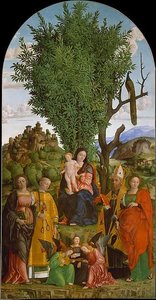
Among Girolamo dai Libri’s most celebrated works are the *Madonna dell'Ombrellino* (1530) and the *Madonna della Quercia* (1533), both housed in the Museo di Castelvecchio in Verona. These paintings exemplify his mastery of technique, composition, and symbolism, showcasing his ability to seamlessly blend influences from various artistic traditions. His altarpiece for the San Tomaso Cantuariense, depicting Saints Roch, Sebastian, and Job, is another significant example of his work, reflecting the anxieties and spiritual concerns of the era.
Girolamo dai Libri’s influence extended far beyond Verona. His innovative approach to manuscript illumination inspired a generation of artists, shaping the course of Renaissance art in Italy. He remains a pivotal figure in the history of Italian painting, celebrated for his exquisite detail, profound symbolism, and enduring legacy as one of the most accomplished illuminators and painters of the early Renaissance.
girolamo dai libri
1474 - 1555
Quick Facts
- Artistic Movement Or Style: Early Renaissance, Manuscript Illumination
- Artists Or Movements Influenced By This Artist:
- Giulio Clovio
- High Renaissance
- Artists Who Influenced This Artist:
- Domenico Morone
- Andrea Mantegna
- Giovanni Bellini
- Date Of Birth: 1474/1475
- Date Of Death: July 2, 1555
- Full Name: Girolamo dai Libri
- Nationality: Italian
- Notable Artworks:
- Madonna and Child with Saints
- Deposition from the Cross
- Nativity with Rabbits
- Place Of Birth: Verona, Italy