

 Preview
 Send
Send Share
Share
 Details

 Download
 Similars
 X-Ray
X-Ray Diaporama
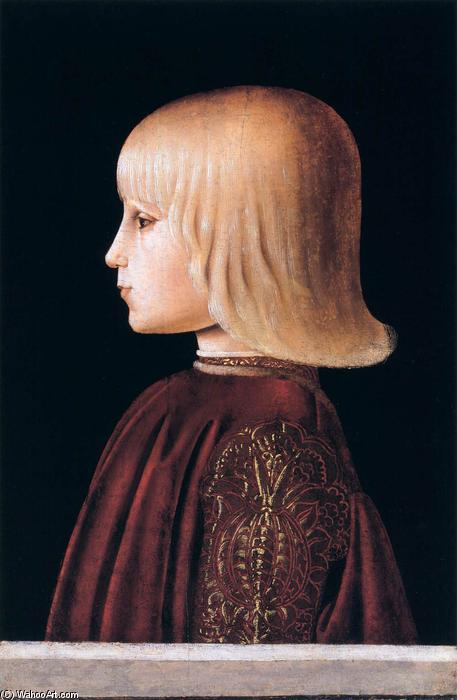
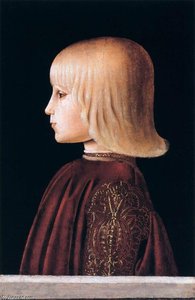
Portrait of a Child
 1465
1465 39.0 x 26.0 cm
 Museo Thyssen-Bornemisza
 Read More
Purchase a high-resolution, enhanced digital image, far superior to the online preview.
Each file is meticulously prepared by our in-house specialists using advanced tools and expert manual retouching. We ensure every image has exceptional clarity, precise color accuracy, and fine detail.
The final file is delivered via email within 72 hours, optimized for immediate use in professional, editorial, and print environments. This is the same quality trusted by top-tier design studios, publishers, and galleries.
Digital Image
Download a high-resolution file for personal display, printing, and creative projects. ( Buy Print Buy Hand Made Painting)
Included in Every Digital Image Order
Expert Digital Delivery, Guaranteed
When you choose ArtsDot.com, you're not just getting an image - you're receiving a professionally enhanced digital artwork, crafted with precision and backed by a satisfaction guarantee. Here's everything that comes with your order, automatically:

Fast Email Delivery
Your high-resolution digital image file will be emailed to you within 72 hours of ordering - ready for immediate use.

AI-Enhanced Digital File
Your artwork is professionally optimized using advanced AI tools and manual editing, ensuring maximum detail, clarity, and color accuracy.

Free Lifetime Re-Delivery
Accidentally deleted or lost your file? No worries - we'll resend it to you anytime, free of charge.

No Import Fees - Ever
Enjoy your artwork instantly with zero customs, duties, or delivery fees - digital downloads are always tax-free.

Color Accuracy Guarantee
We ensure your digital image reflects the original colors as closely as possible using professional tools and color management.

60-Day Satisfaction Guarantee
If you're not satisfied with your digital image, we'll revise it or refund 100% within 60 days - no questions asked.

100% Money-Back Guarantee
Not satisfied? Get a full refund within 60 days of receiving your digital file - no questions asked.

Bulk Order Discounts
Buy 3 images, save 10% - Buy 5, save 15% - Buy 10+, save 20%. Great for creative projects, galleries, and agencies.
Artistic Style and Technique
The style of the painting is characteristic of the Renaissance period, with attention to detail and realism. The use of light and shadow, as well as the careful rendering of facial features, contribute to a lifelike representation of the child. The artist's mastery of tempera technique is evident in the subtle texture of the hair and the softness of the facial features. Key Features of the painting include:- The child's hairstyle, typical of the era, with bangs covering the forehead and longer strands falling over the shoulders.
- The fair skin tone and subtle details that suggest a high level of craftsmanship.
- The dark background, which provides a stark contrast to the subject's face and upper body.
The Museo Thyssen-Bornemisza is home to an extensive collection of art, including works by renowned artists such as Hans The Elder Holbein and Amico Aspertini. For art enthusiasts, ArtsDot.com offers handmade oil painting reproductions of famous works, including those by Girolamo Di Giovanni Da Camerino and other notable artists.
Related Artworks
Artist Biography
The Ethereal Legacy of Girolamo di Giovanni da Camerino
In the luminous era of the Quattrocento, a period defined by the rebirth of classical wisdom and the profound exploration of human emotion, the name Girolamo di Giovanni da Camerino emerges as a delicate yet significant thread in the tapestry of the Italian Renaissance. Though the historical record offers only fragmented glimpses into his personal life—a common frustration for those studying the masters of this age—we know him to be an artist whose spirit was deeply rooted in the fertile artistic soil of the Marche and Umbria regions. Emerging from Camerino, he navigated a landscape where the geometric rigor of Piero della Francesca met the burgeoning humanist ideals of Florence, creating a stylistic bridge between the structured devotion of the past and the naturalistic explorations of the future.
The artistry of Girolamo was not merely a matter of pigment on panel; it was an exercise in spiritual storytelling. His early development was shaped by the vibrant artistic milieu of his homeland, where he likely absorbed the lessons of masters like Giovanni Boccati, whom some traditions suggest as his father. This lineage of craftsmanship is evident in his ability to marry technical precision with a serene, almost otherworldly composure. His works often served as windows into the divine, utilizing the emerging science of linear perspective to invite the viewer into sacred spaces. Whether through the soft, atmospheric depth of an Umbrian landscape or the meticulous rendering of a holy figure, Girolamo possessed a rare gift for making the celestial feel tangibly present.
Mastery of Form and Devotional Depth
To observe a work by Girolamo is to witness a masterclass in the use of light, shadow, and color. His technique, often employing the delicate medium of tempera, allowed for a level of detail that captured the very essence of his subjects. In his celebrated Portrait of a Child, created in 1465, one can see the breathtaking attention to the textures of reality—the intricate gold embroidery on a crimson garment and the soft, lifelike rendering of youthful features. This ability to balance the monumental with the intimate is perhaps his greatest technical achievement, as he could command large-scale altarpieces with the same grace as small, private devotional pieces.
His career was marked by significant commissions that placed him at the heart of Italy's most important religious centers. His contributions to the artistic landscape include:
- The Altarpiece at Santa Maria del Pozzo: A profound work located in Monte San Martino, featuring a Madonna and Child flanked by angels, which showcases his ability to organize complex theological narratives within a harmonious composition.
- The Frescoes of Padua: His monumental depiction of Saint Christopher and the King in St. Mary’s Church stands as a testament to his mastery of illusionistic painting and his skill in employing perspective to expand the perceived boundaries of architectural space.
- Collaborations in Venice: His work on Saint John the Baptist in St. Nicholas Cathedral, alongside the Venetian master Antonio Vivarini, demonstrates his versatility and his ability to integrate into the distinct, luminous traditions of the Venetian school.
A Lasting Impression on the Renaissance Spirit
While much of the scholarly debate continues regarding the exact boundaries of his individual hand—with some historians noting that much of the oeuvre attributed to him may have been shared with Giovanni Angelo d'Antonio—the historical significance of Girolamo di Giovanni da Camerino remains undiminished. He represents a crucial moment in art history when the rigid iconographies of the Middle Ages began to soften under the influence of humanism, giving way to a more empathetic and naturalistic portrayal of the human condition. His preference for muted, sophisticated palettes—rich blues, deep reds, and regal golds—created an atmosphere of quiet dignity that resonated with the patrons of the Montefeltro dukedom and beyond.
Ultimately, Girolamo’s legacy is found in the enduring grace of his compositions. He did not seek to overwhelm the viewer with bravado, but rather to enchant through subtlety. In the quietude of his saints and the tender gaze of his portraits, we find a profound reflection of the Renaissance ideal: the belief that through the perfection of art, one might catch a fleeting glimpse of the eternal. His life, though brief and shrouded in much mystery, continues to illuminate the path of Italian Renaissance painting, reminding us of the power of beauty to bridge the gap between the earthly and the divine.
Quick Facts
- Artistic Movement Or Style: Renaissance
- Artists Or Movements Influenced By This Artist: ['Giovanni Boccati']
- Artists Who Influenced This Artist: ['Piero della Francesca']
- Full Name: Girolamo di Giovanni da Camerino
- Nationality: Italian
- Notable Artworks: ['Madonna della Misericordia']
- Place Of Birth: Camerino, Italy

