

 Preview
 Send
Send Share
Share
 Details

 Download
 Similars
 X-Ray
X-Ray Diaporama
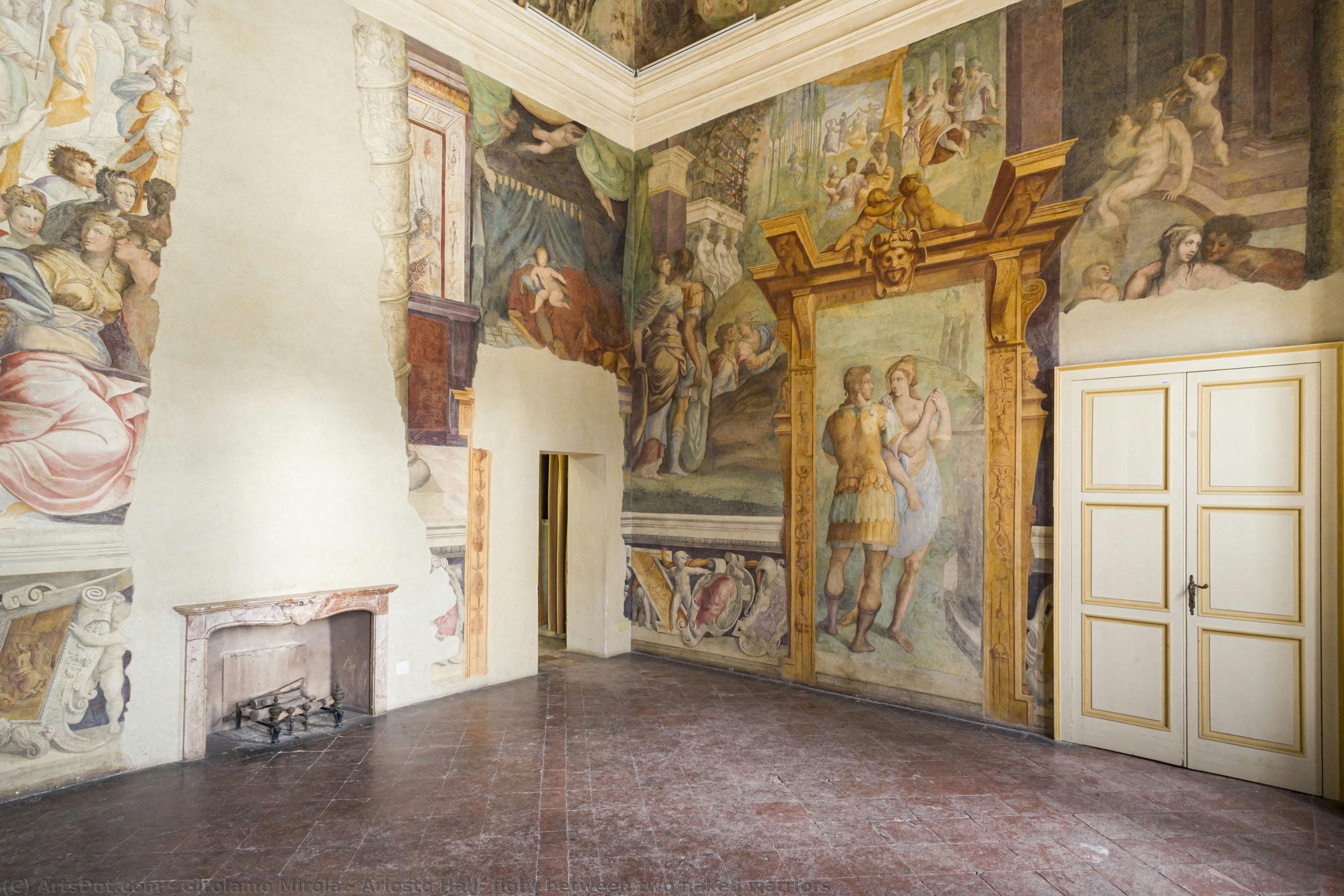
Ariosto Hall: fight between two naked warriors

 Read More
Purchase a high-resolution, enhanced digital image, far superior to the online preview.
Each file is meticulously prepared by our in-house specialists using advanced tools and expert manual retouching. We ensure every image has exceptional clarity, precise color accuracy, and fine detail.
The final file is delivered via email within 72 hours, optimized for immediate use in professional, editorial, and print environments. This is the same quality trusted by top-tier design studios, publishers, and galleries.
Digital Image
Download a high-resolution file for personal display, printing, and creative projects. ( Buy Print Buy Hand Made Painting)
Included in Every Digital Image Order
Expert Digital Delivery, Guaranteed
When you choose ArtsDot.com, you're not just getting an image - you're receiving a professionally enhanced digital artwork, crafted with precision and backed by a satisfaction guarantee. Here's everything that comes with your order, automatically:

Fast Email Delivery
Your high-resolution digital image file will be emailed to you within 72 hours of ordering - ready for immediate use.

AI-Enhanced Digital File
Your artwork is professionally optimized using advanced AI tools and manual editing, ensuring maximum detail, clarity, and color accuracy.

Free Lifetime Re-Delivery
Accidentally deleted or lost your file? No worries - we'll resend it to you anytime, free of charge.

No Import Fees - Ever
Enjoy your artwork instantly with zero customs, duties, or delivery fees - digital downloads are always tax-free.

Color Accuracy Guarantee
We ensure your digital image reflects the original colors as closely as possible using professional tools and color management.

60-Day Satisfaction Guarantee
If you're not satisfied with your digital image, we'll revise it or refund 100% within 60 days - no questions asked.

100% Money-Back Guarantee
Not satisfied? Get a full refund within 60 days of receiving your digital file - no questions asked.

Bulk Order Discounts
Buy 3 images, save 10% - Buy 5, save 15% - Buy 10+, save 20%. Great for creative projects, galleries, and agencies.
Collectible Description
Related Artworks









Artist Biography
Early Life and Formation in Bologna
Girolamo Mirola, born in Bologna around 1530 or 1535, emerged during a vibrant period of artistic ferment in the Emilian region of Italy. While specific details regarding his early training remain elusive, it is understood that he absorbed the prevailing aesthetic currents of his native city—a center renowned for its sophisticated painting traditions and intellectual life. Bologna at this time was steeped in the legacy of Renaissance masters, yet also receptive to emerging Mannerist styles. This confluence likely shaped Mirola’s artistic sensibilities from a young age, fostering a blend of classical elegance and expressive dynamism that would characterize his mature work.
The Palazzo del Giardino Commissions
Mirola's career gained significant momentum through his involvement in the ambitious decorative schemes at the Palazzo del Giardino in Parma. Engaged alongside Jacopo Zanguidi, known as il Bertoja, he contributed to a series of breathtaking frescoes that transformed the palace into a veritable showcase of Renaissance artistry. These commissions, undertaken during the 1560s, provided Mirola with an unparalleled opportunity to demonstrate his skills on a grand scale and establish his reputation among discerning patrons. The Palazzo del Giardino became synonymous with refined taste and intellectual pursuits under the patronage of Octavius Farnese, and Mirola’s contributions were integral to this vision.
A Style Rooted in Emilian Tradition
Mirola's artistic style is firmly anchored within the Emilian school of painting—a tradition celebrated for its harmonious compositions, luminous color palettes, and graceful figural representations. He possessed a remarkable ability to depict mythological narratives with both elegance and emotional depth. His frescoes are characterized by fluid lines, balanced forms, and a subtle yet captivating use of light and shadow. While influenced by the broader Renaissance aesthetic, Mirola infused his work with a distinctive personal touch—a sensitivity to narrative detail and an aptitude for creating atmospheric settings that enhance the dramatic impact of his scenes.
The ‘Rape of the Sabine Women’ and Narrative Power
Among Mirola's most celebrated achievements is his fresco depicting ‘The Rape of the Sabine Women’. This work, executed at the Palazzo del Giardino, exemplifies his mastery of narrative storytelling. The scene pulsates with energy and drama, capturing the chaos and intensity of the legendary event. Mirola’s composition skillfully balances dynamic action with a sense of classical order, showcasing his ability to convey both physical struggle and emotional turmoil. The figures are rendered with anatomical precision and expressive gestures, drawing the viewer into the heart of the unfolding conflict. Beyond its technical brilliance, ‘The Rape of the Sabine Women’ reveals Mirola's profound understanding of human psychology and his capacity to imbue mythological subjects with compelling realism.
Legacy and Historical Significance
Although Girolamo Mirola’s career was tragically cut short by his premature death in 1570, his artistic legacy endures through the remarkable frescoes he left behind at the Palazzo del Giardino. His work represents a high point of Renaissance painting in Parma, embodying the refined aesthetic sensibilities and intellectual ambitions of the Farnese court. Mirola’s contributions helped to solidify the Emilian school's reputation for elegance, harmony, and narrative power. His paintings continue to captivate viewers with their beauty, grace, and emotional depth, offering a glimpse into the artistic world of 16th-century Italy.
girolamo mirola
1530 - 1570 , Italy
Quick Facts
- Artistic Movement Or Style: Emilian School
- Date Of Birth: 1530/35
- Date Of Death: 1570
- Full Name: Girolamo Mirola
- Nationality: Italian
- Notable Artworks: ['Rape of the Sabine Women']
- Place Of Birth: Bologna, Italy

