 Preview
 Send
Send Share
Share
 Details

 Download
 Similars
 X-Ray
X-Ray Diaporama
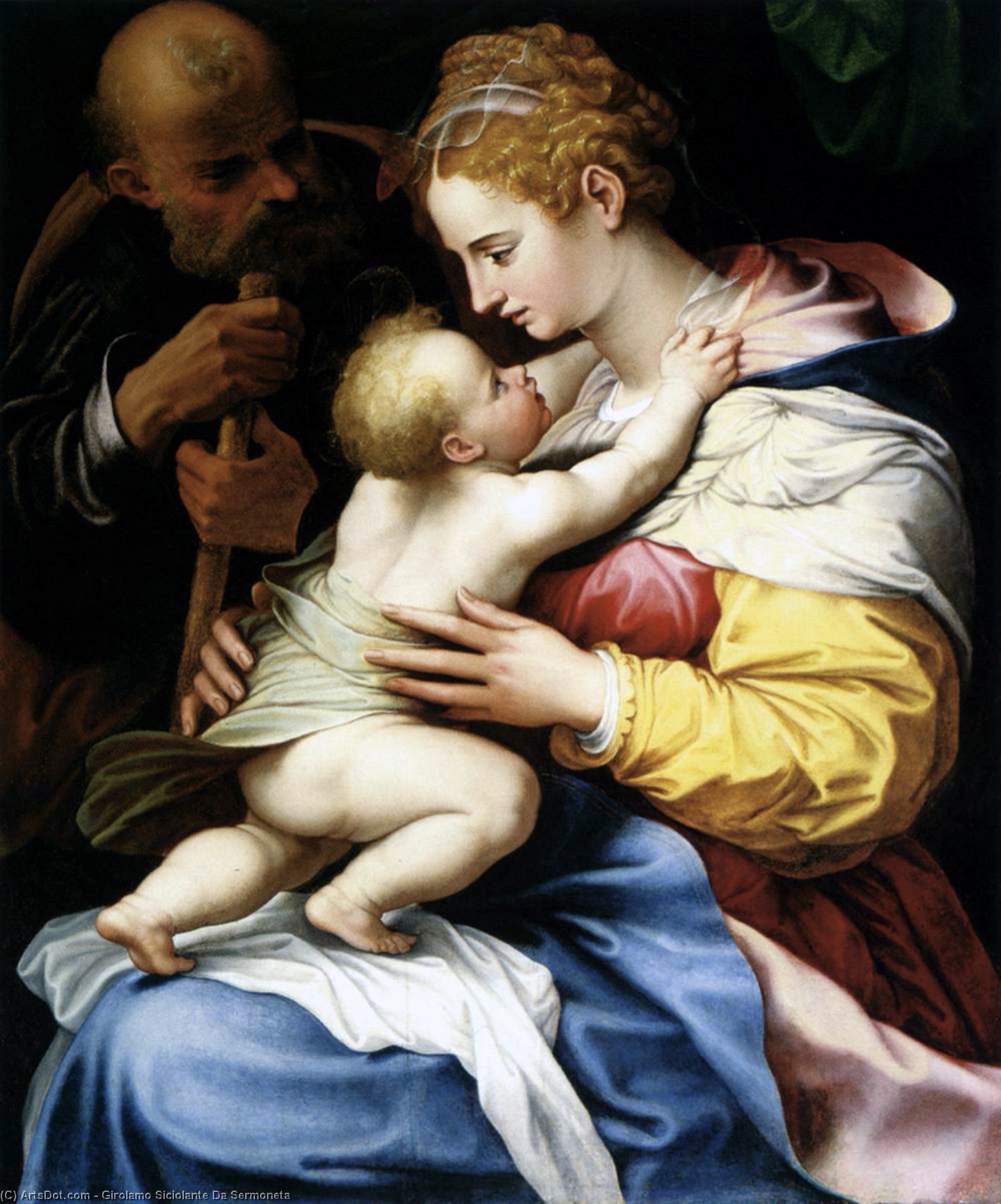
The Holy Family
 99.0 x 78.0 cm
 Szépmûvészeti Múzeum
 Read More
Hand Made Oil Reproduction
Hand-painted oil on canvas in your size and frame, made to order by our artists. ( Buy Print Buy Image)




































Pick from our preset sizes that match the artwork's original proportions.

You may enter your own dimensions to fit a specific frame or space. If your selected size does not match the original image's proportions, we will either crop the artwork or extend the painting with additional hand-painted elements. A digital mockup will be sent for your approval before production begins.
Please note that the on-screen preview does not reflect the actual cropping or extension. Only the mockup will accurately show the final composition.
While custom sizes are available, we recommend selecting a dimension from the predefined list to preserve the original proportions.
After order, ArtsDot.com team will email client for instructions and provide a mockup preview
Worldwide Delivery () in 3/4 weeks instead of standard 5 weeks. (16 August). No compromise on quality.

Free Worldwide Express Shipping

High-Quality Linen Canvas

Full Shipping Insurance

Customs Tax Refund Guarantee

True Color Matching Guarantee

60-Day Return Policy (Defects Only)

100% Money-Back Guarantee

Bulk Discount Offer
 Glass option is only available in size under 110 CM

The Holy Family
Reproduction Medium
Reproduction Size
-


Total Price
$ 263
Related Artworks
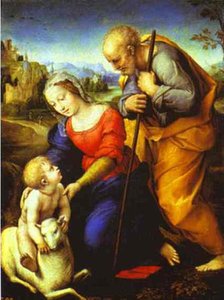
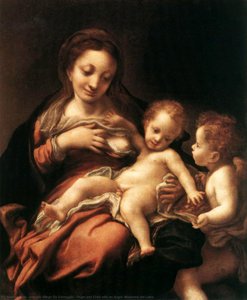
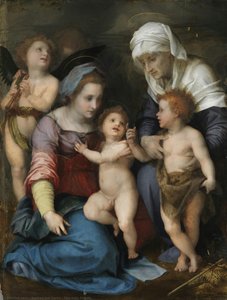
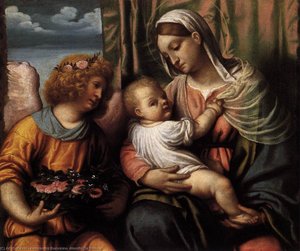
Artist Biography
A Master of the Mannerist Vision
In the heart of the mid-16th century, amidst the vibrant and often turbulent artistic landscape of Italy, Girolamo Siciolante da Sermoneta emerged as a profound voice of the Mannerist movement. Born around 1521 in the medieval hill-town of Sermoneta, south of Rome, his life was a testament to the enduring power of classical ideals filtered through a new, more dramatic lens. His early years were shaped by the prestigious patronage of the Caetani Family, influential lords whose support allowed him to navigate the highest circles of Roman artistic life. Siciolante’s journey was not merely one of personal ambition but a sophisticated evolution of style, moving from the refined elegance of his early training toward a more robust and naturalistic expression that would define his later years.
The foundations of his technique were laid through a lineage of masters that connected him directly to the golden age of the High Renaissance. It is believed that he first honed his craft under Leonardo Grazia da Pistoia, absorbing a fluid and graceful approach to line and form. This education was further enriched when he became an assistant to Perino del Varga, a celebrated pupil of Raphael. Through this connection, Siciolante breathed the very air of Raphaelesque perfection, learning to balance classical harmony with the burgeoning complexities of Mannerism. Even the serene, ethereal influence of Pietro Perugino can be detected in his early religious works, where a delicate equilibrium between color and composition suggests a deep reverence for the Umbrian tradition of spiritual clarity.
The Evolution of Style and Sacred Narrative
As Siciolante’s career progressed, his work began to exhibit a captivating tension between grace and drama. In the mid-1450s, his commissions in Piacenza and Bologna allowed him to experiment with more expressive colorations and dynamic compositions. His Holy Family with Saint Michael stands as a striking example of this period, showcasing an early inclination toward the theatricality that would become a hallmark of the Mannerist aesthetic. This era of his development was marked by a transition from the purely decorative to the deeply narrative, as he sought to imbant religious subjects with a palpable sense of divine presence and human emotion.
A pivotal moment in his artistic trajectory occurred during the late 1440s when he collaborated on the ambitious fresco cycles for the chapel of San Luigi dei Francesi in Rome. Working alongside figures such as Scipione Pulzone and Jacopino del Conte, Siciolante helped complete works that had been left unfinished by his predecessor, Perino del Vaga. These frescoes, including the Baptism of Clovis, demonstrated his ability to work within a large-scale, monumental framework while maintaining the intricate detail and sophisticated artifice required by the Raphaelesque style. His ability to navigate such prestigious projects solidified his reputation as a premier painter in the Roman art scene.
Legacy and the Shift Toward Naturalism
In the latter decades of his life, Siciolante’s artistry underwent another significant transformation. Moving away from the stylized complexities of pure Mannerism, he began to embrace the reformist naturalism championed by Girolamo Muziano. This shift toward a more grounded and realistic depiction of the human form and natural light reflected the broader religious and artistic shifts occurring in Italy during the late 16th century. His later works, such as the Crucifixion for San Giacomo degli Spagnoli—a project supported by Prince Philip of Spain—exhibit a powerful, somber dignity that resonates with the gravity of the Counter-Reformation.
The historical significance of Girolamo Siciolante da Sermoneta lies in his role as a bridge between eras. He was an artist who could inhabit the sophisticated artifice of the Mannerist court while simultaneously preparing the way for the more direct, naturalistic styles of the following generation. His contributions to the Sala Regia of the Palazzo Quirinale and various Roman churches ensure that his name remains etched in the annals of Italian art history. Through his mastery of light, color, and sacred narrative, Siciolante captured a moment in time when the elegance of the Renaissance was being reshaped into something more intense, emotive, and enduring.
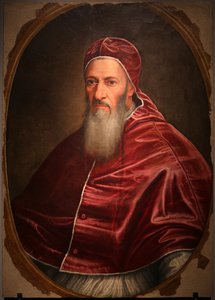
Girolamo Siciolante da Sermoneta
1521 - 1575 , Italy
Quick Facts
- Artistic Movement Or Style: Mannerism
- Artists Or Movements Influenced By This Artist: ['Michelangelo']
- Artists Who Influenced This Artist:
- Leonardo Grazia da Pistoia
- Perino del Vaga
- Date Of Birth: ca. 1521
- Date Of Death: 1575
- Full Name: Girolamo Siciolante da Sermoneta
- Nationality: Italian
- Notable Artworks:
- The Holy Family
- Saint Francis
- Place Of Birth: Sermoneta, Italy