

 Preview
 Send
Send Share
Share
 Details

 Download
 Similars
 X-Ray
X-Ray Diaporama
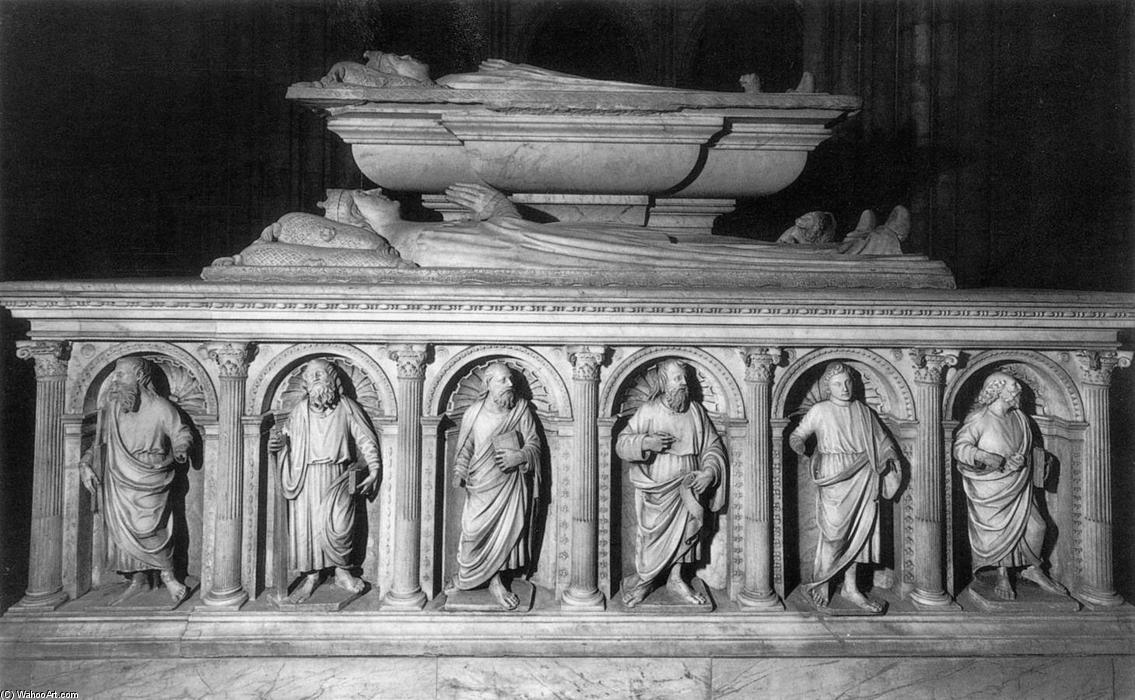
Tomb of the Dukes of Orleans


 Read More
Purchase a high-resolution, enhanced digital image, far superior to the online preview.
Each file is meticulously prepared by our in-house specialists using advanced tools and expert manual retouching. We ensure every image has exceptional clarity, precise color accuracy, and fine detail.
The final file is delivered via email within 72 hours, optimized for immediate use in professional, editorial, and print environments. This is the same quality trusted by top-tier design studios, publishers, and galleries.
Digital Image
Download a high-resolution file for personal display, printing, and creative projects. ( Buy Print Buy Hand Made Painting)
Included in Every Digital Image Order
Expert Digital Delivery, Guaranteed
When you choose ArtsDot.com, you're not just getting an image - you're receiving a professionally enhanced digital artwork, crafted with precision and backed by a satisfaction guarantee. Here's everything that comes with your order, automatically:

Fast Email Delivery
Your high-resolution digital image file will be emailed to you within 72 hours of ordering - ready for immediate use.

AI-Enhanced Digital File
Your artwork is professionally optimized using advanced AI tools and manual editing, ensuring maximum detail, clarity, and color accuracy.

Free Lifetime Re-Delivery
Accidentally deleted or lost your file? No worries - we'll resend it to you anytime, free of charge.

No Import Fees - Ever
Enjoy your artwork instantly with zero customs, duties, or delivery fees - digital downloads are always tax-free.

Color Accuracy Guarantee
We ensure your digital image reflects the original colors as closely as possible using professional tools and color management.

60-Day Satisfaction Guarantee
If you're not satisfied with your digital image, we'll revise it or refund 100% within 60 days - no questions asked.

100% Money-Back Guarantee
Not satisfied? Get a full refund within 60 days of receiving your digital file - no questions asked.

Bulk Order Discounts
Buy 3 images, save 10% - Buy 5, save 15% - Buy 10+, save 20%. Great for creative projects, galleries, and agencies.
A Monument to Dynasty: The Tomb of the Dukes of Orleans
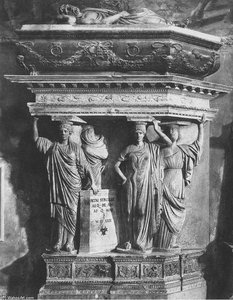
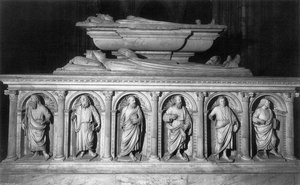
Girolamo Viscardi’s *Tomb of the Dukes of Orleans*, created in 1502, is a breathtaking example of Renaissance sculpture commissioned for the royal chapel of Blois, France. This monumental work isn't merely a funerary monument; it’s a powerful statement about lineage, piety, and the enduring legacy of the House of Orléans. The photograph reveals a striking interplay of light and shadow across the intricately carved stone, emphasizing its imposing scale and solemn atmosphere within what appears to be a Gothic cathedral setting. The composition centers on the rectangular tomb itself, flanked by sculpted figures arranged within arched niches – a design choice that draws the eye inward and creates a sense of depth and reverence.Style & Technique: Bridging Gothic Grandeur with Renaissance Detail
Viscardi masterfully blends the lingering influence of Gothic aesthetics with the emerging naturalism of the High Renaissance. While the overall structure – the arched niches, the rectangular form of the tomb – echoes medieval traditions, the figures themselves demonstrate a keen understanding of anatomy and drapery characteristic of Renaissance sculpture. Subtractive sculpture is employed here; Viscardi meticulously carved away at stone (likely marble) to reveal these detailed forms. The style is distinctly linear, defined by sharp edges and flowing robes. Notice how the artist utilizes texture – the rough, weathered surface of the stone conveys age and permanence, while the polished details on the figures suggest a reverence for human form. This contrast creates a visually compelling experience, highlighting both the earthly decay and spiritual transcendence associated with death. The dramatic chiaroscuro—the strong contrast between light and dark—further enhances the emotional impact of the scene.Symbolism & Historical Context: Remembrance and Royal Power
The tomb was created for Louis II, Duke of Orléans (brother to King Charles VIII), and his wife Jeanne de France. The six sculpted figures flanking the tomb are believed to represent members of their family or perhaps allegorical virtues. Their placement within arched niches suggests a protective embrace, symbolizing eternal guardianship. Commissioned during a period of political instability in France, the monument served as a potent symbol of dynastic continuity and royal authority. It was intended not only to honor the deceased but also to legitimize the Orléans lineage and project an image of strength and stability. The choice of sculpture as a medium itself speaks to the enduring nature of memory and the desire to create a lasting tribute.Emotional Impact & Lasting Legacy
The *Tomb of the Dukes of Orleans* evokes a profound sense of solemnity, reverence, and contemplation. The sheer scale of the monument, combined with its intricate detail and dramatic lighting, creates an atmosphere that is both awe-inspiring and deeply moving. It’s a work that invites viewers to reflect on themes of mortality, remembrance, and the enduring power of art. For interior designers, a high-quality reproduction of this piece would serve as a striking focal point, adding a touch of historical grandeur and intellectual depth to any space. Its timeless aesthetic ensures it will remain a captivating conversation starter for years to come.Related Artworks


Artist Biography
The Sculptural Legacy of Girolamo Viscardi
In the vibrant tapestry of the Early Renaissance, few figures embody the era's stylistic transition as profoundly as Girolamo Viscardi. Born in the Italian town of Laino Borgo around 1467, Viscardi emerged from the rich artistic traditions of Lombardy to become a sculptor whose influence bridged the gap between Northern Italian craftsmanship and the burgeoning Renaissance ideals spreading through Europe. His life and work represent a moment in history where the intricate, soaring grandeur of the Gothic tradition began to merge with the newfound anatomical precision and classical perspective that would define the High Renaissance.
Viscardi’s artistic journey was deeply rooted in the fertile ground of Lombardy, where he underwent rigorous training under masters such as Antonio dalla Porta and Michele d’Aria. This formative period was essential in shaping his technical prowess; through his association with dalla Porta, a sculptor celebrated for his innovative approach to classical forms, Viscardi gained an intimate understanding of linear perspective and the delicate nuances of human anatomy. His early participation in grand-scale projects, such as the ambitious decoration of the Certosa Monastery in Pavia, provided him with a foundation in monumental composition and the ability to execute large-scale ecclesiastical commissions that demanded both spiritual reverence and technical mastery.
A Confluence of Styles: The Tomb of the Dukes of Orleans
The pinnacle of Viscardi’s career is perhaps best exemplified by his 1502 masterpiece, the Tomb of the Dukes of Orleans. Commissioned for the royal chapel of Blois in France, this colossal marble sculpture serves as a breathtaking testament to the artist's ability to synthesize disparate cultural aesthetics. Created during a period of intense political and cultural exchange between Genoa and France under the reign of Louis XII, the tomb is much more than a funerary monument; it is a profound statement of dynastic power and religious piety.
In this work, Viscardi achieved a remarkable stylistic equilibrium. While the structural elements—such as the soaring arches and the rectangular form of the tomb—echo the traditional Gothic grandeur that had long dominated European funerary art, the execution of the figures reveals a deep commitment to Renaissance naturalism. The artist utilized the technique of subtractive sculpture to meticulously carve marble into forms that possess a startling sense of life. Through the masterful use of chiaroscuro, Viscardi created a dramatic interplay of light and shadow across the stone, emphasizing the depth of the sculpted niches and the flowing drapery of the figures. This contrast between the weathered texture of the stone and the polished, lifelike details of the human form invites the viewer to contemplate both the permanence of death and the transcendence of the soul.
Historical Significance and Artistic Impact
Beyond his individual masterpieces, Viscardi’s historical importance lies in his role as a cultural conduit. His career demonstrates how artistic innovations developed in the Italian peninsula were disseminated across the continent, specifically into the French courts. By blending the decorative complexity of the medieval period with the emerging realism of the Renaissance, he helped create a visual language that was both familiar to the old traditions and excitingly modern.
The enduring legacy of Girolamo Viscardi can be summarized through several key contributions:
- Stylistic Synthesis: His unique ability to integrate Gothic ornamentation with Renaissance anatomical accuracy.
- Cultural Diplomacy: Acting as a bridge between the Lombard-Genoese artistic traditions and the French royal patronage.
- Technical Mastery: The advancement of marble carving techniques that utilized light and shadow to enhance emotional impact.
- Monumental Achievement: Creating enduring works of funerary art that served as powerful symbols of lineage and religious devotion.
Though biographical records from the late 15th century are often fragmented, the physical presence of Viscardi’s work continues to command respect in the halls of European cathedrals. He remains a pivotal figure whose hands helped shape the very stone of the Renaissance, leaving behind a legacy of beauty, strength, and profound spiritual depth.
girolamo viscardi
1467 - 1522 , Italy
Quick Facts
- Artistic Movement Or Style: Early Renaissance
- Artists Or Movements Influenced By This Artist: ['Masaccio']
- Artists Who Influenced This Artist: ['Antonio dalla Porta']
- Date Of Birth: 1467
- Full Name: Girolamo Viscardi
- Nationality: Italian
- Notable Artworks: ['Tomb of the Dukes of Orleans']
- Place Of Birth: Laino Borgo, Italy

