 Preview
 Send
Send Share
Share
 Details

 Download
 Similars
 X-Ray
X-Ray Diaporama
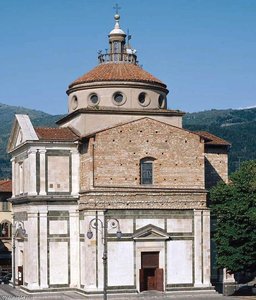
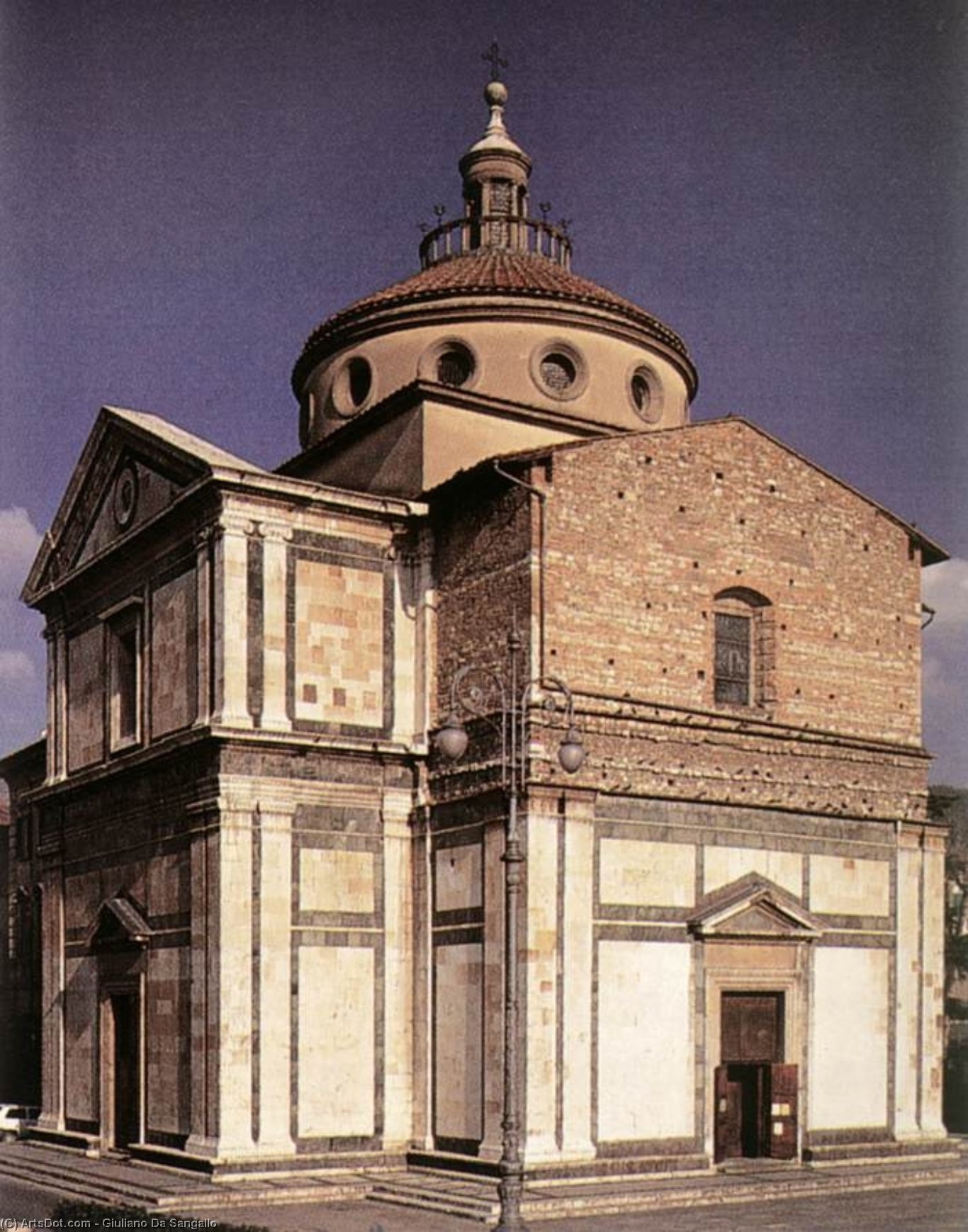
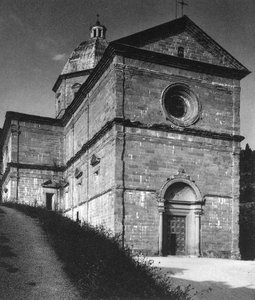
Exterior of the church

 Read More
Hand Made Oil Reproduction
Hand-painted oil on canvas in your size and frame, made to order by our artists. ( Buy Print Buy Image)




































Pick from our preset sizes that match the artwork's original proportions.

You may enter your own dimensions to fit a specific frame or space. If your selected size does not match the original image's proportions, we will either crop the artwork or extend the painting with additional hand-painted elements. A digital mockup will be sent for your approval before production begins.
Please note that the on-screen preview does not reflect the actual cropping or extension. Only the mockup will accurately show the final composition.
While custom sizes are available, we recommend selecting a dimension from the predefined list to preserve the original proportions.
After order, ArtsDot.com team will email client for instructions and provide a mockup preview
Worldwide Delivery () in 3/4 weeks instead of standard 5 weeks. (29 August). No compromise on quality.

Free Worldwide Express Shipping

High-Quality Linen Canvas

Full Shipping Insurance

Customs Tax Refund Guarantee

True Color Matching Guarantee

60-Day Return Policy (Defects Only)

100% Money-Back Guarantee

Bulk Discount Offer
 Glass option is only available in size under 110 CM

Exterior of the church
Reproduction Medium
Reproduction Size
-


Total Price
$ 263
The Architecture of Santa Maria delle Carceri
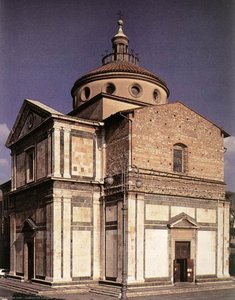
Designed by Giuliano da Sangallo and built between 1485 and 1490, Santa Maria delle Carceri is a masterpiece of Renaissance architecture. The church features a Greek cross plan with four equal arms that intersect at the center, creating a symmetrical and harmonious design. This style was inspired by ancient Roman buildings such as the Pantheon in Rome. The exterior of Santa Maria delle Carceri is decorated with white and green marble, which gives it a unique and striking appearance. The church also features a dome that rises above the center of the building, adding to its grandeur and majesty.The Artwork of Giuliano da Sangallo
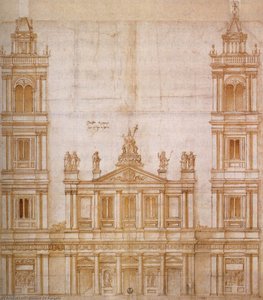
In addition to his architectural work, Giuliano da Sangallo was also an accomplished artist. One of his most famous works is the Exterior of the Church, which depicts the facade of Santa Maria delle Carceri. This painting showcases the intricate details and beautiful design of the church, highlighting its architectural significance.The Legacy of Giuliano da Sangallo
Giuliano da Sangallo's work on Santa Maria delle Carceri has had a lasting impact on architecture and art. His innovative use of the Greek cross plan inspired other architects to create similar designs, such as San Biagio in Montepulciano, which was designed by Antonio da Sangallo the Elder, Giuliano's brother. Today, Santa Maria delle Carceri is a museum that houses many works of art and historical artifacts. Visitors can explore the church's beautiful architecture and learn about its rich history. If you are interested in seeing more artwork by Giuliano da Sangallo, be sure to check out our collection on ArtsDot.com.Conclusion
Giuliano da Sangallo's work on Santa Maria delle Carceri is a testament to his skill as an architect and artist. His innovative use of the Greek cross plan and beautiful design have left a lasting impact on architecture and art, inspiring generations of artists and architects. If you are interested in learning more about Giuliano da Sangallo's work or seeing more artwork by this talented artist, be sure to visit ArtsDot.com. Exterior of the Church is a stunning example of Renaissance art and architecture that showcases Giuliano da Sangallo's talent and vision. Whether you are an art lover or simply appreciate beautiful design, this painting is sure to impress.Related Artworks
Artist Biography
The Architect of Renaissance Florence
Giuliano da Sangallo stands as a monumental figure in the Italian Renaissance, an architect whose vision shaped the cultural landscape of Florence and beyond. More than just a builder, he was a craftsman steeped in classical ideals, mentored by luminaries like Leon Battista Alberti and Filippo Brunelleschi. His legacy resides not only in the grandeur of his structures but also in the transmission of artistic knowledge across generations, profoundly influencing masters such as Raphael and Leonardo da Vinci. Born around 1445 in Florence, Giuliano’s formative years were marked by a privileged upbringing thanks to his father, Francesco Giamberti, a skilled woodworker and architect who served under Cosimo de' Medici. This familial connection provided invaluable access to artistic patronage and fostered a lifelong partnership with Lorenzo de' Medici—a relationship that would define Sangallo’s career trajectory.
Like many aspiring artisans of the era, Giuliano began his apprenticeship as a joiner, honing foundational skills in construction and craftsmanship. Crucially, he embraced the humanist ideals championed by Alberti and Brunelleschi, immersing himself in the study of ancient texts and architectural precedents. His ascent to prominence began with Cosimo de' Medici’s commission for a fortified villa—a project that showcased his burgeoning talent for defensive architecture and solidified his reputation as a formidable engineer. This initial undertaking established a crucial bond with Lorenzo the Magnificent, who would become his most enduring patron. Recognizing Sangallo’s versatility, Lorenzo entrusted him with ambitious projects extending beyond fortifications, allowing the architect to weave classical elegance into the very fabric of Florentine urbanism.
Mastery of Form and Classical Influence
The work of Giuliano da Sangallo is characterized by a seamless blend of strength and grace, a hallmark of the High Renaissance style. His designs often sought to revive the mathematical harmony and proportion found in Roman antiquity, yet they remained deeply rooted in the local traditions of Tuscany. One of his most celebrated contributions is the Design for the façade of San Lorenzo in Florence. Commissioned by Lorenzo de' Medici, this project exemplifies the architect's ability to create spaces that are both spiritually uplifting and structurally profound. This basilica, which features the vibrant stained glass windows of Ghirlandaio, stands as a testament to Sangallo’s influence on artistic innovation and his ability to coordinate diverse artistic talents toward a singular, harmonious vision.
Beyond religious structures, Sangallo's mastery extended to the creation of villas and churches that defined the era's aesthetic. His work on Santa Maria delle Carceri remains a pinnacle of his architectural achievement, showcasing a sophisticated use of geometry and classical motifs. The architect's ability to balance the rugged requirements of military engineering with the delicate beauty of residential design allowed him to navigate the complex needs of the Medici court. His influence was not merely structural but also deeply personal; through his brother Antonio da Sangallo the elder and his sons, Antonio and Francesco, the architectural language he helped pioneer continued to evolve and dominate the European landscape for decades.
A Lasting Legacy in Stone and Spirit
The historical significance of Giuliano da Sangallo lies in his role as a bridge between the early innovations of Brunelleschi and the refined classicism of the later Renaissance. He was a pivotal figure who helped translate the intellectual theories of humanism into tangible, enduring monuments. His life's work represents a period where architecture ceased to be merely functional and became an expressive medium for political power, religious devotion, and philosophical inquiry.
To reflect on his impact, one might consider these key pillars of his career:
- The Medici Connection: His role as the preferred architect for Lorenzo the Magnificent, which allowed him to shape the physical identity of the Medici era.
- Architectural Synthesis: The successful integration of Alberti's theoretical classical principles with the practical engineering traditions of Florence.
- Generational Influence: The establishment of a family dynasty of architects that carried his stylistic DNA into the 16th century.
- Urban Transformation: His contribution to the development of both fortified defensive structures and elegant, light-filled religious and residential spaces.
Though he passed away in 1516, the stones of Florence continue to speak his name. Every time a viewer gazes upon the balanced proportions of a Renaissance facade or feels the rhythmic harmony of a classical courtyard, they are experiencing the enduring spirit of Giuliano da Sangallo.
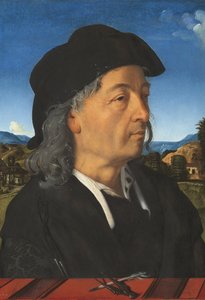
Giuliano da Sangallo
1443 - 1516 , Italy
Quick Facts
- Artistic Movement Or Style: Renaissance
- Artists Or Movements Influenced By This Artist:
- Raphael
- Leonardo da Vinci
- Artists Who Influenced This Artist:
- Leon Battista Alberti
- Filippo Brunelleschi
- Date Of Birth: c. 1445
- Date Of Death: 1516
- Full Name: Giuliano Giamberti da Sangallo
- Nationality: Italian
- Notable Artworks:
- Villa Medici
- Santa Maria delle Carceri
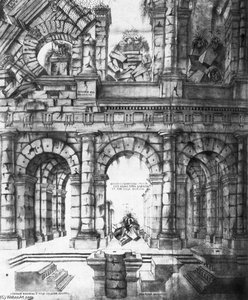
- Ruins of the Ancient Roman Theater of Marcellus
- Place Of Birth: Florence, Italy