

 Preview
 Send
Send Share
Share
 Details

 Download
 Similars
 X-Ray
X-Ray Diaporama
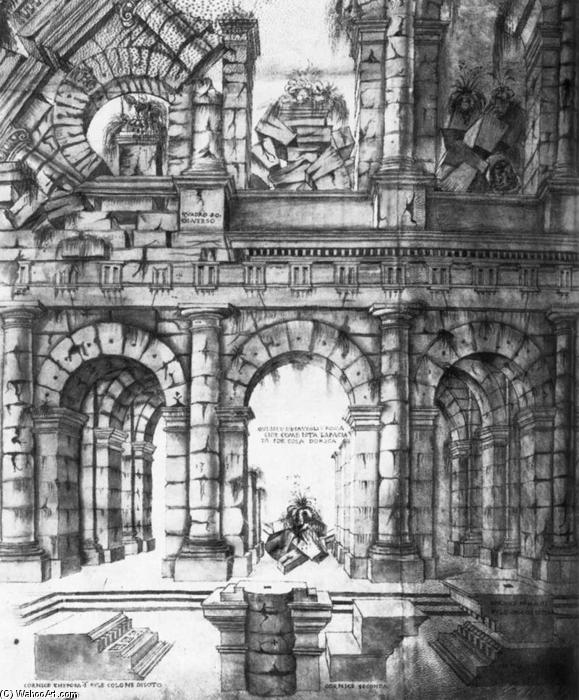
Ruins of the Ancient Roman Theater of Marcellus
 Ink On Paper
- WallArt
- High Renaissance
 1480
1480- Renaissance
 460.0 x 378.0 cm
 Biblioteca Apostolica
 Read More
Purchase a high-resolution, enhanced digital image, far superior to the online preview.
Each file is meticulously prepared by our in-house specialists using advanced tools and expert manual retouching. We ensure every image has exceptional clarity, precise color accuracy, and fine detail.
The final file is delivered via email within 72 hours, optimized for immediate use in professional, editorial, and print environments. This is the same quality trusted by top-tier design studios, publishers, and galleries.
Digital Image
Download a high-resolution file for personal display, printing, and creative projects. ( Buy Print Buy Hand Made Painting)
Included in Every Digital Image Order
Expert Digital Delivery, Guaranteed
When you choose ArtsDot.com, you're not just getting an image - you're receiving a professionally enhanced digital artwork, crafted with precision and backed by a satisfaction guarantee. Here's everything that comes with your order, automatically:

Fast Email Delivery
Your high-resolution digital image file will be emailed to you within 72 hours of ordering - ready for immediate use.

AI-Enhanced Digital File
Your artwork is professionally optimized using advanced AI tools and manual editing, ensuring maximum detail, clarity, and color accuracy.

Free Lifetime Re-Delivery
Accidentally deleted or lost your file? No worries - we'll resend it to you anytime, free of charge.

No Import Fees - Ever
Enjoy your artwork instantly with zero customs, duties, or delivery fees - digital downloads are always tax-free.

Color Accuracy Guarantee
We ensure your digital image reflects the original colors as closely as possible using professional tools and color management.

60-Day Satisfaction Guarantee
If you're not satisfied with your digital image, we'll revise it or refund 100% within 60 days - no questions asked.

100% Money-Back Guarantee
Not satisfied? Get a full refund within 60 days of receiving your digital file - no questions asked.

Bulk Order Discounts
Buy 3 images, save 10% - Buy 5, save 15% - Buy 10+, save 20%. Great for creative projects, galleries, and agencies.
Ruins of the Ancient Roman Theater of Marcellus: A Testament to Time’s Passage
The drawing by Giuliano da Sangallo, titled “Ruins of the Ancient Roman Theater of Marcellus,” transcends mere architectural representation; it embodies a profound meditation on history and decay. Executed in 1480s Florence during the High Renaissance, this piece stands as a cornerstone of humanist artistic thought—a deliberate effort to recapture the grandeur of antiquity while acknowledging its inevitable transformation. Da Sangallo’s meticulous attention to detail captures not just the physical structure but also the palpable atmosphere of ruin, inviting contemplation on cycles of creation and destruction.- Composition & Perspective: The central focus is undeniably the theater ruins themselves, arranged within a carefully constructed pyramidal composition that utilizes linear perspective to establish depth. Overlapping architectural elements create an illusion of three-dimensionality, guiding the viewer’s gaze upwards towards the apex of the structure and emphasizing its monumental scale.
- Color Palette & Line Work: Monochrome—primarily shades of gray—dominates the image, prioritizing texture and form over chromatic vibrancy. Fine lines delineate intricate architectural details – arches, columns, and walls – demonstrating Da Sangallo’s mastery of hatching and cross-hatching techniques to simulate stone surfaces and cast shadows with remarkable realism.
- Materials & Technique: Primarily graphite or ink on paper, the drawing reflects Da Sangallo's commitment to observation and accurate representation. The artist skillfully employs shading to convey the weathered appearance of the ruins, capturing the subtle nuances of stone erosion and highlighting the passage of time.
Architectural Detail & Classical Influence
Da Sangallo’s drawing is deeply rooted in classical architectural principles—specifically those championed by Leon Battista Alberti and Filippo Brunelleschi. The pyramidal composition echoes Roman temple designs, reflecting a desire to revive the ideals of harmony and proportion that characterized Greco-Roman civilization. The meticulous rendering of columns and arches demonstrates an understanding of structural engineering informed by rediscovered knowledge of Roman construction methods. This stylistic choice underscores Da Sangallo’s role as a conduit for humanist scholarship into the artistic realm.Symbolism & Emotional Resonance
Beyond its technical prowess, “Ruins of the Ancient Roman Theater of Marcellus” carries symbolic weight. The depiction of decay serves as a poignant reminder of mortality and the impermanence of human endeavors—a theme prevalent in Renaissance art reflecting anxieties about the fragility of earthly existence. Yet, amidst the ruin lies beauty—the enduring elegance of classical form preserved through Da Sangallo’s artistic vision. It evokes a sense of melancholy contemplation, prompting viewers to consider the legacy of past glories and the inevitability of change.A Preparatory Study for Grandeur
The drawing itself is considered a preparatory study—likely intended for a larger architectural rendering or painting project. Its detailed execution demonstrates Da Sangallo’s dedication to capturing the essence of his subject matter with unwavering precision, ensuring that any subsequent artwork would faithfully convey the grandeur and solemn beauty of the ancient theater ruins. This meticulous approach exemplifies the humanist spirit of the Renaissance, prioritizing intellectual rigor alongside artistic creativity.Related Artworks
Artist Biography
The Architect of Renaissance Florence
Giuliano da Sangallo stands as a monumental figure in the Italian Renaissance, an architect whose vision shaped the cultural landscape of Florence and beyond. More than just a builder, he was a craftsman steeped in classical ideals, mentored by luminaries like Leon Battista Alberti and Filippo Brunelleschi. His legacy resides not only in the grandeur of his structures but also in the transmission of artistic knowledge across generations, profoundly influencing masters such as Raphael and Leonardo da Vinci. Born around 1445 in Florence, Giuliano’s formative years were marked by a privileged upbringing thanks to his father, Francesco Giamberti, a skilled woodworker and architect who served under Cosimo de' Medici. This familial connection provided invaluable access to artistic patronage and fostered a lifelong partnership with Lorenzo de' Medici—a relationship that would define Sangallo’s career trajectory.
Like many aspiring artisans of the era, Giuliano began his apprenticeship as a joiner, honing foundational skills in construction and craftsmanship. Crucially, he embraced the humanist ideals championed by Alberti and Brunelleschi, immersing himself in the study of ancient texts and architectural precedents. His ascent to prominence began with Cosimo de' Medici’s commission for a fortified villa—a project that showcased his burgeoning talent for defensive architecture and solidified his reputation as a formidable engineer. This initial undertaking established a crucial bond with Lorenzo the Magnificent, who would become his most enduring patron. Recognizing Sangallo’s versatility, Lorenzo entrusted him with ambitious projects extending beyond fortifications, allowing the architect to weave classical elegance into the very fabric of Florentine urbanism.
Mastery of Form and Classical Influence
The work of Giuliano da Sangallo is characterized by a seamless blend of strength and grace, a hallmark of the High Renaissance style. His designs often sought to revive the mathematical harmony and proportion found in Roman antiquity, yet they remained deeply rooted in the local traditions of Tuscany. One of his most celebrated contributions is the Design for the façade of San Lorenzo in Florence. Commissioned by Lorenzo de' Medici, this project exemplifies the architect's ability to create spaces that are both spiritually uplifting and structurally profound. This basilica, which features the vibrant stained glass windows of Ghirlandaio, stands as a testament to Sangallo’s influence on artistic innovation and his ability to coordinate diverse artistic talents toward a singular, harmonious vision.
Beyond religious structures, Sangallo's mastery extended to the creation of villas and churches that defined the era's aesthetic. His work on Santa Maria delle Carceri remains a pinnacle of his architectural achievement, showcasing a sophisticated use of geometry and classical motifs. The architect's ability to balance the rugged requirements of military engineering with the delicate beauty of residential design allowed him to navigate the complex needs of the Medici court. His influence was not merely structural but also deeply personal; through his brother Antonio da Sangallo the elder and his sons, Antonio and Francesco, the architectural language he helped pioneer continued to evolve and dominate the European landscape for decades.
A Lasting Legacy in Stone and Spirit
The historical significance of Giuliano da Sangallo lies in his role as a bridge between the early innovations of Brunelleschi and the refined classicism of the later Renaissance. He was a pivotal figure who helped translate the intellectual theories of humanism into tangible, enduring monuments. His life's work represents a period where architecture ceased to be merely functional and became an expressive medium for political power, religious devotion, and philosophical inquiry.
To reflect on his impact, one might consider these key pillars of his career:
- The Medici Connection: His role as the preferred architect for Lorenzo the Magnificent, which allowed him to shape the physical identity of the Medici era.
- Architectural Synthesis: The successful integration of Alberti's theoretical classical principles with the practical engineering traditions of Florence.
- Generational Influence: The establishment of a family dynasty of architects that carried his stylistic DNA into the 16th century.
- Urban Transformation: His contribution to the development of both fortified defensive structures and elegant, light-filled religious and residential spaces.
Though he passed away in 1516, the stones of Florence continue to speak his name. Every time a viewer gazes upon the balanced proportions of a Renaissance facade or feels the rhythmic harmony of a classical courtyard, they are experiencing the enduring spirit of Giuliano da Sangallo.
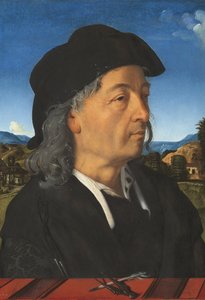
Giuliano da Sangallo
1443 - 1516 , Italy
Quick Facts
- Artistic Movement Or Style: Renaissance
- Artists Or Movements Influenced By This Artist:
- Raphael
- Leonardo da Vinci
- Artists Who Influenced This Artist:
- Leon Battista Alberti
- Filippo Brunelleschi
- Date Of Birth: c. 1445
- Date Of Death: 1516
- Full Name: Giuliano Giamberti da Sangallo
- Nationality: Italian
- Notable Artworks:
- Villa Medici
- Santa Maria delle Carceri
- Ruins of the Ancient Roman Theater of Marcellus
- Place Of Birth: Florence, Italy

