 Preview
 Send
Send Share
Share
 Details

 Download
 Similars
 X-Ray
X-Ray Diaporama
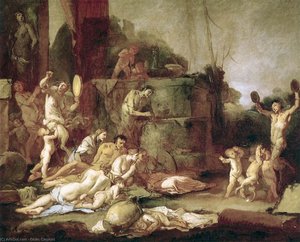
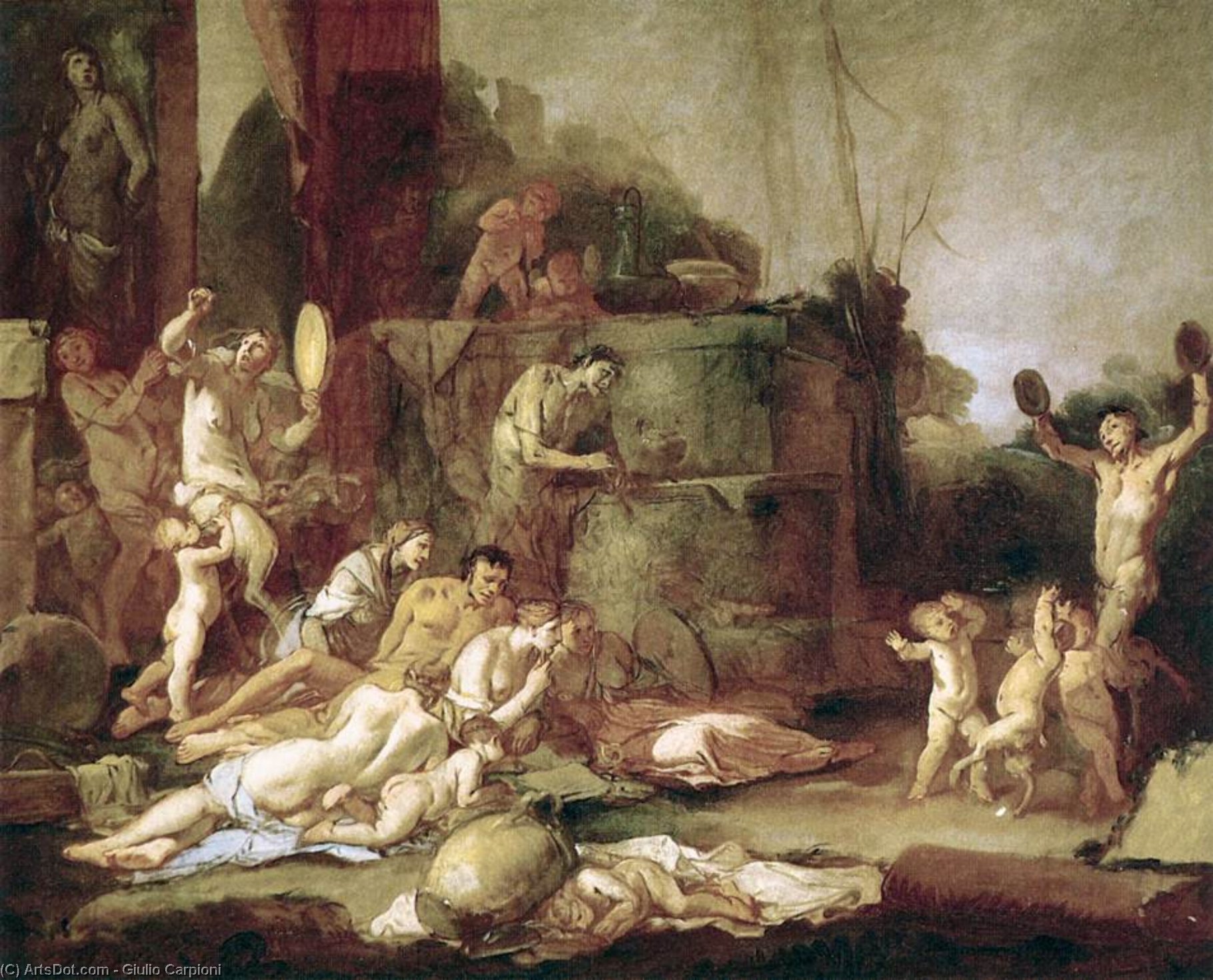
Bacchanal
 Oil
Oil- WallArt
- Baroque
 1660
1660- Early Modern
 81.0 x 100.0 cm
 Museo Thyssen-Bornemisza
 Read More
Hand Made Oil Reproduction
Hand-painted oil on canvas in your size and frame, made to order by our artists. ( Buy Print Buy Image)




P118B $10

P118H $10

P118W $10

P438Z $10

P508JH $12

P508YH $12

P805H $10

P805Z $10

P919BZ $10

P919G $10

P919XJ $10

P959ZH $10

P968JZ $12

W106C $8

W218G $10

W218JH $8

W218Y $10

W307PJ $10

W316G $10

W316PJ $8

W316Y $10

W398PJ $8

W4111J $10

W500HY $15

W500JH $15

W692G $12

W849H $8

W940BG $15

W953PJ $8




Pick from our preset sizes that match the artwork's original proportions.

You may enter your own dimensions to fit a specific frame or space. If your selected size does not match the original image's proportions, we will either crop the artwork or extend the painting with additional hand-painted elements. A digital mockup will be sent for your approval before production begins.
Please note that the on-screen preview does not reflect the actual cropping or extension. Only the mockup will accurately show the final composition.
While custom sizes are available, we recommend selecting a dimension from the predefined list to preserve the original proportions.
After order, ArtsDot.com team will email client for instructions and provide a mockup preview
Worldwide Delivery () in 3/4 weeks instead of standard 5 weeks. (18 August). No compromise on quality.

Free Worldwide Express Shipping

High-Quality Linen Canvas

Full Shipping Insurance

Customs Tax Refund Guarantee

True Color Matching Guarantee

60-Day Return Policy (Defects Only)

100% Money-Back Guarantee

Bulk Discount Offer
 Glass option is only available in size under 110 CM

Bacchanal
Reproduction Medium
Reproduction Size
-


Total Price
$ 263
Artwork Description
A Symphony of Venetian Excess
In the heart of the seventeenth century, the Venetian Baroque era reached a crescendo of sensory indulgence, and few artists captured this spirit of revelry as masterfully as Giulio Carpioni. His work Bacchanal serves as a breathtaking window into a world of uninhibited joy and classical myth. The painting presents a sprawling, lively tableau where a diverse group of figures—at least thirteen in number—are woven into a complex tapestry of movement and emotion. Some figures lounge in states of relaxed abandon, while others are caught in the kinetic energy of social interaction and play. Through his brush, Carpioni transforms a simple gathering into a grand theatrical performance, inviting the viewer to step into a space where the boundaries between the mortal and the divine seem to blur amidst the laughter and the wine.
The composition is a masterclass in Baroque disegno, reflecting the rigorous training Carpioni received under Alessandro Varotari. Every element of the scene is meticulously placed to guide the eye through a labyrinth of delights. A bowl rests on the periphery, perhaps holding the remnants of a feast, while a delicate wine glass catches the light toward the right, acting as a subtle nod to the intoxicating nature of the festivities. Even the presence of sports balls scattered near the center and bottom-right corners suggests a momentary pause in vigorous activity, adding a layer of spontaneous realism to the mythological setting. This careful arrangement creates a sense of depth and rhythm, making the canvas feel less like a static image and more like a living, breathing moment frozen in time.
Technique and the Radiance of Light
Carpioni’s technical prowess is most evident in his command of light and shadow, a hallmark of the Venetian tradition. Influenced by the dramatic chiaroscuro of contemporaries like Carlo Saraceni, he uses light not merely to illuminate, but to sculpt the figures and imbue them with a palpable presence. The way light dances across the skin of the revelers and glints off the various objects scattered throughout the scene creates a luminous atmosphere that feels both opulent and intimate. His ability to balance the heavy, dramatic shadows with brilliant, focused highlights allows for a rich texture that appeals deeply to the tactile senses.
For the discerning collector or interior designer, this piece offers more than just visual beauty; it provides an emotional anchor. The painting’s palette and subject matter evoke a sense of timeless luxury and classical sophistication. Whether placed in a grand salon or a curated study, a high-quality reproduction of Bacchanal brings with it the prestige of the Italian Baroque. It is a work that commands attention through its complexity and rewards prolonged contemplation with its subtle details, making it an ideal centerpiece for those looking to infuse their space with history, drama, and the enduring allure of Venetian splendor.
Related Artworks
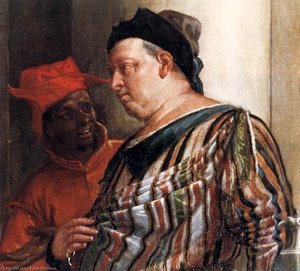
Artist Biography
The Venetian Visionary: The Life and Art of Giulio Carpioni
In the vibrant, sun-drenched landscape of the seventeenth-century Venetian Republic, few artists captured the dual nature of human existence—the sacred and the profane—with as much grace and technical precision as Giulio Carpioni. Born in Venice around 1613, Carpioni emerged during the height of the Baroque era, a period defined by dramatic movement, emotional intensity, and a sensory feast of light and shadow. His journey as an artist was one of profound refinement, shaped by the prestigious workshops of his homeland and a deep-seated commitment to the classical ideals of disegno. Through his brush, the theatricality of the Baroque found a unique voice, blending the spiritual fervor of religious devotion with the uninhibited joy of mythological revelry.
The foundation of Carpioni’s mastery can be traced back to his formative years under the tutelage of Alessandro Varotari, known as il Padovanino. From this mentor, Carpioni inherited a rigorous command of drawing and composition, ensuring that even his most chaotic scenes possessed an underlying structural elegance. His artistic vocabulary was further enriched by absorbing the stylistic nuances of contemporaries such as Simone Cantarini and Carlo Saraceni. These influences introduced him to the power of chiaroscuro—the dramatic interplay of light and dark—which he would later use to sculpt figures out of the shadows, imbuing them with a palpable, breathing presence. A pivotal moment in his development occurred in 1631, when a brief sojourn to Bergamo exposed him to the distinct traditions of Lombard art. This encounter with the more sculptural and refined aesthetic of the Lombardy region added a new layer of complexity to his visual language, allowing him to marry Venetian color with a more structured, tactile sensibility.
A Tapestry of Sacred and Profane Themes
Carpioni’s body of work is characterized by a remarkable versatility, oscillating between the solemnity of the altar and the decadence of the feast. As he established himself in Vicenza around 1638, he became a sought-after painter for the churches of the Venetian Republic. His religious compositions were not merely instructional; they were deeply emotive experiences, designed to convey profound theological truths through meticulous detail and spiritual intensity. In works such as his depictions of biblical narratives, one finds a sense of divine presence captured through the careful arrangement of light, guiding the faithful through complex stories of martyrdom and grace.
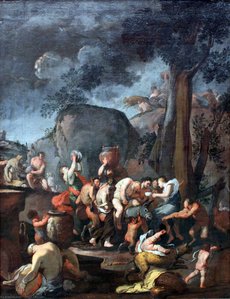
Yet, it is perhaps in his secular explorations that Carpioni’s exuberant spirit truly shines. He was a master of the Bacchanal, creating sprawling, lively tableaus that served as windows into a world of classical myth and sensory indulgence. In these paintings, the boundaries between the mortal and the divine seem to blur amidst flowing wine and rhythmic movement. His ability to weave dozens of figures into a single, cohesive tapestry of emotion is nothing short of breathtaking. Consider his approach to such scenes:
- Dynamic Composition: He utilized a complex arrangement of bodies in various states of repose and action to create a sense of kinetic energy.
- Symbolic Detail: Small elements, such as a discarded bowl or a delicate wine glass catching the light, served to ground the mythological grandeur in a startling, spontaneous realism.
- Mastery of Light: He employed light not just for illumination, but as a tool to direct the viewer's eye through a labyrinth of delights, highlighting the textures of fabric and the glow of skin.
Legacy and Historical Significance
The historical significance of Giulio Carpioni lies in his ability to synthesize the diverse artistic currents of his time into a singular, cohesive style. He stood at the crossroads of tradition and innovation, honoring the classical foundations of disegno while embracing the theatrical emotionalism of the Baroque. His portraits, which reflected the grandeur and dignity of noble families, further cemented his status as a premier chronicler of Venetian society. Through his etchings and paintings, Carpioni left behind a legacy that celebrates the full spectrum of human experience—from the quiet contemplation of the saint to the boisterous laughter of the reveler. Today, his works remain vital testaments to an era of unparalleled artistic splendor, reminding us of a time when art was a grand performance designed to stir the soul and enchant the senses.
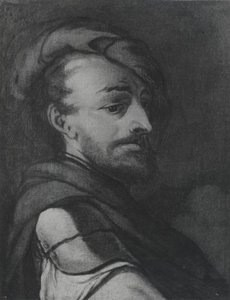
Giulio Carpioni
1613 - 1678 , Italy
Quick Facts
- Artistic Movement Or Style: Baroque
- Artists Or Movements Influenced By This Artist: ['Bergamo Art']
- Artists Who Influenced This Artist:
- Alessandro Varotari
- Simone Cantarini
- Carlo Saraceni
- Jean Leclerc
- Date Of Birth: 1613 Venice Italy
- Date Of Death: 1678 Verona Italy
- Full Name: Giulio Carpioni
- Nationality: Italian
- Notable Artworks:
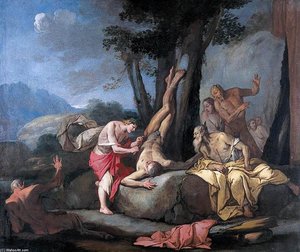
- Apollo & Marsyas
- A bacchanal
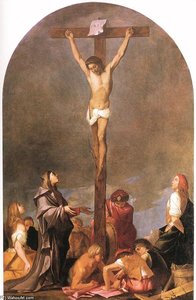
- Crucifixion
- Place Of Birth: Venice Italy
Related Articles

Baroque Drama: Bringing Opulence & Emotion into Contemporary Interiors
Explore the opulent world of Baroque interior design! Discover key elements, modern applications & how to bring dramatic elegance into your home with 's authentic reproductions.

Jacopo Tintoretto's Masterpieces: 25 Paintings That Define Venetian Drama | ArtsDot
Explore 25 breathtaking masterpieces by Jacopo Tintoretto, the Venetian master of drama and light. Discover the stories behind iconic Renaissance paintings & find museum-quality art reproductions to elevate your home decor on ArtsDot.com.

Baroque Masterpieces: 10 Paintings That Defined an Era |
Journey through the drama & grandeur of Baroque art! Explore 10 masterpieces by Caravaggio, Rembrandt, Rubens & more. Discover stunning oil paintings, rich colors & timeless stories. Find museum-quality reproductions at .

The Dramatic Flourish: Exploring the Baroque Movement's Enduring Legacy in Art History
Explore the dramatic world of Baroque art! Discover iconic artists like Caravaggio & Rubens, defining techniques, and its lasting impact on art history. Expert insights for collectors & enthusiasts at ArtsDot.

The Visceral Stage: Exploring Dramatic Narratives & Emotional Intensity in Baroque Art
Explore the dramatic world of Baroque art! Discover iconic masters like Caravaggio & Rembrandt, their techniques, and the movement's lasting impact. Expert insights for collectors & enthusiasts at ArtsDot.