 Preview
 Send
Send Share
Share
 Details

 Download
 Similars
 X-Ray
X-Ray Diaporama
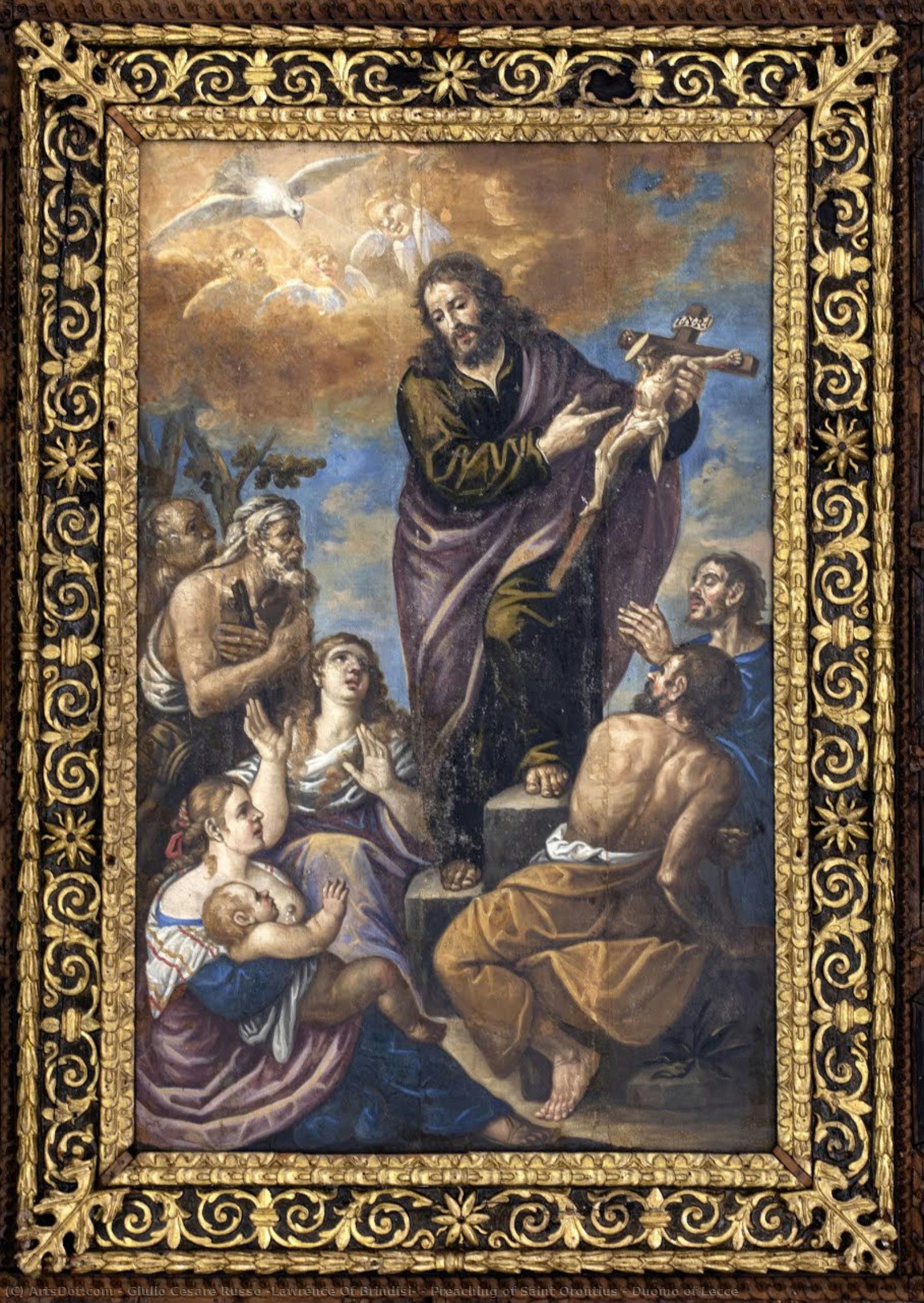
Preaching of Saint Orontius - Duomo of Lecce

 Read More
Hand Made Oil Reproduction
Hand-painted oil on canvas in your size and frame, made to order by our artists. ( Buy Print Buy Image)




































Pick from our preset sizes that match the artwork's original proportions.

You may enter your own dimensions to fit a specific frame or space. If your selected size does not match the original image's proportions, we will either crop the artwork or extend the painting with additional hand-painted elements. A digital mockup will be sent for your approval before production begins.
Please note that the on-screen preview does not reflect the actual cropping or extension. Only the mockup will accurately show the final composition.
While custom sizes are available, we recommend selecting a dimension from the predefined list to preserve the original proportions.
After order, ArtsDot.com team will email client for instructions and provide a mockup preview
Worldwide Delivery () in 3/4 weeks instead of standard 5 weeks. (5 September). No compromise on quality.

Free Worldwide Express Shipping

High-Quality Linen Canvas

Full Shipping Insurance

Customs Tax Refund Guarantee

True Color Matching Guarantee

60-Day Return Policy (Defects Only)

100% Money-Back Guarantee

Bulk Discount Offer
 Glass option is only available in size under 110 CM

Preaching of Saint Orontius - Duomo of Lecce
Reproduction Medium
Reproduction Size
-


Total Price
$ 263
Related Artworks








Artist Biography
A Life Forged in Faith and Language
Giulio Cesare Russo, known to history as Saint Lawrence of Brindisi, was a figure who embodied the fervor and intellectual currents of his time—the late 16th and early 17th centuries. Born in the bustling port city of Brindisi, Italy, on July 22, 1559, his life unfolded against the backdrop of the Counter-Reformation, a period of intense religious debate and renewal within the Catholic Church. He wasn’t merely a witness to this era; he became one of its most compelling voices, dedicating himself wholly to defending and propagating the Catholic faith through both theological rigor and remarkable linguistic skill. His journey culminated in his death on his 60th birthday, July 22, 1619, in Lisbon, Portugal, leaving behind a legacy that continues to resonate within the Church and beyond. The story of Lawrence of Brindisi is one of profound devotion, intellectual brilliance, and tireless service—a testament to the power of faith combined with an extraordinary gift for communication.Early Promise and Capuchin Vocation
The seeds of Lawrence’s exceptional life were sown in a family steeped in commerce; his parents were Venetian merchants who instilled in him a practical sensibility alongside their Catholic beliefs. However, it was the Conventual Franciscans in Brindisi who first recognized and nurtured his remarkable potential. Even as a young boy, he displayed an astonishing aptitude for learning and a precocious gift for oratory. By the age of six, he was already delivering sermons on the Infant Jesus during Christmas festivities—a testament to both his innate talent and the encouragement he received from those around him. The early loss of his father at twelve led to his continued education under the care of an uncle in Venice, where he flourished academically. This period solidified his intellectual foundation before a pivotal moment arrived: at sixteen, Giulio Cesare Russo entered the Capuchin Order, embracing a life of poverty, prayer, and service, and taking the name Lawrence. He pursued theological studies at the University of Padua, but it was his unparalleled mastery of languages that would truly set him apart.A Polyglot Apostle of the Counter-Reformation
Lawrence’s linguistic abilities were nothing short of phenomenal. Beyond his native Italian, he achieved fluency in Latin, Hebrew, Greek, German, Czech, Spanish, and French—a feat virtually unheard of for someone of his time. This extraordinary gift wasn't merely an academic accomplishment; it became the cornerstone of his ministry. Ordained a priest at twenty-three, Lawrence quickly gained renown for his powerful preaching and deep understanding of scripture. Pope Clement VIII recognized this unique talent and entrusted him with a particularly challenging mission: to preach to the Jewish community in Rome. His fluency in Hebrew allowed him to engage with them on their own terms, fostering dialogue and seeking reconciliation. But Lawrence’s influence extended far beyond theological debates. He was a skilled diplomat who played a crucial role during the Counter-Reformation, traveling extensively throughout Europe—particularly Germany and Austria—establishing Capuchin friaries and working tirelessly to win back Protestants to Catholicism. His involvement in the Battle of Stuhlweissenburg in 1601, accompanying Emperor Rudolf II’s forces against the Ottoman Turks, further cemented his reputation as a man of unwavering faith and decisive action; he was even credited with inspiring the Christian troops to victory through his presence and prayers.Legacy of Faith, Scholarship, and Diplomacy
The contributions of Saint Lawrence of Brindisi were multifaceted and enduring. His sermons and theological treatises provided powerful arguments for Catholic doctrine during a period of intense religious upheaval. He wasn’t simply defending dogma; he was articulating a vision of faith rooted in scripture and reason. His linguistic mastery facilitated his diplomatic missions, enabling him to navigate complex political landscapes and build bridges between cultures. The expansion of the Capuchin Order throughout Europe—with numerous friaries founded under his guidance—stands as a testament to his leadership and organizational skills. He also served with distinction as a papal nuncio (ambassador) to Bavaria and Spain, demonstrating his acumen in international relations. Ultimately, it was his profound theological insights that led to his recognition as a Doctor of the Church by Pope John XXIII in 1959—a title reserved for those whose writings have had a lasting impact on Christian thought. Lawrence’s life serves as an inspiring example of how intellectual brilliance and unwavering faith can be combined to effect positive change in the world. He was beatified in 1783 and canonized in 1881, his feast day celebrated annually on July 21st—a continuing tribute to a remarkable man who dedicated his life to God and humanity. His favorite blessing, “Nos cum prole pia benedicat Virgo Maria” (Mary, with your loving Son, bless us each and everyone), encapsulates the essence of his devotion.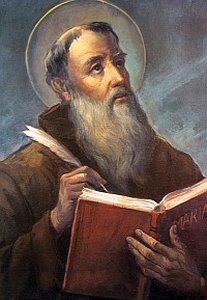
Giulio Cesare Russo (Lawrence of Brindisi)
1559 - 1619 , Italy
Quick Facts
- Artistic Movement Or Style: Counter-Reformation art
- Date Of Birth: July 22, 1559
- Date Of Death: July 22, 1619
- Full Name: Giulio Cesare Russo
- Nationality: Italian
- Notable Artworks:
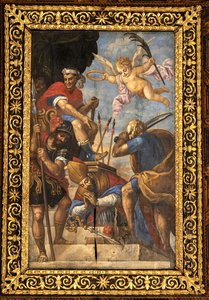
- Martyrdom of Saint Orontius
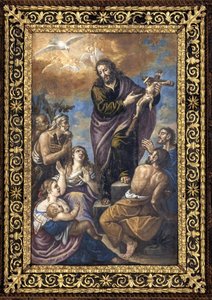
- Preaching of Saint Orontius
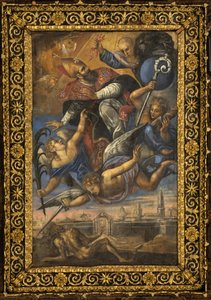
- Protection of Saint Orontius
- Place Of Birth: Brindisi, Italy