 Preview
 Send
Send Share
Share
 Details

 Download
 Similars
 X-Ray
X-Ray Diaporama
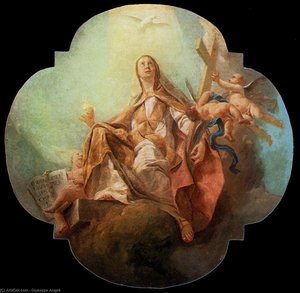
Faith
 Acrylic On Canvas
- WallArt
- Baroque Drama
 1754
1754 155.0 x 150.0 cm
 Scuola Grande di San Rocco
 Read More
Hand Made Oil Reproduction
Hand-painted oil on canvas in your size and frame, made to order by our artists. ( Buy Print Buy Image)




P118B $10

P118H $10

P118W $10

P438Z $10

P508JH $12

P508YH $12

P805H $10

P805Z $10

P919BZ $10

P919G $10

P919XJ $10

P959ZH $10

P968JZ $12

W106C $8

W218G $10

W218JH $8

W218Y $10

W307PJ $10

W316G $10

W316PJ $8

W316Y $10

W398PJ $8

W4111J $10

W500HY $15

W500JH $15

W692G $12

W849H $8

W940BG $15

W953PJ $8




Pick from our preset sizes that match the artwork's original proportions.

You may enter your own dimensions to fit a specific frame or space. If your selected size does not match the original image's proportions, we will either crop the artwork or extend the painting with additional hand-painted elements. A digital mockup will be sent for your approval before production begins.
Please note that the on-screen preview does not reflect the actual cropping or extension. Only the mockup will accurately show the final composition.
While custom sizes are available, we recommend selecting a dimension from the predefined list to preserve the original proportions.
After order, ArtsDot.com team will email client for instructions and provide a mockup preview
Worldwide Delivery () in 3/4 weeks instead of standard 5 weeks. (17 August). No compromise on quality.

Free Worldwide Express Shipping

High-Quality Linen Canvas

Full Shipping Insurance

Customs Tax Refund Guarantee

True Color Matching Guarantee

60-Day Return Policy (Defects Only)

100% Money-Back Guarantee

Bulk Discount Offer
 Glass option is only available in size under 110 CM

Faith
Reproduction Medium
Reproduction Size
-


Total Price
$ 263
Artwork Description
Giuseppe Angeli: Venetian Baroque Drama Embodied
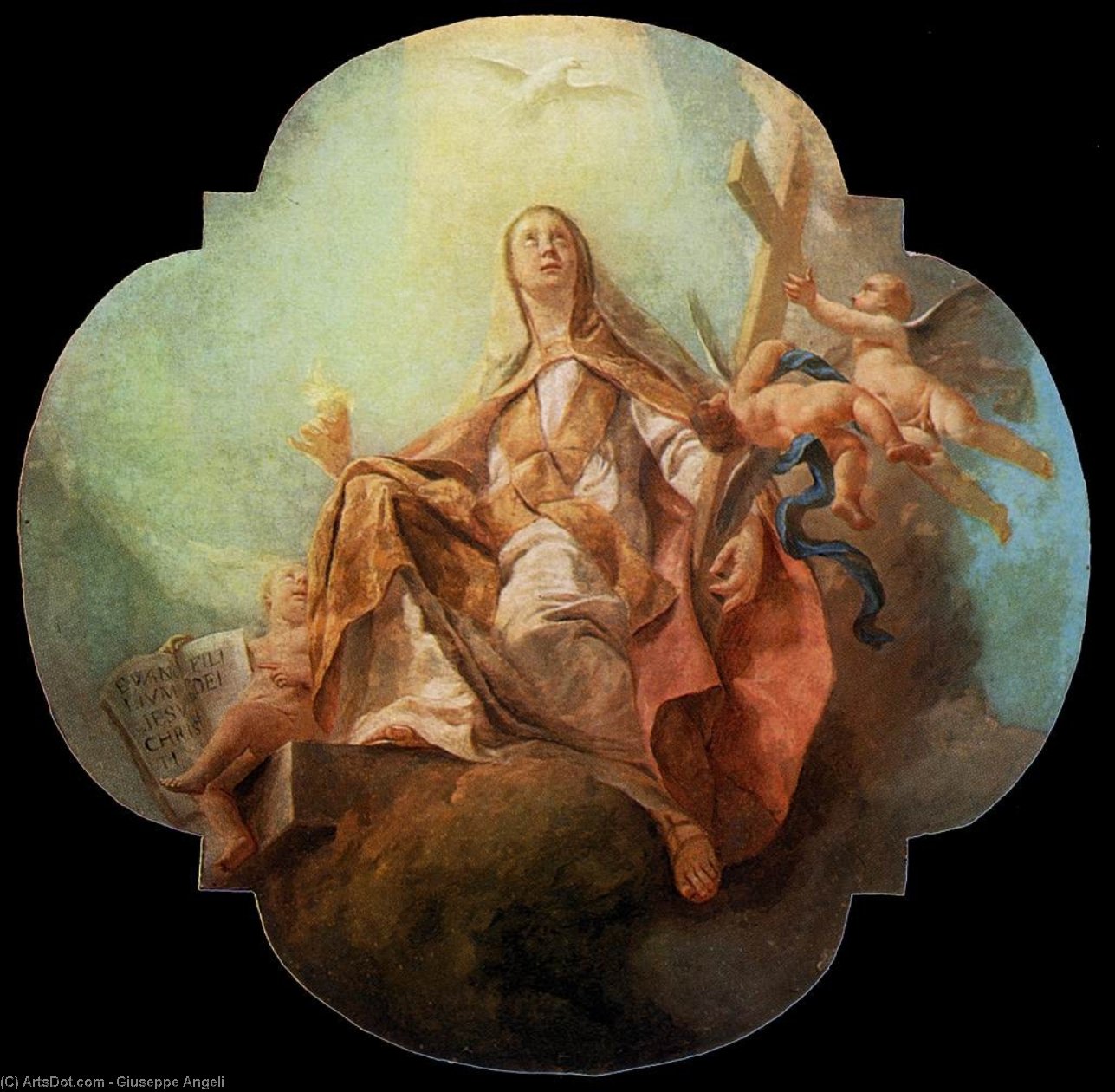
The painting “Faith,” executed in 1754 by Giuseppe Angeli (1712 – 1798), stands as a testament to the grandeur and emotional depth of Venetian Baroque art. Born in Venice, Angeli honed his craft under the mentorship of Piazzetta, absorbing the stylistic precepts that defined the era’s artistic sensibilities—a tradition he embraced with unwavering dedication throughout his prolific career. His enrollment at the Academy of Fine Arts solidified his place within a vibrant intellectual movement committed to elevating artistic standards while honoring established conventions.Subject Matter and Composition
“Faith” depicts a serene yet powerfully evocative scene: a woman, identified as Mary Magdalene according to scholarly consensus, cradles her infant son—representing Jesus Christ—upon a weathered stone bench overlooking the Adriatic Sea. The meticulous arrangement of figures underscores Angeli’s masterful command of compositional principles characteristic of Baroque art. The central Madonna dominates the canvas, bathed in diffused light that emanates from an unseen source, creating an atmosphere of solemn contemplation and spiritual reverence. Two angels flank Mary Magdalene, their wings outstretched in benediction—a recurring motif within Venetian religious iconography reflecting a profound belief in divine grace and protection. Scattered books contribute to the narrative’s intellectual dimension, symbolizing knowledge and piety as essential components of Christian faith.Style and Technique
Angeli's style aligns seamlessly with the Baroque aesthetic—characterized by dramatic chiaroscuro (light and shadow), opulent ornamentation, and a fervent pursuit of realism infused with expressive emotion. He employed oil paint on canvas using a layering technique known as sfumato, skillfully blending colors to achieve subtle gradations of tone that soften contours and heighten visual impact. The artist’s meticulous attention to detail—evident in the depiction of Mary Magdalene's drapery folds and the texture of the stone bench—demonstrates Angeli’s unwavering commitment to artistic accuracy while simultaneously conveying a palpable sense of immediacy and emotional resonance.Historical Context and Symbolism
“Faith” emerged during a period marked by fervent religious fervor within Venice—a city deeply rooted in Catholic tradition. The painting reflects the Baroque preoccupation with portraying biblical narratives as conduits for spiritual enlightenment, aiming to inspire piety and reaffirm faith’s transformative power. Mary Magdalene embodies repentance and redemption—a central theme within Christian theology—while Jesus Christ represents divine incarnation and salvation. The Adriatic Sea serves as a backdrop symbolizing both earthly pilgrimage and heavenly communion—underscoring the painting's overarching message of hope and spiritual transcendence.Emotional Impact and Artistic Legacy
“Faith” transcends mere visual representation; it communicates profound emotional depth—capturing the tenderness of maternal love and the solemn beauty of religious devotion. Angeli’s masterful execution elevates the artwork beyond its historical context, establishing it as a timeless masterpiece that continues to resonate with audiences today. Its enduring appeal testifies to the power of art to evoke empathy, inspire contemplation, and affirm humanity's spiritual aspirations—a legacy cemented by Angeli’s position as president of the Venetian Academy and his influence on subsequent generations of Venetian artists.Related Artworks
Artist Biography
The Venetian Master of Baroque Drama: The Life of Giuseppe Angeli
In the luminous, water-bound world of eighteenth-century Venice, few artists captured the profound tension between the earthly and the divine as masterfully as Giuseppe Angeli. Born in 1712, Angeli emerged during a period when the late Baroque style was reaching its most sophisticated and emotive peak. His life’s work serves as a vibrant window into the cultural soul of Venice, bridging the gap between intimate genre scenes of everyday Venetian life and the monumental, sweeping narratives of religious devotion. To study Angeli is to witness the evolution of a painter who could command both the quiet subtlety of a domestic moment and the thunderous grandeur of a celestial vision.
The foundation of Angeli’s brilliance was laid under the watchful eye of Giambattista Piazzetta, one of the most formidable figures in Venetian painting. From his mentor, Angeli inherited a profound understanding of chiaroscroll—the dramatic interplay of light and shadow—and a technique that prioritized emotional resonance over mere decorative flourish. This rigorous training allowed him to navigate the complex guild systems of the era with professional ease. By 1741, his ascent was formalized through his enrollment in the Venetian Academy of Fine Arts, an institution that would later become the stage for his greatest professional triumphs.
A Legacy of Instruction and Influence
Angeli was not merely a practitioner of art but a guardian of its future. His relationship with the Venetian Academy of Fine Arts transitioned from student to leader, a journey marked by deep intellectual commitment. In 1756, he began sharing his mastery through teaching, and by 1772, he had ascended to the prestigious position of President of the Academy. This role placed him at the heart of Venice's artistic evolution, where he shaped the pedagogical standards for a new generation of painters, ensuring that the traditions of the Baroque would endure even as the winds of Neoclassicism began to stir.
His influence extended far beyond the classroom, manifesting in grand architectural interventions that transformed sacred and secular spaces alike. His reputation was cemented by several monumental achievements:
- The Church of San Stae: Here, his ambitious canvases showcased a breathtaking mastery of perspective and color, drawing the faithful into a heightened state of spiritual contemplation.
- Villa Widmann-Foscari: In the lush landscapes near Padua, Angeli’s expansive fresco murals demonstrated an unparalleled command of scale, turning walls into immersive, narrative windows.
The Versatility of Vision: From Sacred to Secular
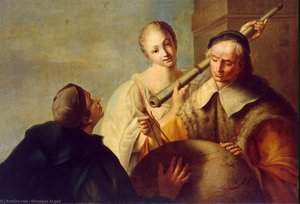
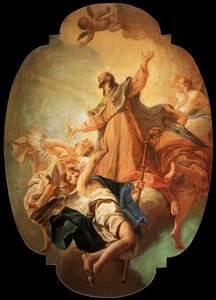
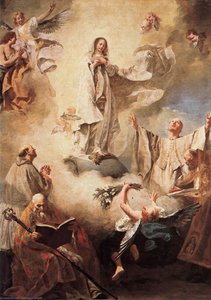
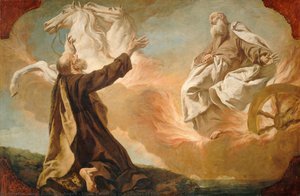
What truly distinguishes Angeli is his remarkable ability to pivot between scales and subjects without losing his stylistic signature. While his religious works, such as St Roch in Glory and Elijah Taken Up in a Chariot of Fire, utilize dramatic movement and biblical grandeur to evoke awe, his smaller-scale works offer a more intimate look at the human condition. In pieces like Lesson in Astronomy, one can sense the intellectual elegance of the era, where the pursuit of scientific knowledge was treated with the same reverence as spiritual enlightenment.
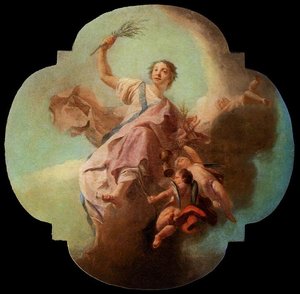
His oeuvre remains a testament to the enduring power of the Venetian school. Whether through the tender personifications found in works like Charity or the sweeping theatricality of his frescoes, Angeli’s art continues to resonate. He remains a pivotal figure whose work captures the twilight of the Baroque era—a period defined by its ability to find the extraordinary within the ordinary and the divine within the human experience.
Giuseppe Angeli
1712 - 1798 , Italy
Quick Facts
- Artistic Movement Or Style: Late Baroque
- Artists Or Movements Influenced By This Artist: ['']
- Artists Who Influenced This Artist: ['Giambattista Piazzetta']
- Date Of Birth: 1712
- Date Of Death: 1798
- Full Name: Giuseppe Angeli
- Nationality: Italian
- Notable Artworks:
- Elijah Taken Up in a Chariot of Fire
- St Roch in Glory
- Faith
- Charity
- Place Of Birth: Venice, Italy
Related Articles

Jacopo Tintoretto's Masterpieces: 25 Paintings That Define Venetian Drama | ArtsDot
Explore 25 breathtaking masterpieces by Jacopo Tintoretto, the Venetian master of drama and light. Discover the stories behind iconic Renaissance paintings & find museum-quality art reproductions to elevate your home decor on ArtsDot.com.

Fra Angelico's Masterpieces: 25 Renaissance Paintings for Your Home | ArtsDot
Explore 25 breathtaking masterpieces by Fra Angelico, a Renaissance master. Discover the stories behind his iconic frescoes, Annunciations & religious art. Find museum-quality reproductions and elevate your home decor with ArtsDot.com.

The Dramatic Flourish: Exploring the Baroque Movement's Enduring Legacy in Art History
Explore the dramatic world of Baroque art! Discover iconic artists like Caravaggio & Rubens, defining techniques, and its lasting impact on art history. Expert insights for collectors & enthusiasts at ArtsDot.

The Visceral Stage: Exploring Dramatic Narratives & Emotional Intensity in Baroque Art
Explore the dramatic world of Baroque art! Discover iconic masters like Caravaggio & Rembrandt, their techniques, and the movement's lasting impact. Expert insights for collectors & enthusiasts at ArtsDot.

Baroque Masterpieces: 10 Paintings That Defined an Era |
Journey through the drama & grandeur of Baroque art! Explore 10 masterpieces by Caravaggio, Rembrandt, Rubens & more. Discover stunning oil paintings, rich colors & timeless stories. Find museum-quality reproductions at .