

 Preview
 Send
Send Share
Share
 Details

 Download
 Similars
 X-Ray
X-Ray Diaporama
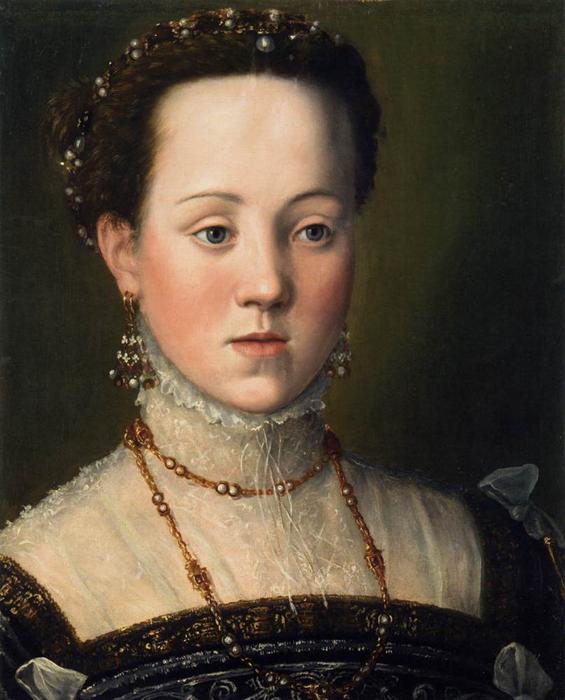
Archduchess Anna, Daughter of Emperor Maximilian II
 Oil On Canvas
- WallArt
- Renaissance
 1563
1563 42.0 x 34.0 cm
 Kunsthistorisches Museum
 Read More
Purchase a high-resolution, enhanced digital image, far superior to the online preview.
Each file is meticulously prepared by our in-house specialists using advanced tools and expert manual retouching. We ensure every image has exceptional clarity, precise color accuracy, and fine detail.
The final file is delivered via email within 72 hours, optimized for immediate use in professional, editorial, and print environments. This is the same quality trusted by top-tier design studios, publishers, and galleries.
Digital Image
Download a high-resolution file for personal display, printing, and creative projects. ( Buy Print Buy Hand Made Painting)
Included in Every Digital Image Order
Expert Digital Delivery, Guaranteed
When you choose ArtsDot.com, you're not just getting an image - you're receiving a professionally enhanced digital artwork, crafted with precision and backed by a satisfaction guarantee. Here's everything that comes with your order, automatically:

Fast Email Delivery
Your high-resolution digital image file will be emailed to you within 72 hours of ordering - ready for immediate use.

AI-Enhanced Digital File
Your artwork is professionally optimized using advanced AI tools and manual editing, ensuring maximum detail, clarity, and color accuracy.

Free Lifetime Re-Delivery
Accidentally deleted or lost your file? No worries - we'll resend it to you anytime, free of charge.

No Import Fees - Ever
Enjoy your artwork instantly with zero customs, duties, or delivery fees - digital downloads are always tax-free.

Color Accuracy Guarantee
We ensure your digital image reflects the original colors as closely as possible using professional tools and color management.

60-Day Satisfaction Guarantee
If you're not satisfied with your digital image, we'll revise it or refund 100% within 60 days - no questions asked.

100% Money-Back Guarantee
Not satisfied? Get a full refund within 60 days of receiving your digital file - no questions asked.

Bulk Order Discounts
Buy 3 images, save 10% - Buy 5, save 15% - Buy 10+, save 20%. Great for creative projects, galleries, and agencies.
Collectible Description
Archduchess Anna, Daughter of Emperor Maximilian II: A Renaissance Masterpiece by Arcimboldo
- Subject: This exquisite portrait captures Archduchess Anna, the daughter of Emperor Maximilian II, in a manner that transcends simple representation. Arcimboldo doesn't merely depict a young woman; he constructs her very being from a carefully orchestrated assemblage of objects – a testament to his innovative approach and profound understanding of symbolism.
- Style & Technique: Executed in 1563 by the renowned Giuseppe Arcimboldo, this artwork exemplifies the peak of Renaissance portraiture. The meticulous oil painting on canvas reveals a mastery of technique, characterized by smooth blending, subtle gradations of light and shadow, and an almost obsessive attention to detail. The linear perspective adds depth, creating a convincing illusion of three-dimensionality within the composition.
A Symphony of Symbolism
Arcimboldo’s genius lies not just in his technical skill but also in his ability to imbue his works with layers of meaning. The inclusion of pearls and gold, prominently displayed as adornments for Archduchess Anna, immediately speaks to wealth, nobility, and the status afforded to members of the Habsburg court. Beyond this, the specific objects composing her head – fruits, vegetables, and flowers – carry rich symbolic weight within the Renaissance worldview. These elements often represented virtues, seasons, or allegorical concepts, adding a complex intellectual dimension to the portrait. The arrangement itself suggests a harmonious balance between earthly beauty and divine grace, reflecting the humanist ideals prevalent during this era.
Historical Context & Arcimboldo’s Vision
Born in Milan in 1527, Giuseppe Arcimboldo emerged as an artist during a period of intense intellectual and artistic ferment. His early works, including frescoes for churches and traditional court portraits, demonstrated a solid grounding in established techniques. However, it was his increasingly unconventional approach – the creation of composite heads – that cemented his place in art history. These innovative portraits were conceived within the context of the Renaissance fascination with nature, humanism, and the pursuit of knowledge. Arcimboldo’s work reflects this spirit of inquiry, challenging conventional notions of portraiture and inviting viewers to engage with multiple layers of interpretation.
Emotional Impact & Artistic Value
The Archduchess Anna portrait possesses a captivating allure, drawing the viewer into a world of intricate detail and symbolic richness. The warm color palette – dominated by rich tones – evokes a sense of opulence and grandeur, reflecting the status of its subject. Measuring 42 x 34 cm, this piece is perfectly suited for display in a variety of settings, from private residences to corporate offices. This hand-painted reproduction offers an unparalleled opportunity to own a genuine Arcimboldo masterpiece, bringing a touch of Renaissance brilliance and intellectual depth to your space. It’s more than just a portrait; it's a window into the mind of a visionary artist.
Related Artworks

Artist Biography
A World Reimagined: The Enigmatic Art of Giuseppe Arcimboldo
Giuseppe Arcimboldo, a name that conjures images both whimsical and profoundly strange, remains one of the most singular figures in Renaissance art. Born in Milan in 1527, his career unfolded against the backdrop of a Europe steeped in intellectual ferment, religious upheaval, and an insatiable curiosity about the natural world. While initially recognized for more conventional works – frescoes adorning cathedrals and portraits adhering to established courtly standards – Arcimboldo’s enduring legacy rests upon a series of composite heads constructed entirely from meticulously arranged objects: fruits, vegetables, flowers, books, even musical instruments. These weren't mere playful exercises in visual trickery; they were complex allegories, imbued with symbolism that resonated deeply within the Renaissance worldview and continue to fascinate audiences today. His father, Biagio Arcimboldo, was an artist himself, providing young Giuseppe with early artistic training and likely influencing his initial foray into design work for stained glass windows and frescoes at Milan Cathedral beginning around 1549. This foundational experience honed his technical skill and eye for detail—qualities that would become hallmarks of his later, more unconventional creations.Courtly Commissions and the Rise of a Unique Style
Arcimboldo’s trajectory took a significant turn in 1562 when he was appointed court portraitist to Ferdinand I at the Habsburg court in Vienna. This marked the beginning of over two decades serving as an artistic polymath for three successive Habsburg rulers: Maximilian II and his son, Rudolf II. Beyond painting portraits – though even these often displayed subtle eccentricities – Arcimboldo’s duties encompassed costume design, festival decorations, and the organization of imperial collections. It was within this environment of refined taste and intellectual curiosity that his signature style began to blossom. The courtly demand for novelty and spectacle provided fertile ground for experimentation, allowing him to move beyond traditional portraiture towards the creation of his celebrated “composite heads.” These weren’t born from a sudden impulse but evolved gradually, building upon Renaissance fascination with puzzles, riddles, and the exploration of hidden meanings within seemingly ordinary objects. The influence of earlier artists who experimented with *trompe l'oeil* effects and distorted perspectives can be detected, yet Arcimboldo synthesized these elements into something entirely his own—a unique visual language that challenged conventional notions of representation.Decoding the Symbolism: More Than Meets the Eye
To dismiss Arcimboldo’s work as mere whimsicality is to overlook its profound intellectual depth. Each object within his composite portraits was carefully chosen, laden with symbolic meaning related to the sitter's character, profession, or social status. *The Librarian*, for example, isn’t simply a face constructed from books; it’s a subtle critique of scholarly pretension—a commentary on those who amass knowledge without truly engaging with its content. The animal tails forming the beard represent dusters, hinting at neglected volumes gathering dust on shelves. Similarly, his portraits of the seasons – particularly *Vertumnus*, depicting Emperor Rudolf II as the Roman god of gardens and change – are rich in botanical symbolism, reflecting the emperor’s patronage of science and natural history. These weren't intended to be immediately deciphered; they were designed to provoke contemplation, inviting viewers to unravel layers of meaning hidden within the seemingly playful arrangement of objects. The very act of constructing a human likeness from inanimate matter served as a meditation on the interconnectedness of all things—a reflection of Renaissance Neoplatonism’s belief in the underlying harmony of the universe.Legacy and Rediscovery: A Precursor to Surrealism
Despite his success during his lifetime, Arcimboldo's reputation waned in the centuries following his death in 1593. His work was often relegated to the realm of curiosities—appreciated for its technical skill but dismissed as lacking serious artistic merit. It wasn’t until the 20th century that a renewed appreciation for his art emerged, fueled by the rise of Surrealism. Artists like Salvador Dalí recognized in Arcimboldo a kindred spirit—a visionary who dared to challenge conventional perceptions and explore the subconscious through unexpected juxtapositions of imagery. The influence of Arcimboldo can be seen in Dalí’s own dreamlike compositions and his fascination with metamorphosis and illusion. Today, Arcimboldo is celebrated as a pivotal figure in art history—a precursor to Surrealism whose innovative use of symbolism and playful distortion continues to inspire artists and captivate audiences worldwide. His paintings are housed in prestigious museums such as the Kunsthistorisches Museum in Vienna and the Louvre in Paris, ensuring that his unique vision will continue to resonate for generations to come. His legacy is a testament to the enduring power of imagination and the ability of art to transform our understanding of the world around us.
Giuseppe Arcimboldo
1527 - 1593 , Italy
Quick Facts
- Artistic Movement Or Style: Mannerism, Surrealism
- Artists Or Movements Influenced By This Artist:
- Salvador Dalí
- Surrealism
- Date Of Birth: April 5, 1527
- Date Of Death: July 11, 1593
- Full Name: Giuseppe Arcimboldo
- Nationality: Italian
- Notable Artworks:
- Floral Still Life
- The Four Seasons
- Vertumnus
- The Librarian
- Place Of Birth: Milan, Italy

