

 Preview
 Send
Send Share
Share
 Details

 Download
 Similars
 X-Ray
X-Ray Diaporama
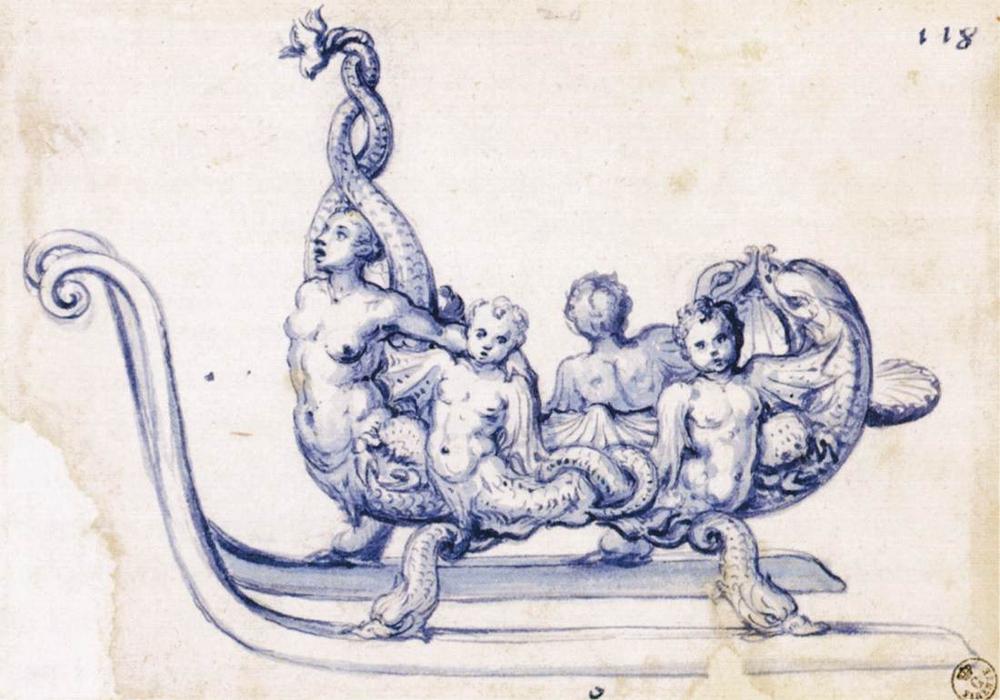
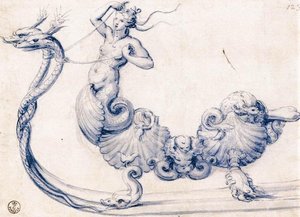
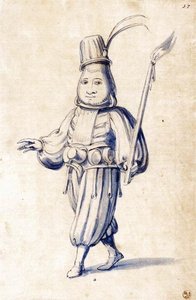
Sketch for a Sleigh with a Siren


 Read More
Purchase a high-resolution, enhanced digital image, far superior to the online preview.
Each file is meticulously prepared by our in-house specialists using advanced tools and expert manual retouching. We ensure every image has exceptional clarity, precise color accuracy, and fine detail.
The final file is delivered via email within 72 hours, optimized for immediate use in professional, editorial, and print environments. This is the same quality trusted by top-tier design studios, publishers, and galleries.
Digital Image
Download a high-resolution file for personal display, printing, and creative projects. ( Buy Print Buy Hand Made Painting)
Included in Every Digital Image Order
Expert Digital Delivery, Guaranteed
When you choose ArtsDot.com, you're not just getting an image - you're receiving a professionally enhanced digital artwork, crafted with precision and backed by a satisfaction guarantee. Here's everything that comes with your order, automatically:

Fast Email Delivery
Your high-resolution digital image file will be emailed to you within 72 hours of ordering - ready for immediate use.

AI-Enhanced Digital File
Your artwork is professionally optimized using advanced AI tools and manual editing, ensuring maximum detail, clarity, and color accuracy.

Free Lifetime Re-Delivery
Accidentally deleted or lost your file? No worries - we'll resend it to you anytime, free of charge.

No Import Fees - Ever
Enjoy your artwork instantly with zero customs, duties, or delivery fees - digital downloads are always tax-free.

Color Accuracy Guarantee
We ensure your digital image reflects the original colors as closely as possible using professional tools and color management.

60-Day Satisfaction Guarantee
If you're not satisfied with your digital image, we'll revise it or refund 100% within 60 days - no questions asked.

100% Money-Back Guarantee
Not satisfied? Get a full refund within 60 days of receiving your digital file - no questions asked.

Bulk Order Discounts
Buy 3 images, save 10% - Buy 5, save 15% - Buy 10+, save 20%. Great for creative projects, galleries, and agencies.
Collectible Description
Giuseppe Arcimboldo’s “Sketch for a Sleigh with a Siren”: A Frozen Fantasy of Renaissance Symbolism
Giuseppe Arcimboldo's "Sketch for a Sleigh with a Siren," painted in 1585 and now residing within the Galleria degli Uffizi in Florence, is not merely a charming winter scene; it’s a meticulously constructed allegory brimming with the intellectual currents of the late Renaissance. This captivating work transcends simple portraiture, transforming into a complex visual poem that speaks to themes of power, nature, mythology, and the very essence of human perception. The painting immediately draws the eye with its vibrant, almost theatrical composition – a fantastical sleigh pulled by an ethereal siren whose body forms the foundation of the vehicle itself. Above her, two human heads, strikingly different in appearance yet united in their gaze, serve as decorative elements, perhaps hinting at duality or contrasting perspectives.
Arcimboldo’s genius lies not just in his technical skill – evident in the remarkably detailed rendering of each fruit, vegetable, and flower – but in his masterful manipulation of symbolism. The siren, a figure deeply rooted in classical mythology, represents both alluring beauty and dangerous temptation. Her placement at the sleigh's core suggests a powerful force driving the scene, while her serpentine form subtly alludes to the cyclical nature of time and the passage of seasons. The two human heads flanking her are equally significant; one, with its short hair and crowned features, embodies authority and perhaps even a touch of regal arrogance, while the other, adorned with flowing locks and floral embellishments, represents femininity and grace. This deliberate juxtaposition invites contemplation on the balance between masculine and feminine energies, order and chaos.
A Masterclass in Pen and Ink Technique
“Sketch for a Sleigh with a Siren” is executed primarily using pen and ink, a technique that lends the artwork an exquisite delicacy and remarkable precision. The lines are crisp yet fluid, creating a sense of depth and texture that brings each element to life. Arcimboldo’s meticulous attention to detail is breathtaking; you can almost feel the velvety skin of the fruits, the delicate petals of the flowers, and the rough bark of the branches used to frame the scene. This painstaking process underscores the artist's dedication to his craft and highlights the inherent beauty within the natural world – a core tenet of Renaissance art.
The choice of pen and ink also contributes to the painting’s overall mood, imbuing it with an air of mystery and intrigue. The dark lines create strong contrasts, emphasizing the shapes and forms while simultaneously suggesting hidden depths. This technique is particularly effective in conveying the ethereal quality of the siren and the surrounding winter landscape, creating a sense of both wonder and unease.
Renaissance Roots: Symbolism and Allegory
To fully appreciate “Sketch for a Sleigh with a Siren,” it’s crucial to understand the intellectual context within which Arcimboldo worked. The late 16th century was a period of intense philosophical debate, fueled by the rediscovery of classical texts and a renewed interest in Neo-Platonism – a philosophy that sought to reconcile Christian theology with ancient Greek thought. Neo-Platonism emphasized the interconnectedness of all things, viewing nature as a reflection of divine order. Arcimboldo’s art perfectly embodies this worldview, using natural objects not just as decorative elements but as symbolic representations of abstract concepts.
The sleigh itself can be interpreted as a metaphor for life's journey – a vehicle propelled by the siren’s allure and guided by the contrasting forces represented by the two human heads. The winter setting further reinforces this theme, symbolizing death, dormancy, and the cyclical nature of existence. Arcimboldo was not simply creating a pretty picture; he was engaging in a complex dialogue with his audience, inviting them to contemplate profound questions about life, death, and the relationship between humanity and the natural world.
Bringing Arcimboldo’s Vision to Life: Reproductions and Interior Design
Today, “Sketch for a Sleigh with a Siren” remains one of Giuseppe Arcimboldo's most celebrated works. High-quality reproductions capture the painting’s vibrant colors and intricate details, allowing art lovers around the world to experience its beauty firsthand. Furthermore, the artwork’s unique aesthetic makes it an ideal choice for interior design projects, adding a touch of whimsical elegance to any space. The rich symbolism and captivating imagery are sure to spark conversation and create a memorable focal point.
Reproductions offer a wonderful way to incorporate Arcimboldo's distinctive style into your home or office. Whether you choose a large-scale canvas print or a smaller framed piece, you’ll be bringing a touch of Renaissance magic into your environment. Consider pairing the artwork with complementary colors and textures to create a cohesive and visually stunning space.
Related Artworks
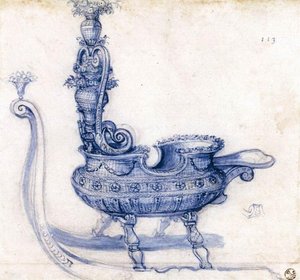
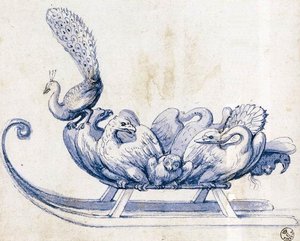
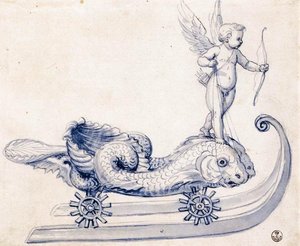


Artist Biography
A World Reimagined: The Enigmatic Art of Giuseppe Arcimboldo
Giuseppe Arcimboldo, a name that conjures images both whimsical and profoundly strange, remains one of the most singular figures in Renaissance art. Born in Milan in 1527, his career unfolded against the backdrop of a Europe steeped in intellectual ferment, religious upheaval, and an insatiable curiosity about the natural world. While initially recognized for more conventional works – frescoes adorning cathedrals and portraits adhering to established courtly standards – Arcimboldo’s enduring legacy rests upon a series of composite heads constructed entirely from meticulously arranged objects: fruits, vegetables, flowers, books, even musical instruments. These weren't mere playful exercises in visual trickery; they were complex allegories, imbued with symbolism that resonated deeply within the Renaissance worldview and continue to fascinate audiences today. His father, Biagio Arcimboldo, was an artist himself, providing young Giuseppe with early artistic training and likely influencing his initial foray into design work for stained glass windows and frescoes at Milan Cathedral beginning around 1549. This foundational experience honed his technical skill and eye for detail—qualities that would become hallmarks of his later, more unconventional creations.Courtly Commissions and the Rise of a Unique Style
Arcimboldo’s trajectory took a significant turn in 1562 when he was appointed court portraitist to Ferdinand I at the Habsburg court in Vienna. This marked the beginning of over two decades serving as an artistic polymath for three successive Habsburg rulers: Maximilian II and his son, Rudolf II. Beyond painting portraits – though even these often displayed subtle eccentricities – Arcimboldo’s duties encompassed costume design, festival decorations, and the organization of imperial collections. It was within this environment of refined taste and intellectual curiosity that his signature style began to blossom. The courtly demand for novelty and spectacle provided fertile ground for experimentation, allowing him to move beyond traditional portraiture towards the creation of his celebrated “composite heads.” These weren’t born from a sudden impulse but evolved gradually, building upon Renaissance fascination with puzzles, riddles, and the exploration of hidden meanings within seemingly ordinary objects. The influence of earlier artists who experimented with *trompe l'oeil* effects and distorted perspectives can be detected, yet Arcimboldo synthesized these elements into something entirely his own—a unique visual language that challenged conventional notions of representation.Decoding the Symbolism: More Than Meets the Eye
To dismiss Arcimboldo’s work as mere whimsicality is to overlook its profound intellectual depth. Each object within his composite portraits was carefully chosen, laden with symbolic meaning related to the sitter's character, profession, or social status. *The Librarian*, for example, isn’t simply a face constructed from books; it’s a subtle critique of scholarly pretension—a commentary on those who amass knowledge without truly engaging with its content. The animal tails forming the beard represent dusters, hinting at neglected volumes gathering dust on shelves. Similarly, his portraits of the seasons – particularly *Vertumnus*, depicting Emperor Rudolf II as the Roman god of gardens and change – are rich in botanical symbolism, reflecting the emperor’s patronage of science and natural history. These weren't intended to be immediately deciphered; they were designed to provoke contemplation, inviting viewers to unravel layers of meaning hidden within the seemingly playful arrangement of objects. The very act of constructing a human likeness from inanimate matter served as a meditation on the interconnectedness of all things—a reflection of Renaissance Neoplatonism’s belief in the underlying harmony of the universe.Legacy and Rediscovery: A Precursor to Surrealism
Despite his success during his lifetime, Arcimboldo's reputation waned in the centuries following his death in 1593. His work was often relegated to the realm of curiosities—appreciated for its technical skill but dismissed as lacking serious artistic merit. It wasn’t until the 20th century that a renewed appreciation for his art emerged, fueled by the rise of Surrealism. Artists like Salvador Dalí recognized in Arcimboldo a kindred spirit—a visionary who dared to challenge conventional perceptions and explore the subconscious through unexpected juxtapositions of imagery. The influence of Arcimboldo can be seen in Dalí’s own dreamlike compositions and his fascination with metamorphosis and illusion. Today, Arcimboldo is celebrated as a pivotal figure in art history—a precursor to Surrealism whose innovative use of symbolism and playful distortion continues to inspire artists and captivate audiences worldwide. His paintings are housed in prestigious museums such as the Kunsthistorisches Museum in Vienna and the Louvre in Paris, ensuring that his unique vision will continue to resonate for generations to come. His legacy is a testament to the enduring power of imagination and the ability of art to transform our understanding of the world around us.
Giuseppe Arcimboldo
1527 - 1593 , Italy
Quick Facts
- Artistic Movement Or Style: Mannerism, Surrealism
- Artists Or Movements Influenced By This Artist:
- Salvador Dalí
- Surrealism
- Date Of Birth: April 5, 1527
- Date Of Death: July 11, 1593
- Full Name: Giuseppe Arcimboldo
- Nationality: Italian
- Notable Artworks:
- Floral Still Life
- The Four Seasons
- Vertumnus
- The Librarian
- Place Of Birth: Milan, Italy

