 Preview
 Send
Send Share
Share
 Details

 Download
 Similars
 X-Ray
X-Ray Diaporama
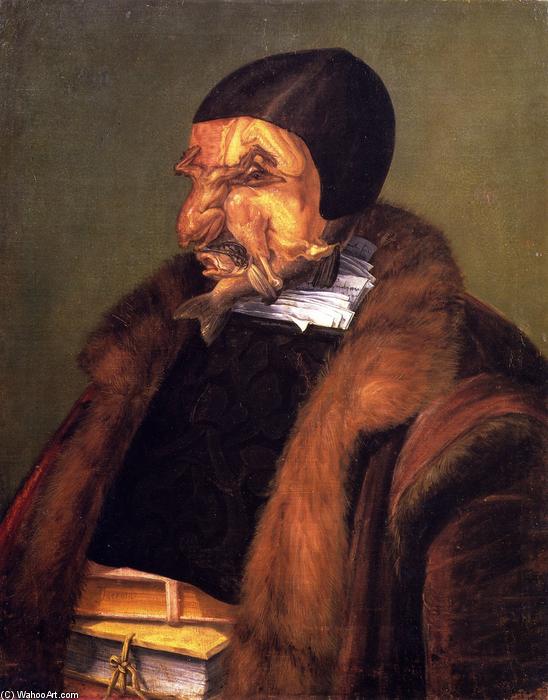
The Lawyer
 Oil On Canvas
- WallArt
- High Renaissance
 1566
1566 64.0 x 51.0 cm
 Read More
Hand Made Oil Reproduction
Hand-painted oil on canvas in your size and frame, made to order by our artists. ( Buy Print Buy Image)




P118B S$10

P118H S$10

P118W S$10

P438Z S$10

P508JH S$12

P508YH S$12

P805H S$10

P805Z S$10

P919BZ S$10

P919G S$10

P919XJ S$10

P959ZH S$10

P968JZ S$12

W106C S$8

W218G S$10

W218JH S$8

W218Y S$10

W307PJ S$10

W316G S$10

W316PJ S$8

W316Y S$10

W398PJ S$8

W4111J S$10

W500HY S$15

W500JH S$15

W692G S$12

W849H S$8

W940BG S$15

W953PJ S$8




Pick from our preset sizes that match the artwork's original proportions.

You may enter your own dimensions to fit a specific frame or space. If your selected size does not match the original image's proportions, we will either crop the artwork or extend the painting with additional hand-painted elements. A digital mockup will be sent for your approval before production begins.
Please note that the on-screen preview does not reflect the actual cropping or extension. Only the mockup will accurately show the final composition.
While custom sizes are available, we recommend selecting a dimension from the predefined list to preserve the original proportions.
After order, ArtsDot.com team will email client for instructions and provide a mockup preview
Worldwide Delivery () in 3/4 weeks instead of standard 5 weeks. (16 August). No compromise on quality.

Free Worldwide Express Shipping

High-Quality Linen Canvas

Full Shipping Insurance

Customs Tax Refund Guarantee

True Color Matching Guarantee

60-Day Return Policy (Defects Only)

100% Money-Back Guarantee

Bulk Discount Offer
 Glass option is only available in size under 110 CM

The Lawyer
Reproduction Medium
Reproduction Size
-


Total Price
S$ 340
Artwork Description
Giuseppe Arcimboldo's "The Lawyer": A Renaissance Portrait of Authority
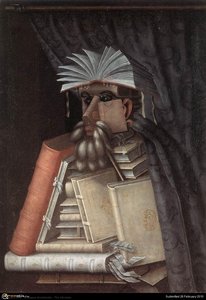
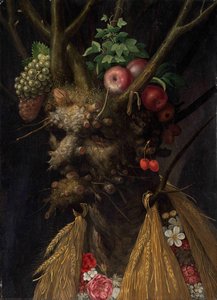
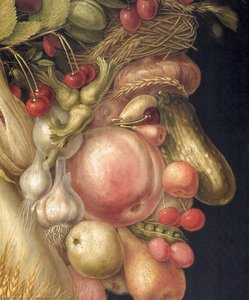
Giuseppe Arcimboldo’s “The Lawyer,” painted in 1566, is more than just a portrait; it’s a meticulously constructed meditation on profession, knowledge, and the very nature of representation. Housed within the Finnish National Gallery, this oil-on-canvas masterpiece offers a captivating glimpse into the Renaissance mind – a world where art was inextricably linked to intellect, status, and even religious symbolism. The painting immediately arrests the viewer with its audacious composition: a man rendered entirely from meticulously arranged objects—fruits, vegetables, books, and luxurious fabrics—creating an arresting image of a legal professional at the height of his power.
- Subject & Style: Arcimboldo’s signature “portrait-plants” technique is on full display here. The subject, identified as a lawyer or judge, embodies the formality and seriousness expected of such a role during the 16th century. His attire – a black hat, fur coat, and formal clothing – speaks to his elevated status, while his carefully groomed beard and mustache underscore his attention to detail and professional demeanor.
- Technique & Materials: Executed in oil on canvas, Arcimboldo’s masterful control of texture and light is evident. The rich layering of objects creates a remarkable sense of depth, mimicking the three-dimensionality of a traditional portrait while simultaneously challenging conventional artistic norms. The use of dark hues combined with vibrant colors adds to the painting's dramatic effect.
Symbolism Woven into the Composition
“The Lawyer” is rich in symbolic elements that reflect the intellectual and cultural currents of the Renaissance. The most obvious symbol is the book, prominently placed on the left side of the composition. Books represented knowledge, learning, and the legal profession itself – a cornerstone of education during this period. Further reinforcing this theme are two additional books visible within the scene, one near the bottom right corner and another at the top right corner. These additions suggest a broader engagement with literature and scholarship, highlighting the importance of intellectual pursuits alongside professional duties. The inclusion of fruits and vegetables adds another layer of meaning, often associated with abundance, prosperity, and even allegory – representing virtues or vices depending on their arrangement.
Historical Context & Arcimboldo’s Vision
Created in 1566, “The Lawyer” reflects the societal values and expectations of the Renaissance. The legal profession held a position of considerable power and influence during this era, and Arcimboldo's depiction captures this authority with precision. Arcimboldo was not simply creating portraits; he was crafting allegorical statements about human nature and the world around him. His work reflects the humanist ideals prevalent at the time – an emphasis on reason, observation, and the study of classical antiquity. The painting serves as a window into the past, offering insights into the lives and roles of lawyers during the Renaissance.
Emotional Impact & Artistic Legacy
“The Lawyer” continues to captivate viewers centuries after its creation. Arcimboldo’s innovative approach to portraiture challenges our perceptions of identity and representation. The painting evokes a sense of both admiration for the subject's authority and wonder at the artist's ingenuity. It is a testament to Arcimboldo’s unique vision and his ability to transform ordinary objects into extraordinary works of art. This piece remains a powerful example of Renaissance artistry, demonstrating the profound connection between art, intellect, and social commentary.
Related Artworks

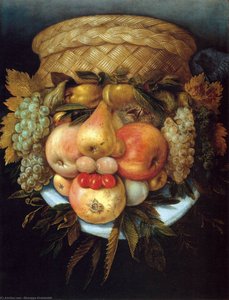
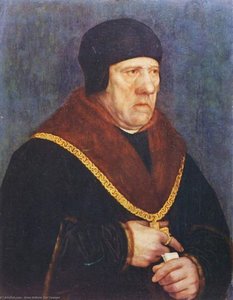
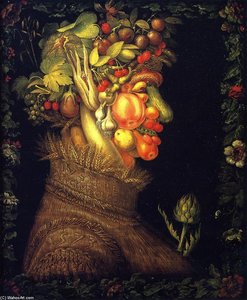
Artist Biography
A World Reimagined: The Enigmatic Art of Giuseppe Arcimboldo
Giuseppe Arcimboldo, a name that conjures images both whimsical and profoundly strange, remains one of the most singular figures in Renaissance art. Born in Milan in 1527, his career unfolded against the backdrop of a Europe steeped in intellectual ferment, religious upheaval, and an insatiable curiosity about the natural world. While initially recognized for more conventional works – frescoes adorning cathedrals and portraits adhering to established courtly standards – Arcimboldo’s enduring legacy rests upon a series of composite heads constructed entirely from meticulously arranged objects: fruits, vegetables, flowers, books, even musical instruments. These weren't mere playful exercises in visual trickery; they were complex allegories, imbued with symbolism that resonated deeply within the Renaissance worldview and continue to fascinate audiences today. His father, Biagio Arcimboldo, was an artist himself, providing young Giuseppe with early artistic training and likely influencing his initial foray into design work for stained glass windows and frescoes at Milan Cathedral beginning around 1549. This foundational experience honed his technical skill and eye for detail—qualities that would become hallmarks of his later, more unconventional creations.Courtly Commissions and the Rise of a Unique Style
Arcimboldo’s trajectory took a significant turn in 1562 when he was appointed court portraitist to Ferdinand I at the Habsburg court in Vienna. This marked the beginning of over two decades serving as an artistic polymath for three successive Habsburg rulers: Maximilian II and his son, Rudolf II. Beyond painting portraits – though even these often displayed subtle eccentricities – Arcimboldo’s duties encompassed costume design, festival decorations, and the organization of imperial collections. It was within this environment of refined taste and intellectual curiosity that his signature style began to blossom. The courtly demand for novelty and spectacle provided fertile ground for experimentation, allowing him to move beyond traditional portraiture towards the creation of his celebrated “composite heads.” These weren’t born from a sudden impulse but evolved gradually, building upon Renaissance fascination with puzzles, riddles, and the exploration of hidden meanings within seemingly ordinary objects. The influence of earlier artists who experimented with *trompe l'oeil* effects and distorted perspectives can be detected, yet Arcimboldo synthesized these elements into something entirely his own—a unique visual language that challenged conventional notions of representation.Decoding the Symbolism: More Than Meets the Eye
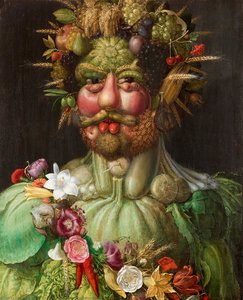
To dismiss Arcimboldo’s work as mere whimsicality is to overlook its profound intellectual depth. Each object within his composite portraits was carefully chosen, laden with symbolic meaning related to the sitter's character, profession, or social status. *The Librarian*, for example, isn’t simply a face constructed from books; it’s a subtle critique of scholarly pretension—a commentary on those who amass knowledge without truly engaging with its content. The animal tails forming the beard represent dusters, hinting at neglected volumes gathering dust on shelves. Similarly, his portraits of the seasons – particularly *Vertumnus*, depicting Emperor Rudolf II as the Roman god of gardens and change – are rich in botanical symbolism, reflecting the emperor’s patronage of science and natural history. These weren't intended to be immediately deciphered; they were designed to provoke contemplation, inviting viewers to unravel layers of meaning hidden within the seemingly playful arrangement of objects. The very act of constructing a human likeness from inanimate matter served as a meditation on the interconnectedness of all things—a reflection of Renaissance Neoplatonism’s belief in the underlying harmony of the universe.Legacy and Rediscovery: A Precursor to Surrealism
Despite his success during his lifetime, Arcimboldo's reputation waned in the centuries following his death in 1593. His work was often relegated to the realm of curiosities—appreciated for its technical skill but dismissed as lacking serious artistic merit. It wasn’t until the 20th century that a renewed appreciation for his art emerged, fueled by the rise of Surrealism. Artists like Salvador Dalí recognized in Arcimboldo a kindred spirit—a visionary who dared to challenge conventional perceptions and explore the subconscious through unexpected juxtapositions of imagery. The influence of Arcimboldo can be seen in Dalí’s own dreamlike compositions and his fascination with metamorphosis and illusion. Today, Arcimboldo is celebrated as a pivotal figure in art history—a precursor to Surrealism whose innovative use of symbolism and playful distortion continues to inspire artists and captivate audiences worldwide. His paintings are housed in prestigious museums such as the Kunsthistorisches Museum in Vienna and the Louvre in Paris, ensuring that his unique vision will continue to resonate for generations to come. His legacy is a testament to the enduring power of imagination and the ability of art to transform our understanding of the world around us.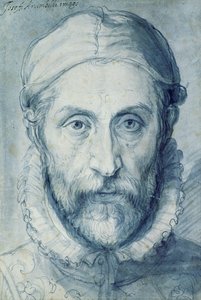
Giuseppe Arcimboldo
1527 - 1593 , Italy
Quick Facts
- Artistic Movement Or Style: Mannerism, Surrealism
- Artists Or Movements Influenced By This Artist:
- Salvador Dalí
- Surrealism
- Date Of Birth: April 5, 1527
- Date Of Death: July 11, 1593
- Full Name: Giuseppe Arcimboldo
- Nationality: Italian
- Notable Artworks:
- Floral Still Life
- The Four Seasons
- Vertumnus
- The Librarian
- Place Of Birth: Milan, Italy
Related Articles

Oil on Canvas: A Historical & Technical Exploration of a Timeless Artistic Medium
Explore the rich history & enduring techniques of oil painting on canvas. Discover the science behind its longevity, conservation practices, and contemporary relevance. Expert insights for art enthusiasts.

The Enduring Legacy of Oil on Canvas: Technique, History & Aesthetic Impact
Explore the rich history & techniques of oil painting – from Renaissance masters to Impressionism. Discover pigments, layering methods, and why this timeless medium endures. Expert insights for artists & art enthusiasts.

The Enduring Legacy of Oil on Canvas: Technique, History & Contemporary Practice
Explore the rich history & enduring techniques of oil painting on canvas. Discover the science behind its longevity, conservation practices, and contemporary relevance. Expert insights for art enthusiasts.
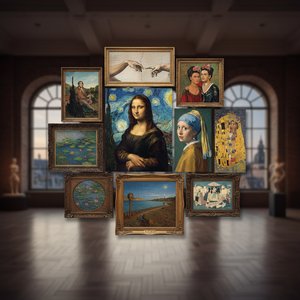
Oil on Canvas Masters: 10 Paintings That Redefined Art History |
Journey through art history with our guide to 10 legendary oil on canvas masterpieces! Explore iconic works by Van Gogh, Monet & Rembrandt. Find museum-quality reproductions and elevate your home decor at . Discover all masterpieces online.

Cézanne's Masterpieces: 25 Iconic Artworks to Transform Your Space
Journey through 25 iconic artworks by Paul Cézanne – a master of Impressionism and Post-Impressionism. Explore his landscapes, still lifes, and the stories behind these timeless masterpieces. Discover museum-quality reproductions & curated decor at ArtsDot.com.