 Preview
 Send
Send Share
Share
 Details

 Download
 Similars
 X-Ray
X-Ray Diaporama
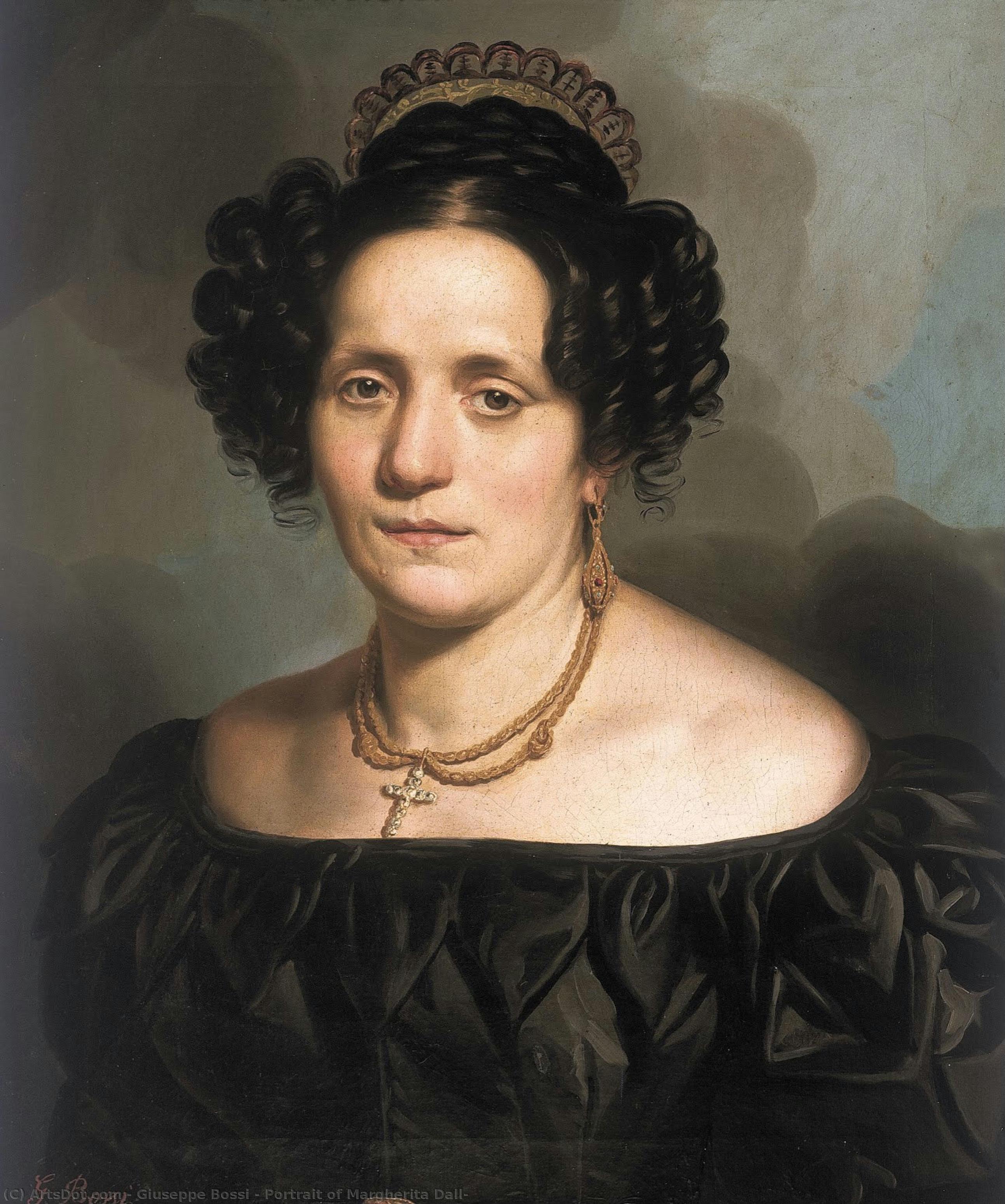
Portrait of Margherita Dall

 Read More
Hand Made Oil Reproduction
Hand-painted oil on canvas in your size and frame, made to order by our artists. ( Buy Print Buy Image)




































Pick from our preset sizes that match the artwork's original proportions.

You may enter your own dimensions to fit a specific frame or space. If your selected size does not match the original image's proportions, we will either crop the artwork or extend the painting with additional hand-painted elements. A digital mockup will be sent for your approval before production begins.
Please note that the on-screen preview does not reflect the actual cropping or extension. Only the mockup will accurately show the final composition.
While custom sizes are available, we recommend selecting a dimension from the predefined list to preserve the original proportions.
After order, ArtsDot.com team will email client for instructions and provide a mockup preview
Worldwide Delivery () in 3/4 weeks instead of standard 5 weeks. (23 August). No compromise on quality.

Free Worldwide Express Shipping

High-Quality Linen Canvas

Full Shipping Insurance

Customs Tax Refund Guarantee

True Color Matching Guarantee

60-Day Return Policy (Defects Only)

100% Money-Back Guarantee

Bulk Discount Offer
 Glass option is only available in size under 110 CM

Portrait of Margherita Dall
Reproduction Medium
Reproduction Size
-


Total Price
$ 263
Related Artworks








Artist Biography
Giuseppe Bossi (1777-1815): A Neoclassical Voice of Lombardy
Giuseppe Bossi, a name perhaps less familiar than some of his contemporaries within the vibrant artistic circles of 18th and early 19th century Lombardy, nevertheless stands as a pivotal figure in the region’s neoclassical movement. Born in Busto Arsizio in 1777, Bossi wasn't merely a painter; he was an administrator, a writer deeply invested in the preservation and promotion of art, and a man profoundly shaped by the intellectual currents of his time. His life, tragically cut short at the age of 38, nonetheless left an indelible mark on the artistic landscape of Italy, particularly through his meticulous work as the secretary of the Brera Academy and his dedication to studying and disseminating the legacy of Leonardo da Vinci.
Bossi’s early education fostered a deep appreciation for drawing, nurtured by the guidance of his college director. This foundation led him to the prestigious Brera Academy in Milan, where he honed his skills alongside other rising talents like Andrea Appiani and Ugo Foscolo. Crucially, his time in Rome proved transformative. Far from simply absorbing artistic techniques, Bossi immersed himself in the study of Roman antiquities, meticulously copying sculptures within the Museo Pio-Clementino and drawing inspiration from the frescoes of Raphael and Michelangelo in the Vatican. This period wasn’t just about imitation; it was a deliberate engagement with classical ideals – a commitment to order, balance, and the pursuit of beauty rooted in antiquity. He formed close relationships with influential figures like Canova, Angelica Kauffman, and Marianna Candidi Dionigi, absorbing their perspectives on art and life.
A Champion of Leonardo and the Brera Academy
Upon his return to Milan, Bossi quickly ascended within the ranks of the artistic community. He became assistant secretary, then secretary (1802-1807) of the Brera Academy – a position he essentially founded. This role demanded more than administrative skill; it required a passionate advocate for art and a strategic thinker capable of navigating the complex political landscape of post-Napoleonic Italy. Bossi’s primary focus was safeguarding the academy's collection, preventing valuable works from being lost to foreign lands or dispersed through private sales. He meticulously cataloged and organized the collection, transforming the Brera into a recognized center for artistic study and appreciation.
His efforts extended beyond mere preservation. Bossi actively sought out new acquisitions, often procuring casts of renowned sculptures from Paris, Rome, and Florence – enriching the academy’s holdings and providing invaluable resources for students and scholars. He was instrumental in establishing clear organizational rules for the three academies of art of Bologna, Venice and Milan, a significant step towards public collections of great examples of the arts, which were being supplied from the dissolved monasteries and secularized churches of Lombardy under Napoleonic administration. This commitment to accessibility and education underscored his belief that art should be available not just to the elite but to all who sought to understand its beauty and significance.
The Artistic Style and Key Works
Bossi’s artistic style is often described as neoclassical, yet it possessed a distinctly personal quality. While deeply influenced by classical principles of proportion and composition, his work wasn't simply a slavish imitation of the past. He demonstrated a remarkable ability to capture the essence of human emotion and narrative within a formal framework. His portraits, such as the “Portrait of Margherita Dall,” are notable for their dignified composure and subtle psychological insight. He also produced frescoes – most notably "San Giuseppe di Castello" in Venice and "Casa di Riposo per Musicisti" in Milan – that showcased his technical skill and his interest in depicting historical or mythological scenes with a sense of realism and drama.
Perhaps Bossi’s most enduring legacy lies in his meticulous study and reproduction of Leonardo da Vinci's work. He undertook the ambitious project of creating copies of Leonardo’s masterpieces, including a detailed drawing of “The Last Supper,” which was subsequently rendered in mosaic for Vienna’s Minoritenkirche. This undertaking not only preserved a vital piece of art history but also cemented Bossi’s reputation as a scholar and devotee of the Renaissance master. His later drawings exploring Leonardo's techniques and artistic philosophy, such as those examining the artist’s approach to anatomy and perspective, reveal a profound intellectual engagement with the past.
A Tragic End and Lasting Influence
Giuseppe Bossi’s life was tragically cut short in 1815. Despite his relatively brief career, he left an important legacy as a champion of art, administrator, and scholar. His work at the Brera Academy helped to establish it as one of Italy's leading artistic institutions, and his dedication to preserving and promoting classical ideals contributed significantly to the development of neoclassical culture in Lombardy. His meticulous studies of Leonardo da Vinci continue to be admired for their scholarship and insight, solidifying Bossi’s place among the foremost figures of his time – alongside luminaries like Ugo Foscolo, Giuseppe Parini, Andrea Appiani, and Alessandro Manzoni.
Further Resources
- Portrait of Margherita Dall: /en/art/giuseppe-bossi-portrait-of-margherita-dall-D9TDNV-en/
- San Giuseppe di Castello: /en/museums/san-giuseppe-di-castello-italy-venice-en/
- Casa di Riposo per Musicisti: /en/museums/casa-di-riposo-per-musicisti-italy-milan-en/
- Giuseppe Bossi - Getty Museum: https://www.getty.edu/art/collection/person/103KWC
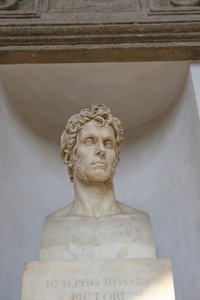
Giuseppe Bossi
1777 - 1815 , Italy
Quick Facts
- Artistic Movement Or Style: Neoclassical
- Artists Or Movements Influenced By This Artist:
- Ugo Foscolo
- Giuseppe Parini
- Andrea Appiani
- Artists Who Influenced This Artist: ['Leonardo da Vinci']
- Date Of Birth: 1777-08-11
- Date Of Death: 1815-12-15
- Full Name: Giuseppe Bossi
- Nationality: Italian
- Notable Artworks:
- Portrait of Margherita Dall
- San Giuseppe di Castello
- Casa di Riposo per Musicisti
- Place Of Birth: Busto Arsizio, Italy