

 Preview
 Send
Send Share
Share
 Details

 Download
 Similars
 X-Ray
X-Ray Diaporama
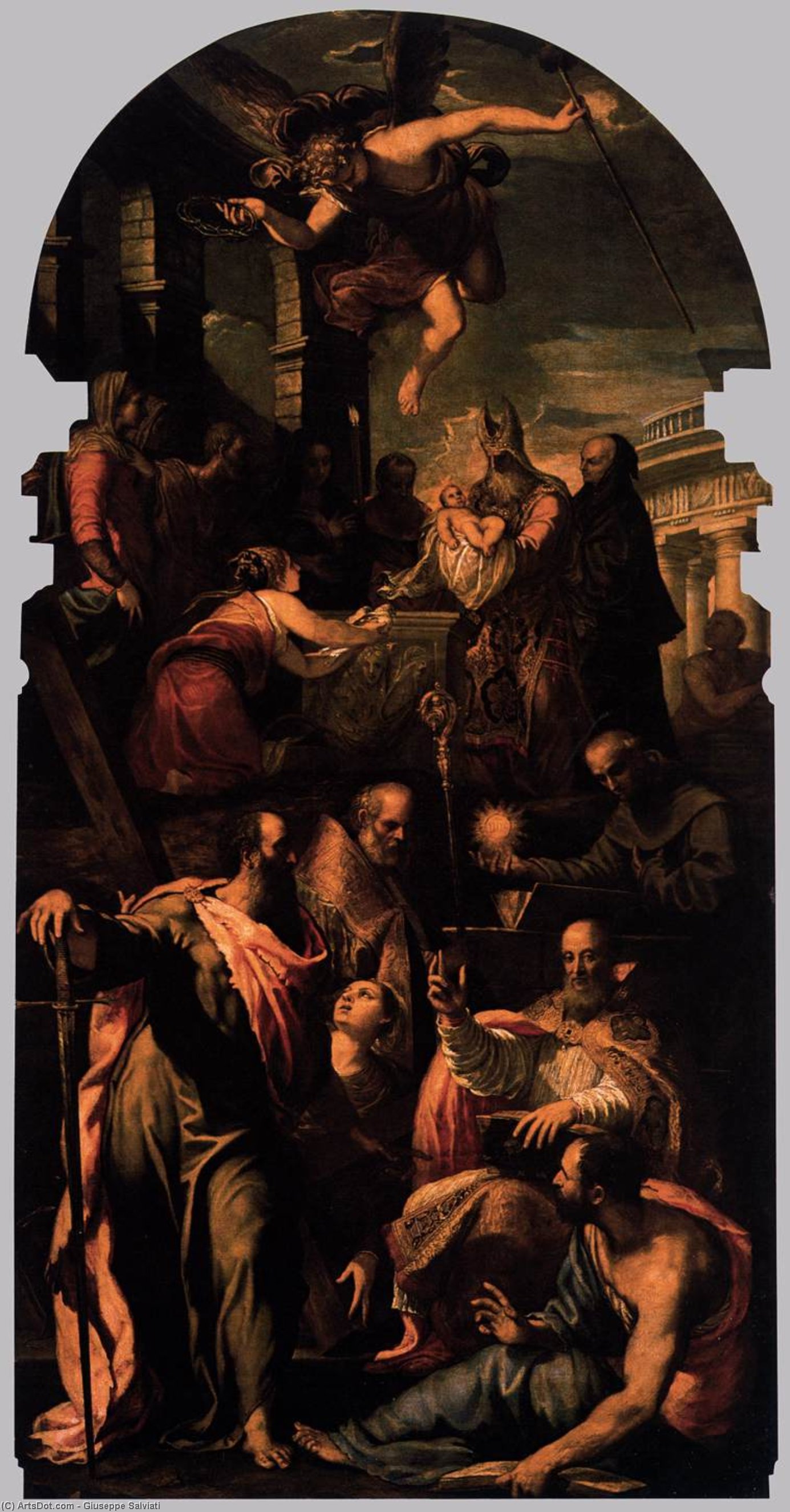
Presentation of Mary in the Temple
 Oil On Canvas
- WallArt
- Mannerism
 1548
1548- Renaissance
 483.0 x 247.0 cm
 Santa Maria Gloriosa dei Frari
 Read More
Purchase a high-resolution, enhanced digital image, far superior to the online preview.
Each file is meticulously prepared by our in-house specialists using advanced tools and expert manual retouching. We ensure every image has exceptional clarity, precise color accuracy, and fine detail.
The final file is delivered via email within 72 hours, optimized for immediate use in professional, editorial, and print environments. This is the same quality trusted by top-tier design studios, publishers, and galleries.
Digital Image
Download a high-resolution file for personal display, printing, and creative projects. ( Buy Print Buy Hand Made Painting)
Included in Every Digital Image Order
Expert Digital Delivery, Guaranteed
When you choose ArtsDot.com, you're not just getting an image - you're receiving a professionally enhanced digital artwork, crafted with precision and backed by a satisfaction guarantee. Here's everything that comes with your order, automatically:

Fast Email Delivery
Your high-resolution digital image file will be emailed to you within 72 hours of ordering - ready for immediate use.

AI-Enhanced Digital File
Your artwork is professionally optimized using advanced AI tools and manual editing, ensuring maximum detail, clarity, and color accuracy.

Free Lifetime Re-Delivery
Accidentally deleted or lost your file? No worries - we'll resend it to you anytime, free of charge.

No Import Fees - Ever
Enjoy your artwork instantly with zero customs, duties, or delivery fees - digital downloads are always tax-free.

Color Accuracy Guarantee
We ensure your digital image reflects the original colors as closely as possible using professional tools and color management.

60-Day Satisfaction Guarantee
If you're not satisfied with your digital image, we'll revise it or refund 100% within 60 days - no questions asked.

100% Money-Back Guarantee
Not satisfied? Get a full refund within 60 days of receiving your digital file - no questions asked.

Bulk Order Discounts
Buy 3 images, save 10% - Buy 5, save 15% - Buy 10+, save 20%. Great for creative projects, galleries, and agencies.
Collectible Description
A Divine Narrative in Mannerist Splendor
To stand before Giuseppe Salviati's depiction of the Presentation of Mary in the Temple is to step directly into the vibrant, dramatic heart of the late Italian Renaissance colliding with the emerging energy of Mannerism. This monumental work is not merely a recounting of scripture; it is an orchestrated tableau vivant, brimming with theological weight and breathtaking artistic virtuosity. The scene captures that pivotal moment when the young Mary, daughter of Joachim and Anne, is formally presented within the sacred confines of the Temple. One can almost feel the hushed reverence mingling with the palpable drama emanating from the richly robed figures.
Mastery in Composition and Detail
Salviati, a master whose career unfolded amidst the artistic ferment of Venice, imbues this canvas with an opulent detail that speaks to his technical prowess. Observe the interplay between the central figures—Mary, flanked by her parents, Joachim and Anne—and the surrounding celestial witnesses. The composition is anything but static; it pulses with controlled energy. From the background elements, perhaps a figure bearing a cross or another engaged in study with a book, we glean glimpses of the broader spiritual world intersecting with this intimate rite. Salviati’s handling of drapery is particularly noteworthy; the folds seem to possess a life of their own, catching the light and suggesting movement even in repose. The inclusion of minute details, such as the depicted chair or perhaps a subtle bird, anchors the divine narrative within a tangible, richly decorated reality.
The Echoes of Mannerist Drama
This painting serves as a magnificent testament to the period's stylistic shift. While rooted in the grandeur of High Renaissance composition, Salviati channels it through a distinctly Mannerist lens—a style characterized by heightened emotion, elongated forms, and an almost theatrical sense of drama. The colors are rich, deep, and saturated, contributing to an atmosphere that is both sacredly solemn and dramatically charged. It is this masterful manipulation of tone and gesture that elevates the piece beyond mere illustration; it becomes a profound meditation on piety and divine destiny.
Symbolism and Emotional Resonance
The Presentation itself carries layers of deep symbolism. Mary’s journey to the Temple marks her formal introduction into the religious life, an event charged with prophecy and anticipation. The presence of angels underscores the heavenly sanction upon this earthly rite. For the modern admirer or collector, the emotional impact is one of awe—a feeling evoked by witnessing a moment of profound transition. Owning a reproduction of this work allows one to bring that sense of elevated spirituality and dramatic beauty into a contemporary space, transforming an area from merely decorative to deeply evocative.
A Legacy for Your Sanctuary
Whether adorning a grand hall or serving as the focal point of a richly decorated chapel, this artwork speaks to enduring themes of faith, lineage, and divine grace. Salviati’s ability to merge meticulous craftsmanship with overwhelming emotional narrative ensures that this piece remains timeless. It is an investment not just in art history, but in a continuous dialogue with the masters who defined dramatic pictorial storytelling.
Related Artworks


Artist Biography
Giuseppe Salviati: A Master of Mannerist Drama
Giuseppe Salviati (c. 1520 – c. 1575), originally known as Giuseppe Porta, stands as a pivotal figure in the late Italian Renaissance and early Mannerist period. Born in Castelnuovo di Garfagnana, he initially apprenticed under Francesco Salviati, a renowned painter of his time, ultimately adopting his mentor’s surname – a common practice among artists seeking recognition and prestige. Salviati's career unfolded primarily in Venice, a city that served as a vibrant hub for artistic innovation during this era, absorbing the stylistic influences of both Rome and its own rich Venetian tradition.
His early training instilled within him a deep understanding of classical composition and technique, yet Salviati quickly developed his own distinctive style – characterized by dramatic dynamism, opulent detail, and a masterful manipulation of perspective. Unlike many of his contemporaries who adhered strictly to the established rules of High Renaissance art, Salviati embraced exaggeration, distortion, and an intense emotionalism that defined the Mannerist movement. This wasn’t simply stylistic choice; it reflected a broader shift in artistic sensibilities, moving away from idealized beauty towards a more expressive and psychologically charged representation of reality.
Religious Themes and Dramatic Compositions
Salviati's oeuvre is overwhelmingly dominated by religious subjects, reflecting the patronage demands of Venetian churches and noble families. He frequently depicted scenes from the lives of Christ, Mary, and the saints, but approached these narratives with a distinctly Mannerist flair. His compositions are rarely static; instead, they pulsate with movement, energy, and often unsettling intensity. Figures are elongated, their poses exaggerated, and drapery flows in swirling, dramatic folds – elements that contribute to a sense of heightened emotionality.
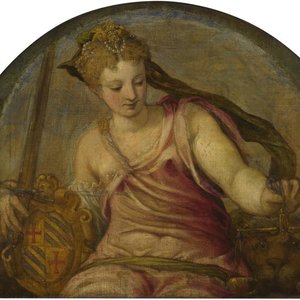
Consider his ‘Presentation of Mary in the Temple,’ a powerful depiction of this pivotal biblical event. The figures are arranged in a complex, almost claustrophobic space, conveying both the sacredness and the inherent tension of the scene. Similarly, ‘Pallas Athene between Fortune and Virtue’ showcases Salviati's ability to fuse classical mythology with Mannerist dynamism, creating a visually arresting tableau that explores themes of wisdom, fate, and moral choice. These works demonstrate his skill in layering complex narratives within a single image, inviting viewers to contemplate the deeper meanings behind each scene.
Technique and Venetian Influence
Salviati’s technical approach was deeply rooted in the Venetian painting tradition, yet he pushed its boundaries further. He employed a technique known as “stiacciato,” building up layers of thin paint – often dozens – to create a sense of depth and volume. This meticulous layering resulted in surfaces that shimmered with an almost tactile quality, particularly evident in his ceiling frescoes. His use of color was equally distinctive—rich, saturated hues combined with subtle gradations and atmospheric effects, creating a luminous and dramatic visual experience.
However, Salviati wasn’t simply replicating Venetian techniques; he adapted them to serve his own expressive goals. He incorporated elements of Roman Mannerism – such as distorted perspective and elongated figures – while simultaneously embracing the vibrant color palette and dynamic compositions characteristic of Venice. This synthesis created a uniquely personal style that distinguished him from both his Roman predecessors and his Venetian contemporaries.
Legacy and Recognition
Despite his considerable talent, Salviati’s work was often overshadowed during his lifetime. Many of his most ambitious commissions – particularly his large-scale frescoes – were tragically lost to fire or neglect. However, in recent decades, scholars have increasingly recognized Salviati's importance as a key figure in the development of Mannerism and a significant contributor to Venetian art history. His influence can be seen in the work of subsequent generations of artists, including Girolamo da Santacroce.
Today, his masterpieces – such as ‘Pallas Athene between Fortune and Virtue’ and ‘Presentation of Mary in the Temple’ – are treasured examples of Italian Renaissance art, offering a compelling glimpse into the dramatic world of Giuseppe Salviati, a master painter who skillfully blended classical ideals with the expressive power of Mannerism.
giuseppe salviati
1520 - 1575 , Italy
Quick Facts
- Artistic Movement Or Style: Mannerist
- Artists Or Movements Influenced By This Artist: ['Girolamo da Santacroce']
- Artists Who Influenced This Artist: ['Francesco Salviati']
- Date Of Birth: ca. 1520
- Date Of Death: ca. 1575
- Full Name: Giuseppe Salviati
- Nationality: Italian
- Notable Artworks:
- Presentation of Mary
- Pallas Athene
- Place Of Birth: Castelnuovo di Garfagnana, Italy

