 Preview
 Send
Send Share
Share
 Details

 Download
 Similars
 X-Ray
X-Ray Diaporama
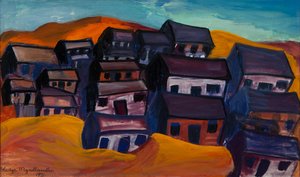
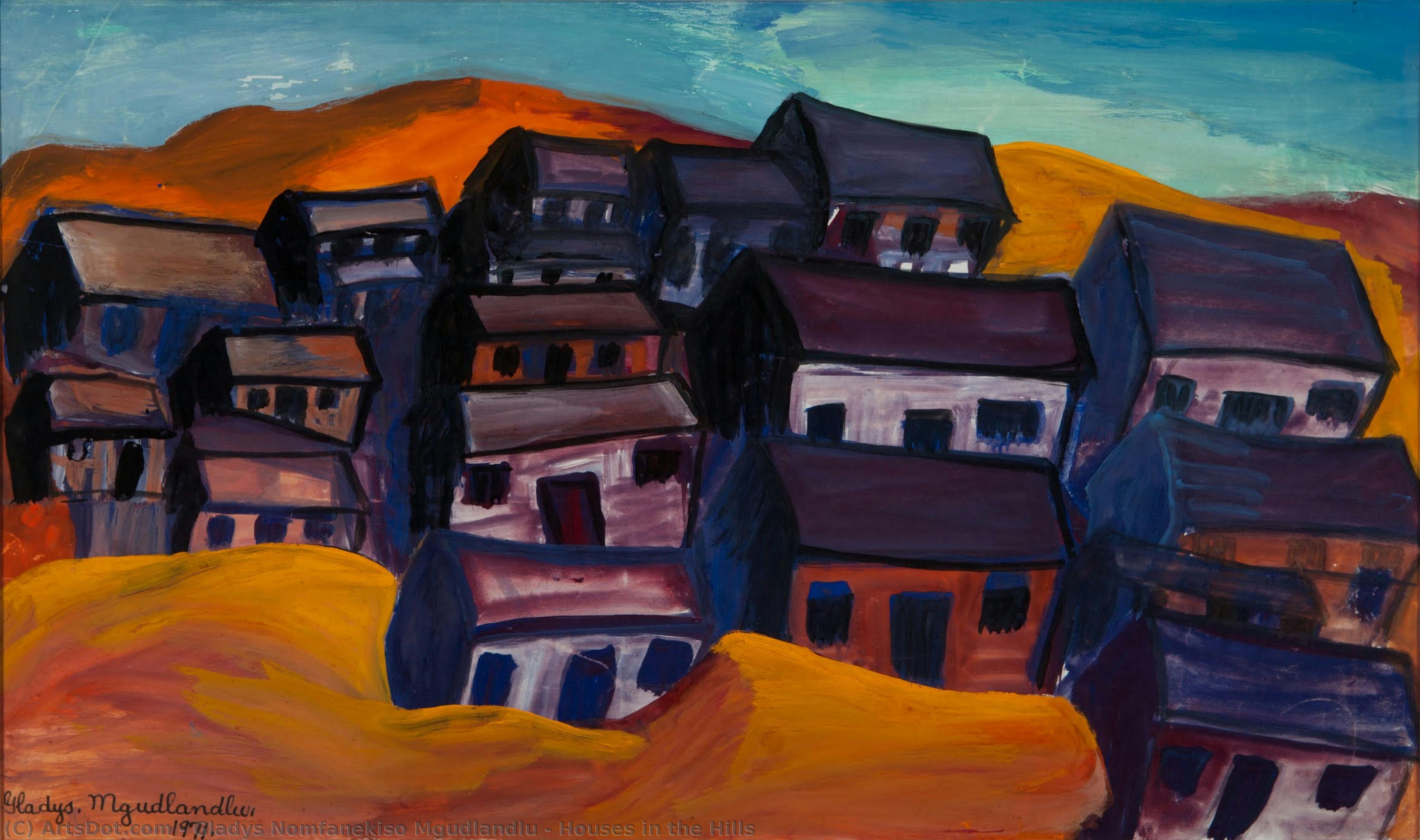
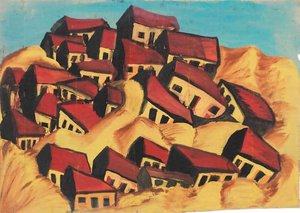
Houses in the Hills
 1971
1971 80.0 x 47.0 cm
 Iziko South African National Gallery
 Read More
Giclée / Art Print
Museum-quality giclée or canvas print with fast production and flexible finish options. ( Buy Hand Made Painting Buy Image)




































Pick from our preset sizes that match the artwork's original proportions.

You may enter your own dimensions to fit a specific frame or space. If your selected size does not match the original image's proportions, we will either crop the artwork or extend the image with a mirrored or solid-fill edge. A digital mockup will be sent for your approval before production begins.
Please note that the on-screen preview does not reflect the actual cropping or extension. Only the mockup will accurately show the final composition.
While custom sizes are available, we recommend selecting a dimension from the predefined list to preserve the original proportions.
Worldwide Delivery () in 2 weeks instead of standard 4/5 weeks. (1 September)

Free Worldwide Express Shipping

High-Quality Linen Canvas

Full Shipping Insurance

Customs Tax Refund Guarantee

True Color Matching Guarantee

60-Day Return Policy (Defects Only)

100% Money-Back Guarantee

Bulk Discount Offer
 Glass option is only available in size under 110 CM

Houses in the Hills
Giclée / Art Print
Reproduction Size
-


Total Price
$ 63
Related Artworks








Artist Biography
Gladys Nomfanekiso Mgudlandlu: A Dreamer’s Vision of South Africa
Gladys Nomfanekiso Mgudlandlu (1917 – 17 February 1979) remains a profoundly significant, yet often overlooked, figure in the history of South African art. Born in Peddie, a small town in the Eastern Cape, her life and work were deeply intertwined with her cultural heritage, the evocative landscapes of her childhood, and a quiet determination to express herself through vibrant color and unique perspective. She stands as one of the first African women to achieve solo recognition within the predominantly white South African art scene of the 1960s – a pioneering achievement that deserves greater celebration today. Her legacy isn’t just in the paintings themselves, but in her courageous assertion of artistic identity against considerable societal barriers.
Mgudlandlu's early life was shaped by a strong connection to tradition and nature. Raised primarily by her grandmother, she inherited not only a deep respect for indigenous storytelling and craft but also a foundational understanding of painting techniques passed down through generations. This upbringing instilled in her a reverence for the natural world, particularly birds – creatures that would become recurring motifs throughout her oeuvre. Her artistic journey began informally, experimenting with murals and clay sculpture as a child, absorbing the visual language of her heritage before formally pursuing art education at Lovedale College. It was here she developed a foundation in Western techniques, which she skillfully blended with her unique South African sensibility.
A Unique Artistic Style: Impressionism Meets Xhosa Heritage
Mgudlandlu’s artistic style is remarkably distinctive, a captivating synthesis of Impressionistic and Expressionistic elements. She was drawn to the loose brushwork and luminous color palettes associated with Impressionism, yet imbued her paintings with an intensely personal emotional resonance – a hallmark of Expressionism. Her use of light, particularly in nocturnal scenes, is masterful, creating an ethereal quality that evokes dreams and memories. This distinctive approach is often described as “dreamer-imaginist,” reflecting her own introspective nature and her tendency to translate her inner world onto the canvas.
A key element of her style lies in her unconventional perspective – frequently employing a bird’s-eye view, mirroring the vantage point of a soaring avian creature. This choice wasn't merely stylistic; it reflected her deep connection with birds and her desire to capture a broader, more encompassing vision of the landscape. Her paintings are characterized by bold colors, often applied in thick impasto layers, creating a tactile and immersive experience for the viewer. The recurring presence of African motifs – patterns and symbols rooted in Xhosa culture – further anchors her work within its South African context, adding layers of meaning and cultural significance.
Themes and Symbolism: Birds, Women, and the Landscape
Mgudlandlu’s paintings are rich with symbolism. Birds, as mentioned earlier, hold a central place in her work, representing freedom, spirituality, and connection to nature. She frequently depicted pairs of birds – an image that resonated deeply with her own solitary existence and perhaps symbolized companionship or balance. Portraits of women, often young girls from the Xhosa ethnic group, are also prominent, frequently presented in pairs. These figures aren’t simply rendered; they are imbued with a quiet dignity and a sense of timelessness. The use of white haze surrounding these subjects suggests a connection to ancestral spirits – a nod to her grandmother's teachings and the sacred traditions of her heritage.
Beyond portraits, Mgudlandlu captured the essence of South African landscapes—rolling hills, rugged mountains, and bustling townships—often rendered with an unusual perspective. Her depictions of township life are particularly noteworthy, eschewing romanticized portrayals in favor of a more honest and nuanced representation of daily existence. She didn't shy away from depicting the stark realities of urban poverty and social inequality, yet her approach was characterized by a subtle restraint, avoiding overt political commentary.
Recognition and Legacy
Despite facing significant challenges as a Black female artist in a racially segregated society, Mgudlandlu achieved considerable recognition during her lifetime. In 2003, she received the Presidential Order of Ikhamanga in Silver – a prestigious national award recognizing her contributions to the arts. This honor served as a powerful validation of her artistic achievements and her pioneering role in South African visual culture.
Today, Mgudlandlu’s work is held in several museums and galleries across South Africa, including the University of Pretoria Museums and the Iziko South African National Gallery. Her paintings continue to inspire artists and art enthusiasts alike, offering a unique window into the soul of South Africa—a land of beauty, resilience, and profound cultural heritage. The ArtsDot.com website provides an accessible platform for exploring her artistic legacy, ensuring that her vision endures.
Further Exploration
For more detailed information about Gladys Mgudlandlu’s life and work, consider visiting the following resources:
gladys nomfanekiso mgudlandlu
1917 - 1979 , South Africa
Quick Facts
- Artistic Movement Or Style: Impressionism/Expressionism
- Artists Or Movements Influenced By This Artist: ['None explicitly stated']
- Artists Who Influenced This Artist: ['Her grandmother']
- Date Of Birth: 1917
- Date Of Death: 1979
- Full Name: Gladys Nomfanekiso Mgudlandlu
- Nationality: South African
- Notable Artworks:
- Two Girls
- Mini Girls
- Rocky Outcrop
- Place Of Birth: Peddie, South Africa