 Preview
 Send
Send Share
Share
 Details

 Download
 Similars
 X-Ray
X-Ray Diaporama
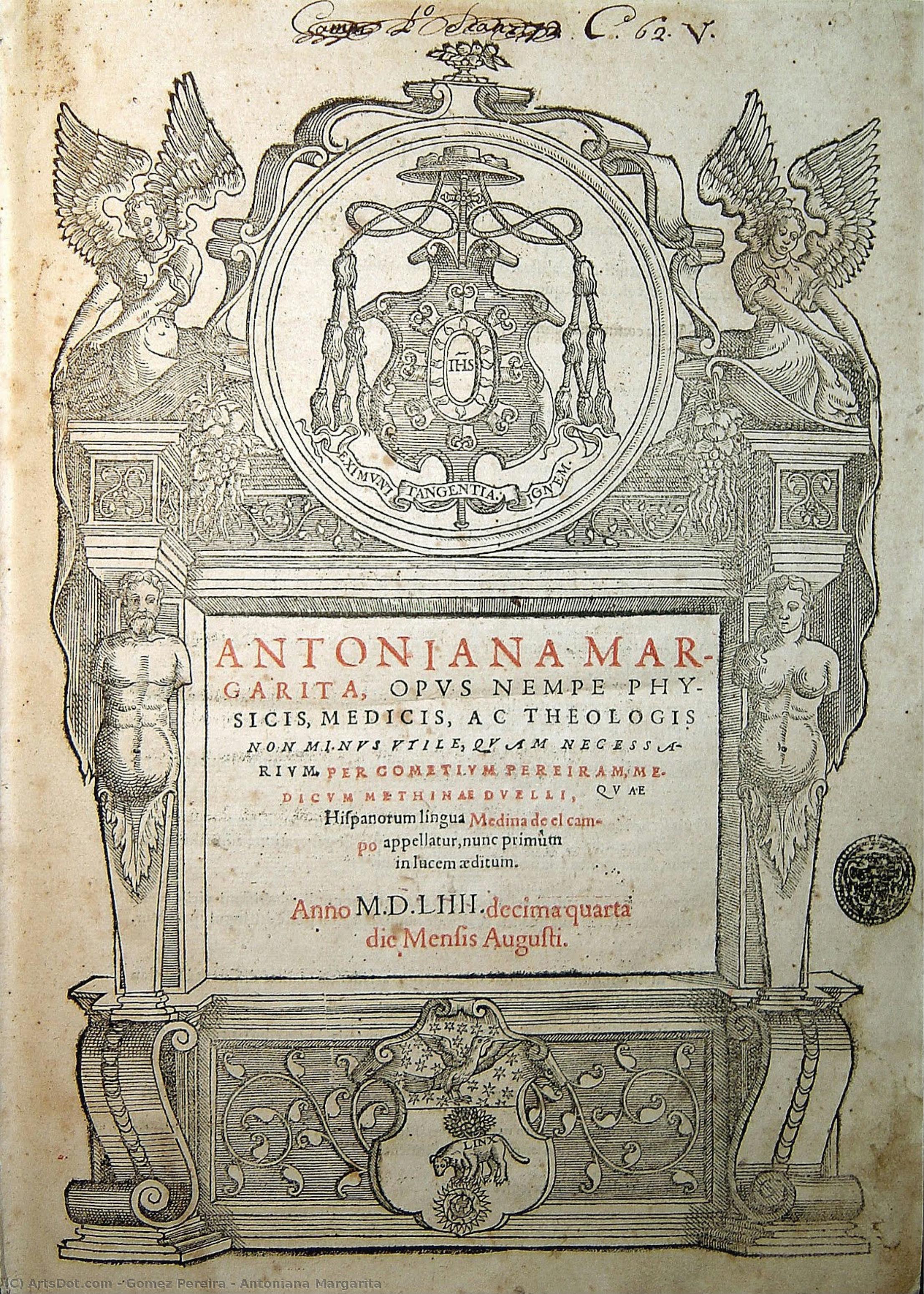
Antoniana Margarita
 30.0 x 20.0 cm
 Museum of the Fairs Foundation - Simón Ruiz Archive
 Read More
Hand Made Oil Reproduction
Hand-painted oil on canvas in your size and frame, made to order by our artists. ( Buy Print Buy Image)




































Pick from our preset sizes that match the artwork's original proportions.

You may enter your own dimensions to fit a specific frame or space. If your selected size does not match the original image's proportions, we will either crop the artwork or extend the painting with additional hand-painted elements. A digital mockup will be sent for your approval before production begins.
Please note that the on-screen preview does not reflect the actual cropping or extension. Only the mockup will accurately show the final composition.
While custom sizes are available, we recommend selecting a dimension from the predefined list to preserve the original proportions.
After order, ArtsDot.com team will email client for instructions and provide a mockup preview
Worldwide Delivery () in 3/4 weeks instead of standard 5 weeks. (22 August). No compromise on quality.

Free Worldwide Express Shipping

High-Quality Linen Canvas

Full Shipping Insurance

Customs Tax Refund Guarantee

True Color Matching Guarantee

60-Day Return Policy (Defects Only)

100% Money-Back Guarantee

Bulk Discount Offer
 Glass option is only available in size under 110 CM

Antoniana Margarita
Reproduction Medium
Reproduction Size
-


Total Price
$ 263
Related Artworks









Artist Biography
A Pioneer of Modern Thought: The Life and Legacy of Gómez Pereira
The Renaissance, a period synonymous with rebirth and intellectual awakening, produced figures whose contributions often lay dormant for centuries before being fully appreciated. Among these unsung heroes stands Gómez Pereira (1500-1567), a Spanish philosopher, doctor, and natural humanist born in the modest town of Medina del Campo. While not a painter or sculptor in the traditional sense, Pereira wielded a different kind of brush – that of rigorous logic and observation – to challenge established dogma and lay the groundwork for modern philosophical inquiry. His life, though relatively undocumented compared to his contemporaries, reveals a dedicated scholar striving to reconcile classical wisdom with the burgeoning scientific spirit of the 16th century.
Pereira’s early education remains shrouded in some mystery, but it is clear he received a thorough grounding in the humanities and medicine. He pursued these studies with an intensity that would define his career. He wasn't content to simply accept the pronouncements of ancient authorities like Galen or Aristotle; instead, he embarked on a mission to critically examine their theories through empirical observation and reasoned argument. This pursuit led him to question the very foundations of medical knowledge prevalent at the time, advocating for a more practical, evidence-based approach – a remarkably forward-thinking stance in an era dominated by scholastic tradition.
Challenging Medieval Dogma: Pereira’s Philosophical Project
Pereira's philosophical work is best understood as a concerted effort to dismantle the intellectual structures of the medieval period. He believed that many accepted truths were based on flawed reasoning and unsubstantiated assumptions. His magnum opus, *Antidotarium Nicolai*, published in 1554, wasn’t merely a medical text; it was a vehicle for his broader philosophical ideas. Within its pages, he systematically deconstructed Aristotelian logic, arguing against the reliance on abstract forms and advocating for a focus on concrete experience as the basis of knowledge.
Central to Pereira's critique was his rejection of the notion of innate ideas – the belief that certain concepts are present in the mind at birth. He posited instead that all knowledge originates from sensory perception, meticulously tracing the process by which our minds construct understanding through experience. This emphasis on empirical observation foreshadowed the scientific revolution and the rise of empiricism championed later by figures like Francis Bacon and John Locke. He wasn’t simply dismissing tradition; he was proposing a new methodology for acquiring knowledge – one rooted in careful scrutiny and verifiable evidence.
The Anticipation of Descartes: *Cogito Ergo Sum*
Perhaps the most striking aspect of Pereira's legacy is his anticipation of René Descartes’ famous “cogito ergo sum” (“I think, therefore I am”). In *Antidotarium Nicolai*, published over half a century before Descartes’ *Discourse on Method*, Pereira articulated a remarkably similar argument. He reasoned that the very act of doubting one's existence confirms it; for to doubt is to think, and to think requires an existing mind. While his formulation differed slightly from Descartes’, the underlying principle – the self-awareness inherent in conscious thought as proof of being – is undeniably present.
The significance of this discovery has been a subject of ongoing scholarly debate. Some argue that Descartes was unaware of Pereira’s work, while others suggest he may have encountered it during his travels through Spain. Regardless of the direct influence, Pereira's articulation of the *cogito* demonstrates an extraordinary level of philosophical insight and places him firmly within the lineage of modern rationalism. It is a testament to his independent thinking that he arrived at this pivotal conclusion decades before it became widely associated with Descartes.
A Lasting Impact: Pereira’s Historical Significance
Despite being largely overlooked during his lifetime, Gómez Pereira's work experienced a revival in the 19th and 20th centuries. Scholars began to recognize the profound originality of his ideas and their crucial role in bridging the gap between medieval scholasticism and the scientific revolution. His emphasis on empirical observation, his critique of Aristotelian logic, and his anticipation of Descartes’ *cogito* all contribute to a growing appreciation for his intellectual stature.
Pereira's influence can be seen in the development of early modern thought, particularly in the rise of empiricism and rationalism. He represents a pivotal figure in the transition from a worldview dominated by authority to one grounded in reason and observation. His work serves as a reminder that intellectual progress is often driven by those who dare to question established norms and pursue knowledge with unwavering dedication. While he may not be a household name, Gómez Pereira’s legacy continues to inspire scholars and thinkers seeking to understand the foundations of modern philosophy.
- Major Works: *Antidotarium Nicolai* (1554), his most significant philosophical treatise.
- Influences: Classical philosophers like Aristotle and Galen, though he critically engaged with their ideas. The burgeoning humanist movement also played a role in shaping his intellectual outlook.
- Key Ideas: Emphasis on empirical observation, critique of Aristotelian logic, anticipation of Descartes’ *cogito ergo sum*, rejection of innate ideas.
gomez pereira
1500 - 1567 , Spain
Quick Facts
- Artistic Movement Or Style: Renaissance Humanism
- Artists Or Movements Influenced By This Artist: ['René Descartes']
- Date Of Birth: 1500
- Date Of Death: 1567
- Full Name: Gómez Pereira
- Nationality: Spanish
- Place Of Birth: Medina del Campo, Spain