 Preview
 Send
Send Share
Share
 Details

 Download
 Similars
 X-Ray
X-Ray Diaporama
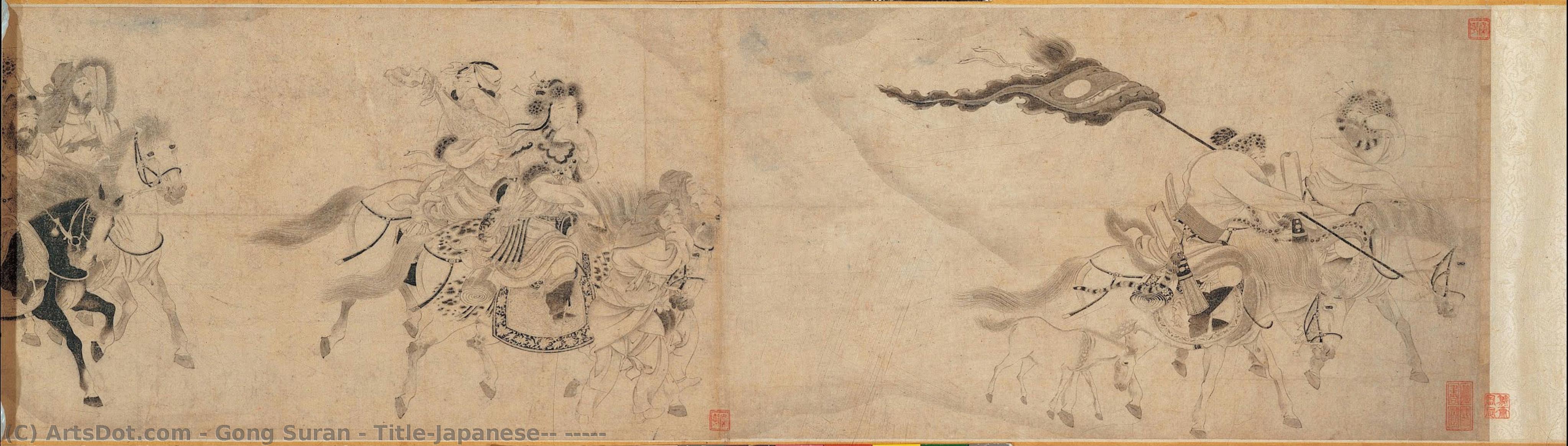
Title(Japanese): 明妃出塞図
 1200
1200 160.0 x 30.0 cm
 Osaka City Museum of Fine Arts
 Read More
Giclée / Art Print
Museum-quality giclée or canvas print with fast production and flexible finish options. ( Buy Hand Made Painting Buy Image)




































Pick from our preset sizes that match the artwork's original proportions.

You may enter your own dimensions to fit a specific frame or space. If your selected size does not match the original image's proportions, we will either crop the artwork or extend the image with a mirrored or solid-fill edge. A digital mockup will be sent for your approval before production begins.
Please note that the on-screen preview does not reflect the actual cropping or extension. Only the mockup will accurately show the final composition.
While custom sizes are available, we recommend selecting a dimension from the predefined list to preserve the original proportions.
Worldwide Delivery () in 2 weeks instead of standard 4/5 weeks. (25 August)

Free Worldwide Express Shipping

High-Quality Linen Canvas

Full Shipping Insurance

Customs Tax Refund Guarantee

True Color Matching Guarantee

60-Day Return Policy (Defects Only)

100% Money-Back Guarantee

Bulk Discount Offer
 Glass option is only available in size under 110 CM

Title(Japanese): 明妃出塞図
Giclée / Art Print
Reproduction Size
-


Total Price
$ 63
Collectible Description
Related Artworks



Artist Biography
Gong Suran: Echoes of Legend in Ink and Silk
The world of Chinese painting often holds secrets, whispers of artists whose names are lost to time, yet whose hands nonetheless shaped the cultural landscape. Among these enigmatic figures stands Gong Suran (c. 1100-1300), a Jin Dynasty painter whose legacy rests primarily on a single, haunting scroll: “Ming-fei Leaves the Fort.” Little is definitively known about his life – he appears to have vanished from historical records entirely – yet this work speaks volumes about his skill, sensitivity, and profound understanding of Chinese storytelling. More than just a portrait, it’s a visual distillation of legend, a poignant meditation on duty, sacrifice, and the enduring power of narrative.
The story behind “Ming-fei Leaves the Fort” is rooted in a complex historical drama – one that has been embellished and reinterpreted over centuries. It centers around Wang Zhaojun (54 BC–19BC), a young concubine of Emperor Yuan-di of the Han Dynasty. Facing pressure from neighboring Xiongnu tribes, the emperor strategically arranged for her marriage to a Xiongnu chieftain as a means of securing peace. This diplomatic alliance, however, was deeply unpopular with the court and ultimately viewed as a humiliating act. The legend quickly evolved, transforming Zhaojun into a symbol of patriotic virtue – a woman who refused to compromise her honor, even at the cost of her own happiness. Gong Suran’s scroll captures this transformation, moving beyond a simple historical record to imbue the scene with emotional resonance.
The Artistry of “Ming-fei Leaves the Fort”
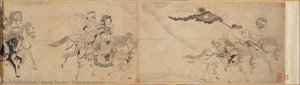
Analyzing Gong Suran's technique reveals a remarkable command of traditional Jin Dynasty painting methods. The scroll is executed in ink on paper, utilizing a delicate and layered approach that’s characteristic of the period. Notice the subtle gradations of tone achieved through meticulous washes – particularly evident in the depiction of the distant sand dunes, which seem to shimmer with an ethereal light. The composition itself is carefully balanced, guiding the viewer's eye from the central figure of Wang Zhaojun to the supporting figures and the vast expanse of the landscape.
The artist’s attention to detail is striking. Wang Zhaojun herself is rendered with a quiet dignity, her expression conveying both sadness and resolve. The folds of her garments are meticulously depicted, suggesting movement and revealing the texture of the silk. Even the escorts – soldiers and attendants – are portrayed with individual characteristics, hinting at their roles within the narrative. The inclusion of a banner fluttering in the wind adds a dynamic element to the scene, further emphasizing the sense of departure.
Crucially, Gong Suran doesn’t simply depict Wang Zhaojun as a beautiful woman; he captures her spirit – her quiet strength and unwavering loyalty. The artist masterfully uses negative space to create a sense of loneliness and isolation, underscoring the tragic nature of her fate.
Context within Jin Dynasty Painting
Gong Suran’s work is deeply embedded within the artistic context of the Jin Dynasty (1115–1234). This period was marked by political instability and military conflict, as the Jurchen tribes gradually conquered the Southern Song. Amidst this turmoil, painting served as a powerful tool for both propaganda and cultural preservation. Many artists were employed by the court to create works that legitimized the rule of the Jurchens or celebrated traditional Chinese values.
However, Gong Suran’s “Ming-fei Leaves the Fort” stands apart from much of this official art. It's a deeply personal and emotionally resonant work – one that transcends political considerations. The scroll reflects a broader trend in Jin Dynasty painting: an increased interest in storytelling and a greater emphasis on human emotion. The legend of Wang Zhaojun, with its themes of sacrifice and honor, provided fertile ground for artistic exploration.
Legacy and Historical Significance
Despite the obscurity surrounding his life, Gong Suran’s “Ming-fei Leaves the Fort” has had a lasting impact on Chinese art history. The scroll is considered one of the most important examples of Jin Dynasty narrative painting and continues to be studied by scholars and art enthusiasts alike. Its enduring appeal lies in its ability to evoke powerful emotions and to illuminate a complex historical event.
Furthermore, Gong Suran’s work highlights the importance of oral tradition and storytelling in shaping Chinese culture. The legend of Wang Zhaojun had been circulating for centuries before it was visually represented on the scroll – and the painting itself served as a powerful reminder of this rich cultural heritage. Gong Suran's legacy is not just that of a painter, but as a conduit for preserving and transmitting a vital piece of Chinese history and legend.
gong suran
China
Quick Facts
- Artistic Movement Or Style: Jin Dynasty Art
- Full Name: Gong Suran
- Nationality: Chinese
- Notable Artworks:
- Ming-Fei Leaves Fort
- Consort Ming Departing
- Place Of Birth: China