 Preview
 Send
Send Share
Share
 Details

 Download
 Similars
 X-Ray
X-Ray Diaporama
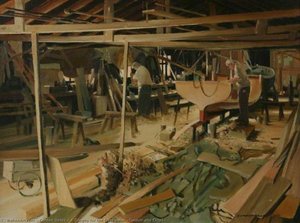
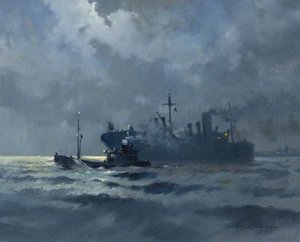
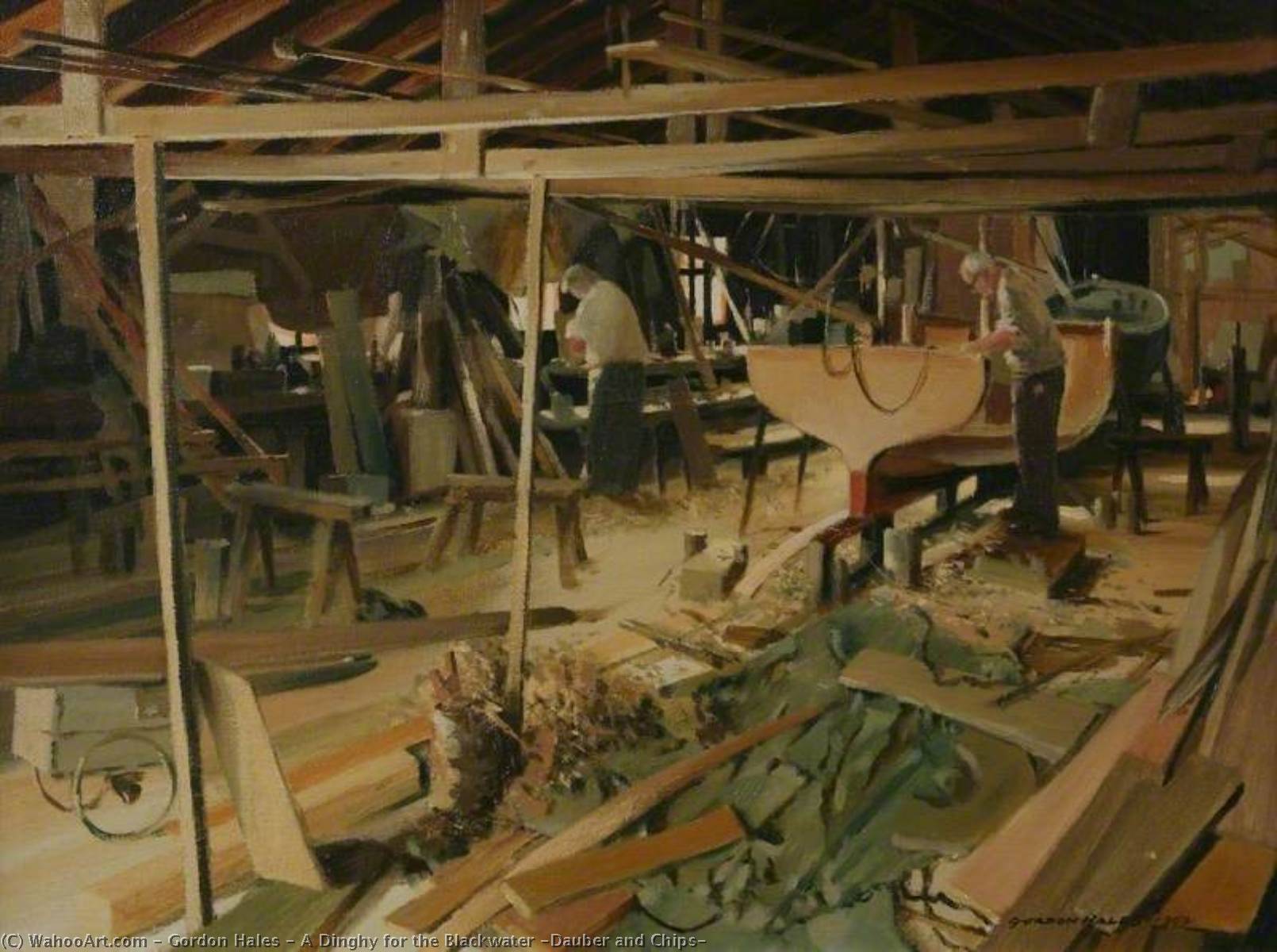
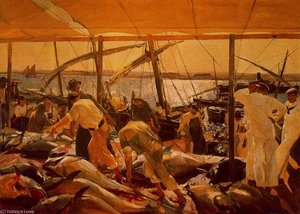
A Dinghy for the Blackwater (Dauber and Chips)
 Contemporary Realism
 44.0 x 60.0 cm
 Read More
Hand Made Oil Reproduction
Hand-painted oil on canvas in your size and frame, made to order by our artists. ( Buy Print Buy Image)




































Pick from our preset sizes that match the artwork's original proportions.

You may enter your own dimensions to fit a specific frame or space. If your selected size does not match the original image's proportions, we will either crop the artwork or extend the painting with additional hand-painted elements. A digital mockup will be sent for your approval before production begins.
Please note that the on-screen preview does not reflect the actual cropping or extension. Only the mockup will accurately show the final composition.
While custom sizes are available, we recommend selecting a dimension from the predefined list to preserve the original proportions.
After order, ArtsDot.com team will email client for instructions and provide a mockup preview
Worldwide Delivery () in 3/4 weeks instead of standard 5 weeks. (26 August). No compromise on quality.

Free Worldwide Express Shipping

High-Quality Linen Canvas

Full Shipping Insurance

Customs Tax Refund Guarantee

True Color Matching Guarantee

60-Day Return Policy (Defects Only)

100% Money-Back Guarantee

Bulk Discount Offer
 Glass option is only available in size under 110 CM

A Dinghy for the Blackwater (Dauber and Chips)
Reproduction Medium
Reproduction Size
-


Total Price
$ 263
Related Artworks
![Indian Tobacco Shop Sign [reverse, Indian Facing Right] — Winslow Homer, Contemporary Realism](/media/artworks/images-thumb/74/22/7422432cafc295265ef3b7f7fa62d35d.jpg)
Artist Biography
The Luminous Chronicles of Gordon Hales
To step into a painting by Gordon Hales is to wander through the golden, sun-drenched corridors of a bygone Britain. Born in 1916, Hales possessed a rare, quiet genius for capturing the soul of the urban landscape, transforming the mundane architecture of English streets into vessels of profound nostalgia and light. While his name may not have echoed with the same global fanfare as some of his contemporaries during his lifetime, his work carries an intimate, enduring resonance that speaks to the very heart of British realism. His artistry was never merely about the reproduction of stone and mortar; it was about the atmosphere that clings to them—the way a late afternoon shadow stretches across a pavement or how the light of a setting sun catches the edge of a Victorian facade.
Hales’s journey into the depths of visual storytelling began with a formal education at the prestigious Slade School of Fine Art in London. It was within these hallowed halls that his technical foundation was forged, shaped by the influence of masters such as William Orchard Roberts and the expressive Frank Auerbach. From these mentors, Hales inherited a respect for bold, purposeful brushwork and an understanding of how color can be used to evoke deep emotional responses. Yet, where others might have leaned into the raw abstraction of the era, Hales chose a path of meticulous observation. He developed a signature approach that blended the precision of a documentarian with the ethereal touch of a poet, focusing his gaze on the architectural grandeur and the bustling, everyday rhythms of life.
A Master of Light and Urban Texture
The true magic of Hales’s technique lies in his unparalleled command over medium and light. He was particularly celebrated for his mastery of watercolor, utilizing a painstaking process of layering translucent washes to achieve a luminous, almost glowing effect. This method allowed him to build depth within his compositions, creating a sense of air and space that makes his street scenes feel breathable and alive. Whether working in the delicate transparency of watercolor or the rich, textured weight of oil on canvas, Halese sought to capture the essence of his subjects. His famous depictions of Watford High Street serve as a testament to this; through subtle gradations of light and shadow, he transformed ordinary commercial thoroughfares into timeless monuments of Victorian elegance.
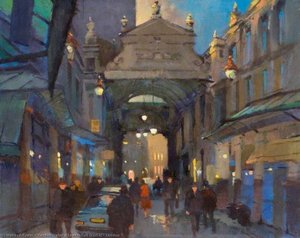
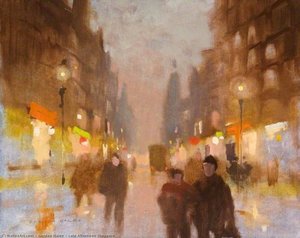
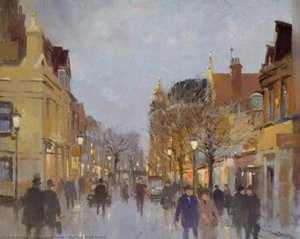
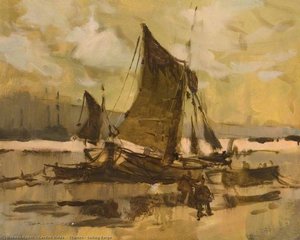
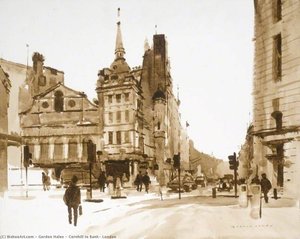
His repertoire extended far beyond the familiar streets of Watford, reaching into the very heart of London’s historical landscape. In works such as Cornhill to Bank, London, one can witness his ability to use a faded, impressionistic touch to evoke the weight of history and the charm of weathered architecture. His versatility was equally evident in his more tranquil subjects, such as Thames, Sailing Barge, where he captured the serene movement of water and the majestic presence of sails against the sky. In every piece, there is a palpable sense of movement—a group of shoppers turning a corner in Late Afternoon Shoppers or the cluttered, industrious energy found in his 1960s explorations of craftsmanship. He did not just paint scenes; he painted the very pulse of the era.
Legacy and the Preservation of Memory
The historical significance of Gordon Hales lies in his role as a visual custodian of British heritage. At a time when the rapid modernization of the mid-20th century threatened to erase the architectural character of many English towns, Hales’s paintings remained steadfast, preserving the textures, colors, and moods of a disappearing world. His work serves as a vital bridge between the Victorian grandeur he admired and the contemporary viewer seeking connection to the past.
Today, his contributions are cherished by collectors and institutions alike, with many of his most poignant works finding a permanent home in the Watford Museum. To look upon a Hales original is to experience a profound sense of continuity. His legacy is defined by several key artistic pillars:
- The Art of Observation: A lifelong commitment to finding extraordinary beauty within ordinary urban settings.
- Technical Brilliance: The sophisticated use of layering and light to create immersive, atmospheric environments.
- Historical Preservation: The ability to document the spirit of British realism and the architectural soul of the United Kingdom.
- Emotional Resonance: A unique capacity to evoke nostalgia, warmth, and a deep sense of place through color and composition.
Though he passed away in 1997, the world Gordon Hales painted remains vibrantly alive within his canvases, inviting every new generation to rediscover the quiet majesty of the streets we walk every day.
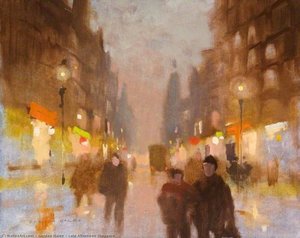
gordon hales
1916 - 1997
Quick Facts
- Artistic Movement Or Style: Realist Painting
- Artists Or Movements Influenced By This Artist: ['British Impressionism']
- Artists Who Influenced This Artist:
- William Holman Hunt
- John Constable
- Date Of Death: 1997
- Full Name: Gordon Hales
- Nationality: British
- Notable Artworks:
- Thames, Sailing Barge
- Late Afternoon Shoppers
- Cornhill to Bank, London
- Place Of Birth: London, England
Related Articles
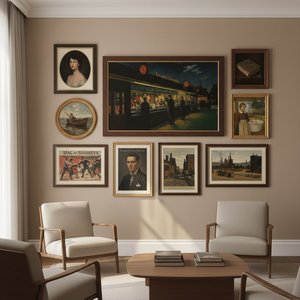
American Realism's Defining Works: 10 Masterpieces for Your Home
Explore 10 defining American Realism masterpieces – Hopper, Homer & more. Discover the stories behind these iconic paintings and bring timeless art to your home with ArtsDot's museum-quality reproductions. Explore the full collection online.
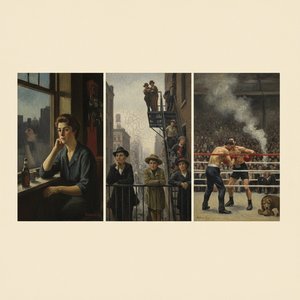
American Realism: Social Commentary & Artistic Representation in Early 20th-Century Painting
Explore the powerful social commentary & artistic representation of American Realism. Discover key artists like Bellows & Sloan, and understand the movement's lasting impact on 20th-century art history.

Grant Wood & American Regionalism: Identity, Myth & the Rural Landscape
Explore the world of Grant Wood & American Regionalism with ArtsDot. Discover the symbolism behind 'American Gothic', recurring themes, and the movement's lasting impact on art history. High-quality reproductions available.

Romantic Realism's Finest: 10 Masterpieces for Your Home | ArtsDot
Explore 10 defining masterpieces of Romantic Realism! Discover Courbet, Millet & Daumier's powerful paintings—capturing emotion and social realities. Find museum-quality reproductions for your home at ArtsDot.com.
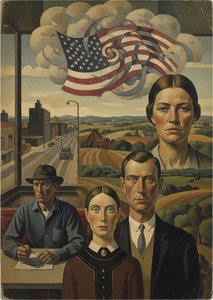
Echoes of Place: Regionalism & American Identity in Interwar Art
Explore the rise of American Regionalism in interwar art! Discover Grant Wood, Thomas Hart Benton & the movement's impact on American identity. Expert analysis & historical context.