 Send
Send Share
Share
 Details

 Download
 Similars
 Diaporama
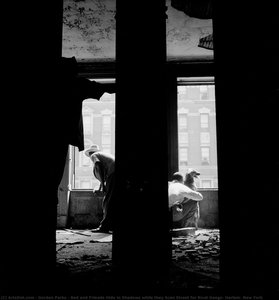
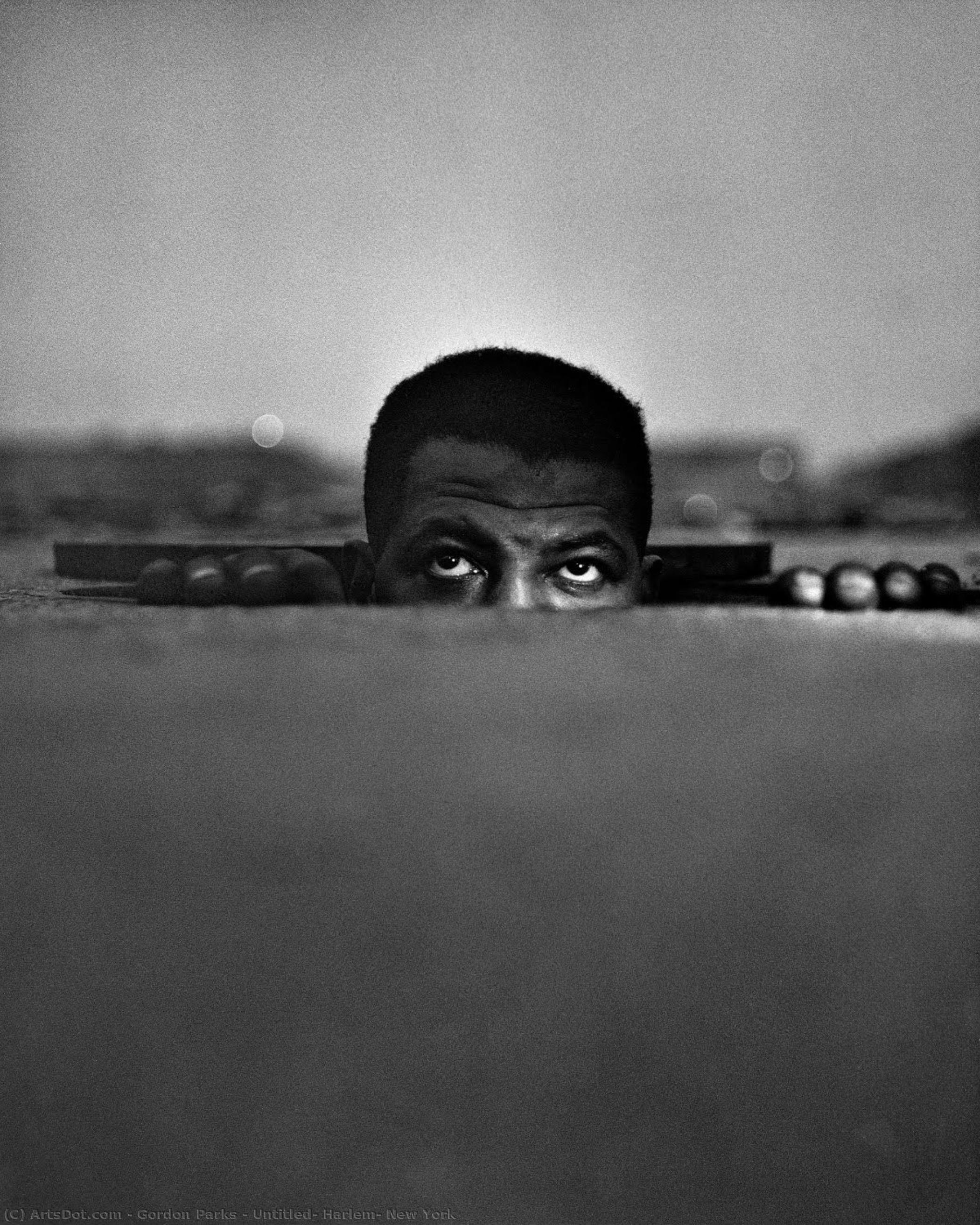
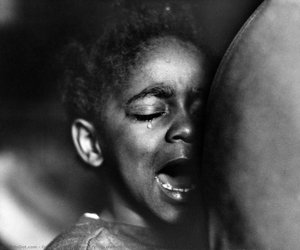
Untitled, Harlem, New York


 Read More
Giclée / Art Print
Museum-quality giclée or canvas print with fast production and flexible finish options. ( Buy Hand Made Painting Buy Image)




































Pick from our preset sizes that match the artwork's original proportions.

You may enter your own dimensions to fit a specific frame or space. If your selected size does not match the original image's proportions, we will either crop the artwork or extend the image with a mirrored or solid-fill edge. A digital mockup will be sent for your approval before production begins.
Please note that the on-screen preview does not reflect the actual cropping or extension. Only the mockup will accurately show the final composition.
While custom sizes are available, we recommend selecting a dimension from the predefined list to preserve the original proportions.
Worldwide Delivery () in 2 weeks instead of standard 4/5 weeks. (19 August)

Free Worldwide Express Shipping

High-Quality Linen Canvas

Full Shipping Insurance

Customs Tax Refund Guarantee

True Color Matching Guarantee

60-Day Return Policy (Defects Only)

100% Money-Back Guarantee

Bulk Discount Offer
 Glass option is only available in size under 110 CM

Untitled, Harlem, New York
Giclée / Art Print
Reproduction Size
-


Total Price
$ 63
Collectible Description
A Gaze Frozen in Time: Gordon Parks’ “Untitled, Harlem, New York”
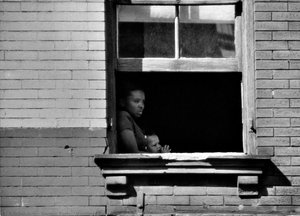
Gordon Parks' "Untitled, Harlem, New York," captured in 1952, isn’t merely a photograph; it’s a distilled moment of urban life, a quiet interrogation of the human condition. This black and white image, part of Parks’ seminal “A Man Becomes Invisible” series, immediately draws you into a scene both familiar and profoundly unsettling. The subject – a man peering over what appears to be a low barrier – possesses an intensity that transcends simple observation; he seems to hold a secret, a question directed at the viewer, or perhaps simply contemplating the world beyond his immediate reach.
Parks’ approach is firmly rooted in documentary photography, yet imbued with a subtle artistry. He eschews overt sentimentality, instead presenting a raw and honest portrayal of an everyday scene. The composition is strikingly simple – a central figure dominating the frame, bisected by a horizontal element that subtly suggests confinement or concealment. This deliberate restraint amplifies the impact of the man’s gaze, forcing us to confront our own role as observers.
Technical Mastery & Photographic Language
The photograph's power resides not only in its subject matter but also in Parks’ masterful manipulation of photographic technique. Shot on film – likely a black and white negative – it exhibits the characteristic graininess that lends a sense of immediacy and authenticity to the image. Notice the careful use of light; it’s soft and diffused, creating subtle gradations of tone across the man's face, highlighting his forehead and nose while casting shadows that deepen the mystery surrounding his expression. The shallow depth of field – with the subject sharply in focus and the background rendered indistinct – expertly isolates him from his environment, drawing our attention entirely to his enigmatic presence.
Furthermore, subtle post-processing techniques, such as dodging and burning, have been employed to enhance contrast and emphasize key areas. This meticulous control over tonal values contributes significantly to the image’s dramatic impact, transforming a simple street scene into a compelling visual narrative.
Symbolism & The Weight of Observation
The act of peering over a barrier is rich with symbolic weight. It speaks to secrets, observation, and perhaps even a yearning for connection – or a guarded distance from the world. Parks was deeply attuned to the social realities of his time, documenting the lives of African Americans in America’s segregated society. This photograph, taken during this period, can be interpreted as a commentary on invisibility—the experience of being overlooked, dismissed, or simply unseen by those around us. The man's intense gaze suggests a quiet defiance, a refusal to be passively defined.
The setting itself – Harlem, New York – is crucial to understanding the image’s context. Harlem in the 1950s was a vibrant and complex neighborhood grappling with issues of poverty, racial inequality, and cultural identity. Parks' work served as a vital record of this era, offering a nuanced perspective often absent from mainstream media representations.
A Timeless Portrait & Enduring Legacy
"Untitled, Harlem, New York" is more than just a historical artifact; it’s a profoundly moving and enduring portrait. Gordon Parks' ability to capture the essence of human experience—the quiet dignity, the unspoken anxieties, the subtle complexities—continues to resonate with viewers today. Reproductions of this image offer a powerful opportunity to engage with Parks’ legacy and reflect on the ongoing struggle for recognition and equality. It stands as a testament to the power of photography to illuminate both individual lives and broader social realities.
Related Artworks

Artist Biography
early life and career
gordon roger alexander buchanan parks, an american photographer, musician, writer, and film director, was born on november 30, 1912, in fort scott, kansas. he was the youngest of fifteen children to sarah (née ross) and jackson parks. parks' early life was marked by segregation, which he experienced firsthand in his hometown.as a self-taught artist, parks began his career as a photographer, eventually becoming the first african american to work for life and vogue magazines. his iconic photos of poor americans during the 1940s, taken for a federal government project, are a testament to his skill and dedication.
notable works and achievements
- shaft (1971), a film directed by parks, which became a cultural phenomenon.
- the learning tree (1969), a semiautobiographical film that marked parks' directorial debut.
- a choice of weapons (1985), a memoir that showcases parks' writing prowess.
- life magazine's photographic essays, which cemented parks' status as a prominent photojournalist.
museums and collections
- the melvin holmes collection, featuring an extensive collection of parks' work. [https://www.holmesartgallery.com/gordonparks](https://www.holmesartgallery.com/gordonparks)
- moma (the museum of modern art), which has an impressive collection of parks' photographs. [https://www.moma.org/artists/8083](https://www.moma.org/artists/8083)
awards and legacy
- naacp image award (2003)
- pga oscar micheaux award (1993)
- national medal of arts (1988)
- spingarn medal (1972)
gordon parks' legacy extends beyond his impressive body of work, as he paved the way for future generations of african american artists. his contributions to photojournalism, filmmaking, and music continue to inspire and influence artists today.
selected works on ArtsDot.com
- emerging man (gelatin silver print), a powerful photograph showcasing parks' skill. [https://ArtsDot.com/d3xgfc-gordon-parks-emerging-man](https://ArtsDot.com/d3xgfc-gordon-parks-emerging-man)
- portrait of mrs. lucy johnson (gelatin silver print), a poignant portrait that highlights parks' storytelling ability. [https://ArtsDot.com/d4dblu-gordon-parks-portrait-of-mrs-lucy-johnson](https://ArtsDot.com/d4dblu-gordon-parks-portrait-of-mrs-lucy-johnson)
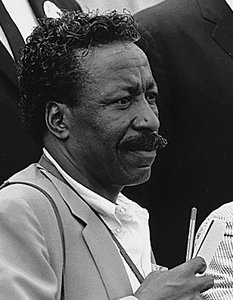
Gordon Parks
1912 - 2006 , United States of America
Quick Facts
- Artistic Movement Or Style: Photojournalism, Social Realism
- Artists Or Movements Influenced By This Artist: Future African American artists
- Date Of Birth: November 30, 1912
- Date Of Death: March 7, 2006
- Full Name: Gordon Roger Alexander Buchanan Parks
- Nationality: American
- Notable Artworks:
- Shaft
- The Learning Tree
- Emerging Man
- Harlem Gang Wars
- Night Rumble
- Place Of Birth: Fort Scott, USA
Related Articles

Monochrome Visions: Exploring the Aesthetic & Historical Significance of Black & White Photography
Explore the rich history & artistic power of black and white photography. From early techniques to iconic masters like Ansel Adams, discover why monochrome continues to captivate art lovers today. Expert insights for collectors.
Gordon Parks: A Poetic Lens on American Life – Photography, Social Justice & Storytelling
Explore the profound work of Gordon Parks, a groundbreaking photographer who documented American life with unparalleled empathy and artistry. Discover his iconic images & lasting impact on social justice through Life magazine & beyond.

White on Canvas: 10 Masterpieces & Timeless Elegance for Your Home Decor
Explore 10 iconic white paintings by Monet, Whistler & Rothko! Discover the stories behind these serene masterpieces and their impact on art history. Find museum-quality reproductions for your home decor at .
Witnessing History Through Lens & Light: Documentary Photography's Enduring Legacy
Explore the powerful history of documentary photography – from its origins to contemporary masters like Gordon Parks & W. Eugene Smith. Discover how this art form shapes our understanding of society and witness pivotal moments in time.

Timeless & Chic: Elevating Your New Home with the Sophistication of Black and White Photography
Transform your new home with the timeless allure of black and white photography. ArtsDot.com specializes in elegant monochrome decor and custom hand-painted wedding portraits that turn cherished milestones into lasting, soulful masterpieces. Elevate your space with ease.