 Preview
 Send
Send Share
Share
 Details

 Download
 Similars
 X-Ray
X-Ray Diaporama
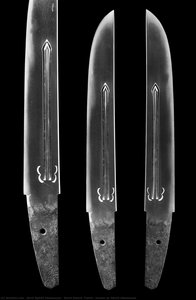
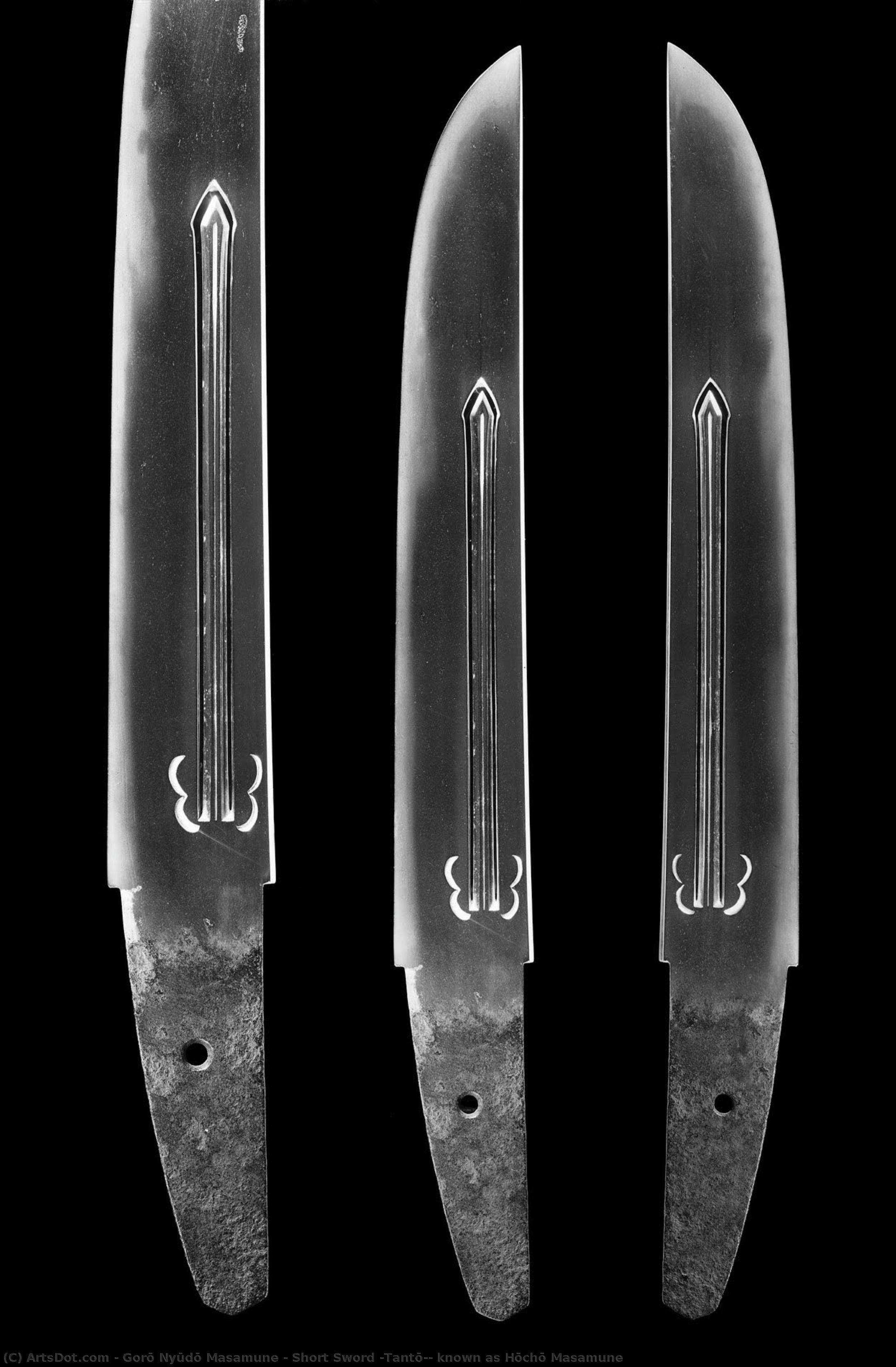
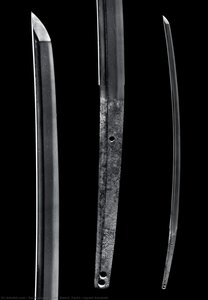
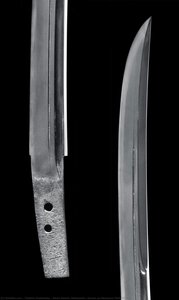
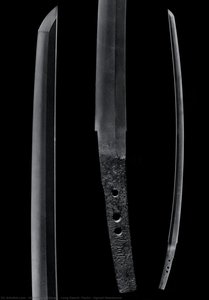
Short Sword (Tantō), known as Hōchō Masamune

 Read More
Hand Made Oil Reproduction
Hand-painted oil on canvas in your size and frame, made to order by our artists. ( Buy Print Buy Image)




































Pick from our preset sizes that match the artwork's original proportions.

You may enter your own dimensions to fit a specific frame or space. If your selected size does not match the original image's proportions, we will either crop the artwork or extend the painting with additional hand-painted elements. A digital mockup will be sent for your approval before production begins.
Please note that the on-screen preview does not reflect the actual cropping or extension. Only the mockup will accurately show the final composition.
While custom sizes are available, we recommend selecting a dimension from the predefined list to preserve the original proportions.
After order, ArtsDot.com team will email client for instructions and provide a mockup preview
Worldwide Delivery () in 3/4 weeks instead of standard 5 weeks. (29 August). No compromise on quality.

Free Worldwide Express Shipping

High-Quality Linen Canvas

Full Shipping Insurance

Customs Tax Refund Guarantee

True Color Matching Guarantee

60-Day Return Policy (Defects Only)

100% Money-Back Guarantee

Bulk Discount Offer
 Glass option is only available in size under 110 CM

Short Sword (Tantō), known as Hōchō Masamune
Reproduction Medium
Reproduction Size
-


Total Price
$ 263
Related Artworks





Artist Biography
The Enigma of Masamune: Japan’s Lost Swordsmith
Gorō Nyūdō Masamune (c. 1264-1343), a name whispered with reverence and shrouded in mystery, stands as arguably the greatest swordsmith in Japanese history. More than just a craftsman, he was a pivotal figure in shaping the very soul of the katana, a master who left behind no signed works yet whose influence resonates through centuries of blade-making. His life remains largely undocumented, lost to the mists of time, adding an alluring layer of intrigue to his already legendary status. Born around 1264 in Kanagawa Prefecture, Masamune’s early years are a blank page, though it's believed he was either adopted or born into the Okazaki family – a detail debated by scholars today. What *is* known is that he emerged during the tumultuous Kamakura period, a time of shifting power and constant warfare, a crucible where the samurai class demanded weapons of unparalleled quality and deadly grace. The late 13th century was a pivotal moment in Japanese history, marked by the Mongol invasions and the rise of the Hōjō regency. The need for effective weaponry fueled innovation in swordsmithing, and Masamune’s work became inextricably linked to this era. He honed his skills under the tutelage of Shintōgo Kunimitsu, a prominent figure in the Sagami school – a lineage known for its emphasis on beauty and functionality. While the precise details of his training remain elusive, it's clear that Masamune absorbed and refined the techniques of his master, ultimately surpassing him in both skill and innovation. He wasn’t merely copying; he was evolving, pushing the boundaries of what was possible with steel and fire. His workshop, situated in Sagami Province, placed him at the heart of this burgeoning swordsmithing community, allowing him to exchange ideas and refine his craft amidst a flurry of activity.The Soshu-Den Style: A Legacy Forged in Fire
Masamune’s contribution wasn't simply about creating better swords; he fundamentally altered the aesthetic and technical approach to blade making. He is credited with establishing what became known as the Soshu-den school, a style characterized by its exquisite beauty, exceptional hardness, and subtle complexity. Unlike earlier styles that prioritized brute strength, Masamune’s blades possessed an ethereal quality – a delicate balance between power and grace. Key elements of the Soshu-den style, demonstrably present in his work, include *nie-deki*, the creation of fine, granular martensite within the hamon (temper line); *chikei* and *kinsuji*, intricate patterns of hardened steel that added depth and visual interest; and *midareba*, a distinctive wavy pattern achieved through masterful heat control. The resulting blades were not just weapons; they were miniature works of art, imbued with a sense of dynamism and spirit. Perhaps most remarkably, Masamune’s techniques defied easy categorization. He seemed to intuitively understand the properties of steel, coaxing it into forms that were both visually stunning and incredibly effective in combat. His blades weren't simply forged; they were *shaped*, molded by an almost spiritual understanding of the material. This intuitive approach is reflected in the words of a contemporary master: “The brilliance of Masamune’s hamon is like moonlight upon rippling water, unforced yet perfect. No man may improve upon it.” This sentiment encapsulates the enduring admiration for his work – a recognition that he had achieved a level of mastery rarely seen before or since.A Shadowed Legacy: The Mystery of Signed Blades and the Muramasa Legend
Despite his undeniable genius, Masamune’s legacy is complicated by a frustrating lack of definitive evidence. He left behind no signed blades, a perplexing anomaly that has fueled speculation and debate for centuries. This absence contributes significantly to the aura of mystery surrounding him – it's as if he deliberately avoided personal branding, preferring instead to let his work speak for itself. However, through meticulous analysis by later swordsmiths and appraisers, scholars have been able to attribute a number of blades to his hand, relying on stylistic similarities, metallurgical characteristics, and historical context. Notable examples include the Fudo Masamune, a tantō linked to the Tokugawa family; the Honzō Masamune, once held by the influential Honzō clan; and the Hocho Masamune, a wide-bladed tantō prized for its exceptional geometry. Adding another layer of intrigue is the enduring legend surrounding Masamune and his rival, Muramasa. This tale, popularized in the 17th-century *Tales of the Shinkage School*, paints a dramatic picture of two master swordsmiths locked in a perpetual struggle – Masamune representing restraint and elegance, while Muramasa embodies raw power and aggression. The story claims that Muramasa’s blades could “cut everything, even the wind,” while Masamune’s were reserved and precise, only targeting what needed to be struck. While undoubtedly a fictional narrative, this legend has profoundly shaped perceptions of both smiths, solidifying Masamune's image as a figure of profound wisdom and artistic integrity.The Influence Beyond the Blade: Students and the Propagation of Technique
Masamune’s impact extended far beyond his own lifetime. He is credited with training ten legendary disciples – Sadamune, Norishige, Hiromitsu, and others – who carried the Soshu-den techniques to various provinces and schools throughout Japan. These students, in turn, influenced generations of swordsmiths, ensuring that Masamune’s legacy lived on long after his death in 1343. The *Honcho Kaji Ko*, a 18th-century treatise on swordsmithing, succinctly summarized this enduring influence: “Masamune's blades are the foundation upon which all other Soshu blades are built.” His techniques became deeply ingrained within the Japanese sword-making tradition, shaping not only the style of individual smiths but also the very character of the katana itself.Conclusion: A Master Unsolved
Gorō Nyūdō Masamune remains an enigma—a testament to the enduring mysteries surrounding Japan’s past. Despite centuries of research and countless attempts to reconstruct his life, many fundamental questions remain unanswered. Was he truly a solitary genius, or was he part of a larger network of smiths? What were his early influences? And perhaps most tantalizingly, did he *really* exist in the form that we know him today? The lack of definitive evidence only serves to heighten the fascination surrounding this legendary swordsmith. Masamune’s legacy isn't just about the exquisite beauty and unparalleled craftsmanship of his blades; it’s about the enduring power of mystery—a reminder that even the greatest masters can remain, in some ways, forever lost to time.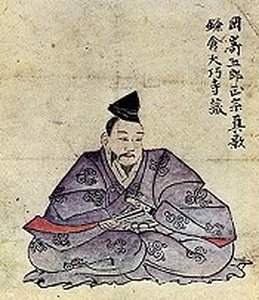
gorō nyūdō masamune
1343 , Japan
Quick Facts
- Artistic Movement Or Style: Sōshū school
- Artists Or Movements Influenced By This Artist: ['Soshu-den school']
- Artists Who Influenced This Artist:
- Shintōgo Kunimitsu
- Saburō Kunimune
- Date Of Birth: c. 1264
- Date Of Death: 1343
- Full Name: Gorō Nyūdō Masamune
- Nationality: Japanese
- Notable Artworks:
- Tachi
- Tantō
- Wakizashi
- Place Of Birth: Kanagawa Prefecture, Japan