 Preview
 Send
Send Share
Share
 Details

 Download
 Similars
 X-Ray
X-Ray Diaporama
 Stats
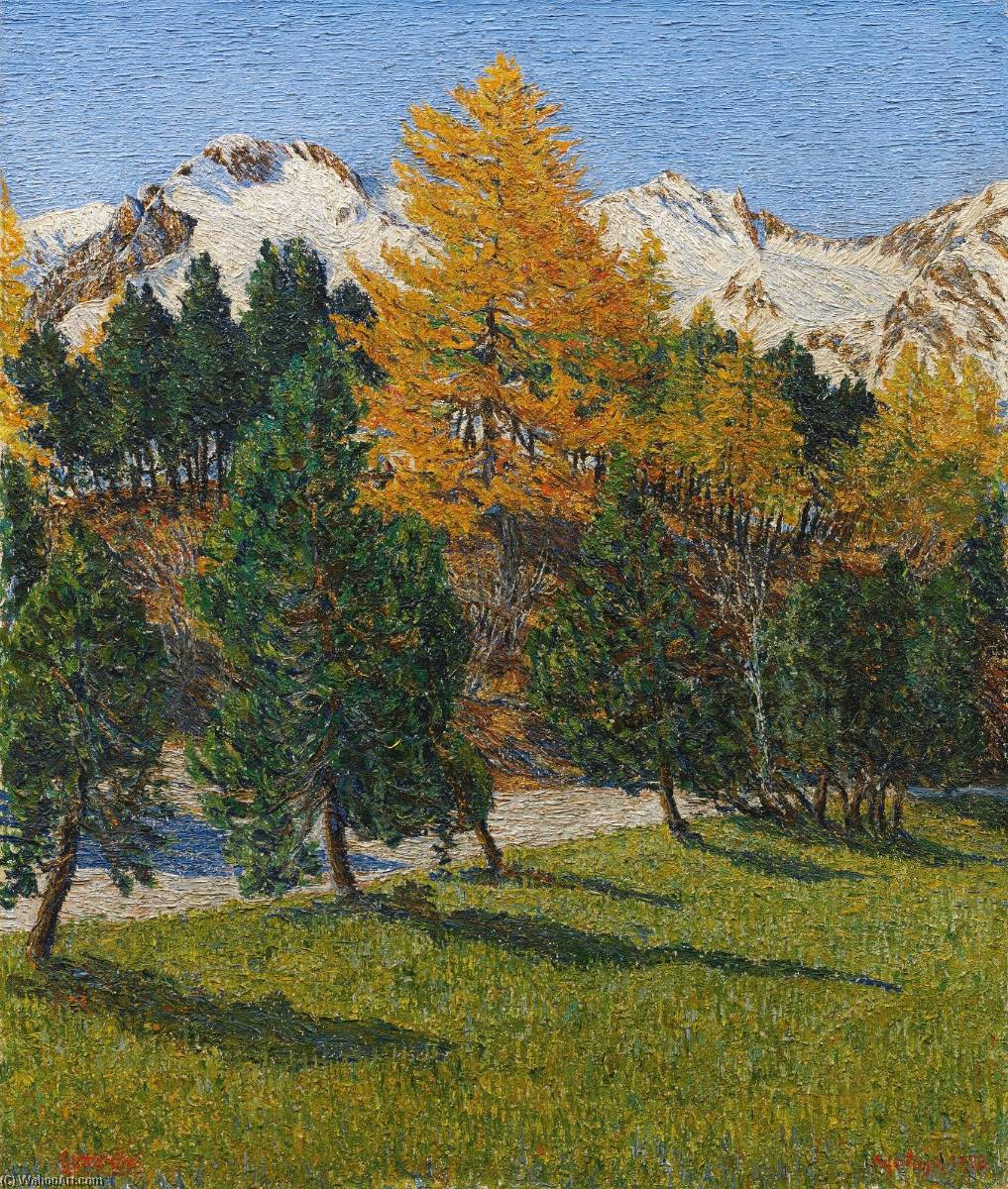
StatsHerbstschnee, 1922
 Read More
Hand Made Oil Reproduction
Hand-painted oil on canvas in your size and frame, made to order by our artists. ( Switch to Print Switch to Digital Image)




































Pick from our preset sizes that match the artwork's original proportions.

You may enter your own dimensions to fit a specific frame or space. If your selected size does not match the original image's proportions, we will either crop the artwork or extend the painting with additional hand-painted elements. A digital mockup will be sent for your approval before production begins.
Please note that the on-screen preview does not reflect the actual cropping or extension. Only the mockup will accurately show the final composition.
While custom sizes are available, we recommend selecting a dimension from the predefined list to preserve the original proportions.
After order, ArtsDot.com team will email client for instructions and provide a mockup preview
Worldwide Delivery () in 3/4 weeks instead of standard 5 weeks. (8 September). No compromise on quality.

Free Worldwide Express Shipping

High-Quality Linen Canvas

Full Shipping Insurance

Customs Tax Refund Guarantee

True Color Matching Guarantee

100-Day Return Policy (Defects Only)

100% Money-Back Guarantee

Bulk Discount Offer
 Glass option is only available in size under 110 CM

Herbstschnee, 1922
Reproduction Medium
Reproduction Size
-


Total Price
$ 263
Related Artworks









Artist Biography
Early Life and Artistic Beginnings
Gottardo Segantini’s story is inextricably linked to the towering figure of his father, Giovanni Segantini, one of the most celebrated Symbolist painters of the late 19th century. While often discussed in relation to his more famous parent, Gottardo has carved out a distinct artistic identity rooted in a deep reverence for nature and a masterful application of Divisionist techniques. Born into an artistically vibrant family – though precise birth details remain elusive – Gottardo’s early life was steeped in the atmosphere of creative exploration that characterized Giovanni's studio and travels. The Segantini family moved frequently, seeking landscapes that would inspire their work, from their native Trentino to the shores of Lake Garda and eventually settling in the Engadine Valley in Switzerland. This nomadic existence instilled in Gottardo a profound connection with the natural world, particularly the majestic Alpine scenery that would become a defining feature of his oeuvre. He received his initial artistic training from his father, learning not only technical skills but also a philosophical approach to painting that emphasized emotional response and symbolic meaning.The Influence of Giovanni Segantini & Divisionism
Giovanni Segantini’s influence on Gottardo was immense, extending beyond mere instruction into a shared aesthetic vision. The elder Segantini pioneered a unique form of Divisionism – a technique where colors are applied in small, distinct strokes rather than blended on the palette – to capture the luminosity and atmospheric effects of the Alpine environment. Gottardo embraced this method with remarkable skill, refining it further and developing his own nuanced approach. However, while Giovanni often imbued his landscapes with allegorical figures and narratives reflecting social commentary, Gottardo tended towards a more pure representation of nature’s beauty. He focused on capturing the subtle shifts in light, the textures of rock and foliage, and the overall sense of tranquility found within the Alpine world. This isn't to say symbolism was absent from his work; rather, it manifested as an almost spiritual connection with the landscape itself, a reverence for its power and serenity. The legacy of Giovanni Segantini provided a strong foundation, but Gottardo’s art quickly evolved into something uniquely his own.Development of a Pastoral Style
As Gottardo matured as an artist, he increasingly focused on pastoral landscapes – scenes depicting rural life harmoniously integrated with nature. These paintings are characterized by their delicate color palettes, meticulous detail, and a sense of quiet contemplation. He wasn’t interested in dramatic or sensational depictions; instead, he sought to capture the everyday beauty of Alpine life: farmers tending their flocks, villagers going about their daily routines, and the serene stillness of mountain meadows. His work often features a soft, diffused light that evokes a feeling of nostalgia and peace. This period saw Gottardo experimenting with different compositional techniques, moving away from the more structured arrangements of his father’s paintings towards looser, more atmospheric renderings. He became adept at capturing the effects of sunlight filtering through trees, reflecting off snow-capped peaks, and creating a sense of depth and perspective that drew viewers into the heart of the landscape.Major Achievements & Artistic Recognition
While Gottardo Segantini may not have achieved the same level of widespread fame as his father during his lifetime, his work has garnered increasing recognition in recent years. His paintings are admired for their technical brilliance, emotional depth, and unique perspective on the Alpine world.- His mastery of Divisionism allowed him to create incredibly luminous and atmospheric landscapes.
- He successfully captured the essence of pastoral life, portraying a harmonious relationship between humans and nature.
- His work provides valuable insight into the artistic traditions of the late 19th and early 20th centuries.