
 Preview
 Send
Send Share
Share
 Details

 Download
 Similars
 X-Ray
X-Ray Diaporama
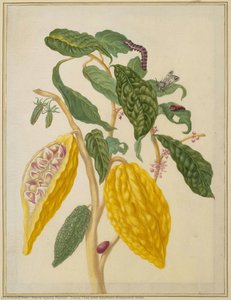
Tafel XXXIX - Diadelphia


 Read More
Hand Made Oil Reproduction
Hand-painted oil on canvas in your size and frame, made to order by our artists. ( Buy Print Buy Image)




































Pick from our preset sizes that match the artwork's original proportions.

You may enter your own dimensions to fit a specific frame or space. If your selected size does not match the original image's proportions, we will either crop the artwork or extend the painting with additional hand-painted elements. A digital mockup will be sent for your approval before production begins.
Please note that the on-screen preview does not reflect the actual cropping or extension. Only the mockup will accurately show the final composition.
While custom sizes are available, we recommend selecting a dimension from the predefined list to preserve the original proportions.
After order, ArtsDot.com team will email client for instructions and provide a mockup preview
Worldwide Delivery () in 3/4 weeks instead of standard 5 weeks. (25 August). No compromise on quality.

Free Worldwide Express Shipping

High-Quality Linen Canvas

Full Shipping Insurance

Customs Tax Refund Guarantee

True Color Matching Guarantee

60-Day Return Policy (Defects Only)

100% Money-Back Guarantee

Bulk Discount Offer
 Glass option is only available in size under 110 CM

Tafel XXXIX - Diadelphia
Reproduction Medium
Reproduction Size
-


Total Price
$ 263
Artwork Description
Related Artworks









Artist Biography
The Enigmatic Visionary: Gotthilf Heinrich von Schubert
Gotthilf Heinrich von Schubert (1780-1860) remains a figure of intriguing complexity, a bridge between the burgeoning scientific curiosity of the late 18th and early 19th centuries and the blossoming Romantic spirit. Born in Hohenstein-Ernstthal, Germany, into a family steeped in religious tradition, Schubert’s life unfolded as a remarkable synthesis of observation, intuition, and a profound yearning to understand the interconnectedness of nature, humanity, and the divine. Initially drawn to theology, he swiftly transitioned to medicine, establishing himself as a respected physician before ultimately dedicating his energies to a path less traveled – one that sought to reconcile scientific inquiry with spiritual experience.
Schubert’s early career was marked by a restless intellect and a fascination with the natural world. He began collecting specimens, conducting experiments, and meticulously documenting his observations—a practice that would become central to his later work. His relocation to Dresden in 1806 proved pivotal, providing him with access to intellectual circles dominated by figures like Friedrich Wilhelm Joseph Schelling, whose philosophy of absolute idealism profoundly shaped Schubert’s worldview. This encounter ignited a lifelong exploration into the realm of symbolism and the hidden meanings embedded within both the natural world and the human psyche. The influence of Schelling is undeniable; Schubert sought to build upon his ideas, creating a system that integrated scientific observation with spiritual insight – a radical proposition for his time.
The Symbolism of Dreams and the Dawn of Psychological Inquiry
Schubert’s most celebrated work, *Die Symbolik des Traumes* (1814), stands as a testament to this unique synthesis. Far from merely cataloging dream imagery, Schubert interpreted dreams as windows into the soul, offering glimpses of deeper truths and unconscious desires. He meticulously analyzed recurring motifs—animals, colors, landscapes—associating them with specific psychological states and spiritual archetypes. This work was remarkably prescient, anticipating later developments in psychoanalysis by decades. It demonstrated a remarkable sensitivity to the symbolic language of the subconscious, foreshadowing the groundbreaking insights of Sigmund Freud and Carl Jung.
The book’s immediate success reflected a growing public interest in the mysteries of the mind. Schubert's approach was accessible yet profound, appealing to both intellectuals and those seeking personal understanding. He wasn’t simply describing dreams; he was offering a framework for interpreting them as expressions of inner life—a concept revolutionary for its time. His work gained traction through recommendations from prominent figures like Johann Wolfgang von Goethe, who recognized in Schubert's explorations a kindred spirit grappling with similar questions about the nature of reality and human consciousness.
A Naturalist’s Pursuit of Holistic Knowledge
Beyond *Die Symbolik des Traumes*, Schubert’s intellectual pursuits encompassed a wide range of scientific disciplines. He held positions as a professor of natural history in Erlangen, where he lectured on botany, forestry, mineralogy, and geognosy—a testament to his breadth of knowledge and his commitment to a holistic understanding of the world. His *Handbuch der Naturkunde* (1813), a comprehensive treatise on natural science, reflected this integrated approach, demonstrating a deep appreciation for the interconnectedness of all living things.
However, Schubert’s scientific endeavors were always intertwined with his spiritual concerns. He believed that true knowledge could only be attained through a synthesis of observation and intuition—a perspective that distinguished him from many of his contemporaries who prioritized empirical data above all else. His exploration of animal magnetism (Mesmerism) and his interest in clairvoyance further exemplify this commitment to bridging the gap between science and spirituality, reflecting a desire to understand the hidden forces shaping human experience.
Legacy and Enduring Influence
Despite facing criticism and skepticism during his lifetime, Gotthilf Heinrich von Schubert’s legacy has grown steadily over time. His work on dream symbolism continues to be studied by psychologists, art historians, and literary critics alike, while his holistic approach to knowledge foreshadowed many of the insights of modern psychology and systems thinking. The naming of the plant genus *Schubertia* in his honor serves as a lasting tribute to his contributions to the natural sciences.
More than simply a scientist or a philosopher, Schubert was a visionary who sought to illuminate the hidden connections between the inner world of the human psyche and the outer world of nature. His life’s work stands as a powerful reminder that true understanding requires not only observation but also intuition—a synthesis of intellect and spirit that continues to resonate with contemporary audiences.
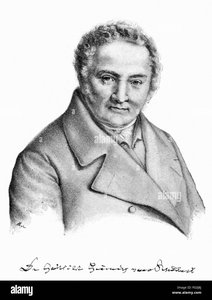
gotthilf heinrich von schubert
1780 - 1860 , Germany
Quick Facts
- Artistic Movement Or Style: Romantic science
- Artists Or Movements Influenced By This Artist:
- Freud
- Jung
- Artists Who Influenced This Artist:
- Schelling
- Goethe
- Date Of Birth: April 26, 1780
- Date Of Death: June 30, 1860
- Full Name: Gotthilf Heinrich von Schubert
- Nationality: German
- Notable Artworks:
- Symbolism of Dreams
- History of the Soul
- Place Of Birth: Hohenstein-Ernstthal, Germany