 Preview
 Send
Send Share
Share
 Details

 Download
 Similars
 X-Ray
X-Ray Diaporama
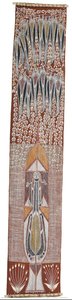
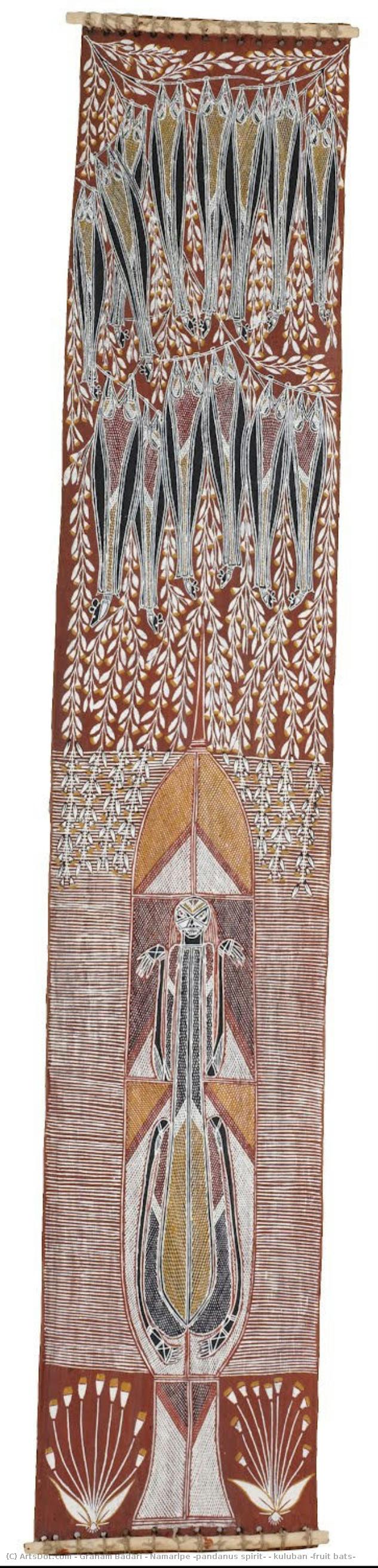
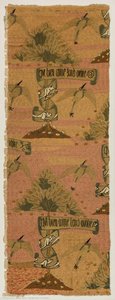
Namarlpe (pandanus spirit) & kuluban (fruit bats)
 Read More
Giclée / Art Print
Museum-quality giclée or canvas print with fast production and flexible finish options. ( Buy Hand Made Painting Buy Image)




































Pick from our preset sizes that match the artwork's original proportions.

You may enter your own dimensions to fit a specific frame or space. If your selected size does not match the original image's proportions, we will either crop the artwork or extend the image with a mirrored or solid-fill edge. A digital mockup will be sent for your approval before production begins.
Please note that the on-screen preview does not reflect the actual cropping or extension. Only the mockup will accurately show the final composition.
While custom sizes are available, we recommend selecting a dimension from the predefined list to preserve the original proportions.
Worldwide Delivery () in 2 weeks instead of standard 4/5 weeks. (25 August)

Free Worldwide Express Shipping

High-Quality Linen Canvas

Full Shipping Insurance

Customs Tax Refund Guarantee

True Color Matching Guarantee

60-Day Return Policy (Defects Only)

100% Money-Back Guarantee

Bulk Discount Offer
 Glass option is only available in size under 110 CM

Namarlpe (pandanus spirit) & kuluban (fruit bats)
Giclée / Art Print
Reproduction Size
-


Total Price
$ 63
Collectible Description
Related Artworks






Artist Biography
Graham Badari: A Life in Kunwinjku Painting
Early Life and Background
Graham Badari (born 1963) is a highly respected Aboriginal Australian artist from the Wardjak clan in West Arnhem Land. He speaks the Kunwinjku dialect and maintains strong ties to his ancestral lands. Born in Gunbalanya and raised at Maburrinj, approximately 75 miles east of Gunbalanya, Badari’s upbringing was deeply rooted in traditional culture and artistic practices.
Artistic Influences and Development
Badari's artistic journey began with observing and learning from the senior artists at Injalak Arts. He credits the late Thompson Yulidjirri as his greatest influence, absorbing the fluid and dynamic figurative style that defines Kunwinjku painting. He was also raised by the renowned Aboriginal Australian artist Djawida Nadjongorle, further shaping his artistic foundation. Art historian Henry Skerritt describes Badari as possessing a “unique and eccentric personality” coupled with an “impish smile and cheeky sense of humour.”
Themes and Style
Badari’s paintings are deeply connected to the land and Dreamings of his mother country, Djurlka. He frequently depicts scenes from this area, particularly near the outstation of Marmardawerre, where he spent much of his youth. Common themes in his work include depictions of animals – notably fruit bats (kuluban) and representations of the pandanus spirit (Namarlpe). His style is characterized by its dynamic energy, intricate detail, and vibrant use of natural pigments.
Role at Injalak Arts
Beyond his artistic practice, Graham Badari plays a vital role within the Injalak Arts community. He serves as a popular tour guide, sharing his knowledge of the land, culture, and art with visitors. He is also considered a key source of community news and information.
Major Achievements & Significance
- Preservation of Kunwinjku Painting: Badari contributes to the continuation of this important artistic tradition.
- Cultural Ambassador: Through his art and tours, he shares Aboriginal culture with a wider audience.
- Dreaming Storyteller: His paintings visually narrate significant Dreaming stories connected to Djurlka.
Historical Context
Kunwinjku painting is an ancient tradition passed down through generations. Badari’s work represents a continuation of this legacy, adapting traditional techniques and themes for contemporary audiences. His art provides valuable insights into the spiritual beliefs, ecological knowledge, and cultural practices of the Aboriginal people of West Arnhem Land. He exemplifies how Indigenous artists are maintaining their heritage while engaging with the modern world.
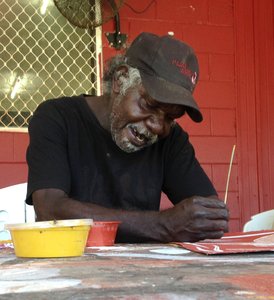
Graham Badari
1963 - , Australia
Quick Facts
- Birth Date: 1963
- Birth Place: Gove Peninsula, Australia
- Influenced By: Thompson Yulidjirri, Djawida Nadjongorle
- Movement: Aboriginal Australian Art, Kunwinjku Painting
- Name: Graham Badari
- Nationality: Australian
- Notable Works: Namarlpe (pandanus spirit) & kuluban (fruit bats)