Preview
 Send
Send Share
Share
 Details

 Download
 Similars
 X-Ray
X-Ray Diaporama
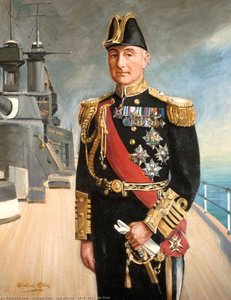
Earl Jellicoe (1859–1935) on Deck
 1920
1920 121.0 x 101.0 cm
 Hms Excellent
 Read More
Hand Made Oil Reproduction
Hand-painted oil on canvas in your size and frame, made to order by our artists. ( Buy Print Buy Image)




































Pick from our preset sizes that match the artwork's original proportions.

You may enter your own dimensions to fit a specific frame or space. If your selected size does not match the original image's proportions, we will either crop the artwork or extend the painting with additional hand-painted elements. A digital mockup will be sent for your approval before production begins.
Please note that the on-screen preview does not reflect the actual cropping or extension. Only the mockup will accurately show the final composition.
While custom sizes are available, we recommend selecting a dimension from the predefined list to preserve the original proportions.
After order, ArtsDot.com team will email client for instructions and provide a mockup preview
Worldwide Delivery () in 3/4 weeks instead of standard 5 weeks. (21 August). No compromise on quality.

Free Worldwide Express Shipping

High-Quality Linen Canvas

Full Shipping Insurance

Customs Tax Refund Guarantee

True Color Matching Guarantee

60-Day Return Policy (Defects Only)

100% Money-Back Guarantee

Bulk Discount Offer
 Glass option is only available in size under 110 CM

Earl Jellicoe (1859–1935) on Deck
Reproduction Medium
Reproduction Size
-


Total Price
$ 263
Related Artworks
Artist Biography
Graham Glen (1878–1951): Evoking Otago’s Soul Through Light & Landscape
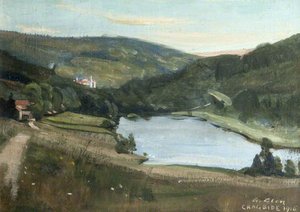
Graham Glen, born in Edinburgh around 1878, was a British painter whose artistic vision centered on capturing the essence of Otago, New Zealand – specifically its dramatic landscapes. Though biographical details remain somewhat sparse, Glen's oeuvre speaks volumes about his dedication to portraying the region’s beauty with remarkable precision and emotional depth. His work is characterized by an Impressionistic style infused with elements of Symbolism, reflecting a profound engagement with both artistic traditions and the spiritual resonance of the natural world. Glen’s formative years were marked by exposure to musical instrument making—his father was a craftsman—a skill that instilled in him a meticulous attention to detail and an appreciation for craftsmanship. He relocated to London around 1914, establishing himself as a professional artist amidst the burgeoning artistic milieu of the era. This move coincided with a period of significant artistic experimentation, propelling Glen toward bolder brushstrokes and expressive color palettes. Glen’s artistic output spanned several decades, producing a substantial body of paintings that predominantly focused on Otago's coastal vistas and mountainous interiors. He skillfully employed light and shadow to convey mood and atmosphere, mirroring the shifting conditions of the Otago environment—from misty mornings over Loch Katrine to sunlit peaks overlooking Dunedin Harbour. Glen’s landscapes aren’t merely representations of scenery; they are imbued with a palpable sense of place, capturing the spirit of Otago's rugged grandeur. A pivotal influence on Glen’s artistic approach was Sir Grahame Sydney (1867–1945), another prominent New Zealand artist who championed a “magic realism” style—a technique that blends photographic accuracy with imaginative embellishment to heighten emotional impact. Like Sydney, Glen sought to transcend mere visual depiction, aiming instead to evoke the viewer’s experience of Otago's sublime beauty. This stylistic kinship is evident in Glen’s paintings, which resonate with Sydney’s characteristic blend of observation and artistic intuition. Glen’s legacy extends beyond his individual artworks; he contributed significantly to the development of New Zealand art history. His commitment to portraying Otago’s landscapes—a region celebrated for its geological formations and atmospheric conditions—established him as a key figure in capturing the spirit of the era. Furthermore, Glen's exploration of Symbolism – evident in subtle tonal shifts and compositional choices – elevated his work beyond purely descriptive realism, enriching it with layers of emotional and spiritual significance. His paintings continue to inspire admiration for their technical mastery and artistic vision—testaments to Glen’s enduring contribution to Otago’s cultural heritage. Glen's artistic achievements include notable depictions of Loch Katrine (circa 1916), capturing the ethereal quality of the loch under misty conditions, and panoramic views of Dunedin Harbour showcasing the interplay of light and water. These works exemplify his ability to convey not only visual accuracy but also a profound connection to the environment—a hallmark of Otago’s artistic representation during Glen's lifetime. His paintings are held in collections across New Zealand and internationally, underscoring their enduring appeal and scholarly significance.
graham glen
1878 - 1951
Quick Facts
- Artistic Movement Or Style: Impressionism
- Artists Or Movements Influenced By This Artist: ['Modern Art']
- Artists Who Influenced This Artist: ['Jellicoe']
- Date Of Birth: 1878
- Full Name: Graham Glen
- Nationality: British
- Notable Artworks:
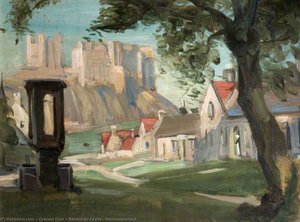
- Bamburgh Castle
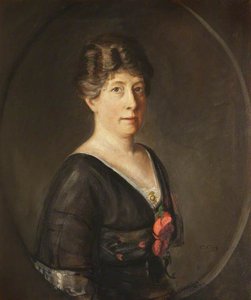
- Beatrice Elizabeth Cowx
- Place Of Birth: Edinburgh, Scotland