

 Preview
 Send
Send Share
Share
 Details

 Download
 Similars
 X-Ray
X-Ray Diaporama
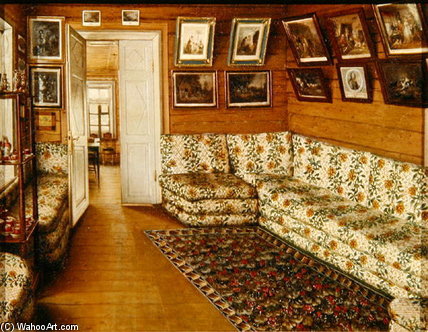
Reception Room Of A Manor House

 Read More
Purchase a high-resolution, enhanced digital image, far superior to the online preview.
Each file is meticulously prepared by our in-house specialists using advanced tools and expert manual retouching. We ensure every image has exceptional clarity, precise color accuracy, and fine detail.
The final file is delivered via email within 72 hours, optimized for immediate use in professional, editorial, and print environments. This is the same quality trusted by top-tier design studios, publishers, and galleries.
Digital Image
Download a high-resolution file for personal display, printing, and creative projects. ( Buy Print Buy Hand Made Painting)
Included in Every Digital Image Order
Expert Digital Delivery, Guaranteed
When you choose ArtsDot.com, you're not just getting an image - you're receiving a professionally enhanced digital artwork, crafted with precision and backed by a satisfaction guarantee. Here's everything that comes with your order, automatically:

Fast Email Delivery
Your high-resolution digital image file will be emailed to you within 72 hours of ordering - ready for immediate use.

AI-Enhanced Digital File
Your artwork is professionally optimized using advanced AI tools and manual editing, ensuring maximum detail, clarity, and color accuracy.

Free Lifetime Re-Delivery
Accidentally deleted or lost your file? No worries - we'll resend it to you anytime, free of charge.

No Import Fees - Ever
Enjoy your artwork instantly with zero customs, duties, or delivery fees - digital downloads are always tax-free.

Color Accuracy Guarantee
We ensure your digital image reflects the original colors as closely as possible using professional tools and color management.

60-Day Satisfaction Guarantee
If you're not satisfied with your digital image, we'll revise it or refund 100% within 60 days - no questions asked.

100% Money-Back Guarantee
Not satisfied? Get a full refund within 60 days of receiving your digital file - no questions asked.

Bulk Order Discounts
Buy 3 images, save 10% - Buy 5, save 15% - Buy 10+, save 20%. Great for creative projects, galleries, and agencies.
Related Artworks
Artist Biography
A Life Etched in Rural Russia: Grigori Vasilievich Soroka
Grigori Vasilievich Soroka (1823-1864), a name resonating with the quiet dignity of 19th-century Russian life, stands as a poignant figure within the Venetsianov school. Born into serfdom on the estate of Nikolai Petrovich Milyukov in Pokrovskoye village, Tver Guberniya, Soroka’s artistic journey was one forged not through formal education but through intimate observation and intermittent tutelage under Alexey Venetsianov. His very existence embodies the complex social fabric of pre-emancipation Russia – a world where talent could blossom even within the constraints of bondage, yet remained inextricably linked to the fortunes and limitations imposed by his landowner. Unlike many artists who sought grand historical or mythological themes, Soroka’s canvas was populated by the everyday lives of peasants, landowners, and the landscapes that cradled them, offering a uniquely grounded perspective on Russian society.Early Years and Artistic Awakening
The early life of Grigori Vasilyevich Vasilyev – he adopted the surname “Soroka,” meaning magpie, a common nickname in his village – was steeped in the arduous realities of serfdom. His days were filled with agricultural labor, mirroring those of his father before him. However, even amidst these demanding duties, an innate artistic sensibility began to emerge. In 1841, at the age of eighteen, Soroka was transferred to Milyukov’s manor house, where he first encountered the work and guidance of Alexey Venetsianov. This mentorship, though sporadic due to his continued serf obligations, proved pivotal. Venetsianov instilled in him a dedication to realistic depiction, emphasizing meticulous detail and an honest portrayal of rural life – principles that would define Soroka’s oeuvre. He began painting icons, portraits for local patrons, and scenes of the estate itself, slowly honing his skills while remaining bound by the constraints of his social position. This period was not merely about technical development; it was a process of learning to *see* – to capture the subtle nuances of light, form, and emotion within the world around him.The Venetsianov School and Soroka’s Distinct Style
Soroka became one of the most notable members of the Venetsianov school, an artistic movement founded by Alexey Venetsianov that championed a realistic approach to painting, focusing on scenes of peasant life and Russian landscapes. However, while influenced by Venetsianov's emphasis on naturalism and detailed observation, Soroka developed a style uniquely his own. His paintings are characterized by a warmth and intimacy often absent in the more idealized depictions of rural life found elsewhere. He possessed an exceptional ability to capture the psychological depth of his subjects – whether it was the quiet introspection of a peasant boy or the serious gaze of a young man in a portrait. Works like “Peasant Boy” exemplify this talent, showcasing not just physical likeness but also a sense of inner life and dignity. His palette tended towards muted tones, reflecting the subdued colors of the Russian countryside, yet his brushwork was precise and evocative, bringing a remarkable level of detail to his compositions.Themes and Major Works
Soroka’s artistic output centered on three primary themes: portraits, genre scenes, and landscapes. His portraits, often commissioned by landowners like Milyukov, provide valuable insights into the lives of the Russian nobility during this period. “Portrait of K. Milyukov in his Childhood” is a particularly compelling example, capturing the seriousness and composure expected of young men from privileged backgrounds. However, it was his genre scenes that truly distinguished him. Paintings such as "Reflection in the Mirror" offer intimate glimpses into domestic life, revealing moments of quiet contemplation and everyday routines. These works are not grand narratives but rather subtle explorations of human connection and social dynamics. He also painted “Reception Room Of A Manor House”, a detailed depiction of the interiors that he knew so well. His landscapes, while less numerous, share the same meticulous attention to detail and atmospheric quality as his other works, capturing the beauty and tranquility of the Russian countryside.Legacy and Historical Significance
Grigori Soroka’s life ended tragically in 1864, a mere decade after the emancipation of the serfs. He died by suicide, reportedly following unrequited love for Milyukov's daughter and struggles with the new realities of freedom. Despite his relatively short career and limited formal training, Soroka left behind a body of work that offers a uniquely valuable perspective on 19th-century Russian life. His paintings are not merely depictions of peasants and landowners; they are *testaments* to their humanity, capturing their dignity, resilience, and inner lives with remarkable sensitivity. He stands as a powerful example of an artist who overcame significant social obstacles to create works of lasting beauty and historical significance. Soroka’s legacy lies in his ability to elevate the everyday – to find profound meaning and emotional resonance within the seemingly ordinary moments of rural Russian life, making him a vital voice in understanding this pivotal period of Russian history.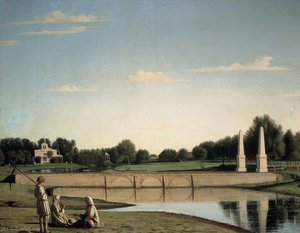
grigori vasilievich soroka
1823 - 1864
Quick Facts
- Artistic Movement Or Style: Venetsianov school
- Artists Who Influenced This Artist: ['Alexey Venetsianov']
- Date Of Birth: November 27 [O.S. November 15] 1823
- Date Of Death: April 22 [O.S. April 10] 1864
- Full Name: Grigoriy Vasilyevich Soroka
- Nationality: Russian
- Notable Artworks:
- Reception Room Of A Manor House
- Peasant boy.
- Reflection in a mirror
- Place Of Birth: Pokrovskoye village (Tver Guberniya)

