

 Preview
 Send
Send Share
Share
 Details

 Download
 Similars
 X-Ray
X-Ray Diaporama
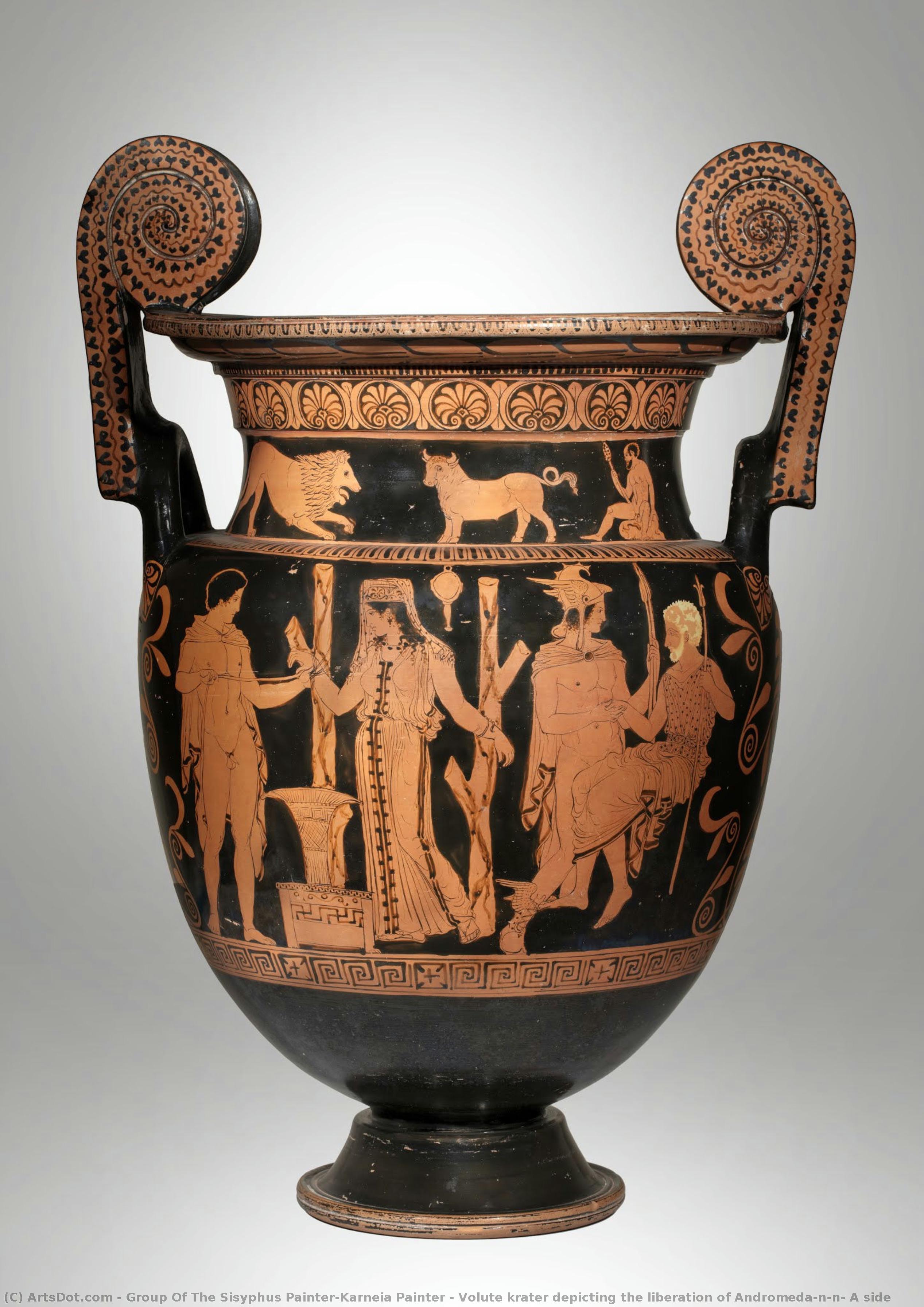
Volute krater depicting the liberation of Andromeda\n\n- A side

 Read More
Purchase a high-resolution, enhanced digital image, far superior to the online preview.
Each file is meticulously prepared by our in-house specialists using advanced tools and expert manual retouching. We ensure every image has exceptional clarity, precise color accuracy, and fine detail.
The final file is delivered via email within 72 hours, optimized for immediate use in professional, editorial, and print environments. This is the same quality trusted by top-tier design studios, publishers, and galleries.
Digital Image
Download a high-resolution file for personal display, printing, and creative projects. ( Buy Print Buy Hand Made Painting)
Included in Every Digital Image Order
Expert Digital Delivery, Guaranteed
When you choose ArtsDot.com, you're not just getting an image - you're receiving a professionally enhanced digital artwork, crafted with precision and backed by a satisfaction guarantee. Here's everything that comes with your order, automatically:

Fast Email Delivery
Your high-resolution digital image file will be emailed to you within 72 hours of ordering - ready for immediate use.

AI-Enhanced Digital File
Your artwork is professionally optimized using advanced AI tools and manual editing, ensuring maximum detail, clarity, and color accuracy.

Free Lifetime Re-Delivery
Accidentally deleted or lost your file? No worries - we'll resend it to you anytime, free of charge.

No Import Fees - Ever
Enjoy your artwork instantly with zero customs, duties, or delivery fees - digital downloads are always tax-free.

Color Accuracy Guarantee
We ensure your digital image reflects the original colors as closely as possible using professional tools and color management.

60-Day Satisfaction Guarantee
If you're not satisfied with your digital image, we'll revise it or refund 100% within 60 days - no questions asked.

100% Money-Back Guarantee
Not satisfied? Get a full refund within 60 days of receiving your digital file - no questions asked.

Bulk Order Discounts
Buy 3 images, save 10% - Buy 5, save 15% - Buy 10+, save 20%. Great for creative projects, galleries, and agencies.
Related Artworks




Artist Biography
The Enigmatic World of the Sisyphus and Karneia Painters
The world of ancient Greek vase painting is populated by a fascinating cast of anonymous artists, known to us only through their surviving works—identified by conventional names derived from scenes or inscriptions on their pottery. Among these figures stand the Sisyphus Painter and the closely related Karneia Painter, two Apulian red-figure vase painters whose artistry flourished in the late fifth and early fourth centuries BC. Their story is one of cultural fusion, stylistic innovation, and a gradual shift in artistic priorities within the vibrant Greek colonies of southern Italy. While separating their individual contributions remains a challenge for scholars, they represent a pivotal moment in Apulian pottery production, bridging the gap between Athenian influence and a distinctly Italic aesthetic.Origins and Early Influences
The Sisyphus Painter emerged during a period when Apulia—the southeastern region of Italy—was experiencing increasing contact with the Greek mainland. Prior to this time, Apulian vase painting was relatively undeveloped compared to the established traditions of Athens and Corinth. The Sisyphus Painter is believed to have begun his career in the workshop of the Painter of the Berlin Dancing Girl, absorbing the foundational techniques of red-figure pottery. This early training instilled a mastery of anatomical detail and narrative clarity. However, unlike his predecessors who largely replicated Attic styles, the Sisyphus Painter quickly began to incorporate local motifs and subject matter into his compositions. His conventional name stems from an inscription on a heart-shaped gift held by a youth depicted in a wedding scene—a testament to the importance of ritual and everyday life in Apulian culture. The influence of other Attic artists, such as the Dwarf Painter and Kodros Painter, is also discernible in his early works, particularly in the rendering of heads and drapery.A Blossoming Style: Themes and Techniques
The Sisyphus Painter’s mature style is characterized by large-scale vessels—primarily volute kraters and column kraters—decorated with elaborate scenes. He favored depictions of everyday life, Dionysiac rituals, and mythological episodes. Early works often feature three figures arranged in dynamic compositions on the bell *kraters*. A hallmark of his technique is a meticulous attention to detail, particularly in the rendering of faces, frequently depicted in three-quarter profile, conveying a sense of individuality and emotion. The backs of his vases consistently showcase draped male youths, adding another layer of narrative or symbolic meaning. While initially demonstrating exceptional quality, especially in head painting, his later works reveal a slight decline in consistency, with figures becoming somewhat more stereotypical and faces losing some of their earlier nuance. This shift may reflect the demands of prolific production or changing artistic tastes within the Apulian market.The Karneia Painter: A Close Associate
The Karneia Painter is inextricably linked to the Sisyphus Painter, often considered a close associate or even a pupil within the same workshop. The name derives from an inscription *Karneios* on one of his most significant vases—a volute krater depicting scenes connected with the festival of Apollo Karneia in Sparta. This vase provides valuable insight into the cultural exchanges between Apulia and other Greek regions, including Sparta. The Karneia Painter shares many stylistic similarities with the Sisyphus Painter, including a fondness for figure-hugging drapery and jewelry reminiscent of late fifth-century Athenian pottery. However, he also introduces unique elements—"fancy/exotic" dress and expressions that reveal a distinct local sensibility. The discovery of his name vase in Taras (modern-day Taranto), a Spartan colony, further emphasizes the interconnectedness of artistic traditions in Magna Graecia.Legacy and Historical Significance
The Sisyphus Painter stands as a pivotal figure in the development of South Italian vase painting. He successfully fused Athenian stylistic conventions with indigenous Apulian motifs, establishing a uniquely Italic branch of Greek ceramics. His influence extended to subsequent generations of painters, shaping the evolution of both the “Plain Style” and the “Ornate Style”—two major currents within Apulian pottery production. Painters like the Hearst Painter and Tarporley Painter were directly connected with his workshop, carrying forward his artistic legacy. The vases produced by the Sisyphus and Karneia Painters offer invaluable insights into the cultural landscape of Magna Graecia—a region characterized by constant exchange between Greek colonists and local Italic peoples. Their works are not merely decorative objects; they are windows into the rituals, beliefs, and daily lives of a vibrant and complex society. They represent a fascinating chapter in the history of art, demonstrating how artistic innovation can arise from the interplay of diverse cultural influences. Their contribution lies in their ability to transform imported styles into something distinctly Apulian, forging a new aesthetic identity for South Italian pottery.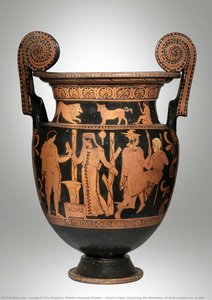
Quick Facts
- Artistic Movement Or Style: Apulian red-figure vase painting
- Artists Or Movements Influenced By This Artist:
- Tarporley Painter
- Plain Style
- Ornate Style
- Artists Who Influenced This Artist:
- Painter of Berlin Dancing Girl
- Dwarf Painter
- Kodros Painter
- Polion
- Date Of Death: Living
- Full Name: Sisyphus Painter/Karneia Painter
- Notable Artworks:
- Volute Krater (Munich)
- Heart-shaped gift depiction

