 Preview
 Send
Send Share
Share
 Details

 Download
 Similars
 X-Ray
X-Ray Diaporama
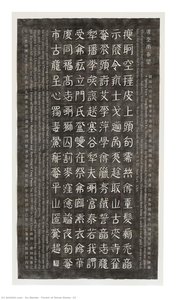
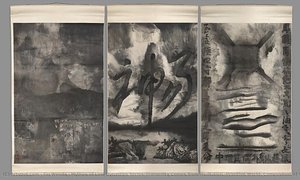
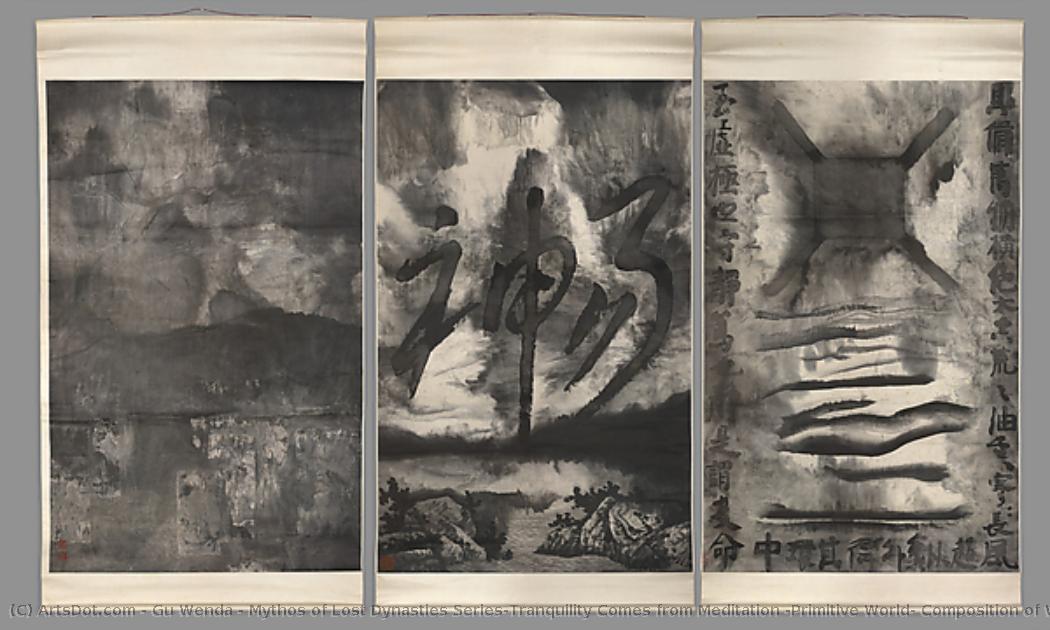
Mythos of Lost Dynasties Series—Tranquility Comes from Meditation (Primitive World, Composition of Words, and Synthesized Words)
 1985
1985 276.0 x 175.0 cm
 Read More
Giclée / Art Print
Museum-quality giclée or canvas print with fast production and flexible finish options. ( Buy Hand Made Painting Buy Image)




































Pick from our preset sizes that match the artwork's original proportions.

You may enter your own dimensions to fit a specific frame or space. If your selected size does not match the original image's proportions, we will either crop the artwork or extend the image with a mirrored or solid-fill edge. A digital mockup will be sent for your approval before production begins.
Please note that the on-screen preview does not reflect the actual cropping or extension. Only the mockup will accurately show the final composition.
While custom sizes are available, we recommend selecting a dimension from the predefined list to preserve the original proportions.
Worldwide Delivery () in 2 weeks instead of standard 4/5 weeks. (25 August)

Free Worldwide Express Shipping

High-Quality Linen Canvas

Full Shipping Insurance

Customs Tax Refund Guarantee

True Color Matching Guarantee

60-Day Return Policy (Defects Only)

100% Money-Back Guarantee

Bulk Discount Offer
 Glass option is only available in size under 110 CM

Mythos of Lost Dynasties Series—Tranquility Comes from Meditation (Primitive World, Composition of Words, and Synthesized Words)
Giclée / Art Print
Reproduction Size
-


Total Price
$ 63
Collectible Description
Related Artworks








Artist Biography
Early Life and Artistic Influences
Gu Wenda’s journey began in Shanghai, China, in 1955, amidst a backdrop of shifting cultural landscapes. His family's involvement in banking and wool production instilled early values of practicality alongside an appreciation for heritage. Notably, his paternal grandfather, a celebrated theatre director and playwright, introduced the concept of spoken word into traditional Chinese opera—a formative experience that foreshadowed Gu’s later fascination with language as a central element in his artistic explorations. The Cultural Revolution profoundly impacted his upbringing; witnessing the upheaval and loss experienced by his grandparents – specifically the confiscation of artistic documents and objects – instilled within him a deep understanding of cultural vulnerability and fueled an unwavering commitment to preserving tradition amidst rapid change. Driven by aspirations for intellectual engagement, Gu actively participated in the Red Guard movement, embracing Mao Zedong’s ideology and championing simplified Chinese language—a stance that reflected his desire to engage critically with societal norms. This period solidified his initial interest in calligraphy, recognizing its power as both a visual art form and a conduit for conveying profound ideas. Simultaneously, he explored woodcarving but found it lacked the creative spark he sought.Career Beginnings: Challenging Conventions
Gu’s artistic career commenced with provocative experiments designed to disrupt established conventions. His inaugural exhibition in Xi’an in 1986 showcased paintings featuring deliberately fabricated ideograms—a bold assertion of linguistic creativity that immediately drew scrutiny from authorities. The exhibit was swiftly shut down due to suspicions of subversive messaging, yet it served as a crucial catalyst for his artistic trajectory. Following five years of arduous visa application processes, Gu emigrated to the United States in 1987 and subsequently established residency in New York City. Recognizing the need for linguistic fluency, he undertook intensive English studies before dedicating himself to honing his craft. His time at the University of Minnesota provided invaluable exposure to diverse artistic perspectives and fostered a deeper understanding of contemporary art practices. This experience marked a pivotal shift toward investigating bodily materials—specifically hair—as mediums for exploring human identity and confronting existential questions.The United Nations Project: Exploring Global Consciousness
A defining moment in Gu’s artistic career was the inception of “United Nations,” an ambitious project wherein he invited participants from across the globe to contribute strands of their hair—a gesture intended to symbolize universal interconnectedness and transcend national boundaries. The installation, housed in Dartmouth College's Baker-Berry Library for four months, garnered considerable attention and sparked critical debate regarding its artistic merit and conceptual significance. Critics lauded Gu’s willingness to engage with complex themes of ethnicity and nationalism, recognizing “United Nations” as a reflection of the anxieties and aspirations characterizing the early 1990s. As Michael K. O’Riley eloquently articulated in Art Beyond the West, “By violating the traditional system of writing in which the characters are arranged according to hierarchical order—a convention that reflects the Confucian values of respect for elders and authority—Gu Wenda disrupts established artistic conventions.”Major Achievements and Recognition
Gu Wenda’s prolific output has garnered widespread acclaim within the international art community. His survey exhibition at the National Gallery of Australia in 2001-2002 cemented his position as a leading voice in contemporary Chinese art, prompting insightful analyses by critics like Kim Levin who characterized “United Nations” as embodying “the universal tea house,” fostering dialogue and transcending national distinctions. Furthermore, Gu’s work has been featured prominently in prestigious biennials—including Venice in 2001—and exhibitions at institutions worldwide, demonstrating his enduring influence on artistic discourse. His contributions to the Sigg Collection have enriched the global art landscape, furthering scholarly understanding of Chinese contemporary art and its engagement with broader cultural currents.Legacy and Artistic Significance
Gu Wenda’s oeuvre stands as a testament to the transformative potential of blending traditional calligraphy with innovative artistic techniques—particularly the incorporation of human hair. His work transcends mere visual representation, delving into profound explorations of language, culture, identity, and spirituality. By challenging conventional artistic paradigms and embracing unconventional materials, Gu Wenda has established himself as a pioneer of experimental art and a champion of intercultural dialogue. He continues to inspire artists globally with his unwavering commitment to pushing boundaries and fostering contemplation on fundamental human concerns—solidifying his place as one of the most influential figures in contemporary Chinese art history.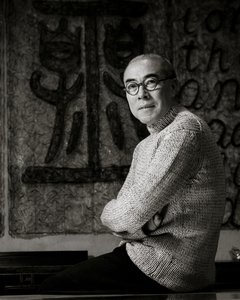
Gu Wenda
1955 - , China
Quick Facts
- Artistic Movement Or Style: Contemporary calligraphy & ink painting
- Artists Or Movements Influenced By This Artist: ['United Nations']
- Artists Who Influenced This Artist: ['Lu Yanshao']
- Date Of Birth: 1955
- Full Name: Gu Wenda
- Nationality: Chinese-American
- Notable Artworks:
- Mythos of Lost Dynasties Series—I Evaluate Characters Written by Three Men and Three Women
- Forest of Stone Steles #13
- Place Of Birth: Shanghai, China