 Preview
 Send
Send Share
Share
 Details

 Download
 Similars
 X-Ray
X-Ray Diaporama
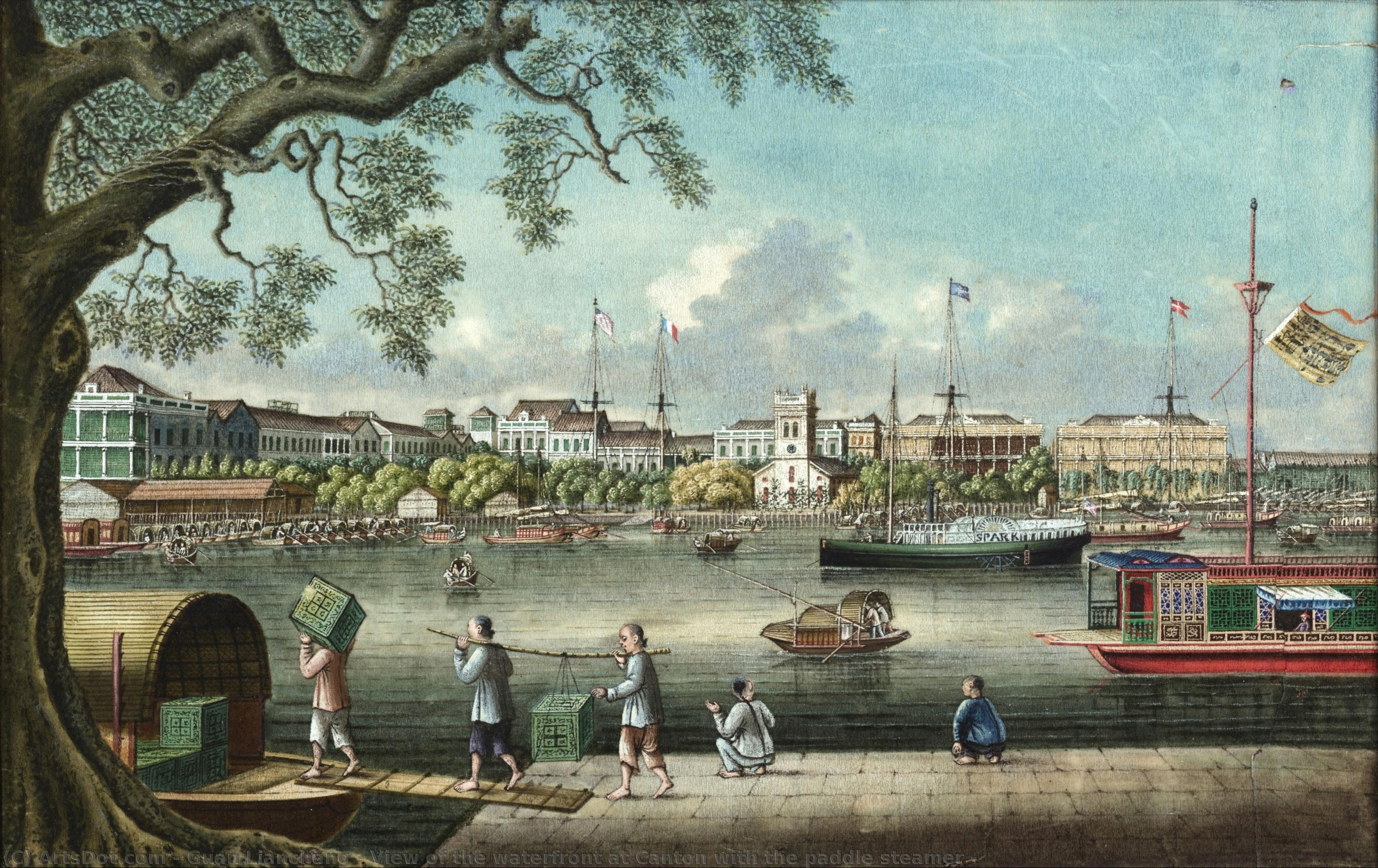
View of the waterfront at Canton with the paddle steamer
 1855
1855 17.0 x 28.0 cm
 Hong Kong Maritime Museum
 Read More
Hand Made Oil Reproduction
Hand-painted oil on canvas in your size and frame, made to order by our artists. ( Buy Print Buy Image)




































Pick from our preset sizes that match the artwork's original proportions.

You may enter your own dimensions to fit a specific frame or space. If your selected size does not match the original image's proportions, we will either crop the artwork or extend the painting with additional hand-painted elements. A digital mockup will be sent for your approval before production begins.
Please note that the on-screen preview does not reflect the actual cropping or extension. Only the mockup will accurately show the final composition.
While custom sizes are available, we recommend selecting a dimension from the predefined list to preserve the original proportions.
After order, ArtsDot.com team will email client for instructions and provide a mockup preview
Worldwide Delivery () in 3/4 weeks instead of standard 5 weeks. (28 August). No compromise on quality.

Free Worldwide Express Shipping

High-Quality Linen Canvas

Full Shipping Insurance

Customs Tax Refund Guarantee

True Color Matching Guarantee

60-Day Return Policy (Defects Only)

100% Money-Back Guarantee

Bulk Discount Offer
 Glass option is only available in size under 110 CM

View of the waterfront at Canton with the paddle steamer
Reproduction Medium
Reproduction Size
-


Total Price
$ 263
Related Artworks










Artist Biography
Guan Lianchang: Decoding the Enigma of Canton’s Workshop Paintings
In the vibrant, salt-aired atmosphere of mid-19th-century Guangzhou, a period when the bustling port of Canton served as the primary gateway between the Middle Kingdom and the Western world, the brushstrokes of Guan Lianchang captured a fleeting moment of profound cultural intersection. Known to history by his studio name, Tingqua, Guan was far more than a mere commercial illustrator; he was a master of the Cantonese export tradition, an artist whose work bridged the gap between the refined aesthetics of Chinese literati painting and the burgeoning demands of a globalized market. Born around 1809 into a lineage of skilled painters, his very identity was woven into the fabric of the Canton trade, standing as a pivotal figure in an era defined by both immense economic opportunity and the quiet tension of colliding civilizations.
The artistic foundations of Guan Lianchang were deeply rooted in the prestigious traditions of his homeland. As the younger brother of the legendary Lamqua, he was raised within a family of exceptional talent, where the principles of Confucian ideals and the delicate elegance of Ming Dynasty styles were part of his daily vernacular. However, his development was uniquely shaped by the presence of Western merchants and travelers who frequented his studio at 16 New China Street. This exposure necessitated a remarkable stylistic evolution. While he maintained the precision and spiritual essence of traditional Chinese art, Guan skillfully integrated Western pictorial conventions, such as linear perspective and a more naturalistic approach to light and shadow. His ability to adapt—even utilizing groundbreaking techniques like photographic reproductions to assist in his compositions—allowed him to cater to an international clientele with unprecedented accuracy.
A Master of Light, Water, and Daily Life
The true magic of the Tingqua Studio lies in its breathtaking versatility. Guan Lianchang’s repertoire was vast, ranging from the delicate, ethereal beauty of the bird-and-flower genre to sweeping, atmospheric depictions of Canton's waterfront. His watercolors are celebrated for their luminous quality, possessing a clarity that seems to capture the very humidity of the Pearl River Delta. To observe his work is to witness a meticulous study of nature and commerce; he had an uncanny ability to render the rhythmic movement of water through regular parallel lines and subtle ripples, and to depict lush, tropical foliage as thick, vibrant clusters of yellow-green leaves.
Beyond mere landscape, Guan’s greatest achievement was his capacity for storytelling. His paintings served as visual chronicles of a world in transition. Through his meticulous detail, one can wander through the bustling interiors of Canton's markets or observe the quiet dignity of daily life along the docks. There is a profound sense of presence in his work—a feeling that the viewer is not merely looking at a painting, but peering through a window into 1850s China. His compositions often balanced the grand scale of architectural grandeur with the intimate, human elements of trade, making his albums highly sought after by Western collectors who desired a tangible piece of the exotic Orient.
Legacy and the Silent Language of the Brush
The historical significance of Guan Lianchang extends far beyond the aesthetic pleasure of his watercolors. His work stands as a vital primary source for historians studying the 19th-century maritime silk road. While much of his output was designed to satisfy the tastes of Westerners, recent scholarly perspectives suggest a deeper, more subversive layer to his artistry. Some researchers have noted that within his workshop paintings, there exist subtle inscriptions and calligraphic codes—messages intended only for the Chinese scholar-gentry, invisible to the Western merchants who purchased them. This suggests that even while participating in a globalized commercial industry, Guan remained deeply connected to his cultural roots, using his art to preserve a sense of identity amidst a changing world.
Today, the legacy of the Tingqua Studio is preserved in prestigious institutions such as the Peabody Essex Museum, where collections brought back by American traders like Augustine Heard continue to enchant new generations. Guan Lianchang’s work remains a testament to the power of artistic adaptation and the enduring allure of the Canton trade. He did not merely paint scenes; he documented the heartbeat of an era, leaving behind a luminous record of a time when the East and West first began their complex, beautiful, and transformative dance.
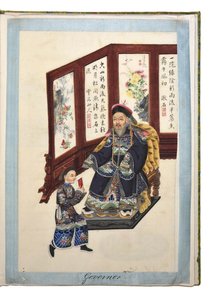
guan lianchang
1809 - 1870 , China
Quick Facts
- Artistic Movement Or Style: Watercolor albums
- Artists Or Movements Influenced By This Artist: ['Lamqua']
- Date Of Birth: 1809
- Full Name: guan lianchang
- Nationality: Chinese
- Notable Artworks: ['View of the waterfront at Canton with the paddle steamer']
- Place Of Birth: Guangzhou, China