 Preview
 Send
Send Share
Share
 Details

 Download
 Similars
 X-Ray
X-Ray Diaporama
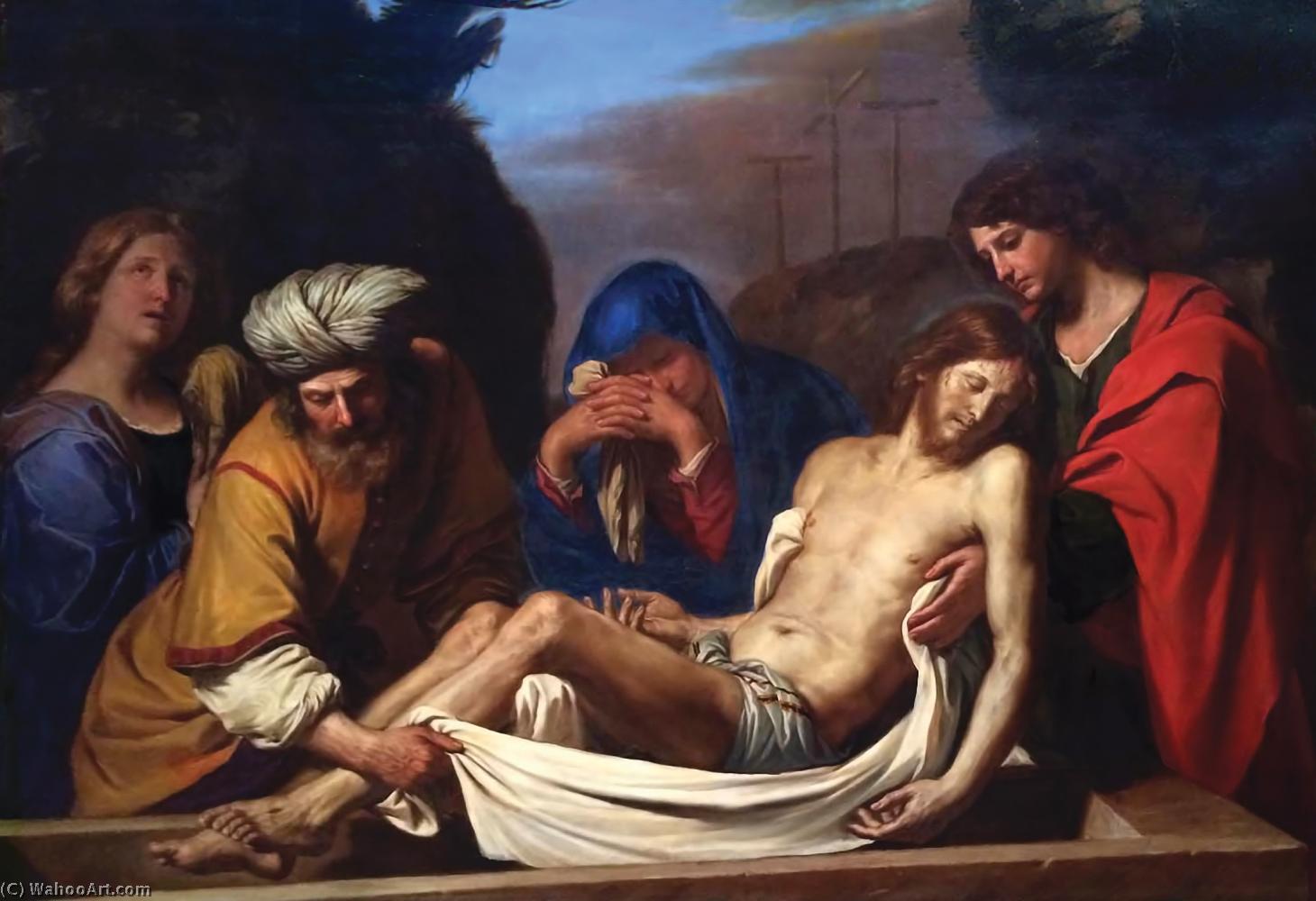
The Entombment of Christ

 Read More
Hand Made Oil Reproduction
Hand-painted oil on canvas in your size and frame, made to order by our artists. ( Buy Print Buy Image)




































Pick from our preset sizes that match the artwork's original proportions.

You may enter your own dimensions to fit a specific frame or space. If your selected size does not match the original image's proportions, we will either crop the artwork or extend the painting with additional hand-painted elements. A digital mockup will be sent for your approval before production begins.
Please note that the on-screen preview does not reflect the actual cropping or extension. Only the mockup will accurately show the final composition.
While custom sizes are available, we recommend selecting a dimension from the predefined list to preserve the original proportions.
After order, ArtsDot.com team will email client for instructions and provide a mockup preview
Worldwide Delivery () in 3/4 weeks instead of standard 5 weeks. (24 August). No compromise on quality.

Free Worldwide Express Shipping

High-Quality Linen Canvas

Full Shipping Insurance

Customs Tax Refund Guarantee

True Color Matching Guarantee

60-Day Return Policy (Defects Only)

100% Money-Back Guarantee

Bulk Discount Offer
 Glass option is only available in size under 110 CM

The Entombment of Christ
Reproduction Medium
Reproduction Size
-


Total Price
S$ 340
Artwork Description
The Artistic Context
Guercino was known for his early works characterized by a vigorous naturalism, while his later pieces showed a classical equilibrium. The Entombment of Christ exemplifies this transition, blending the emotional intensity of Baroque art with the balance and harmony typical of classical styles.The Painting's Composition
The painting depicts Jesus being taken down from the cross by his followers, set against a backdrop of a hillside. The group includes a man with a beard wearing a turban, adding an element of cultural diversity to the scene. The arrangement of figures creates a sense of depth and perspective, drawing the viewer into the emotional turmoil of the moment.Artistic Techniques
Guercino's use of oil paint allows for rich colors and textures, enhancing the overall impact of the painting. The expressions on the faces of Jesus' followers convey a deep sense of sorrow and reverence, while the turbaned man adds an air of solemnity to the scene.Relevance in Art History
The Entombment of Christ is significant not only for its artistic merit but also for its place in the broader context of Baroque art. Guercino's work influenced many other artists, and his style can be seen in various religious paintings throughout history.Other Works by Guercino
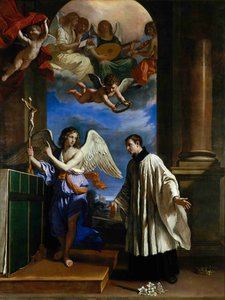
Guercino was a prolific artist with numerous notable works. Some of his other famous pieces include The Vocation of Saint Aloysius (Luigi) Gonzaga, which showcases his ability to capture the essence of religious devotion.Conclusion
The Entombment of Christ by Guercino is a masterpiece that encapsulates the emotional and artistic depth of Baroque art. Its presence in the Pinacoteca Nazionale museum underscores its importance in the history of Italian art.- View The Entombment of Christ by Guercino on ArtsDot
- Learn more about Giovanni Francesco Barbieri (Guercino) on ArtsDot
- Read about Guercino on Wikipedia
Related Artworks
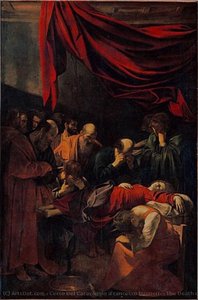
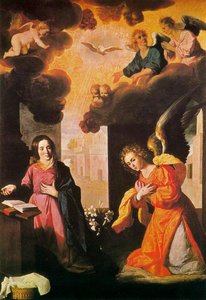
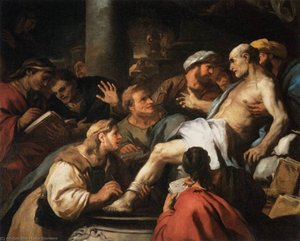
Artist Biography
A Life Illuminated by Shadow: The World of Guercino
Giovanni Francesco Barbieri, known to the world as Il Guercino – “the squinter” – was a name born from a physical characteristic but destined to represent an artistic vision that dramatically reshaped Baroque painting. Born in 1591 in Cento, a small town nestled between Ferrara and Bologna, Guercino’s journey began not within the hallowed halls of formal academies, but through self-discovery and early apprenticeship with Ludovico Carracci. This formative period laid the groundwork for a style that would become synonymous with intense emotionality, dramatic chiaroscuro, and a profound engagement with both realism and idealism. Unlike many of his contemporaries who sought classical perfection, Guercino’s art pulsed with a raw, human energy, reflecting the turbulent spiritual climate of 17th-century Italy. His early life was marked by a natural talent that quickly outstripped conventional training; he wasn't merely replicating styles but forging his own path, one illuminated by an innate understanding of light and shadow.From Caravaggism to Classical Grace: A Shifting Palette
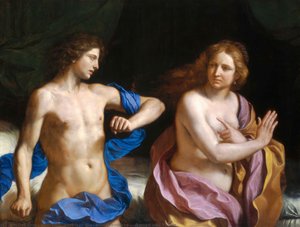
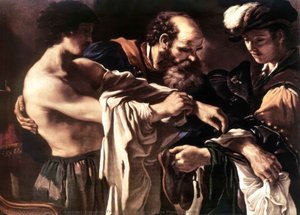
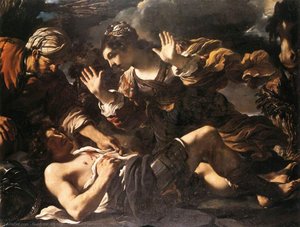
Guercino’s artistic development was not a linear progression, but rather a fascinating dialogue between different influences and stylistic explorations. His initial works were deeply indebted to the revolutionary naturalism of Caravaggio, embracing stark contrasts and a gritty realism that shocked and captivated audiences. Paintings like *Amnon and Tamar* exemplify this early period – a poignant depiction of a biblical narrative rendered with unflinching honesty and psychological depth. However, Guercino was not content to remain solely within the orbit of Caravaggism. A pivotal shift occurred in his style during the 1630s, prompted by both artistic curiosity and the demands of discerning patrons. He began to soften his palette, moving away from the harsh tenebrism towards a more luminous and balanced approach. This transition wasn’t simply a stylistic whim; it reflected a deeper engagement with classical ideals and a desire to create works that were not only emotionally powerful but also aesthetically refined. This period saw him embrace a greater sense of spatial depth and a more harmonious composition, as evidenced in masterpieces like *The Return of the Prodigal Son*.Biblical Narratives and Emotional Resonance
Throughout his career, Guercino consistently turned to biblical narratives for inspiration. However, he didn’t simply illustrate these stories; he imbued them with a profound sense of human drama and emotional resonance. His figures are not idealized saints but flawed individuals grappling with faith, doubt, remorse, and redemption. *The Vocation of Saint Aloysius Gonzaga* is a prime example – a powerful depiction of religious awakening rendered with breathtaking skill and sensitivity. Guercino’s ability to capture the inner lives of his subjects set him apart from many of his contemporaries. He understood that true piety wasn't about outward displays of devotion but about the internal struggles and sacrifices that defined a life dedicated to faith. This psychological depth, combined with his masterful use of light and shadow, created paintings that were both visually stunning and emotionally compelling. He didn’t shy away from portraying difficult or unsettling moments, believing that these were essential to understanding the complexities of the human condition.A Lasting Legacy: Influence and Rediscovery
Guercino's influence extended far beyond his lifetime. His dramatic use of light and shadow, coupled with his ability to evoke powerful emotions, inspired generations of artists across Europe. Though his reputation waned somewhat in the 18th and 19th centuries, a renewed appreciation for his work emerged in the 20th century, largely thanks to the tireless efforts of art historian Sir Denis Mahon. Mahon’s meticulous research and passionate advocacy helped to restore Guercino to his rightful place among the masters of the Baroque period. Today, his paintings are celebrated in prestigious museums around the world – from the Pinacoteca Nazionale in Ferrara to the National Gallery of Art in Washington D.C. – serving as a testament to his enduring artistic genius.- Museums and Collections: Guercino’s works grace the halls of institutions like the Pinacoteca Nazionale (Ferrara), the Palazzo Brignole-Sale (Genoa), and the Galleria Spada (Rome).
- Chiaroscuro Master: His dramatic use of light and shadow remains a defining characteristic of his style.
- Biblical Storyteller: He brought biblical narratives to life with unparalleled emotional depth and psychological insight.
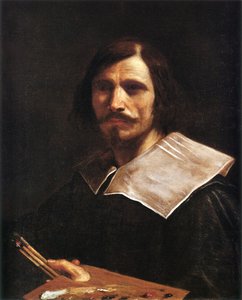
Guercino
1591 - 1666 , Italy
Quick Facts
- Artistic Movement Or Style: Baroque
- Artists Or Movements Influenced By This Artist: ['Baroque painting']
- Artists Who Influenced This Artist: ['Ludovico Carracci']
- Date Of Birth: February 8, 1591
- Date Of Death: December 22, 1666
- Full Name: Giovanni Francesco Barbieri
- Nationality: Italian
- Notable Artworks:
- Amnon and Tamar
- Return of Prodigal Son
- Vocation of Saint Aloysius
- Place Of Birth: Cento, Italy