 Send
Send Share
Share
 Details

 Download
 Similars
 Diaporama
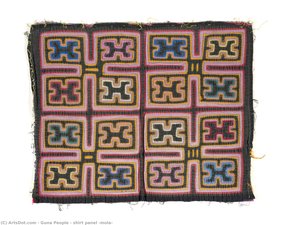
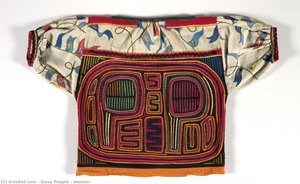
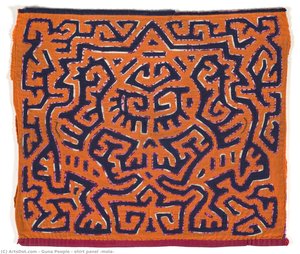
shirt panel (mola)


 Read More
Giclée / Art Print
Museum-quality giclée or canvas print with fast production and flexible finish options. ( Buy Hand Made Painting Buy Image)




































Pick from our preset sizes that match the artwork's original proportions.

You may enter your own dimensions to fit a specific frame or space. If your selected size does not match the original image's proportions, we will either crop the artwork or extend the image with a mirrored or solid-fill edge. A digital mockup will be sent for your approval before production begins.
Please note that the on-screen preview does not reflect the actual cropping or extension. Only the mockup will accurately show the final composition.
While custom sizes are available, we recommend selecting a dimension from the predefined list to preserve the original proportions.
Worldwide Delivery () in 2 weeks instead of standard 4/5 weeks. (18 August)

Free Worldwide Express Shipping

High-Quality Linen Canvas

Full Shipping Insurance

Customs Tax Refund Guarantee

True Color Matching Guarantee

60-Day Return Policy (Defects Only)

100% Money-Back Guarantee

Bulk Discount Offer
 Glass option is only available in size under 110 CM

shirt panel (mola)
Giclée / Art Print
Reproduction Size
-


Total Price
$ 63
Collectible Description
The Vibrant Pulse of Guna Artistry
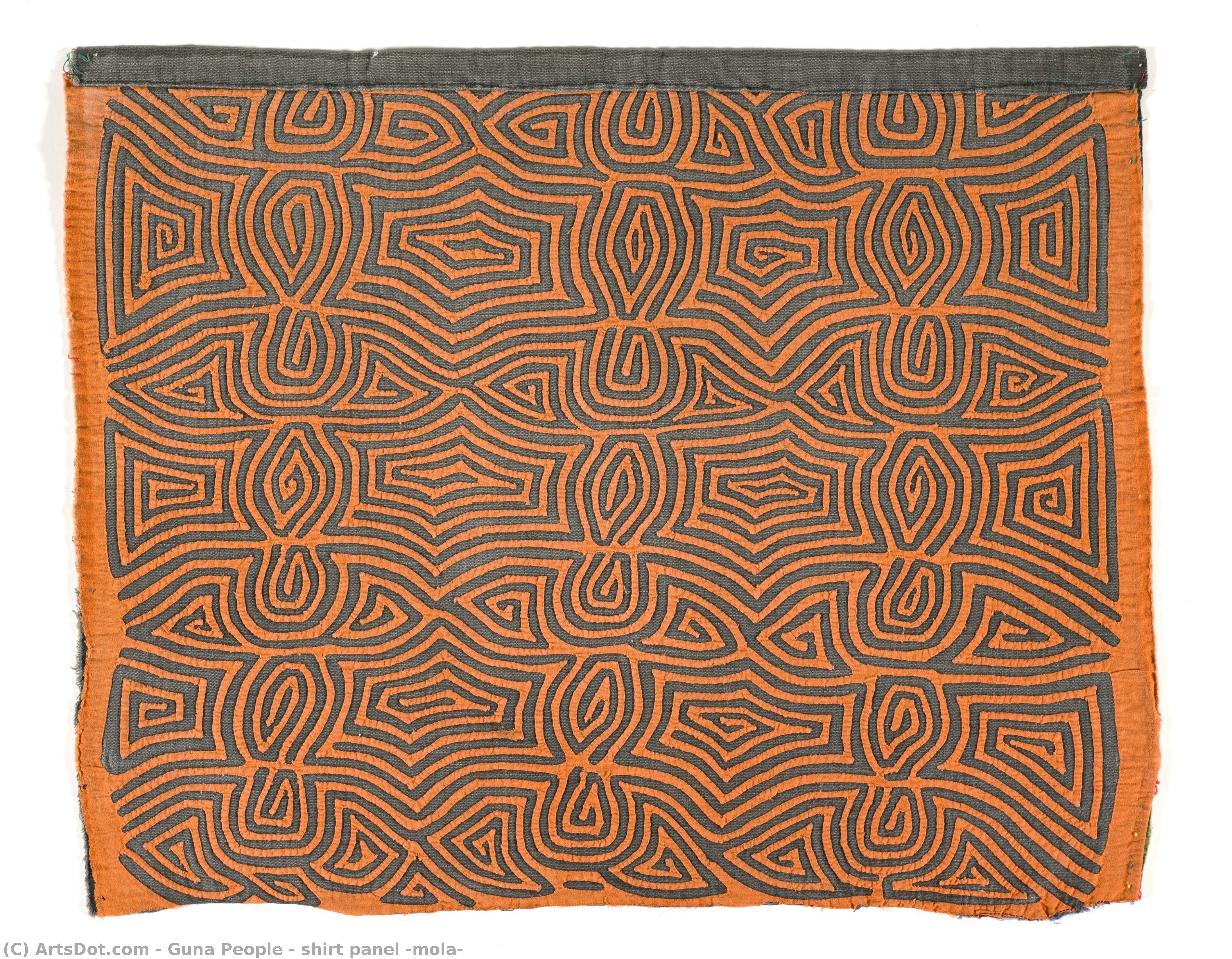
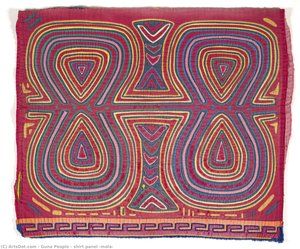
In the heart of the San Blas Islands, where the Caribbean Sea meets the lush coastlines of Panama, lies a visual language written in thread and color. The shirt panel (mola) is not merely a textile; it is a profound testament to the enduring spirit of the Guna people. This piece, dating from approximately 1950, serves as a window into a world where geometry and myth intertwine. At first glance, the viewer is struck by the intense, rhythmic contrast between deep blacks and fiery oranges, a palette that evokes both the warmth of tropical sunrises and the shadows of ancient jungle mysteries. The intricate design, characterized by its meticulous layering, showcases a level of craftsmanship that transforms simple fabric into a complex mosaic of cultural identity.
The technique behind this mola is an extraordinary feat of patience and precision known as reverse appliqué. Unlike traditional embroidery that sits atop a surface, the Guna women create these patterns by layering multiple sheets of colored cloth and carefully cutting away the top layers to reveal the vibrant hues beneath. This process creates a structural depth that gives the artwork a sculptural quality. Every line and geometric notch in this particular panel reflects a disciplined hand, where the artist’s skill is measured by the sharpness of each cut and the seamless integration of contrasting tones. It is an art form born from necessity and refined into a sophisticated aesthetic that commands attention through its sheer complexity.
Symbolism and the Soul of the Textile
Beyond its striking visual appeal, the mola carries a weight of ancestral storytelling. For the Guna people, these textile panels are much more than decorative elements for clothing; they are repositories of cosmology and daily life. The geometric motifs found within this panel likely draw inspiration from the natural world—the scales of a serpent, the movement of waves, or the structural patterns of local flora. In the context of indigenous Panamanian art, such designs act as a visual shorthand for a community's relationship with their environment. To possess or display a reproduction of such a piece is to invite a fragment of this profound connection to nature into one's space.
For the discerning collector or interior designer, this artwork offers a unique opportunity to introduce a bold, organic energy into a modern setting. The high-contrast aesthetic of the red and black tones provides a sophisticated focal point that complements both minimalist contemporary interiors and more eclectic, globally-inspired decors. As a hand-painted reproduction, it captures the raw, emotive power of the original textile, preserving the tactile essence of the Guna heritage. It is an investment in a piece of living history, offering an emotional resonance that transcends mere decoration, bringing the warmth, strength, and vibrant legacy of the Guna people into the heart of the home.
Related Artworks
Artist Biography
The Legacy of Kuna Artistry: Exploring the Soul of Mola Textiles
The Kuna people, also known as Guna or Cuna, are an indigenous group inhabiting Panama and Colombia’s Comarcas—autonomous reservations—primarily on the San Blas Islands off Panama's Caribbean coast. Their artistic heritage is profoundly rooted in the intricate art form of molas, layered textile panels meticulously crafted by Kuna women using appliqué techniques. These vibrant mosaics tell stories of mythology, cosmology, daily life, and ancestral traditions, representing a visual language that transcends spoken words.- Origins & History: The Kuna’s history stretches back millennia, with evidence suggesting connections to ancient Mesoamerican civilizations. Their nomadic lifestyle fostered adaptability and a deep connection to the natural world—influences evident in their artistic motifs and color palettes.
- Mola Technique: Mola creation begins with selecting carefully chosen fabric scraps – often remnants of European textiles brought by traders centuries ago. These pieces are painstakingly cut into geometric shapes, layered onto a contrasting background cloth, and sewn together with meticulous precision. The resulting panels showcase remarkable visual complexity and textural variation.
- Symbolism & Narrative: Each mola embodies a narrative—a tale passed down through generations—often depicting scenes from Kuna mythology or recounting significant events in their history. Geometric patterns represent concepts like duality, balance, and interconnectedness, while stylized animals and plants symbolize spiritual beliefs and ecological awareness.
- Influence of European Contact: The arrival of Europeans dramatically altered Kuna society, introducing new materials (like cotton) and influencing artistic styles. However, Kuna artisans have consistently maintained their distinctive traditions, adapting techniques while preserving the core values expressed in molas.
- Contemporary Significance: Today, molas continue to be produced by Kuna communities worldwide, serving as both a source of economic livelihood and a powerful symbol of Kuna cultural identity. Their art has gained international acclaim, recognized for its beauty, craftsmanship, and profound storytelling abilities—a testament to the enduring spirit of Kuna artistry.
guna people
Panama
Quick Facts
- Artistic Movement Or Style: Mola Art
- Full Name: Guna people
- Nationality: Indigenous
- Notable Artworks:
- Shirt Panel (mola)
- Shirt Panel (mola)
- Place Of Birth: Panama
Related Articles

Dark Masterpieces: 10 Iconic Paintings Dominated by Black Tones |
Explore 10 iconic paintings dominated by black tones, from Rembrandt’s chiaroscuro to Goya's dark expressions. Discover the stories behind these masterpieces & find museum-quality art reproductions for your home at .

Crimson Threads of Narrative: Exploring Symbolism & Representation in Artworks Featuring the Red Dress
Explore the rich symbolism of the red dress in art history! From ancient power displays to iconic portraits like Cézanne’s 'Madame Cezanne', discover the cultural and artistic significance behind this captivating color. Expert analysis & insights.

Geometric Abstraction's 10 Defining Masterpieces | Art for Your Home - ArtsDot
Explore 10 defining masterpieces of Geometric Abstraction! Discover Kandinsky, Mondrian & Malevich’s iconic works. Find museum-quality art reproductions and curated decor ideas to elevate your home at ArtsDot.com.

Mark Rothko's Masterpieces: 25 Paintings That Define Abstract Expressionism | ArtsDot
Explore 25 iconic Mark Rothko paintings that define Abstract Expressionism. Discover the stories, colors & emotions behind these masterpieces. Find museum-quality art reproductions and curated decor ideas at ArtsDot.com.
Kazimir Malevich: 25 Masterpieces of Suprematism & Abstract Art | ArtsDot
Explore 25 iconic artworks by Kazimir Malevich, pioneer of Suprematism & abstract art. Discover the stories behind 'Black Square' and more! Find museum-quality prints & elevate your home decor with ArtsDot.com.