

 Preview
 Send
Send Share
Share
 Details

 Download
 Similars
 X-Ray
X-Ray Diaporama
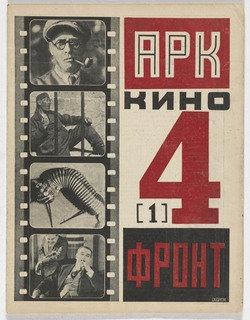
Kino front organ assotsiatsii revoliutsionnoi kinematografii

 Read More
Purchase a high-resolution, enhanced digital image, far superior to the online preview.
Each file is meticulously prepared by our in-house specialists using advanced tools and expert manual retouching. We ensure every image has exceptional clarity, precise color accuracy, and fine detail.
The final file is delivered via email within 72 hours, optimized for immediate use in professional, editorial, and print environments. This is the same quality trusted by top-tier design studios, publishers, and galleries.
Digital Image
Download a high-resolution file for personal display, printing, and creative projects. ( Buy Print Buy Hand Made Painting)
Included in Every Digital Image Order
Expert Digital Delivery, Guaranteed
When you choose ArtsDot.com, you're not just getting an image - you're receiving a professionally enhanced digital artwork, crafted with precision and backed by a satisfaction guarantee. Here's everything that comes with your order, automatically:

Fast Email Delivery
Your high-resolution digital image file will be emailed to you within 72 hours of ordering - ready for immediate use.

AI-Enhanced Digital File
Your artwork is professionally optimized using advanced AI tools and manual editing, ensuring maximum detail, clarity, and color accuracy.

Free Lifetime Re-Delivery
Accidentally deleted or lost your file? No worries - we'll resend it to you anytime, free of charge.

No Import Fees - Ever
Enjoy your artwork instantly with zero customs, duties, or delivery fees - digital downloads are always tax-free.

Color Accuracy Guarantee
We ensure your digital image reflects the original colors as closely as possible using professional tools and color management.

60-Day Satisfaction Guarantee
If you're not satisfied with your digital image, we'll revise it or refund 100% within 60 days - no questions asked.

100% Money-Back Guarantee
Not satisfied? Get a full refund within 60 days of receiving your digital file - no questions asked.

Bulk Order Discounts
Buy 3 images, save 10% - Buy 5, save 15% - Buy 10+, save 20%. Great for creative projects, galleries, and agencies.
Related Artworks









Artist Biography
The Architect of the Soviet Image: The Life and Legacy of Gustav Klutsis
In the turbulent dawn of the twentieth century, few artists captured the frenetic energy of revolution and the mechanical pulse of a changing world as viscerally as Gustav Klutsis. A pioneer of the avant-garde, Klutsis did not merely create art; he engineered visual languages that could speak to the masses. Born in 1895 in the Koni parish of Latvia, his journey from the quiet landscapes of his youth to the heart of the Soviet propaganda machine is a saga of profound artistic transformation and tragic historical consequence. His work stands as a monumental bridge between the radical abstractions of Suprematism and the heavy-handed, cinematic power of political photomontage.
Klutsis’s artistic DNA was forged in the crucible of Moscow’s most radical intellectual circles. After his early training in Riga, he found himself immersed in the revolutionary fervor of 1917, serving even within Vladimir Lenin's personal guard. This proximity to the epicenter of political upheaval deeply informed his creative mission. Under the mentorship of giants like Kazimir Malevich and Antoine Pevsner, Klutsis absorbed the geometric rigor of Suprematism and the structural dynamism of Cubo-Futurism. These influences provided him with a sophisticated toolkit of color theory and spatial arrangement, which he would later repurpose to serve the needs of the state through his tenure as a professor at VKhUTEMAS.
The Mastery of Photomontage and Constructivist Vision
As the Soviet Union sought to modernize and unify its vast territories, Klutsis recognized that traditional painting was insufficient for the era of mass communication. Alongside his wife and lifelong creative partner, Valentina Kulagina, he pioneered the technique of photomontage—a method that blended the "truth" of photography with the aggressive, structural compositions of Constructivism. By slicing, layering, and reassembling photographic elements, Klutsis could create a new kind of reality: one where the human form merged seamlessly with industrial machinery, symbolizing the unstoppable progress of the proletariat.
His technical achievements were characterized by an extraordinary command over typography and scale. His work was not confined to the gallery; it lived on the streets in the form of:
- Revolutionary Posters: Striking visual compositions that utilized bold diagonals and high-contrast imagery to stir political emotion.
- Multimedia Installations: Innovative projects like the “Radio-Orator” kiosks, which integrated sound and visual design to bring news directly to the public.
- Graphic Design: A revolutionary approach to book design and typography that treated text as a structural element of the composition itself.
In his most celebrated period, Klutsis achieved a peak of expression where the individual worker was transformed into a collective juggernaut. His ability to blend the physical bodies of laborers with the iconography of state leaders helped forge the visual identity of the early Soviet era, creating a sense of monumental unity and industrial destiny.
A Tragic Eclipse: The Cost of Ideology
The trajectory of Klutsis’s career serves as a haunting reflection of the shifting political tides in the Soviet Union. As the 1920s gave way to the 1930s, the utopian, experimental spirit of Constructivism began to wane under the rising shadow of Stalinism. The artistic freedom that allowed for radical abstraction was gradually replaced by the rigid requirements of Socialist Realism. Klutsis, ever the loyal servant of the party, found himself navigating an increasingly narrow corridor of permissible subject matter. By 1935, his once-joyful and revolutionary compositions had become increasingly devoted to the cultivation of the Stalinist cult of personality.
The tragedy of his life reached its devastating conclusion during the Great Purge. Despite his decades of service and his role in shaping the very visual landscape of the state, Klutsis was arrested in 1938 as part of the "Latvian Operation." The man who had spent his life constructing the image of a powerful, unified Soviet Union was himself erased by the machinery of that same state. Executed at the age of forty-three, his death marked not only the end of a brilliant life but also the symbolic silencing of the avant-garde spirit in Russia. Today, we remember Gustav Klutsis not just as a propagandist, but as a visionary who redefined the boundaries of modern graphic art.
gustav klutsis
1895 - 1938
Quick Facts
- Artistic Movement Or Style: Constructivism
- Artists Or Movements Influenced By This Artist: ['Soviet Propaganda']
- Artists Who Influenced This Artist:
- Kazimir Malevich
- Antoine Peyvner
- Date Of Birth: January 4, 1895
- Date Of Death: February 26, 1938
- Full Name: Gustav Klutsis
- Nationality: Latvian
- Notable Artworks:
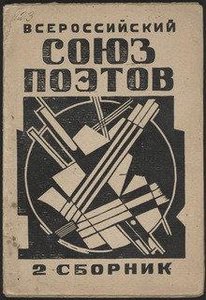
- Vserossiiskii soiuz poetov.
- Kino front organ
- Place Of Birth: Koni parish, Latvia

