 Preview
 Send
Send Share
Share
 Details

 Download
 Similars
 X-Ray
X-Ray Diaporama
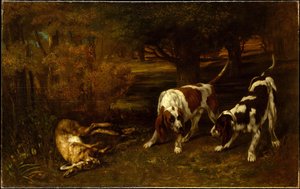
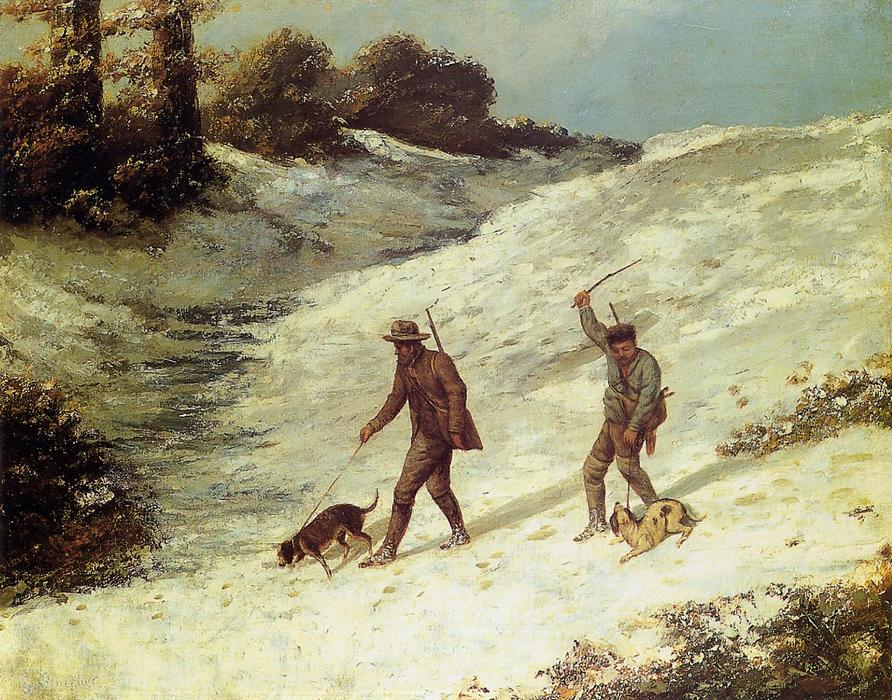
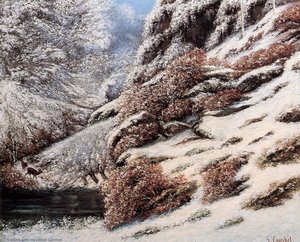
Poachers in the Snow
 Oil On Canvas
- WallArt
- Realism
 1867
1867- 19th Century
 65.0 x 81.0 cm
 Musee des Beaux-Arts
 Read More
Hand Made Oil Reproduction
Hand-painted oil on canvas in your size and frame, made to order by our artists. ( Buy Print Buy Image)




P118B $10

P118H $10

P118W $10

P438Z $10

P508JH $12

P508YH $12

P805H $10

P805Z $10

P919BZ $10

P919G $10

P919XJ $10

P959ZH $10

P968JZ $12

W106C $8

W218G $10

W218JH $8

W218Y $10

W307PJ $10

W316G $10

W316PJ $8

W316Y $10

W398PJ $8

W4111J $10

W500HY $15

W500JH $15

W692G $12

W849H $8

W940BG $15

W953PJ $8




Pick from our preset sizes that match the artwork's original proportions.

You may enter your own dimensions to fit a specific frame or space. If your selected size does not match the original image's proportions, we will either crop the artwork or extend the painting with additional hand-painted elements. A digital mockup will be sent for your approval before production begins.
Please note that the on-screen preview does not reflect the actual cropping or extension. Only the mockup will accurately show the final composition.
While custom sizes are available, we recommend selecting a dimension from the predefined list to preserve the original proportions.
After order, ArtsDot.com team will email client for instructions and provide a mockup preview
Worldwide Delivery () in 3/4 weeks instead of standard 5 weeks. (16 August). No compromise on quality.

Free Worldwide Express Shipping

High-Quality Linen Canvas

Full Shipping Insurance

Customs Tax Refund Guarantee

True Color Matching Guarantee

60-Day Return Policy (Defects Only)

100% Money-Back Guarantee

Bulk Discount Offer
 Glass option is only available in size under 110 CM

Poachers in the Snow
Reproduction Medium
Reproduction Size
-


Total Price
$ 263
Artwork Description
A Stark Winter Tableau: Gustave Courbet’s “Poachers in the Snow”
Gustave Courbet's "Poachers in the Snow," painted in 1867, isn’t merely a depiction of a winter scene; it’s a profound statement about humanity’s relationship with nature and the realities of rural life. This oil-on-canvas masterpiece, now housed within the Musée des Beaux-Arts et d’archéologie de Besançon, France, stands as a cornerstone of the Realist movement, demanding viewers confront the often uncomfortable truths of everyday existence without romantic glossing. Measuring 65 x 81 cm, the painting immediately draws the eye with its muted palette – predominantly whites and browns – mirroring the harshness and unforgiving beauty of a snow-laden landscape. Yet, within this seemingly simple composition lies a complex narrative woven through careful observation and deliberate artistic choices. The scene unfolds with two figures, clad in heavy coats and hats, trudging purposefully through the deep snow. Their postures suggest both weariness and determination, hinting at the difficult labor involved in their pursuit. The man on the left, leading a dog, embodies a cautious approach, while his companion, wielding a stick, exudes a more assertive energy – a clear indication of the illicit activity taking place. Courbet masterfully utilizes light and shadow to create a sense of depth and atmosphere, emphasizing the cold, biting wind that whips across the snow-covered ground. The dogs themselves are integral to the composition, not merely accessories but active participants in this stark drama, their presence adding a layer of companionship amidst the isolation of the scene. The background landscape—a blurred expanse of trees and distant hills—further reinforces the sense of vastness and solitude, underscoring the vulnerability of these figures against the raw power of nature. Courbet’s commitment to Realism is evident in every brushstroke. He eschewed idealized forms and vibrant colors, opting instead for a direct, unvarnished portrayal of reality. The loose application of paint, characteristic of his style, lends a sense of immediacy and spontaneity to the scene, as if captured in a fleeting moment. This deliberate rejection of academic conventions was revolutionary at the time, challenging the prevailing artistic norms that prioritized beauty and grandeur over truth and authenticity. The painting’s subject matter—poaching—was itself controversial, reflecting the social tensions and economic hardships prevalent in rural France during the 19th century. Courbet's choice to depict this illicit activity head-on was a bold statement about his commitment to portraying the lives of ordinary people, regardless of their moral standing. Beyond its immediate subject matter, “Poachers in the Snow” carries significant symbolic weight. The winter landscape can be interpreted as a metaphor for the harsh realities of life—the struggle for survival, the isolation of rural existence, and the conflict between humanity and nature. The figures themselves represent the complexities of human behavior – ambition, desperation, and perhaps even a degree of moral ambiguity. Courbet doesn’t offer judgment; he simply presents the scene as it is, inviting viewers to contemplate its implications. The painting's enduring power lies in its ability to evoke a sense of both melancholy and resilience, reminding us of our shared humanity and our connection to the natural world. It’s a testament to Courbet’s genius that this seemingly straightforward depiction continues to resonate with audiences today, prompting reflection on timeless themes of survival, morality, and the human condition.The Artist's Context: Gustave Courbet and the Rise of Realism
To fully appreciate “Poachers in the Snow,” it’s essential to understand the broader context within which Gustave Courbet was working – the rise of Realism in 19th-century France. Born in Ornans, France, in 1819, Courbet initially trained at the École des Beaux-Arts in Paris, but quickly grew disillusioned with the rigid conventions and idealized subjects favored by the Academy. He rejected the romanticism and historical narratives that dominated the Salon system, instead seeking to depict the world as he saw it – truthfully and without embellishment. Courbet’s artistic development was profoundly influenced by artists like Eugène Delacroix and Théodore Géricault, but he ultimately distanced himself from their Romantic ideals, prioritizing direct observation and a commitment to portraying everyday life. His early works explored landscapes and portraits, gradually shifting towards scenes of rural labor and the lives of working-class individuals. This shift was driven by a desire to break free from the constraints of academic art and to create paintings that reflected the realities of contemporary society. Courbet’s decision to paint subjects considered “unworthy” of artistic attention—such as peasants, laborers, and even criminals—was a deliberate act of rebellion against the established order. The painting "Poachers in the Snow" exemplifies this commitment to Realism. It's not a heroic depiction of hunters; it’s a stark portrayal of individuals engaged in an illegal activity, stripped of any romantic or idealized qualities. Courbet’s focus on detail—the texture of the snow, the weariness of the figures’ faces, the ruggedness of the landscape—creates a powerful sense of immediacy and authenticity. His rejection of traditional artistic techniques—such as smooth brushstrokes and carefully composed backgrounds—further emphasizes his commitment to portraying reality in its rawest form. Courbet's work was often met with criticism and controversy during his lifetime. Many critics dismissed his paintings as crude, vulgar, or lacking in aesthetic merit. However, he remained steadfast in his artistic vision, continuing to produce works that challenged the conventions of the art world and paved the way for future generations of artists. His influence on modern art is undeniable, establishing Realism as a dominant movement and inspiring countless artists to embrace direct observation and social commentary in their work.Technical Details & Artistic Techniques
The execution of “Poachers in the Snow” reveals Courbet’s mastery of oil painting techniques and his meticulous attention to detail. The canvas measures 65 x 81 cm, providing ample space for the artist to capture the vastness of the winter landscape and the physicality of the figures. Courbet employed a technique known as *alla prima*, meaning “at first sight,” which involved completing the painting in a single session without extensive underpainting or sketching. This approach resulted in a sense of spontaneity and immediacy, capturing the fleeting effects of light and shadow with remarkable precision. The color palette is deliberately muted—dominated by shades of white, brown, and gray—to evoke the cold, bleak atmosphere of the winter scene. Courbet skillfully used *chiaroscuro*, the contrast between light and dark, to create a sense of depth and volume, emphasizing the figures’ forms and the texture of the snow-covered ground. The brushstrokes are loose and expressive, contributing to the painting's overall sense of realism and immediacy. Courbet’s technique is characterized by a directness and honesty that reflects his commitment to portraying reality without idealization or embellishment. The composition itself is carefully constructed, with the two figures positioned diagonally across the canvas to create a dynamic and engaging visual arrangement. The use of perspective—particularly in the depiction of the distant hills—adds depth and realism to the scene. Courbet’s attention to detail extends beyond the main subjects to include subtle elements such as the texture of the snow, the folds of the figures’ clothing, and the reflections of light on the ground. These small details contribute significantly to the painting's overall sense of authenticity and immediacy. The artist’s ability to capture these nuances demonstrates his exceptional skill and his unwavering commitment to portraying reality with remarkable accuracy.A Legacy of Realism: Courbet and Beyond
“Poachers in the Snow” stands as a pivotal work in Gustave Courbet’s oeuvre and a defining example of the Realist movement. Its impact extended far beyond its immediate context, influencing generations of artists who followed. Courbet's rejection of academic conventions and his commitment to portraying everyday life without romanticization paved the way for future movements such as Impressionism and Social Realism. Artists like Jean-François Millet, Édouard Manet, and Honoré Daumier were deeply influenced by Courbet’s work, adopting his techniques and exploring similar themes of rural labor and social injustice. Manet's "Le Déjeuner sur l'herbe" (1863), for example, challenged traditional notions of beauty and morality, mirroring Courbet’s own rebellious spirit. Furthermore, Courbet’s legacy extends beyond the realm of painting. His commitment to depicting reality in its rawest form influenced other art forms, including photography and sculpture. The rise of Realism as a dominant movement in 19th-century France marked a significant shift in the history of art, challenging established conventions and opening up new possibilities for artistic expression. For those interested in exploring more of Courbet’s works or delving deeper into the world of Realist art, we recommend visiting the Musée des Beaux-Arts et d’archéologie de Besançon, France, where “Poachers in the Snow” is proudly displayed. Additionally, examining the work of Eugène-Louis Decisy, another prominent figure in the Realist movement, offers a valuable perspective on the diverse range of artistic approaches within this influential movement.Related Artworks
Artist Biography
A Rebel’s Brush: The Life and Legacy of Gustave Courbet
Born in the quiet village of Ornans, France, in 1819, Jean Désiré Gustave Courbet emerged as a defiant force against the established artistic norms of his time. His story isn't simply one of paint and canvas; it’s a narrative woven with threads of social commentary, political conviction, and an unwavering commitment to portraying the world exactly as he saw it – unidealized, raw, and profoundly real. Growing up in a relatively prosperous bourgeois family, Courbet received encouragement from his mother to pursue his artistic inclinations, a nurturing that would ultimately fuel a revolution in the art world. His formal training began at the École des Beaux-Arts in Paris in 1839, but he quickly found himself chafing against the academic conventions and Romantic idealism prevalent there. While acknowledging influences like Eugène Delacroix and Théodore Géricault, Courbet forged his own path, one that prioritized observation over imagination and truth over tradition.The Birth of Realism: Challenging Artistic Conventions
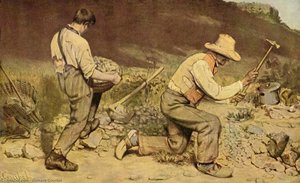
Courbet’s artistic development was marked by a deliberate rejection of the prevailing aesthetic standards. He wasn't interested in mythological narratives or heroic allegories; his gaze was fixed on the everyday lives of ordinary people, particularly those engaged in labor and rural existence. This commitment to depicting the world without embellishment – what would become known as Realism – initially met with scorn and derision from critics accustomed to more polished and idealized representations. Early works explored landscapes and portraits, but soon shifted towards scenes of working-class life, rendered on a monumental scale traditionally reserved for historical or religious paintings. This deliberate choice wasn’t merely stylistic; it was a statement about the inherent dignity and importance of these often-overlooked subjects. The Stone Breakers, completed in 1849 but tragically destroyed during World War II, exemplified this approach – a stark depiction of two laborers toiling away, their faces obscured by exhaustion and hardship. This painting, along with others like A Burial at Ornans (1850), challenged the very definition of what constituted “worthy” subject matter for high art.Major Works and Artistic Philosophy
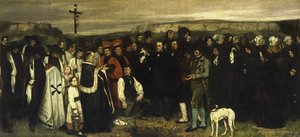
A Burial at Ornans, a colossal canvas depicting a provincial funeral, caused an uproar when it was exhibited in 1850-51. Its sheer size – typically reserved for grand historical paintings – combined with its unflinching realism and lack of emotional idealization shocked audiences. Courbet didn’t portray the mourners as noble or grief-stricken figures; he presented them as ordinary people, their faces etched with a mixture of sorrow, boredom, and resignation. This honesty was revolutionary. His artistic philosophy extended beyond subject matter to encompass technique. He favored a direct, impasto style – applying paint thickly onto the canvas – that emphasized the materiality of the medium itself. The Painter’s Studio (1855), an allegorical work reflecting his artistic beliefs and engagement with contemporary social issues, further solidified his reputation as a provocative and independent artist. His participation in the Salon des Refusés in 1863 – an exhibition of works rejected by the official Salon – cemented his status as a rebel and champion of artistic freedom. Even landscapes like View in the Forest of Fontainebleau (1855) were imbued with a sense of realism, capturing the natural beauty of the forest without romanticizing it.Legacy and Historical Significance
Gustave Courbet’s influence on subsequent art movements is undeniable. While he drew inspiration from earlier masters like Caravaggio for their dramatic realism and use of light and shadow, his impact extended far beyond mere imitation. He profoundly influenced the Impressionists and Post-Impressionists by liberating them from the constraints of traditional representation, encouraging them to explore new ways of seeing and depicting the world. His emphasis on social commentary paved the way for later socially engaged artists who used their work as a platform for political activism. Courbet wasn’t just a painter; he was a vocal advocate for artistic freedom and political change, actively participating in the tumultuous events of his time, including the Paris Commune of 1871 – an involvement that led to a period of exile in Switzerland. He died in 1877, leaving behind a body of work that continues to inspire and provoke audiences today.- Pioneer of Realism
- Challenged academic conventions
- Influenced Impressionism & Post-Impressionism
- Advocate for artistic freedom
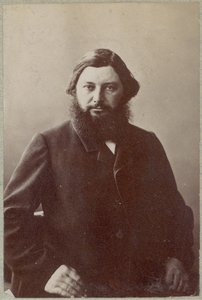
Gustave Courbet
1819 - 1877 , France
Quick Facts
- Artistic Movement Or Style: Realism
- Artists Or Movements Influenced By This Artist:
- Impressionism
- Post-Impressionism
- Artists Who Influenced This Artist:
- Delacroix
- Géricault
- Caravaggio
- Date Of Birth: July 31, 1819
- Date Of Death: April 29, 1877
- Full Name: Gustave Courbet
- Nationality: French
- Notable Artworks:
- The Stone Breakers
- A Burial at Ornans
- The Painter's Studio
- Place Of Birth: Ornans, France
Related Articles
Snowy Masterpieces: 10 Famous Paintings & Art for a Winter Aesthetic
Explore 10 famous snow paintings by Monet, Degas & more! Discover the stories behind these serene winter landscapes and iconic artworks. Find museum-quality art reproductions for your home at ArtsDot.com.
Romantic Realism's Finest: 10 Masterpieces for Your Home | ArtsDot
Explore 10 defining masterpieces of Romantic Realism! Discover Courbet, Millet & Daumier's powerful paintings—capturing emotion and social realities. Find museum-quality reproductions for your home at ArtsDot.com.

Beyond the Horizon: 10 Landscape Masterpieces for Your Home Decor
Journey through 10 breathtaking landscape paintings by Monet, Van Gogh & more! Explore iconic artworks, artistic techniques & find inspiration for your home decor. Museum-quality reproductions at ArtsDot.com. Discover all masterpieces on ArtsDot.com

Romantic Landscapes: 10 Masterpieces for Your Home | ArtsDot
Journey through 10 Romantic landscape masterpieces by Friedrich, Turner & Cole. Explore emotional art, sublime nature scenes & iconic 19th-century paintings. Find museum-quality reproductions for your home at ArtsDot.com – discover the full collection online!

Evocations of Place: A Historical Journey Through Landscape Art
Explore the rich history of landscape art with ArtsDot. Discover renowned artists, movements like Impressionism & Romanticism, and expert guidance for collecting timeless pieces. Find your perfect serene escape today!