 Preview
 Send
Send Share
Share
 Details

 Download
 Similars
 X-Ray
X-Ray Diaporama
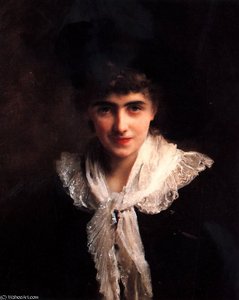
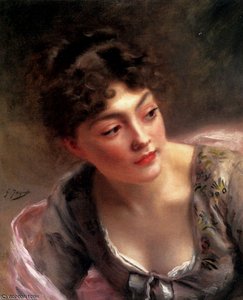
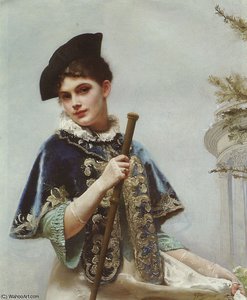
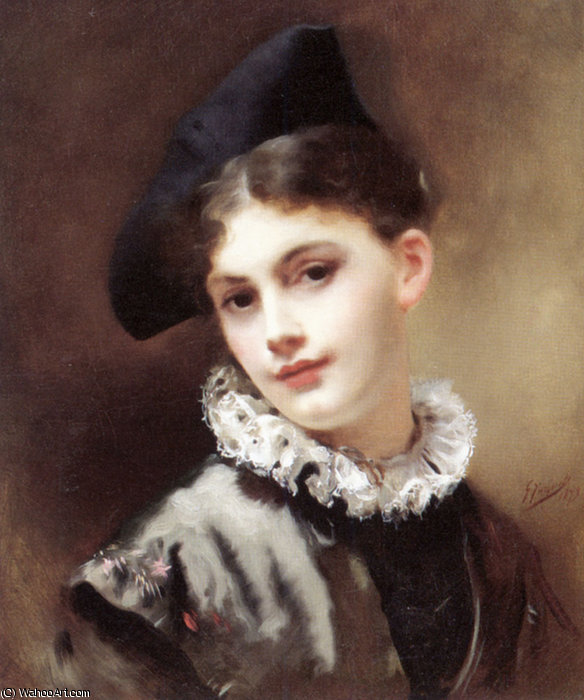
A coquettish smile
 Read More
Hand Made Oil Reproduction
Hand-painted oil on canvas in your size and frame, made to order by our artists. ( Buy Print Buy Image)




































Pick from our preset sizes that match the artwork's original proportions.

You may enter your own dimensions to fit a specific frame or space. If your selected size does not match the original image's proportions, we will either crop the artwork or extend the painting with additional hand-painted elements. A digital mockup will be sent for your approval before production begins.
Please note that the on-screen preview does not reflect the actual cropping or extension. Only the mockup will accurately show the final composition.
While custom sizes are available, we recommend selecting a dimension from the predefined list to preserve the original proportions.
After order, ArtsDot.com team will email client for instructions and provide a mockup preview
Worldwide Delivery () in 3/4 weeks instead of standard 5 weeks. (17 August). No compromise on quality.

Free Worldwide Express Shipping

High-Quality Linen Canvas

Full Shipping Insurance

Customs Tax Refund Guarantee

True Color Matching Guarantee

60-Day Return Policy (Defects Only)

100% Money-Back Guarantee

Bulk Discount Offer
 Glass option is only available in size under 110 CM

A coquettish smile
Reproduction Medium
Reproduction Size
-


Total Price
$ 263
Related Artworks
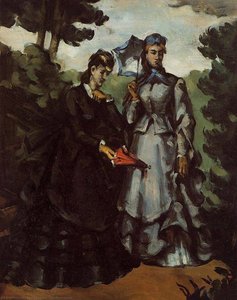
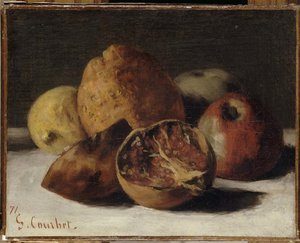
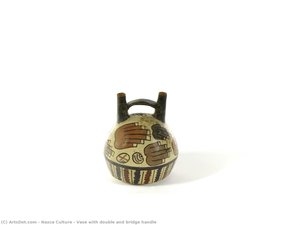
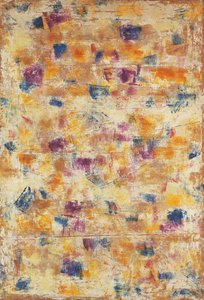
Artist Biography
The Enigmatic World of Gustave Jean Jacquet: A Parisian Chronicler of Elegance and Symbolism
Gustave Jean Jacquet, a name perhaps less immediately recognizable than some of his Realist contemporaries, nevertheless occupies a fascinating niche in the landscape of 19th-century French painting. Born in France in 1846, Jacquet dedicated his artistic life to capturing the nuances of Parisian society – not with grand historical pronouncements or sweeping landscapes, but through intimate portraits and delicately rendered scenes that whisper stories of refinement, introspection, and a subtle undercurrent of Symbolist yearning. While biographical details remain somewhat scarce, the body of work he left behind speaks volumes about an artist deeply attuned to the aesthetic sensibilities of his time, and uniquely skilled at translating them onto canvas. He wasn’t necessarily striving for revolution in the Courbet mold; rather, Jacquet sought a quiet eloquence, a poetic realism that revealed character and atmosphere with remarkable sensitivity.Early Influences and Artistic Development
Jacquet's artistic journey unfolded during a period of significant change within the French art world. The dominance of academic painting was being challenged by the rise of Realism, championed by artists like Courbet and Millet, who sought to depict everyday life without idealization. While Jacquet certainly absorbed elements of this movement – particularly in his commitment to accurate representation – he diverged from its more overtly political or socially critical tendencies. His early training likely involved a traditional academic foundation, equipping him with the technical mastery evident in his precise brushwork and anatomical understanding. However, it was the burgeoning Symbolist aesthetic that truly shaped his artistic vision. Artists like Moreau and Puvis de Chavannes were exploring themes of mythology, dreams, and inner psychological states, and this influence is palpable in Jacquet’s later works. He wasn't simply painting what he *saw*, but what lay beneath the surface – the emotions, desires, and unspoken narratives that animated his subjects.A Focus on Parisian Women: Portraits of a Generation
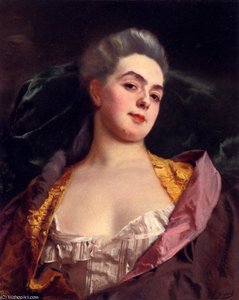
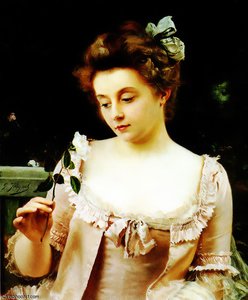
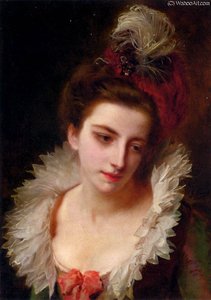
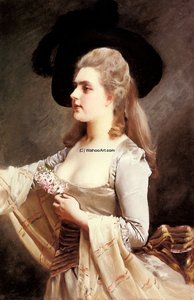
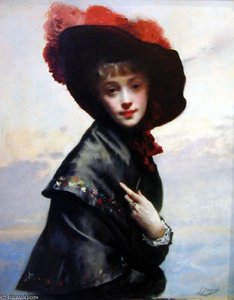
Jacquet quickly established himself as a painter of women, specifically those inhabiting the fashionable circles of Paris. His portraits are not bombastic displays of wealth or status; instead, they offer glimpses into the private lives of these individuals. “An Elegant Lady in a Black Hat”, for example, is a masterclass in capturing both outward grace and inner contemplation. The woman’s gaze is direct yet enigmatic, her expression hinting at a complex emotional life. He excelled at rendering fabrics – silks, velvets, lace – with astonishing realism, but this technical skill was always employed to serve a larger purpose: to convey the personality and social standing of his sitters. “A Rare Beauty” exemplifies this approach; the subject is undeniably striking, yet Jacquet avoids mere physical description, instead focusing on an aura of intelligence and quiet confidence. “A Quick Glance” demonstrates his ability to capture fleeting moments, imbuing a simple portrait with a sense of narrative intrigue. These are not merely likenesses, but psychological studies rendered in oil paint.Technique and Style: Poetic Realism
Jacquet’s technique is characterized by meticulous detail, subtle lighting, and a restrained palette. He favored soft, diffused light that created an atmosphere of intimacy and mystery. His brushwork is remarkably precise, yet never feels overly labored or artificial. He possessed a keen eye for color harmony, often employing muted tones to create a sense of depth and richness. While rooted in Realism, his work transcends simple imitation through its emphasis on symbolism and emotional resonance. The backgrounds of his portraits are rarely detailed, allowing the focus to remain firmly on the subject’s face and expression. This deliberate choice underscores his interest in psychological portraiture – he wasn't interested in depicting a scene, but in revealing a soul. He often incorporated subtle allegorical elements into his compositions, adding layers of meaning that reward close observation.Legacy and Historical Significance
Although Jacquet did not achieve the widespread fame of some of his contemporaries, his work remains highly valued by collectors and art historians today. He represents a fascinating bridge between Realism and Symbolism, offering a unique perspective on Parisian society during the 19th century. His paintings provide invaluable insights into the fashion, manners, and social dynamics of the era. Furthermore, his emphasis on psychological portraiture foreshadows developments in modern art, particularly the work of artists like John Singer Sargent and Tamara de Lempicka. Jacquet’s legacy lies not in grand pronouncements or revolutionary gestures, but in the quiet eloquence of his paintings – a testament to the power of observation, technical skill, and a deep understanding of the human condition. His works continue to captivate viewers with their beauty, subtlety, and enduring sense of mystery.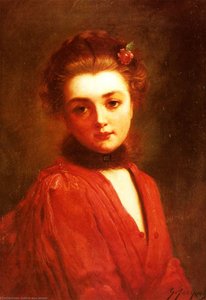
gustave jean jacquet
1846 - 1909 , France
Quick Facts
- Artistic Movement Or Style: Symbolist Art
- Artists Or Movements Influenced By This Artist: ['Romanticism']
- Artists Who Influenced This Artist: ['William Bouguereau']
- Date Of Birth: May 25, 1846
- Date Of Death: 1909
- Full Name: Gustave Jean Jacquet
- Nationality: French
- Notable Artworks:
- La Modestie
- La Tristesse
- Call to Arms
- Sortie de Lansquenets
- Joan of Arc Praying for France
- Place Of Birth: Paris, France